The newly built Mark W. Barker, the United States’ first new Great Lakes bulk carrier in nearly 40 years, has embarked on its maiden voyage from Fincantieri Bay Shipbuilding in Sturgeon Bay, Wis.

“This is a monumental day for our company and the U.S. flag fleet as our much-anticipated freighter departs on her first voyage in what will be a long life of service on the Great Lakes,” said Mark W. Barker, President of The Interlake Steamship Company and namesake of the vessel—the company’s first new build since 1981. “The construction of this vessel, which was made from steel manufactured in Indiana, from iron ore delivered by vessel from Minnesota, reinforces our long-term commitment to shipping and delivering essential cargoes for our customers throughout the region.”

The River Class self-unloading bulk carrier is believed to be the first ship for U.S. Great Lakes service built on the Great Lakes since 1983. Measuring 639 feet in length (78 feet W, 45 feet H, 28,000 DWT), the ship will transport raw materials such as salt, iron ore, and stone to support manufacturing throughout the Great Lakes region.

It was designed jointly by The Interlake Steamship Company, Fincantieri Bay Shipbuilding (FBS) and Bay Engineering, complete with advanced vessel and unloading systems automation. Under construction since August 2019, the carrier was built by FBS’s nearly 700 trade workers and generated business for partnering contractors, vendors and suppliers. Major partners for the project included: American Bureau of Shipping (ABS); Cleveland-Cliffs, Bay Engineering (BEI); EMD Engines; Caterpillar; EMS-Tech, Inc.; Lufkin (a GE Company), Kongsberg and MacGregor.
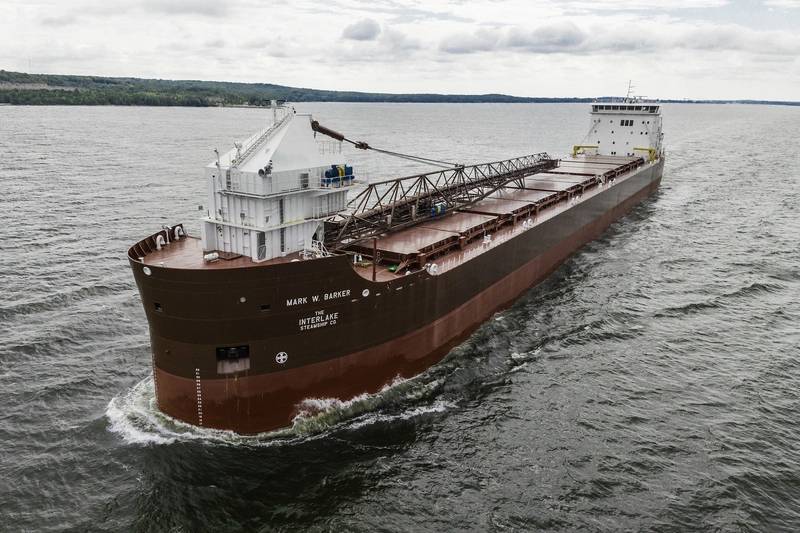
(Photo: The Interlake Steamship Company)

The new ship departed the Sturgeon Bay, Wis. shipyard at 10:36 central time for its 110-mile journey to Port Inland, Mich. where its crew of 21 mariners will load stone to deliver to Muskegon, Mich. Once delivered, that stone cargo will go into ready-mix concrete production.

“This new vessel not only brings with it additional cargo carrying capacity and capabilities, it is the most versatile in our fleet and strategically sized to navigate into nearly any port on the Great Lakes,” said Brendan P. O’Connor, Vice President of Marketing and Marine Traffic at The Interlake Steamship Company. “The M/V Mark W. Barker will give us unmatched ability for cargo operations and to carry unique project cargoes because of both her square-shaped cargo hold and larger hatch openings. She truly was designed to be a vessel for the future.”

“We couldn’t be prouder to add this skillfully constructed vessel to our growing Interlake fleet,” said Barker, who was at the shipyard this week to personally wish the best to the ship’s crew fitting out the new vessel. “It has been genuinely inspiring to see the dedication and workmanship from all of those involved in this multi-year project, from the design, construction, final outfitting and successful sea trials. We are thrilled to add our newest U.S.-crewed, U.S.-built and U.S.-owned vessel to the Great Lakes fleet.”

Source: https://www.marinelink.com/news/us-first-modern-laker-begins-maiden-498334

Navios Maritime Holdings Inc. on Wednesday announced it has reached a deal to sell its 36-vessel dry bulk fleet to Navios Maritime Partners L.P. approximately $835 million.

Navios Holdings, which holds a 10.3% interest in the US publicly listed shipping company Navios Partners, with the sale officially exited direct fleet ownership. Going forward, the company said kit plans to focus on growing Navios South American Logistics Inc. business.

“We believe Navios Logistics is a leading infrastructure and logistics company in the Hidrovia region of South America having a a unique infrastructure comprising of port terminal facilities, barge and cabotage fleet; favorably located assets; Nueva Palmira terminal a critical infrastructure asset; a long-term “take-or-pay” contract with Vale; a favorable market backdrop to support growth and compelling growth opportunities.

Navios Holdings will assume $441.6 million of bank liabilities, bareboat obligations and finance leasing obligations, subject to debt and working capital adjustments (the “Transaction”), from Navios Maritime Holdings Inc. (“Navios Holdings”) (NYSE:NM).]The 36-vessel drybulk fleet consists of 26 owned vessels and 10 chartered-in vessels (all with purchase options) with a total capacity of 3.9 million dwt and an average age of 9.6 years. Assuming Clarksons’ 1-YR TC rate (as of July 22, 2022) and certain operating cost assumptions(1), the acquired vessels are expected to generate approximately $164.0 million of estimated EBITDA and $81.5 million of estimated free cash in 2023.

Following the completion of the Transaction, Navios Partners will own and operate a fleet comprised of 90 dry bulk vessels, 49 containerships and 49 tanker vessels, including 22 newbuilding vessels to be delivered through the first quarter of 2025.

Source: https://www.marinelink.com/news/navios-maritime-holdings-sells-dry-bulk-498342


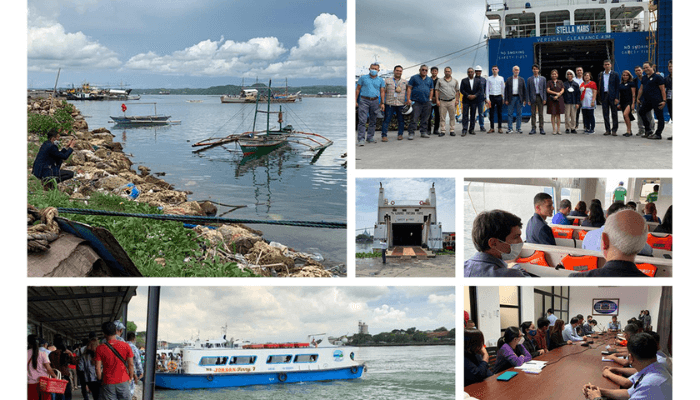
IMO has contributed to the next steps to enhance safety and energy efficiency of domestic passenger ships in the Philippines. A team of experts* undertook a field visit to Manila, Iloilo and Cebu, the Philippines (3-9 July) to see up close how the safety system in the Philippines operates.

The team were able to observe and understand actual operations of domestic passenger ships and their interface with port operations and the regulatory authorities. They were also able to scrutinize the different types of passenger ships which operate in the Philippines, particularly the traditional wooden bancas and redesigned and modernized Fibre Reinforced Plastic (FRP) boats.

Greener Domestic Passenger Ships
Credits: IMO

Meetings were held with officials from the Maritime Industry Authority (MARINA); the Philippine Ports Authority (PPA); the Philippine Coast Guard (PCG); and faculty members the University of Cebu and the University of the Philippines to see how to build local expertise.

The field visit identified the need:

  • for support to create databases for the registration of ships, for the storage of data on safety inspections, and for accident investigation, among others.
  • to study the ship design of the banca and see how to make it safe and fit for purpose.
  • to look into the design of modernized banca boats.
  • to improve capacity for accident investigation and make use of the lessons learned from these investigations to improve safety.
  • for capacity building for the preparation, implementation and enforcement of safety regulations.
  • to build local expertise, particularly on maritime safety.

The field visit was the next step in a year-long US$354,250 project funded by the World Bank Group (WBG), the International Finance Corporation (IFC) and IMO’s Integrated Technical Cooperation Programme (ITCP).

* Maritime safety and energy-efficiency consultants; specialists from the World Bank; and the IMO Regional Coordinator for East Asia

Reference: IMO


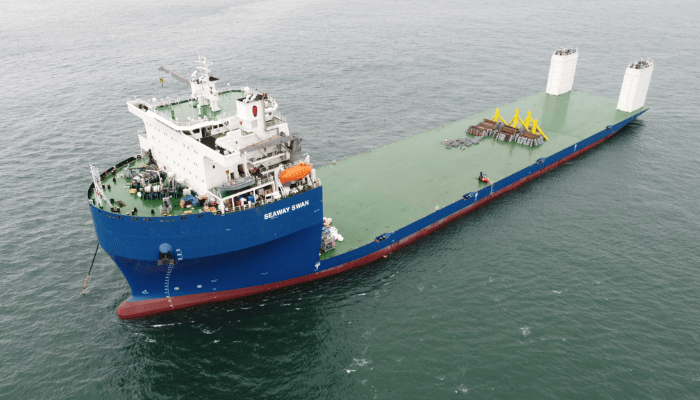
Seaway 7 is pleased to announce that it has taken delivery of a new semisubmersible heavy transport vessel. The company entered into a bareboat contract with United Faith for its new build vessel MV Xin Qun 3, renamed Seaway Swan.

Seaway Swan is a 50,000 Te DWT Heavy Transport Vessel (HTV) with an open stern and large deck free from obstructions.

This addition to Seaway 7’s world-class HTV fleet will further extend the company’s capacity to load larger and longer cargoes such as XXL monopiles, and modules that would typically need to be skidded on and off the vessel over the stern. The Seaway Swan is suitable for float-over operation projects, feeder duties alongside installation vessels, and offshore (subsea) construction support, due to its Dynamic Positioning (DP2) capabilities.

HTV Seaway Swan
Credits: Seaway 7

The vessel has been built by the reputable Qingdao Beihai shipyard, part of the CSSC group, with whom Seaway 7 have long-standing relations. Successful sea trials were completed at the beginning of April and all systems, functions, and capabilities are reported to be working well. Its maiden voyage will commence later this summer when Seaway Swan will transport four large Ship-to-Ship cranes from their pick-up point in Qingdao, China to Alexandria, Egypt for discharge in September.

The vessel is registered in Norway and carries the Norwegian International Ship Register (NIS) flag.

Seaway 7 now operates six HTVs, as well as two heavy lift vessels, three cable vessels, and currently has two new build next-generation offshore wind installation vessels under construction.

Reference: Seaway 7


The Malaysian Port of Tanjung Pelepas (PTP), a joint venture between APM Terminals (30%) and the MMC Group, has entered into an agreement to deploy Innovez One’s AI-powered Port Management Information System (PMIS) to improve efficiency and optimise its scheduling.

Port information management systems provider Innovez One said it will supply its MarineM solution to PTP to aid the port in its journey towards digitalisation. The system’s integration at the port is scheduled by the early third quarter of 2022.

MarineM will provide an interface where agents can register their vessels and order services to support arrivals such as supplies, logistics and marine services. Using algorithms powered by artificial intelligence (AI) and machine learning, MarineM’s planning module will automatically manage schedules and dispatch resources.

According to Innovez One, this AI-powered system can instantly reallocate resources if a vessel’s ETA changes, hence limiting waiting times and making PTP more resilient in the face of congestion.

MarineM will also enable agents to monitor the status of their orders in real time and will automate the billing process. It also includes a live map where port managers will be able to view the movements of each vessel.

“The transition of digitalisation and automation is speeding up in the entire maritime industry,” said Marco Neelsen, Chief Executive Officer of PTP.

To secure efficient, sustainable operation and business competitiveness, PTP has proactively invested in its assets and infrastructure. PTP is committed to continue with the journey and further create values to our customers, shareholders and other stakeholders.”

This significant technological milestone will unlock new efficiencies at the Port of Tanjung Pelepas and ensure that all pieces fall into place seamlessly to support ships’ arrivals and departures,” added David Yeo, CEO and founder of Innovez One.

“As recent months have demonstrated, what we refer to as the first and last mile of the journey at sea is critical. Digitalisation is now more important than ever, in order to make ports more resilient to disruptions and avoid the multiplication of seemingly minor delays that can exacerbate port congestion.”

Earlier this year, PTP said it will invest RM750 million ($178.5 million) in expanding capacity. Speaking to reporters at the PTP 11 million TEU milestone celebration, Marco Neelsen said, “Capacity will grow from 11.5 million TEU to 12.5 million TEU within the first six months of 2022.”

Reference: APM Terminals


Finding enough seafarers willing to sail ships stuck inside Ukraine’s ports is set to pose a major challenge to the proposed grains corridor designed to ease an international food crisis.

Russia and Ukraine last week signed a deal to restart grain and fertilizer exports that have been blocked in the Black Sea and on Wednesday Turkey unveiled a center to coordinate the resumption of shipments.

But some 80 ships remain blocked in Ukraine and the evacuation of most of their crew members means more mariners are needed in the region to get the cargoes moving.

Henrik Jensen, managing director of Danica, which specializes in providing crew for ships in Ukraine and eastern Europe, said it may be hard to find people willing to go.

“The main concern at the moment is the security of crew members,” he said.

At the start of the conflict in late February approximately 2,000 seafarers from all over the world were stranded aboard 94 vessels in Ukrainian ports.

Around 450 are left on the estimated 80 vessels remaining, mainly dry bulk ships that carry grain, but also other cargo vessels transporting other commodities, according to data from U.N. shipping agency the International Maritime Organization (IMO) and from shipping sources.

Under last week’s U.N.-brokered deal, the first shipments of Ukrainian grain could leave Black Sea ports within days in theory.

But few seafarers are expected to be ready to travel to the region until they see the safe passage of the first ships, which will have to be guided round sea mines.

Two merchant sailors have died and seven commercial vessels have been hit by projectiles – with two sunk – around Ukraine’s coast since the war started on Feb. 24.

“Until national navies assist the Ukrainian authorities to sweep these mines and create a safe corridor, seafarers will face significant personal risk sailing through these stretches of water,” Stephen Cotton, General Secretary of the International Transport Workers’ Federation (ITF), told Reuters.

London’s insurance market has placed the entire region on a separate high-risk list, meaning soaring costs for shipments.

Juan Luciano, chief executive of multi-national food and commodities company Archer-Daniels-Midland, told an earnings call on Tuesday there were “issues about insurance” and financial guarantees, as well as problems of fuel and getting crews in place.

But he said, with time, the grain should start moving.

“At the beginning, you’re going to see a little bit of a trickle down of exports, maybe smaller boats. It’s going to take a little bit of building confidence that this works before you can put the bigger boats,” he said.

Local staff
Initially, many of the ships will be need to be backed up by Ukrainians, four industry sources said, asking not to be named because of the sensitivity of the issue.

They said finding enough local seafarers would also be a challenge.

Some local Ukrainian seafarers that have kept the ships maintained have faced difficulties because of restrictions on nationals leaving the country in case they are needed for military service.

Mykhailo Podolyak, adviser to President Volodymyr Zelenskiy’s head of staff, told Reuters there were some restrictions on Ukrainians leaving the country. He said a mechanism with the Ministry of Infrastructure and the Border Guard Service had been set up to deal with the issue, but did not give details.

Russian seafarers will not be used due to security concerns by Ukraine, the sources said.

The Kremlin declined to comment and referred the question to Russia’s Defense Ministry, which did not immediately respond to a request for comment.

One of the industry sources said it could be easier for fresh ships with crew to sail in and out of the Black Sea ports, provided there were berths, but much work needed to be done to clarify the situation.

“Those crews who will go in may also wish to have enhanced payments. So many questions still to be addressed,” the source added.

The ITF – the main seafarers’ union association – and partners have added waters around Ukraine and its ports to their high-risk areas, meaning that seafarers have the right to decline a shipping assignment into the area.

If they accept it, they are entitled to double basic daily wages and double compensation for disability and death, the ITF says.

High price
While the stakes are high for the seafarers, the implications for world markets are also major.

Before Russia’s invasion, which it calls a “special military operation”, began on Feb. 24, Ukraine and Russia accounted for around a third of global wheat exports.

The invasion sent food prices soaring, stoking a global food crisis the World Food Programme says has pushed some 47 million people into “acute hunger”.

The ITF says it is committed to making the grain corridor a success but equally to the safety of its members.

“We would expect to establish clear criteria on both safety and risk to crew, alongside our social partners the shipowners and maritime employers,” the ITF’s Cotton said.

Together with affiliated unions, it has written to the Ukrainian government urging President Zelenskiy to allow Ukrainian seafarers “dispensation from compulsory military service”.

Ukrainian seafarers make up 4% of the total global mariner workforce of 1.89 million sailors, according to trade associations the International Chamber of Shipping and BIMCO.

“If large numbers of Ukrainian seafarers are unable to be deployed for new contracts, or choose to return home, then we need to work with our affiliates in other nations to help make up the shortfall,” Cotton said.

Source: https://www.marinelink.com/news/seafarer-shortage-stands-ukraine-grain-498336


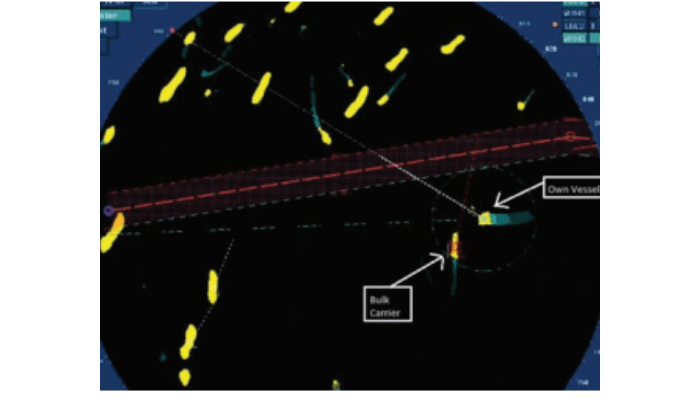
In darkness, a vessel was proceeding to a busy anchorage under the con of a pilot who had just boarded. The pilot and the Master engaged in small talk as they proceeded and there was also an OOW and a lookout on the bridge. Another vessel underway in the vicinity had recently altered course to port and, unknown to the bridge team or pilot, was now in a potential close quarters situation. Almost 10 minutes passed before the potential close quarters situation was observed by local VTS and the bridge team alerted to the danger by VHF radio.

Only now, with the other vessel just 0.3 nm away, was it plotted. There was initially some confusion as to the speed of the other vessel as the value was changing; but this was be expected in the first minute after plotting as the ARPA target acquisition algorithm needs to refine the calculations. Emergency course alterations were made and the bridge team tried to communicate with the other vessel by VHF radio. As the distance decreased between the two vessels, the bridge team, now under some stress, sounded a long blast on the fog horn. Finally, the other vessel passed astern only 35 metres away.

Collision
Credits: The Nautical Institute
  • A common mistake when pilot boards are for the bridge team to relax; the unstated assumption is that the pilot has everything under control. Not so! The bridge team must continue to do their jobs in full support of the pilot and vice versa.
  • As part of a bridge team, never assume that someone else will see it. It is possible for any member of the bridge team to make an error or miss a cue. YOU may be the only one that identifies a potentially hazardous situation, and for this reason, every bridge team member should be alert.
  • The danger signal is at least five short blasts.

Reference: The Nautical Institute


In a mid-year report from the US Department of Energy’s (DOE) Energy Information Agency (EIA) said LNG exports increased by 12% in the first half of 2022, averaging 11.2bn cubic feet per day (Bcf/d), compared with second half of 2021.

They also broke down the total US LNG exports during the first five months of 2022, prior to the fire at a Freeport LNG facility in early June, which will be reducing export volumes for several months going forward. The EIA said that deliveries to the United Kingdom and European Union accounted 8.2 Bcf/d, amounting to 71% of total exports.

The EIA was estimating that the shutdown at Freeport LNG reduced US export capacity by an estimated 2.0 Bcf/d. During May, the Freeport facility loaded 20 vessels. For data on LNG vessel loadings, readers can find them at: https://www.energy.gov/fecm/articles/lng-monthly-2022

The growth in US at the present time was among many issues covered in a very thorough webinar presentation on LNG markets by Poten & Partners, which is active as a broker in the sector, but also offers extensive analytics on supply, demand and overall LNG market dynamics.  Poten analyst Kristen Holmquist, explaining Poten’s longer term outlook (going out 10 years) said that major growth areas will be in Europe, Northeast Asia- especially China, and Southeast Asia.

Poten pegs the overall market for LNG shipments at 400 million tonnnes annually (mta) in 2022, with growth up to 550 mta in 2032. China alone is expected to account for nearly 40 mta of the incremental growth- as LNG is substituted for coal.  India is expected to account for almost 25 mta of this increase. The US is likely to continue its front-runner status, with Poten saying that much of the new contracting for LNG sales, some with timeframes extending out 20+ years, is tied to US origins.

Over the next decade Poten sees the largest portion of supply growth coming from the US and Qatar with the two countries forecast to account for around 100 mta of 200 mta in supply growth between 2022 and 2032. Of this supply from the US would increase by around 60 mta and Qatar by around 42 mta tonnes year by 2032 with the US expected to overtake Qatar as the world’s largest supplier of LNG.

Holmquist, cautioned, “I think there could be some flexibility in that some US projects don’t get approved and more comes on in Qatar, but overall that’s about 100m tonnes of the 200m tonnes of increase in supply.”

Not surprisingly, estimates for European demand have been revised dramatically upward by events in Ukraine with European consumers scrambling to reduce their dependence on gas from Russia. Poten’s forecasters have increased their views of European imports from around 85 mta in the mid/ late 2020’s up to 110 mta, with some 18 mta – more than half of this growth, tied to consumption in Germany, predominantly, and Poland. This is set to drive demand for FSRUs read more here 

Source: https://www.seatrade-maritime.com/lng/us-overtake-qatar-top-lng-supplier


Under the new deal, HHI will provide technical assistance and consulting services in VLCC engineering to IMI, building on a collaboration which began in 2018.

The deal builds on an MoU between IMI, HHI, and Bahri for shipbuilding collaboration signed in June 2019 and a term-sheet for the technical service agreement signed in September 2019.

The agreement was signed by Dr. Abdullah Al Ahmari, Chief Executive Officer of IMI, and Mr. Ohmin Ahn, Executive Vice President at HHI, at the King Salman International Complex for Maritime Industries and Services in Ras Al-Khair, Saudi Arabia.

“We are pleased to further expand our partnership with HHI, one of our four founding JV partners and a key enabler of our progress to date. This agreement reflects HHI’s ongoing commitment to supporting our efforts to build a world-class shipyard capable of locally manufacturing VLCCs and other vessels, that will help drive the development of Saudi Arabia’s maritime industry,” said Ahmari.

Ohmin Ahn, said: “We are delighted to have signed this agreement with our partner, IMI. Working with IMI to leverage our technical expertise and facilitate knowledge transfer and capacity building, we are helping to contribute to the development of the Saudi maritime industry under Vision 2030.”

IMI is a joint venture between Saudi Aramco, Bahri, Lamprell, and HHI, and is the largest shipyard in the MENA region at nearly 12m sq m. It provides new build and maintenance, repair, and overhaul (MRO) services for commercial vessels, including VLCCs, Bulk Carriers, Offshore Support Vessels, and Offshore Jackup rigs.

Source: https://www.seatrade-maritime.com/shipbuilding/imi-and-hhi-sign-vlcc-technical-agreement


General cargo ship NARVA ran aground at around 0300 LT (UTC +10) Jul 27 at Cape Ostrovnoy, east of Nakhodka, Primorye, Russia, Japan sea. The ship is en route from Vladivostok to Okhotsk Port, Okhotsk sea. As of 0100 LT Jul 28, the ship was still aground, according to track. No information on damages, salvage, oil leak if any.

New FleetMon Vessel Safety Risk Reports Available: https://www.fleetmon.com/services/vessel-risk-rating/


Company DETAILS

SHIP IP LTD
VAT:BG 202572176
Rakovski STR.145
Sofia,
Bulgaria
Phone ( +359) 24929284
E-mail: sales(at)shipip.com

ISO 9001:2015 CERTIFIED