BIMCO provides the full write-up on the final guidance issued by t he International Maritime Organization (IMO) relating to corrosivity test for use in the International Maritime Solid Bulk Cargoes (IMSBC) Code . This test is used for classify ing solid bulk cargoes that are hazardous when transported in bulk (MHB cargoes) .

Amendment 06-21 to the IMSBC Code was adopted by the Maritime Safety Committee of the IMO at its 105th meeting held in April 2022. One of the amendments concerned the testing of cargoes for any corrosive hazards in order to see if the cargo is a MHB cargo where an additional test has been incorporated. In connection with this, the IMO also issued final guidance regarding this refined MHB test.

See full write-up in Cargo/Solid bulk cargo/IMSBC Code circulars/Testing of Solid Bulk Cargoes for Corrosivity – IMO Issues Final guidance


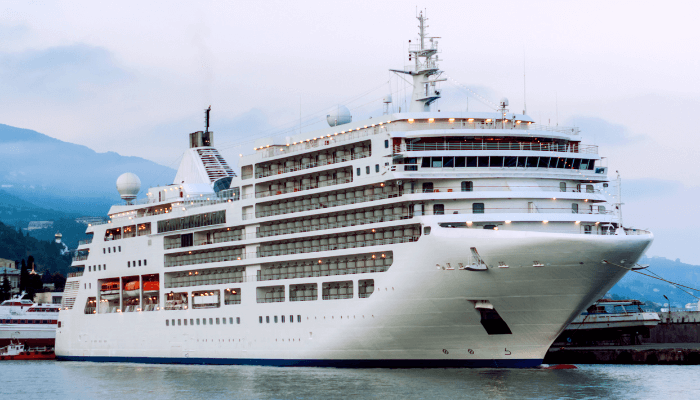
The keel-laying ceremony was held at the Ancona shipyard for “Seven Seas Grandeur”, the third luxury cruise ship that Fincantieri is building for Regent Seven Seas Cruises, the brand of the Norwegian Cruise Line Holdings Ltd. The delivery is scheduled for 2023.

During the ceremony three custom-minted coins have been placed onto the keel of the ship, each one representing one of the sister ships: “Seven Seas Explorer”, “Seven Seas Splendor” and “Seven Seas Grandeur”. The coins for the two vessels, delivered at the Sestri Ponente (Genova) shipyard in 2016 and Ancona shipyard in 2020, are replicas of those that were placed on respective vessels, while the new coin includes the cruise line’s 30th-anniversary logo.

Seven Seas Grandeur
Image for representation purpose only
Like the first two vessels of her class “Seven Seas Grandeur” will be 55,500 gross tons with accommodation for only 732 passengers, with among the highest staff-to-guest ratio in the industry. She will be built using the very latest in environmental protection technologies, while the interiors will be particularly sophisticated, with every attention paid to passenger comfort.

Source:https://www.marineinsight.com/shipping-news/work-starts-in-ancona-dry-dock-on-the-luxury-cruise-ship-seven-seas-grandeur/

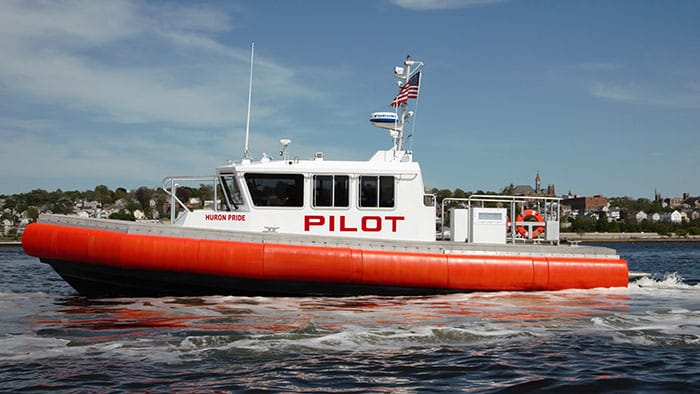
Gladding-Hearn Shipbuilding, Duclos Corporation, has delivered a new pilot boat to the Lake Pilots in Port Huron, Mich., by road transport. The Resilient Class high-speed launch is the pilots’ third boat built by the Somerset, Mass., shipyard since 1979.

Designed by Ray Hunt Design, the waterjet-driven, all-aluminum launch measures 42.5 feet long overall. It has a 14-foot beam and a 2.5-foot shoal draft. The deep-V hull features a steep 24-degree dead-rise at the transom that increases to a very fine entry forward. The perimeter of the launch is fitted with a large foam-collar fendering system. A flat chine and multiple spray-rails provide an efficient running surface and deflect spray away from the collar to produce a dryer ride and reduce collar maintenance. A heavy-duty pipe guard is installed across the transom, along with a platform above the launch’s waterjets.

The boat is powered by twin Cummins QSL-9 diesel engines, which are fully accessible through large lift-assisted deck hatches. The engines, each rated at 450 bhp, at 2100 rpm, turn a pair of HamiltonJet HJ-322 waterjets through Twin Disc gearboxes. Fuel capacity is 300 gallons. A Zipwake interceptor auto trim-control system will be installed on the transom. Top speed is over 37 knots.

“The vessel is an excellent summer complement to the Lake Pilots’ 53- foot Chesapeake Class, burning half the fuel at higher speeds,” said Gladding-Hearn co-president Peter Duclos.

An aluminum pilothouse on a flush deck, with forward-leaning front windows, is set aft of amidships with 18-inch walk-around side decks. Access to the pilothouse is through the aft hinged door. The pilothouse has five Llebroc Stalker XT seats – four pilot seats and one helm seat – and a control console with instruments and controls. A Porta Potty is installed in the forecastle. The launch is outfitted entirely with LED lighting.

The Lake Pilots’ pilot boat is the fourth of the Resilient Class built since its introduction in 2005. The three previous vessels, operating in Texas, Virginia and South Carolina, combined have more than 45,000 operating hours of continuous service, according to Gladding-Hearn officials.

Gladding-Hearn built pilot launch is protected by foam collar fendering
The perimeter of the launch is fitted with a large foam-collar fendering system.

Every summer, ferries transport crowds of visitors between islands in the Swedish archipelago. With the help of a new AI platform, each ferry can now reduce its fuel consumption by 10-25 percent, which contributes to a significant reduction in CO2 emissions. This is according to the results from long-term testing.
A ferry’s fuel consumption can vary by as much as 60 percent while travelling the same route, and one of the most affecting factors is how the captain drives. Cetasol’s new digital platform iHelm, initially developed together with Semcon, uses AI to allow each captain to save large amounts of fuel.
“Cetasol’s platform is a great example of how AI can make a difference in the transition to a more sustainable planet. The platform also offers the same potential for energy efficiency in future electric or even automated operations. I’m grateful that we at Semcon have contributed to the early stages of this project” says Magnus Carlsson, Area Manager Software & Emerging Tech at Semcon.
Semcon has supported Cetasol from initial idea to final implementation of the prototype solution with expertise in software and AI, hardware, IoT and UX. The iHelm platform has then been further developed by Cetasol into a commercial product.
More efficient ferry traffic
Since January 2020, the platform has been tested to streamline ferry traffic in the Gothenburg archipelago, as well as other places worldwide. In the case of the ferry on the Swedish west coast, the captains have been able to save on average 17% fuel by changing their driving patterns. Further savings are expected ahead as the AI learns and improves over time. For further information see the IDTechEx report on Electric Leisure & Sea-going Boats and Ships 2021-2040.
“The current platform processes large amounts of data from different sources, such as driving patterns from experienced captains, weather data, GPS positioning and ocean currents. Based on all this data it delivers ‘actionable insights’ that show the captain how to drive as energy-efficiently as possible,” says Ethan Faghani, CEO at Cetasol.
About Cetasol
Cetasol is a Gothenburg-based start-up company that focuses on sustainability in the marine sector. The company offers data-driven software solutions for sustainability with AI-powered energy optimization solutions for marine-commercial vessels. Read more about Cetasol.
Semcon has long experience and expertise within machine learning and deep learning in several different industries. Read more about Semcon’s AI expertise.
Semcon is an international technology company. We turn technology into excellent user experiences by combining digital edge and engineering expertise. With diverse multi-disciplinary teams we add new perspectives creating sustainable and competitive businesses. Regardless if you aim to recharge a current product or service, reinvent new technology or reimagine future needs, our focus is always on human needs and behaviour in order to develop solutions with the clearest benefits to people and our planet. By combining our 40 years of advanced engineering, strategic innovation, digital services and product information solutions, we drive transformation in a wide range of industries with more than 2,000 dedicated employees based in seven different countries. Read more on www.semcon.com External Link
Source and top image: Cision

Seagulls, according to Andy Stanford-Clark, are smiling. They are a significant obstacle from an image-processing perspective. But they are not a threat at all. In fact, you can completely ignore them.

The chief technology officer for IBM in the United Kingdom and Ireland was exuding panic. It was the afternoon before the morning when IBM”s Mayflower Autonomous Ship was set to begin its journey from Plymouth, England. to Cape Cod, Massachusetts, staffed solely by IBMs A.I. and is owned by a non-profit ocean research company ProMare. It carries a crewless, fully autonomous trimaran for years, alongside a worldwide consortium of other partners.Now, after countless tests and

Seagulls were a false alarm from an image-recognition perspective because they looked like huge wonged obstacles that needed to be avoided at all costs. However, they were also a problem given the Mayflower”s ability to completely ignore against its obstacles-avoiding instincts.

The challenge of sailing a ship autonomously isn”t the same as running an autonomous vehicle. It involves driving down predefined streets, while observing other vehicles, buses, cyclists, and pedestrians at high speed. In the open ocean, lanes are larger, and events occur far more slowly (although turning circles and stopping distance are also significant worse).

There is a big challenge here: The Mayflower Autonomous Ship will be doing its three-week autonomous crossing, which commenced June 15, with zero in the way of human interference. The course is being carried out autonomously. However, any deviation from the ship”s response to weather conditions to avoid water hazards greater than a seagull, according to IBMs A.I. and automation techniques. Any major mechanical failure (all too easy when youre sloshing around in the open ocean) and suddenly one of the world

For people like Stanford-Clark, it”s a source of worry. For curious onlookers, who can tune in to watch every step of the Mayflower Autonomous Ships progress through a livestream dashboard developedby IBM iX the company”s digital agency its just another component of the intrepid adventuring fun.

Alone together

Patrice ONeal once stated that he liked to go alone, but not be lonely. The Mayflower is undertaking its cross-ocean voyage solo, but fans from around the world may watch it. IBM”s MAS400 dashboard gives you the option to get a livestream from the boats onboard cameras. There are six cameras in all, and these are in and out to provide a few of the ships” surroundings.

Livestreaming will not be a big deal in 2021, but it is so commonplace that we will not stop worrying about it. However, livestreaming from the middle of the ocean is quite different from livestreaming from your backyard.

According to Stanford-Clark, people say once you get more than a few miles offshore, there is no cell phone signal. Then all bets are off. From that point on, all solutions are very costly and low bandwidth.

Low bandwidth might be equivalent to a YouTube video that requires a few seconds to load on 360p. However, there is still room for improvement. This feed is then then transcoded in real time with ultralow bit rate encoding techniques to allow it to be transmitted in a bandwidth that, at times, can be as low as 6kbps. That is, in turn, the low bandwidths are due to satellite connectivity, which at best passes at 200kbps and also has to include the telemetry data.

ProMareand IBM and Videosoft, a company that specializes in producing the technology that permits livestreaming in extremely challenging environments with minimal bandwidth. According to Stewart McCone, the CEO of Videosoft, are partnering with Digital Trends.

In cases in which such a high-bandwidth video dropout might be fatal, Videosoft has long developed algorithms and other tools. This includes clients such as the police and the military. The company”s technology is capable of not only stream in low-bandwidth situations, but also to automatically adapt to available bandwidth to encode and transmit it at the highest possible quality.

McCone said he would combine the main challenge of streaming video from the middle of the ocean to using space. It”s a very, very, very similar challenge.

It”s also harder to get a video from a Mars rover in real time due to the distances involved, but the footage is expected to be live with a latency of two weeks at worst, negating the ability to do slow data transfers at a higher quality.

Capturing the public imagination

The Mayflower Autonomous Ship, on the other hand, is IBM”s first bold televised challenge. Its 1997 and the Deep Blue series of chess matches with grandmaster Garry Kasparov captured the public”s imagination more than any other public A.I. demonstration of the last century. This century, the 2011 Jeopardy! showdown between question-answering A.I. Watson and show winners Brad Rutter and Ken Jennings, which has produced the highest audience numbers in over half

Will the ProMares robot ship be a similar triumph of A.I. as both of those previous milestones? Or will it tosputter to a halt somewhere in the middle of the ocean? Whatever happens, thanks to IBM”s dashboard and some very smart compression technology, you”ll be able to tune in to follow along.

Source: https://techmarmot.com/article/23833/the-ibms-a-i-mayflower-ship-is-crossing-the-atlantic-and-you-can-watch-it-live/
Avikus, a subsidiary of HD Hyundai, has successfully carried out autonomous navigation of a large ship across the ocean, becoming the first company in the world to accomplish such a feat. Together with SK Shipping, Avikus, which specializes in autonomous navigation, announced on June 2 that it had successfully completed autonomous navigation of Prism Courage, a 180,000 square-meter-class ultra-large LNG carrier. The vessel is equipped with HiNAS 2.0, Avikus’ Level 2 autonomous navigation solution. This transoceanic voyage is the world’s first case of a vessel using autonomous navigation technology.
The Prism Courage departed from the Freeport on the southern coast of the Gulf of Mexico on May 1, passed through the Panama Canal, and finally arrived at the Boryeong LNG Terminal in South Chungcheong Province in Korea after 33 days. The vessel sailed half of roughly 20,000 kilometers in total distance with the autonomous navigation technology HiNAS 2.0.
Avikus’ HiNAS 2.0 is the navigation system that creates optimal routes and speeds based on Hyundai Global Service’s Integrated Smartship Solution (ISS). Its artificial intelligence recognizes the surrounding environment, such as weather and wave heights, and nearby ships, and then controls the vessel’s steering commands in real-time. The Level 2 autonomous navigation technology can control and operate the ship in addition to the functions of recognition and judgment (Level 1 autonomous navigation technology). For further information see the IDTechEx report on Electric Leisure & Sea-going Boats and Ships 2021-2040.
In this ocean crossing, the Prism Courage equipped with HiNAS 2.0 was operated autonomously on the optimal routes, increasing the fuel efficiency by around 7 percent while reducing greenhouse gas emissions by about 5 percent. Also, the system accurately recognized the locations of nearby ships during operation to avoid collision about 100 times.
This voyage was conducted under real-time monitoring of the American Bureau of Shipping (ABS) and the Korea Register of Shipping (KR) to verify the performance and stability of the technology. Avikus plans to commercialize HiNAS 2.0 within this year after receiving a certification from ABS for the results of this self-propelled ocean crossing.
Autonomous navigation technology is drawing attention as an innovative technology for future maritime mobility because it can solve workforce shortages in the maritime transportation industry, reduce pollutants, and improve safety by completely removing the possibility of human errors.
According to Acute Market Reports, a global market research firm, the autonomous navigation ships and related equipment market is expected to grow at an average annual rate of 12.6 percent, reaching USD 235.7 billion in 2028.
Captain Young-hoon Koh of the Prism Courage said, “Avikus’ autonomous navigation technology was greatly helpful in this ocean-crossing test especially for maintaining navigating routes, autonomously changing directions, and avoiding nearby ships, which were all increasing ship crews’ work conveniences.”
Avikus CEO Do-hyeong Lim said, “It is meaningful that we have successfully tested the Level 2 system to operate a vessel beyond the Level 1 technology providing optimal routes.” He added, “We will lead innovation by upgrading autonomous navigation solutions not only for large merchant ships but also for small leisure boats.”
Avikus was launched in December 2020 as the first in-house venture of Hyundai Heavy Industries Group. It succeeded in conducting the first fully autonomous operation of a 12-seater cruise ship in Korea, and is now redoubling its efforts to advance autonomous navigation technology before others by, for instance, cooperating with ABS for step-by-step basic certification of ship autonomous navigation technology.
Source and top image: HD Hyundai

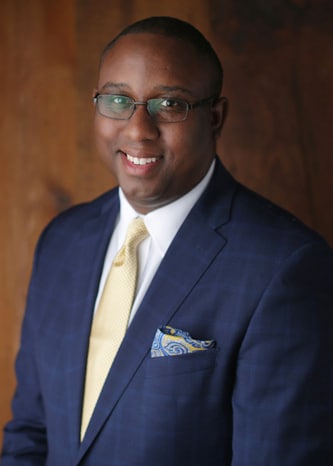
Paul Matthews took over as the new executive director of the Port of South Louisiana this past January. Matthews replaces long-time Executive Director Paul Aucoin, who served the port for over eight years and led the organization through record growth. He is the first African American port director in the history of the state of Louisiana.

Paul Matthews

Matthews has several years of port experience in the Gulf region. Prior to joining the Port of South Louisiana, Matthews served as deputy port director at Plaquemines Port Harbor and Terminal District. He joined Plaquemines Port in 2017 after serving as the community affairs manager at the Port of New Orleans.

As deputy director, he helped negotiate multi-million-dollar terminal leases and facilitated the development of a private-public partnership to expand rail service at the Plaquemines Port. He also assisted in securing millions of dollars of federal port security and dredging funds and was involved in attracting grants for critical port infrastructure projects among so many other things.

When he took over at the port, Matthews said that he looks forward to leading the Port of South Louisiana by maintaining so many of the port’s successes and growth through focus on infrastructure, agriculture and the energy transition. Here’s what else he had to say in a Marine Log exclusive:

Marine Log (ML): Prior to your designation as the Port of South Louisiana’s new executive director, you held roles at Plaquemines Port Harbor and Terminal District and at the Port of New Orleans. Can you tell us a bit about those roles and what you learned that you plan to keep in mind as you lead the Port of South Louisiana?

Paul Matthews (PM): During my tenure at the Plaquemines Port, I helped negotiate multi-million-dollar terminal leases and facilitated a private-public partnership to expand rail service. I also assisted in securing millions of dollars of federal funds for port security and dredging, and was involved in attracting grants for critical port infrastructure projects. As I spent more time at Louisiana ports, I quickly realized that community outreach was lacking. The people knew there were ports but didn’t know exactly where they were or what they did. I spearheaded a community outreach plan to bring awareness to our maritime operations and have continued to advocate for the connection between residents, industry and the actual ports. I’m likely the only individual to have spent time working at three ports in the same region. I plan to use the perspective I gained from working at those ports with great leaders as I work with my team at the Port of South Louisiana. Regionalism is necessary for us to all achieve our full potential in the maritime industry.

ML: How did you get your start with ports? Is it a career path that you saw coming or did you happen into it like so many of us?

PM: I began my journey in the port industry in 2012, when I joined the Port of New Orleans to spearhead community affairs. My efforts led to engaging more than 6,000 civic, business, academic leaders, and local, state, and federal elected delegations with maritime-related issues, such as economic and workforce development and infrastructure improvement.

I think if it hadn’t been for the advice and mentorship of then-executive director, Gary LaGrange, a career in the maritime industry would not have been on my radar.

ML: As many of our readers know, Paul Aucoin is your predecessor. Have you had the chance to talk to him about your role and was there anything valuable he instilled in you in preparation for you taking over?

PM: I know I have big shoes to fill as executive director of the Port of South Louisiana. Paul Aucoin’s accomplishments and the impact of the port on the regional and national economy are inarguable. His advice was simple: acknowledge short-term and long-term challenges, establish goals, formulate a plan while leaving room for adjustment, rely on your staff, and understand the board. Paul helped to continue the Port of South Louisiana’s success. My approach will be different, but no les impactful, of course.

ML: The Port of South Louisiana is one of the country’s largest tonnage ports. What’s going on at the port that our readers might find of interest? Any new expansions or projects in the works?

PM: Transportation is our business. We are truly multimodal, with access to land, air, road and rail. We’ve been focused on upgrading the road aspect and taking advantage of some of the federal funding available.

Infrastructure improvements to our Globalplex Intermodal Terminal include:

  • Installation of two Konecranes Gottwald Model 6 Portal Harbor Cranes that will expand our cargo capacity to help win back tonnage and help with mid-streaming frequency and speed;
  • Reinforcement of the dock that will increase weight limit and improve truck capacity;
  • Internal roadway improvements to help ease use of our facilities; and
  • Second access bridge to improve ingress/egress to our dock.

Additionally, we are supporting the following regional infrastructure, transportation projects:

  • I-310/U.S. 90 corridor and improvements, which will upgrade 160 miles of U.S. 90 to interstate standards;
  • Widening of LA 3127 that will convert the roadway from a two- to a four-lane highway;
  • Installation of I-10/Reserve interchange that would provide a direct access to I-10 from Reserve, alleviating traffic in LaPlace and Gramercy; and
  • Extension of runway at PSL’s Executive Regional Airport from 5,100 to 6,500 feet to accommodate larger corporate and eventually cargo aircraft.

ML: A hot topic at the moment is sustainability and greening maritime operations. Is the port tackling some of these green hurdles to become a more sustainable operation? If so, can you tell us more about that?

PM: We are poised to assist existing industry in making attractive energy transitions, including the introduction of alternate fuel for modern vessels.

We also support the initiative of green fuels/carbon capture. Wind and solar also play a part in making renewable energy successful for all. Our existing industry has already begun to try new ideas to speak to the green movement and we are prepared to help in any way we can.

Source: https://www.marinelog.com/inland-coastal/inland/ceo-spotlight-matthews-take-the-helm-at-port-of-south-louisiana/


The London P&I Club has released new operational guidance for carrying and securing non-standardised cargo during transportation in a bid to reduce stowage risks and the number of serious accidents that have occurred as a result of inadequate securing arrangements.

The new guidance, entitled ‘Reducing the Risk of Damage to or Loss of Non-Standardized Cargo’, was released on 13 July 2022 and produced in collaboration with TMC Marine and Bureau Veritas.

The document provides general guidance and practical advice to crew, ship owners, operators, charters and  managers on the risks associated with safely stowing and securing non-standarised cargo, as well as precautions to reduce and prevent these risks. The London P&I Club stresses that it is not intended to replace official regulations and guidance notes or any document that forms part of a vessel’s Safety Management System, including the cargo securing manual.

According to the guidance, cargoes that have proven to be a potential source of danger due to inadequate stowage methods include portable tanks and receptacles, special wheel-based vehicles such as locomotives or mining equipment, wind farm components such as towers and blades, and offshore mooring equipment.

Carl Durow, Loss Prevention Manager at The London P&I Club, said: “Ships carrying non-standardised cargo face an increased risk of loss or damage during transit due to the infrequent nature of such cargo. General carriers may lack the experience in securing different loads.”

“We wanted to highlight effective methods that crews can take to ensure that cargo is secured properly, reducing the risks of liability related to damaged or lost goods, damage to the vessel itself or the safety of crew members or other ships at sea.”

Inadequate securing arrangements for non-standardised cargo can lead to injury and loss of life, not only at sea but during loading and unloading. In addition, forces arising from wind and sea motions during transit can put the cargo and the vessel at risk due to acceleration and transverse motions.

Charterers should ensure that their vessel is fit for purpose, while shop owners and operators should only tender suitable vessels for specific cargoes. The London P&I Club guidance noted that appropriate precautions should also be taken for cargo with abnormal physical dimensions to ensure that no structural damage to the ship occurs and to maintain adequate stability throughout the voyage.

The London P&I Club recommends that an independent cargo securing survey be carried out when carrying non-standarised cargo in order to ensure that effective stowage methods have been applied. The guidance also recommends that the cargo surveyor liaise with the Master, Chief Officer and stevedores during the survey, and that a full report with photographs is produced prior to transit.

Ian Barr, Director at The London P&I Club, said: “We are always looking to ensure that our members have the guidance and expertise to be able to securely stow any cargo.”

“At The London P&I Club, we have the knowledge and experience to be able to provide best practices for all cargo stowage incidents, including securing non-standarised cargo. This guidance is the latest example of how we work closely with our members to provide that expertise.”

Source: https://www.seanews.co.uk/shipping-news/the-london-pi-club-has-published-new-guidelines-to-decrease-cargo-loss-and-responsibility-claims/


Fosnavaag, Norway, headquartered Olympic Subsea ASA has placed a firm contract with Ulstein Verft for two offshore wind Construction Service Operation Vessels (CSOVs). Deliveries are planned for the spring and summer of 2024 and the contract includes options for two further vessels.

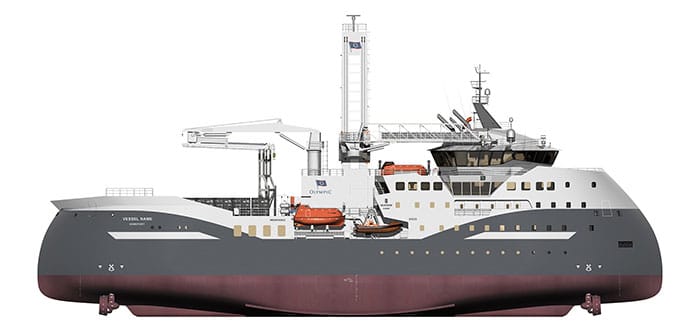
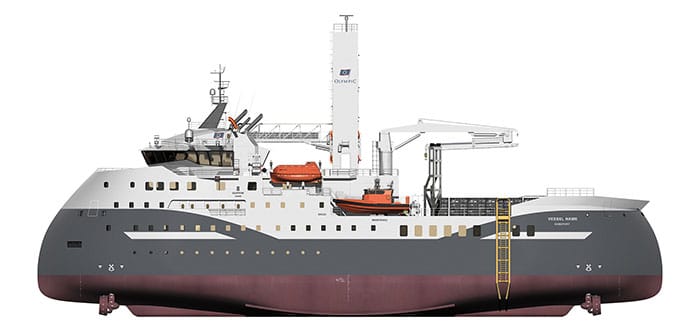
The CSOVs are being built to the Ulstein Design & Solutions SX222 design with a Twin X stern. With a length of 89.6 meters and a beam of 19.2 meters, they will accommodate 126 people in 91 cabins.

The vessels are prepared for future requirements at offshore wind farms and will have a variable speed diesel-electric propulsion system in combination with large battery energy storage systems. They will be prepared for methanol fuel and have available space for additional battery capacity for full-electric repowering when the necessary infrastructure is available.

CSOV 'in air"
Starboard view of CSOV [Image Ulstein]
Portside view of CSOV [Image: Ulstein]

The hull shape and hybrid propulsion system are designed to deliver high operational performances and seakeeping with a substantially reduced environmental footprint.

LONG-TIME CUSTOMER

An important player in the maritime cluster on the northwest coast of Norway, Olympic has previously built six vessels at Ulstein Verft and was the first customer of Ulstein Design & Solutions.

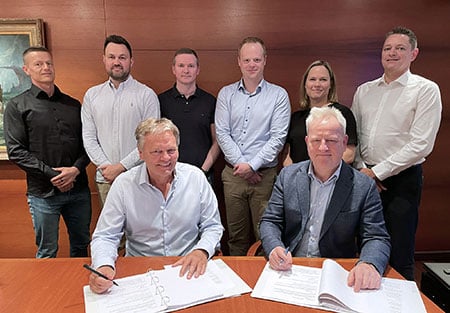
CSOV contract signing
L to R: Stig Remøy (Olympic), Lars Lühr Olsen (Ulstein Verft). Second row from left: Karl Eirik Frøysa Hansen (CFO Olympic), Glenn Erik Valø (CCO Olympic), Frode Andreassen (VP commercial renewables, Olympic), Marius Bergseth (COO Olympic), Ingvill Saunes (general counsel Ulstein), Kolbjørn Moldskred (sales manager Ulstein Verft). [Photo: Ulstein]

“For us, it will be crucial that the vessels are delivered on time and at the right quality, and this is what Ulstein Verft is known for,” said Olympic Group CEO Stig Remøy. “This means we can meet our customers’ demands and get the vessels into operation at the agreed time. The Twin X stern is a smart concept, optimized for low energy consumption. During operation, the offshore wind service vessels stay positioned at the turbines most of the time, and with the main propellers fore and aft, these vessels will reduce the energy requirement to a new level when on DP.”

“We are excited to be working with Olympic again, an important and innovative player in the Norwegian maritime cluster and a company that we have had the pleasure of working with for many years, through many complex and successful projects,” said Ulstein Group CEO Cathrine Kristiseter Marti. “With the current challenging economic and political climate, these contracts are a result of a pragmatic and good cooperation between the parties, where both parties have gone to great lengths to find good and viable solutions.”

“We have cooperated closely with Olympic in the details of this project and are very eager to start the newbuild project,” said Lars Lühr Olsen, managing director of Ulstein Verft. “We are very happy for the trust Olympic has placed in us and will do our utmost to deliver the vessels according to the agreed quality and timeline. The vessels are planned for delivery during spring and summer 2024.”

The contracts for the CSOVs are also an important milestone for Ulstein Power & Control AS, which is contracted to deliver an extended power and automation package, including a large battery supply, for the vessels.

CSOV with Twin X stern
CSOVs feature Ulstein Twin X stern [Image: Ulstein]

Korean Register (KR) has signed a Memorandum of Understanding (MOU) with KLCSM and Samsung Heavy Industries (SHI) to jointly research and approve the application of autonomous navigation systems for mid- to large-sized vessels.

The agreement, which was signed on 23 June at this year’s Korea Ocean Expo in Incheon, Korea, will accelerate the commercialization and international competitiveness of domestic autonomous ship equipment and technology by establishing an actual ship-based autonomous operating system that is jointly developed between domestic shipping companies, shipyards and KR.

The announcement comes as an increasing number of shipowners integrate artificial intelligence (AI), Internet of Things, Big Data and sensor systems into their vessels in order to assist vessel crews.

According to the MOU, SHI’s autonomous navigation system, known as the Samsung Autonomous Ship (SAS), will be applied to KLCSM’s fleet of operating ships to perform risk assessments, develop and certify cyber-security systems, and review the conformity of various agreements and standards for future domestic approval.

In addition, SHI will conduct a comprehensive collaboration for the commercialization of autonomous navigation systems through the certification of ship equipment and Marine Equipment Directive (MED) for Electronic Chart Display and Information System (ECDIS) modules.

“KR will provide technical support for this project in order to further the development and operation autonomous navigation systems,” said YEON Kyujin, Head of Plan Approval Center at KR.

“With this latest joint cooperation, more autonomous navigation systems will be successfully applied to ships, which will further increase the efficiency of ship management,” said KWON Ohgil, Managing Director of KLCSM.

“We also expect to improve vessel safety and improve the environment of ship operations amid a current shortage of sailors.”

KIM Hyunjo, Director of the Marine Shipbuilding Research Center of SHI, said:“SHI is focusing its capabilities on the research and development for the commercialization of autonomous navigation technologies for ocean and coastal navigation, including conducting practical ship operations based on the maritime demonstration of our own SAS autonomous navigation system.”

In addition to this MOU, KR has been building up its related classification certification performance and autonomous navigation ship technology by applying its rules, cyber-security certification and risk-based approval in accordance with its ‘Guidance for Autonomous Ships’ which was published in 2019.

Source: https://www.seanews.co.uk/shipping-news/kr-enters-into-a-mou-with-klcsm-shi-for-collaborative-work-on-autonomous-navigation-technologies/


Company DETAILS

SHIP IP LTD
VAT:BG 202572176
Rakovski STR.145
Sofia,
Bulgaria
Phone ( +359) 24929284
E-mail: sales(at)shipip.com

ISO 9001:2015 CERTIFIED