The meeting aims to unite efforts of the 17 Signatory States to enhance regional maritime security and protect international trade routes

Dubai, UAE: In line with its commitment to support the security and safety of the maritime industry, the UAE hosted the 2022 high-level workshop of the amended Djibouti Code of Conduct (DCoC) concerning the Repression of Piracy and Armed Robbery in the Western Indian Ocean and the Gulf of Aden area.

The workshop was held between 28 to 30 June 2022, at the Intercontinental Festival City hotel in Dubai. With the presence of H.E. Eng. Suhail Al Mazrouei, the UAE Minister of Energy and Infrastructure. The workshop witnessed the presence of around 80 officials, including ministers, representing 17 countries. There were also representatives from ‘Friends of DCoC’ which includes international agencies and countries including France and the USA were present.

The latest amendment of the Djibouti Code of Conduct was adopted at the 2017 Jeddah meeting by countries in the Western Indian Ocean and the Gulf of Aden area.

This Code of Conduct is a major agreement in combating piracy and armed robbery against ships sailing in the region’s waters.

The Jeddah Amendment, which was developed from the initial version of the DCoC, covers measures to tackle a range of illicit activities, including piracy, arms trafficking, trafficking in narcotics, illegal trade in wildlife, illegal oil bunkering, crude oil theft, human trafficking, human smuggling, and illegal dumping of toxic waste in regional and international waters in the region.

Strategy to Support Maritime Security

Commenting on this significant meeting, H.E. Hassan Mohammed Juma Al-Mansouri, Undersecretary for Infrastructure and Transport Affairs at the Ministry of Energy and Infrastructure, said: “The UAE is a leading global maritime hub with the maritime economy exceeding AED 90 billion annually. Over 25,000 commercial ships call the UAE ports every year, making it a gate to the entire region. Maritime security is a key factor to sustain economic growth. Without it, the region’s countries will face major challenges. The UAE abides by all international initiatives that aim to enhance our maritime security and suppress all forms of illegal activities. We dedicate our maritime capabilities, resources and expertise to ensure that the region is free from criminal acts and abuses against humans, the environment and the wildlife.”

Al-Mansouri added: “Just as all oceans and seas around the world are connected as one large body of water, the security and the safety of ships and maritime routes are also connected, especially within the Arabian Gulf and the Western Indian Ocean region. This area has the largest energy reserves in the world as well as the most important straits and international trade routes. Affecting the maritime security of the region will have negative impacts on the global economy as a whole. That’s why, this meeting of the signatory states on the DCoC, which is hosted by us in the UAE, is significant for enhancing maritime safety worldwide.”

The Jeddah Amendment was signed by 17 countries. These are the UAE, Saudi Arabia, the Sultanate of Oman, Jordan, Yemen, Comoros, Djibouti, Ethiopia, Kenya, Madagascar, the Maldives, Mauritius, Mozambique, Seychelles, Somalia, South Africa and Tanzania.

Overarching regional framework

H.E. Sheikh Nasser Al Qasimi, Assistant Under-Secretary for Infrastructure and Transport Regulation at the Ministry of Energy and Infrastructure in the UAE, said: “Over the years, the emended DCoC has evolved from a piracy-centric cooperation framework into a comprehensive forum that addresses maritime security from a comprehensive perspective. Last year, the signatory states made great efforts to implement the planned Information Sharing Network and regionally prioritised Capacity Building Matrix to address the changing maritime security conditions in the Western Indian Ocean and the Gulf of Aden. The DCoC was further supported by the International Partners through the Friends of the Djibouti Code of Conduct to be able to collaborate in providing assistance based on the needs of the Signatory States. Today, we consolidate this cooperation, building on the previous efforts, in order to achieve the highest levels of maritime safety and security in this vital region of the world.”

Source: https://www.zawya.com/en/press-release/companies-news/uae-hosts-the-2022-high-level-meeting-of-the-amended-djibouti-code-of-conduct-legtn2zo


Ship owners have sped up their newbuilding contracting activity, opting for more modern tonnage. In its latest weekly report, shipbroker Allied Shipbroking said that “the impressive performance of the newbuilding market continued for yet another week. A large part of the buying interest continues to focus for yet another week on gas carriers and more specifically LNG units, as we are still seeing a flow of orders being made on behalf of the major Qatar LNG Project that is in the works. It seems that the good feeling that exists for this sector, the positive freight rates as well as the desire to secure energy supply amidst the current global energy crisis that has emerged has increased investor appetite for these projects and in turn the number newbuilding projects that are taking shape. On the shipbuilders’ front, the lion share has been taken up by South Korean shipyards which traditionally have the higher expertise, know-how and track record for these type of vessels, though if appetite remains high for much longer, we are likely to see an overspill across to other shipbuilders as well. We have also seen a strong buying appetite hold for containership units, as earnings are still holding at record highs, while despite the lacklustre earnings performance noted in tankers, the recent freight market recovery has triggered an increase in buying interest and a fair flow of new orders this past week”


Source: Allied Shipbroking

Banchero Costa added in its report this week that “whilst still satisfactory there is a slowing of orders for larger tonnage. Big concern for the New buindings with delivery after 3 years. This week Capital Gas Greece ordered 2 x 174,000 cu.m LNG Carriers at Hyundai Samho for delivery Jan/March 2026 at a level of $240 mln per unit. These are nearly $8 mln more than 2 other greeks controlled orders done few weeks back.

Source: banchero costa &c s.p.a

Knutsen NYK Offshore OAS booker 1 firm Suezmax Shuttle Tanker 154,000 dwt at Cosco Zhoushan for delivery 2024. No price emerged. Thenamaris added 2 more Aframax LR2 Product Carriers at Hyundai Vietnam for dely mid-2025. Total 15 ships on order in Vietnam from Thenamaris, all product carriers except 4 Bulkers ordered recently”.

Meanwhile, in the S&P Market, Allied said that “on the dry bulk side, it was a rather mediocre week in terms of activity taking place, given the relatively fewer number of units changing hands. This, on the other hand, came slightly attuned with the recent downward pressure noted from the side of earnings, with many interested parties appearing to have held back interest for the time being, hoping to get a better perspective of the true market direction at play right now.

Source: Allied Shipbroking

Especially in the bigger size segments, SnP activity was sluggish, underlying the higher volatility noted. On the tanker side, the number of deals appeared stronger as of the past week. It is true that the recent incremental growth in freight rates has helped things heat up in the SnP market as well. However, given that it will take some time before any form of true market direction takes shape, we can not take this recent trend for granted. At this point, we see activity being skewed towards the MRs, relatively inline with the momentum noted in their freight rates”.

Source: banchero costa &c s.p.a

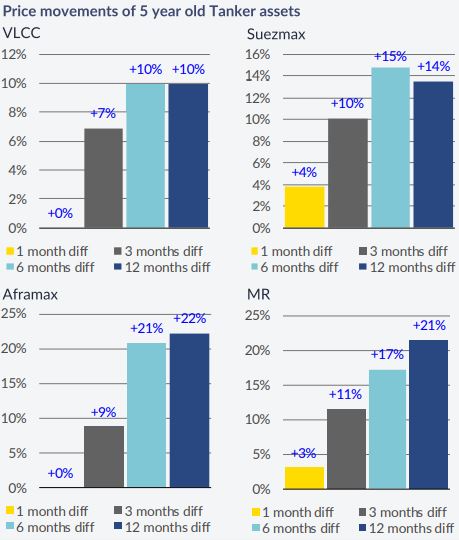
Banchero Costa commented that “after offers were invited the 16th of June Japanese controlled Panamax Lowlands Maine abt 77k blt 2005 Sasebo (SS: 03/2025 – DD: 01/2023, BWTS fitted) has been sold for $16 mln. Two weeks ago, Orient Prima and Beauty abt 76k blt 2005 Imabari were reported at $17 mln. Chinese buyers were behind purchase of Cardinal abt 55k blt 2004 Oshima (SS due July 2024 DD due June 2022 BWTS fitted) at $15.8 mln. Open hatch boxed handysize Ionian Spire abt 32k blt 2008 Kanda (SS due 2026 DD due 2024 BWTS fitted OHBS) has been sold at $17 mln to Turkish buyers. In the tanker market, Greek owners have sold their “Maran Sagitta” abt 105 k dwt blt 2009 Hyundai for $27.6 mln to c. of Performance Shipping. Furthermore, Suezmax Storviken abt 152k blt 2006 Samsung (CAP 1 SS due 2026 and BWTS fitted) was purchased by Greek buyers at $23.5 mln”, the shipbroker concluded.
Nikos Roussanoglou, Hellenic Shipping News Worldwide


National Security Advisor Ajit Doval

NEW DELHI: National Security Advisor (NSA) Ajit Doval on Thursday referred to as for seamless coordination amongst numerous companies concerned in the nation’s maritime safety equipment.
In an handle on the first assembly of the MultiAgency Maritime Security Group (MAMSG), Doval mentioned the companies and stakeholders in the maritime sphere must coordinate in sync with India’s general strategy of progress and improvement.
In view of geopolitical developments, seas have develop into way more necessary, he mentioned.
The assembly was chaired by the National Maritime Security Coordinator Vice Admiral (retd) G Ashok Kumar.
Kumar assumed cost because the nation’s first National Maritime Security Coordinator on February 16 this yr.
The assembly was attended by senior officers from key central authorities ministries, companies and safety forces coping with maritime affairs.
Maritime safety coordinators from 13 coastal states and Union Territories additionally attended it.
In a serious determination to reform coordination of maritime safety affairs on the apex degree, the Union Cabinet in November final authorized creation of the put up of NMSC, underneath the NSA, on the National Security Council Secretariat.
This initiative was supposed to make sure a seamless strategy to India’s maritime safety chopping throughout geographical and purposeful domains.
At the inaugural assembly, a quantity of essential coverage points on maritime safety have been taken up, together with mapping of present orders and insurance policies on maritime safety to determine gaps, evaluate of customary working procedures for maritime contingencies, safety of ports and coastal infrastructure and creation of a nationwide maritime database, officers mentioned
The MAMSG is envisaged to offer a standing and efficient mechanism to make sure coordination of all facets of maritime safety together with coastal and offshore safety, in addition to fill the technological and operational gaps in assembly current and future safety challenges.
The assembly is anticipated to handle maritime contingencies requiring an pressing and coordinated response.

Source: https://www.pehalnews.in/stakeholders-in-maritime-sphere-must-coordinate-nsa-doval-india-news-times-of-india/2181651/


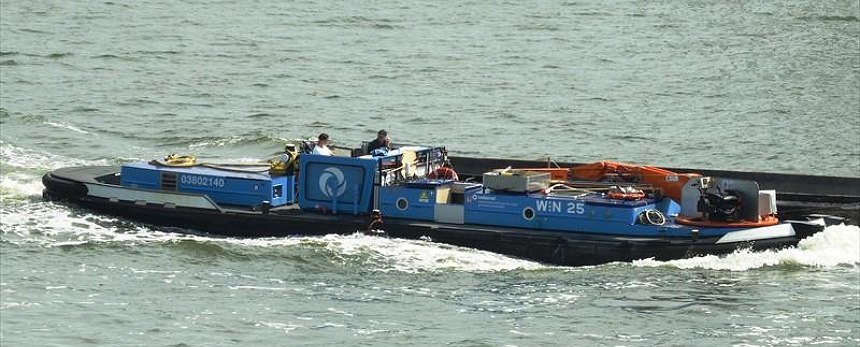
Damen Shipyards Hardinxveld has delivered a new shallow-draught crane vessel to Waternet Amsterdam, the organisation responsible for delivering fresh water and associated management services to 1.3 million people in and around Amsterdam.

Named WN25, the versatile boat will be operated by the department within Waternet that is tasked with dredging and collection of floating debris. It is equipped to undertake a range of roles including detecting and removing rubbish and abandoned derelict boats, as well as towing and pushing barges when required.

The vessel has an LOA of 17.5 metres, a beam of 4.2 metres, and a draught of only 0.8 metres. It has been adapted to meet Waternet’s exact requirements with its hull shape modified to reduce the suction effect when sailing close to the side of a channel and through bridges.

WN25 with the wheelhouse lowered (Photo: MarineTraffic.com/William Hill)

To minimise emissions, the vessel has a hybrid propulsion system with lithium-ion batteries installed in a dedicated air-conditioned section and charged by an EU Stage V-certified engine. With a capacity of 138 kWh, the batteries deliver a maximum speed of eight knots and an endurance of 3.5 hours at 6.5 knots, plus a bollard pull of 2.1 tonnes.

In addition, the wheelhouse has been redesigned, allowing the cabin structure to be lowered in order to minimise the air draught, thus allowing safe passage underneath bridges and other low-hanging structures. Both the wheelhouse and the accommodation spaces are air-conditioned.

WN25 is the newest Damen-built vessel to join the fleet of Waternet. The same owner also operates a small fleet of Damen patrol vessels that were acquired in recent years.

Source: https://www.bairdmaritime.com/work-boat-world/small-craft-world/pollution-rubbish-cleanup/vessel-review-wn25-hybrid-crane-vessel-delivered-to-amsterdam-water-utility-company/


Van Ameyde Marine, the Netherlands-headquartered marine surveying, consultancy, and loss prevention group, has appointed Rob Chesters as its new Global Business Development Manager.

Based in the UK, Chesters has a remit to work with teams across group to develop a global strategy and service offering, with the aim of expanding the company’s international reach geographically and by market sector.

Chesters, who has more than twenty years’ business development experience in the maritime services sector, having held senior positions with Wilhelmsen Ships Service, joins Van Ameyde Marine from Oceanic Technical Solutions, where he worked with shipowners and managers to reduce their vessels’ impact on the marine environment.

Robert Chesters, Global Business Development Manager, Van Ameyde Marine, has a remit to work with teams across the Van Ameyde Marine group to expand the company’s international reach geographically and by market sector

Walter Dekkers, Managing Director Van Ameyde Marine, said: “We are delighted to welcome Robert to the Van Ameyde Marine family as we chart a new course in the company’s long and illustrious history. Rob has a track record shaping growth for maritime service companies and will work with business heads across the company’s marine division to strengthen our presence globally, initially with developments in Singapore and later looking at other geographical areas.

Robert Chesters, Global Business Development Manager, Van Ameyde Marine, said: “From maritime casualties, bunker quality issues, cargo damage, pollution, pandemics and crew welfare, climate changes, to the introduction of autonomous ships, renewables and alternative fuels and new types of cargo; the gamut of issues faced by the marine industry is huge.”

Van Ameyde Marine’s consultancy and surveying group embraces a family of four iconic heritage brands: Van Ameyde Krogius, Van Ameyde McAuslands, Van Ameyde Seasia and Van Ameyde Marine.

“With a global team of almost 100 in-house marine surveyors, engineers, scientists and experts across four historic business brands, Van Ameyde Marine is well placed to help shipowners, charterers, insurers, P&I Clubs, lawyers and government agencies around the world better manage the challenges presented by a maritime industry on the cusp of change.” Chesters said.

All of the companies in the Van Ameyde Marine group have a rich heritage and with Van Ameyde Krogius celebrating its 150th year, Chesters is looking forward to being a part of developing the company for the demands of the future and the digital age.

“These historic companies, each of which, over the course of many decades, has established a solid reputation as a quality, independent and objective technical consultancy, have been brought together to form the global Van Ameyde Marine group.

“I am excited to be working across the Van Ameyde Marine group to deliver a global strategy and service offering that meets the needs of our principals and customers globally,” said Chesters.
Source: Van Ameyde Marine

Source: https://www.hellenicshippingnews.com/van-ameyde-marine-set-for-global-expansion-with-chesters-appointment/


Since the start of the COVID-19 Pandemic, Southern California’s ports have bottlenecked the supply chain, resulting in suppliers waiting record amounts of time to receive shipments. In recent weeks, this trend has transferred to the rail freight system nationally bringing stark price increases and logistical problems that mirror the height of the pandemic.

Shifting Priorities and Dropping Margins:

This has suppliers from many sectors reevaluating their logistics. Lisa Leffler, Director of International Logistics for the Utah-based outdoor sporting goods company Black Diamond, told The Wall Street Journal the current state of backups has forced the brand to utilize truck-based shipping for some product lines.

This not only delays shipments but can also increase backend costs by thousands of dollars per load. “This is what we were doing at the beginning of congestion in 2021,” Leffler went on to say.

Expect Delays:

The congestion of intermodal logistics has significantly increased delays for long haul freight, as firms are unable to get goods to their own distribution centers – a worrying sign after the 22% increase in logistics costs observed in 2021. Combined with the highest inflation rates the U.S. has seen in decades, the raise in shipping costs is taking a toll on retailers.

Roughly 29,000 shipping containers awaiting were held at the Port of Los Angeles in June, which remains the gateway for production from Asia. Union Pacific Corp. and BNSF, the two railroads servicing the port, say that congestion has now reached freight-switching stations thousands of miles inland.

State of Domestic Supply Chains:

Seeing rail logistics revert to peak pandemic form has been difficult to deal with, after levels of backup systematically fell throughout the second half of 2021, showing the problem has yet to be solved – and this new trend has posed problems of its own.

“This push-pull is very difficult to deal with,” President of Gross Transportation consulting, Lawrence Gross, said particularly of railroads. “[We] don’t have much warning of what’s coming, and the changes are severe.”

While railroads are attempting to limit the number of containers they move out of Southern California, containers are observing 20% longer wait times at inland transfer stations found in areas like Chicago – levels that logistics and transportation executives don’t see as sustainable over time.

As Dan Bergman, CEO of TraPac LLC, a container terminal operator in the Port of Los Angeles says, “the numbers are not improving. At some point, we will run out of space.”

Source: https://www.morethanshipping.com/continued-backups-at-u-s-ports-threaten-rail-based-supply-chains-nationwide/


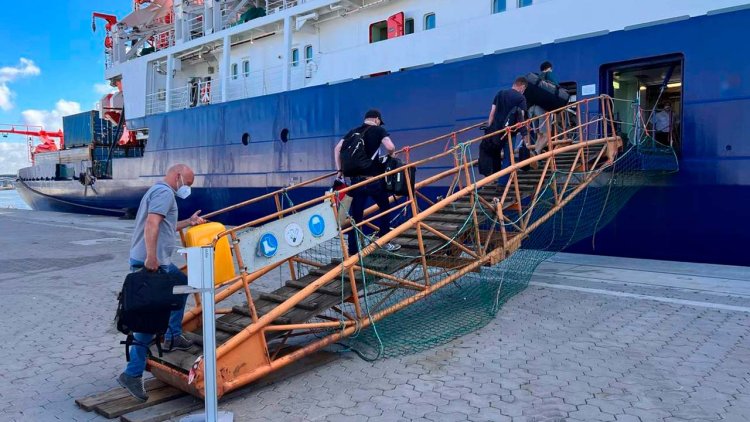
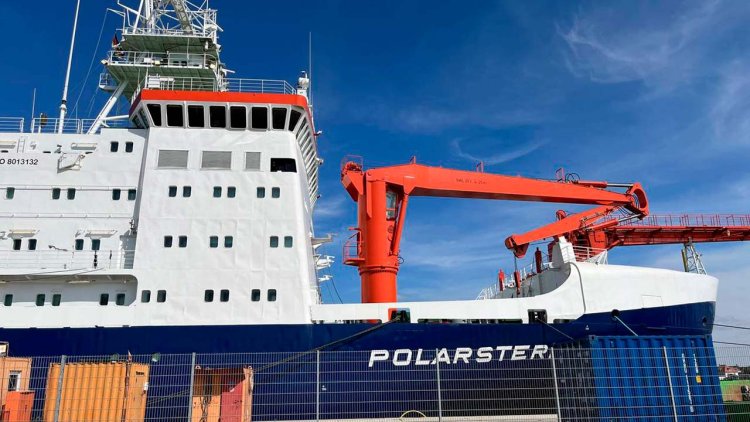
The research vessel Polarstern has departed on a seven-week-long voyage to the Arctic, where the onset of summer also marks the beginning of the annual sea-ice melting. 

Over the past 40 years, the summer sea-ice extent has decreased by 40 percent – making it one of the most visible impacts of climate change. In a process study to be conducted in the marginal ice zone, the team of researchers on board will investigate how heat fluxes and water layering in the ocean, as well as the characteristics of the ice, interact and influence melting. A further focus of the expedition will be on the warming produced by Atlantic Water circulation and its effects on marine glaciers in northeast Greenland.

From her home port in Bremerhaven, the Polarstern will set course for Fram Strait and the marginal ice zone north of Svalbard, where warm, nutrient-rich Atlantic Water flows into the Arctic Ocean. Closely monitoring energy and material flows in the marginal ice zone from the ship and from on ice floes is the goal of the team led by Prof Torsten Kanzow, expedition leader and a physical oceanographer at the Alfred Wegener Institute, Helmholtz Centre for Polar and Marine Research (AWI).

Kanzow explains:

“We will make transects from the open water into the dense sea ice and back. Along the way, we will gather a variety of physical, chemical and biological measurements in the marginal ice zone, which is especially productive and therefore especially interesting. The team will also venture onto the ice to take a closer look at the thickness and characteristics of the sea ice and measure ocean currents and eddies away from the ship. We’ll also deploy so-called gliders in the ocean, buoys on the ice and moorings on the seafloor, all of which will record valuable data for the next several years. Lastly, we’ll extend our research radius with helicopter flights, during which we’ll observe, for instance, the melt ponds on the ice.”

The study will be supplemented with atmospheric research, in which the characteristics and flows of aerosols and greenhouse gases in the atmospheric boundary layer, as well as the distribution of water vapour and clouds, will be evaluated. A further project is intended to show how oceanographic fronts, eddies and the ice edge itself, as well as sea-ice characteristics (melt ponds and light transmission), influence carbon export. In order to quantify the latter, the experts will assess the nutrient supply in the sunlit zone, as well as the distribution of phytoplankton and zooplankton (including jellyfish) and primary and net community production. This fieldwork in the marginal ice zone will help us to understand the impacts of climate change in the Arctic.

Another key target region for the expedition is northeast Greenland, where the team will investigate the ocean’s influences on marine glaciers. The two glaciers there (79 N Glacier and Zachariae Isstrom) are both characterised by ocean-driven ice loss and accelerated ice flows, making them contributors to sea-level rise.

Kanzow, who’s been pursuing research in the region since 2016, says:

“We plan to install moorings in order to gauge the sensitivity of ocean-driven glacier melting to changing environmental conditions.”

Accompanying geodetic-glaciological studies will be conducted on Greenland. On the one hand, they will assess how the solid ground is rising on extremely small scales, because it is still rebounding from the past weight of ice masses that melted after the last glacial maximum. On the other, they will explore temporal variations in supraglacial lakes; their drainage out to sea can have considerable effects on glacier flow speeds and glacier melting.

For the AWI’s time series dating back to 1997, the expedition team will also deploy measuring devices at the FRAM Observatory between Greenland and Svalbard. And farther to the north in the Arctic Ocean, new instruments will be deployed in the Aurora Vent Field, where they will continually record the seismic activity and physical characteristics of the local heated-water discharges (hydrothermal vents) for the next year. In mid-August, the Polarstern is slated to return to Bremerhaven, from where, following a nearly two-week break, she will depart again, this time bound for the Antarctic.

Source: https://seawanderer.org/polarstern-expedition-to-the-arctic-ice


When demand to transport cargo weakens, short-term rental rates decline for the ships that carry that cargo. When freight demand rises, lease rates rise. You can see this now in spot rates for supertankers moving crude oil from the Middle East and large bulkers moving iron ore to China (weak demand, low rates) and for product carriers moving diesel, gasoline and jet fuel (high demand, high spot rates).

You can’t see it in container shipping, though. At least, not yet.

The container freight market is awash in negative sentiment on import demand, yet short-term ship charter rates remain stratospherically high.

“The charter market is undeterred by the weaker sentiment across the global shipping industry and remains extremely strong,” affirmed data provider Alphaliner on Wednesday. “Charter rates continue to evolve at historic highs with, remarkably, some further gains achieved by certain sizes.” There is “a continued bonanza.”

Operators still hungry for ships

Alphaliner reported that BAL Container Line has just chartered the Northern Prelude (built in 2009, capacity: 4,600 twenty-foot equivalent units) for $160,000 per day for 40-60 days.

It also reported that Sinotrans has chartered the 2021-built, 2,743-TEU X-Press Mekong for $149,000 per day for 40-45 days. “This rate … is not far off the historical high of $175,000 per day [for that size category] obtained in January,” said Alphaliner.

Even the very smallest ships — in the sub-1,000-TEU category — “continue to generate staggering rates.” Ships with capacities of just 700-800 TEUs are being employed at $20,000-$30,000 per day. Most recently, SITC chartered the 2008-built, 724-TEU Atlantic Pioneer for $30,000 per day.

Why the disparity between the charter market and the freight market? Freight rates are off their peaks and still softening, yet they’re still extremely high — high enough for ship operators to generate profits even if they’re still paying sky-high charter rates.

According to Alphaliner, “The continued fall in spot rates on most major routes is obviously a concern, but they remain at historical highs for now, giving both NOOs [non-operating owners, the companies that lease ships to liners] and charterers confidence in short-term market prospects.”

For NOOs, “the short term remains bright.”

And despite medium- and long-term concerns on rising capacity given new ship deliveries in 2023-25, there are still multiyear charters being inked at very strong rates. Alphaliner reported that ocean carrier Zim (NYSE: ZIM) just chartered the 4,520-TEU, 2011-built sister ships Seaspan Chiba and Seaspan Kobe for five years at $43,000 per day.

No collapse in charter rates yet

Data from companies that track charter rates does not indicate a market collapse. On the contrary, it shows a market that’s holding at or near the high point.

Brokerage Harper Peterson & Co. publishes the Harpex index. The index (covering 700- to 8,500-TEU ships) peaked in mid-March, dipped slightly through April, held steady in May and began rising again this month. The Harpex is currently down 3% versus its peak, but still more than double its level at this time last year.

Alphaliner tracks average rates over time, estimating rates for 12-month charter durations. (These figures are assessments only, given the lack of available ships for rent and the rarity of 12-month deals.)

For 8,500-TEU container vessels, it currently assesses rates at $150,000 per day, just below the $155,000-per-day record hit in late March to mid-April. The current rate is up 114% year on year (y/y).

For 5,600-TEU ships, it puts rates at $130,000 per day. That’s the all-time high and up 110% y/y. It assesses 4,000-TEU ships at $110,000 per day, an all-time high and up 93% y/y, and 2,500-TEU ships at $76,000 per day, just below the peak of $80,000 per day in February to early May and up 105% y/y.

Alphaliner puts one-year rates for 1,700-TEU ships at $58,000 per day, near the all-time high of $62,500 per day in late February to mid-May and up 71% y/y. It estimates charter rates for 1,000-TEU container ships at $32,000 per day, down materially — 36% — from a brief high of $50,000 per day reached in early March, albeit still up 68% y/y.

Source: https://www.freightwaves.com/news/container-ships-still-renting-for-160000-a-day-despite-import-fears


The Nigerian Shippers’ Council (NSC) and the National Judicial Institute will host the 16th edition of the International Maritime Seminar for Judges under the chairmanship of Justice Bode Rhodes-Vivour, a retired Justice of the Supreme Court.

In a press statement made available to LEADERSHIP, by the head, Public Relations, NSC, Rakiya Dhikru-Yagboyaju, it is the mandate of the council to ensure judicial officers, legal and maritime practitioners as well as Legal Advisers and in-house counsel in the employ of public and private sectors of the economy abreast of contemporary issues in the industry.

“The event, aptly described by stakeholders as the ‘prime event in the maritime calendar in Nigeria’ will take place in  Abuja, from 5th – 7th July 2022, from 9:00 am – 5:00 pm daily.

“As the industry arbiter, it is the mandate of the council to ensure judicial officers, legal and maritime practitioners as well as Legal Advisers and in-house counsel in the employ of public and private sectors of the economy are abreast of contemporary issues in this special area of the law that has to do with adjudication on maritime matters.

“The 16th edition, which would have taken place in 2020, was postponed due to the global lockdown caused by the Covid-19 pandemic, promises to be engaging and enriching.

“The Chief Justice of Nigeria,  will serve as the special guest of honour while the Honourable Minister of Transportation, Sen. Gbemisola Ruqayyah Saraki will be the chief host.

“An array of eminent jurists, erudite scholars, and seasoned Maritime/Legal practitioners from the judiciary, and foreign experts from Kenya and Australia will deliver papers aimed at addressing several burning and complex issue bedeviling the maritime industry,” Dhikru-Yagboyaju said.

She said participants at the seminar include justices of the Supreme Court, Court of Appeal and judges of federal and states high courts, legal advisers, in-house counsels, legal and maritime practitioners as well as industry stakeholders.

“Other distinguished dignitaries expected at the occasion include the Chief Justices of the Gambia, Ghana, Kenya, Liberia, Sierra Leone, and South Africa along with some justices/judges of these countries’ respective judiciaries,” she added.

Source: https://leadership.ng/nsc-holds-maritime-seminar-for-judges/


Company DETAILS

SHIP IP LTD
VAT:BG 202572176
Rakovski STR.145
Sofia,
Bulgaria
Phone ( +359) 24929284
E-mail: sales(at)shipip.com

ISO 9001:2015 CERTIFIED