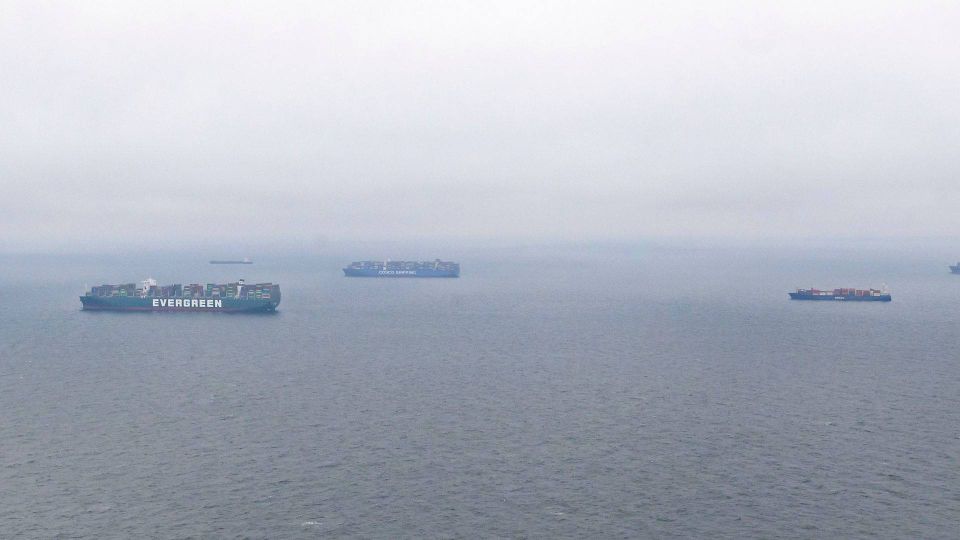
Norwegian Cruise Line is curtailing one of its cruises after its cruise ship Norwegian Sun had a rare encounter hitting a smaller piece of ice over the weekend while traveling in Alaska. The 78,000 gross ton cruise ship suffered unspecified damages that have forced the ship to skip ports on its current cruise and cancel the next cruise to undergo repairs.

With visions of the ill-fated Titanic being invoked, passengers are reporting Saturday morning they awoke to feel a shudder in the ship. The Norwegian Sun was cruising north of Skagway in the Gulf of Alaska toward a scenic visit to Hubbard Glacier and was encountering fog, which is typical of the region. A spokesperson for Norwegian Cruise Line reports that the cruise ship “made contact with a growler,” typically a smaller chunk of ice defined to be no more than about six feet in length. They typically have broken away from a larger formation and are low to the surface of the ocean making them especially difficult to see from the bridge. The majority of their mass is below the water and often the water can be washing over the top of the chunk of ice.

It is unclear what speed the cruise ship was traveling, but a video posted to social media by passengers shows a large black formation of ice floating in the water larger than the typical growler. The contact was along the forward starboard side of the vessel and the ice can be seen floating past the cruise ship.

Passengers reported that the cruise ship was moving slowly after the encounter with the ice. Later the Norwegian Sun changed course, canceling the planned call at Hubbard Glacier and a port visit scheduled for Skagway, Alaska on Sunday. The cruise ship traveled south arriving in Juneau, Alaska later on Sunday, where an inspection was carried out to determine the extent of the damage.

“The ship was given clearance by the United States Coast Guard and other local maritime authorities to return to Seattle at reduced speed,” said the spokesperson. Passengers reported they departed Juneau late Monday and the current AIS signal shows the ship traveling at approximately 16 knots saying its destination is Victoria, Canada. This, however, could be a technical call to meet the requirement to visit a foreign port as Norwegian is reporting that all guests currently onboard will disembark in Seattle as originally planned.

The Norwegian Sun had departed from Seattle on June 21 on a nine-night cruise. They had visited Sitka, Alaska and Icy Strait Point, before heading toward Hubbard Glacier. Port calls at Skagway and Ketchikan in Alaska were canceled when the cruise was curtailed and the vessel began its return voyage. The next cruise of the Norwegian Sun scheduled to depart on June 30 from Seattle has also been canceled so that the necessary repairs can be made to the ship.

Encounters with smaller pieces of ice are common in Alaska when the cruise ships are sailing at slow speeds mostly near the glaciers. The ice occasionally bumps against the hull typically not causing any damage. The location of this encounter, the size of the growler, and the speed of the ship however appeared to have conspired to a unique set of circumstances, and the first reported incidence where a modern cruise ship was damaged and forced to cancel cruises due to hitting an iceberg.
Source: https://www.maritime-executive.com/article/video-norwegian-sun-curtails-cruise-after-hitting-ice-in-alaska


It is indeed a tragedy that Russia’s invasion of Ukraine jolted the world into action in using clean fuel, according to Dr. Sanjay Kuttan, Chief Technology Officer, Global Centre for Maritime Decarbonization, during a panel discussion at the Bunker & Shipping Summit on June 16.

However, when it comes to decarbonization, there is no silver bullet solution or “one fuel fit all” approach. Maritime industry stakeholders are left in the precarious situation of making investment decisions for future fleets with a general lack of clarity regarding the million dollar question – which alternative fuel would be the future?

According to the United Nations, to keep global warming to no more than 1.5°C – as called for in the Paris Agreement – emissions need to be reduced by 45 percent by 2030 and reach net zero by 2050.

Shipping alone transports close to 80 percent of global trade by volume and is estimated to contribute two to three percent of greenhouse gas (GHG) emissions. As such, decarbonization has become the greatest challenge to the maritime industry in this century.

There are numerous decarbonization opportunities that exist across the life cycle of maritime assets such as vessels and ports.  The typical life cycle of a maritime asset starts from the design.  This is followed by construction, operation, retrofit and eventually decommissioning.

Different alternative fuels

The energy sector is the source of around three-quarters of GHG emissions today and holds the key to averting the worst effects of climate change. Replacing fuel oil with alternative fuel would dramatically reduce carbon emissions.   Therefore, the World Shipping Council considers fuel supply development as a critical pathway to zero-carbon shipping.

According to the Nanyang Technological University (NTU) Maritime Energy and Sustainable Development (MESD) Centre of Excellence, there are three major groups of primary energy sources with various production path ways.

The first type of derived fuels would be fuels containing less carbon such as liquified natural gas (LNG), methanol and its derivatives.  The next type of alternative fuels would be those containing biogenic carbon, typically known as biofuels.  These include bio-liquified natural gas (Bio-LNG), bio-methanol, biodiesel, hydrogenated vegetable oil etc.

The last type of alternative fuels would be the carbon free ones also known as non-bio renewable energy, primarily consisting of electricity and resulting in hydrogen. There is also research on using nuclear energy as an alternative source of fuel for ships.

Alternative fuels are expensive

Of at least the same importance as technological and environmental aspects, the economic performance of alternative fuels plays a crucial role in their adoption.

According to NTU MESD, with the current status of technological development, the adoption of fuel cells is around four to six times more expensive than using internal combustion engines.  However, the cost of fuel cells is anticipated to be lower in the future as the technology matured.

The cost of fuel storage tanks for convention fuel oils, biodiesel, methanol, LNG and liquified hydrogen range from 0.1 USD/kWh to 0.95 USD/kWh, with the storage of liquified hydrogen being the most expensive.

The application of biodiesel can leverage the existing fuel tanks used for the storage of conventional fuel oils with only some precautions.  However, the storage for methanol is still more expensive due to its flammable characteristics and material compatibility.

The cost of storage for cryogenic liquids especially liquefied hydrogen can be nine times more expensive than the conventional marine fuels and other liquid alternative fuels i.e. biodiesel and methanol.  Moreover, the cost of other types of hydrogen storage are still unknown as they are in fundamental development stages.

For the application of alternative fuels onboard ships, the cost must consider both the selling cost per ton but also the efficiency of energy conversion when using a particular fuel.

Among all options, using LNG is cheaper than using conventional fuel oils and other alternative fuels.  The cost of methanol and biodiesel blended diesel is comparable with marine gas oil (MGO).  In comparison with the price of fossil-based diesel, biodiesel price is higher and this is mainly because of feedstock cost. The application of ammonia will result in a cost of at least two times higher than that of MGO due to its high specific fuel consumption.

Alternative fuels are not adequate

The availability of alternative fuels is one of the major components enabling energy transition, leading to sustainability in terms of energy systems and meeting climate action targets.  For the maritime industry, the adequacy of alternative fuels refer to the combination of availability of feedstocks and production capacity of alternative fuels with the consideration of competing use in other sectors.

In an interview with Serena Huang, project manager at Drewry, during the Bunker & Shipping Summit, ammonia was cited as an example of a future fuel.  Huang said that people and companies are investigating ammonia from its production scale to its transportation.  Even the automobile industry is interested in ammonia as seen by Mitsubishi’s research on its power generation capabilities and whether it is economically good as a future fuel.

When it comes to convention fuels i.e. low sulfur fuel oil (LSFO) and MGO as well as fossil-based LNG, there is adequacy such that they can meet more than 50 years of global demand. When it comes to fossil-based methanol, Bio-LNG, Bio-methanol and hydrogen, adequacy can only be achieved if a significant expansion of production capacity is realized.

However, first generation biodiesel production produced from edible oils will not be an ultimate choice due to its insufficient supply of feedstock. If biodiesel is to be a preferred choice, third-generation biodiesel from microalgae has to be considered, requiring R&D for microalgae harvesting and establishment of bio-refinery.

Infrastructure for alternative fuels

Other than securing a steady supply of alternative fuels, the infrastructure needs to be on par in order to accommodate them. The requirement of storage facilities at terminal and bunker ships will depend on the fuel’s characteristics, such as physical state, boiling point, flashpoint and storage conditions.

In the case of bio-methanol, new requirements and safety protocols for bunkering would need to be introduced worldwide as it is a flammable liquid. Double-wall fuel storage tanks with leak detectors would need to be in place to ensure the usability of the fuel as well as safety of workers.

As for hydrogen, there is a requirement of the establishment of renewable hydrogen supply chain and bunkering infrastructure. Hydrogen requires either super-insulated low pressure tanks or stainless steel alloy with high level of nickel in order to store and transport it.

It is also important for infrastructure for bunkering to be standardized, so that ships can call at ports regardless of the alternative fuel they are using. Ports need to ensure that they have ready and competent manpower to serve ships using various alternative fuels especially when it comes to cleaning of equipment for flammable fuels.

Other considerations

Although alternative fuels like hydrogen can provide zero emissions onboard ships, hydrogen is produced from fossil fuels without carbon capture technology.  The GHG emissions from the production of hydrogen is definitely not a sustainable approach and “defeats the purpose” of decarbonization.

Instead, hydrogen produced from renewable energy is considered an ideal option.  However, there needs to be more R&D and future studies for adoption of hydrogen as a fuel.

According to Huang, only small volumes of various alternative fuels have been produced by different fuel producers, resulting in a premium price for environmentally friendly fuel. As such, this may be a hard pill to swallow for ship owners as fossil-based fuels are much more available and thus pocket friendly.

Fortunately, overtime, the economies of scale will improve with better technology and lower pricing of the energy source, thereby driving down the cost of generating energy services.

The importance of collaboration

Kuttan emphasizes on the need to “bring people around a table” to “understand stakeholder’s needs and constraints” in order to decarbonize effectively.  The maritime industry is a “highly interdependent industry”, as such, the government, land-based authorities, ports, customers, ship designers and people in technology need to work together in a timely fashion.

All stakeholders need to reflect on their carbon footprint and make changes which will have a “ripple effect across the industry”, thus relieving the burden of the industry as a whole. There also needs to be a shared model and procurement policy to get green shipping moving in the right direction.

Kuttan from the Global Centre for Maritime Decarbonization also shared about the importance of working with the insurance sector as these new fields have different risk profiles.  Working closely together with Protection and Indemnity (P&I) clubs to bridge the issues and gap would help the industry move forward with decarbonization.

Source: https://maritimefairtrade.org/maritime-alternative-fuels-consideration-and-options/

Just 10 days before his inauguration as the Philippines’ 17th president, Ferdinand “Bongbong” Marcos Jr. announced that he would also take on the job of agriculture secretary, which includes managing the country’s fisheries.

“I thought that it is important that the president take that portfolio to not only make it clear to everyone what a high priority we put on the agricultural sector, but also as a practical matter—so that things move quickly because the events of the global economy are moving very quickly,” Marcos told journalists on June 20 without specifying programs or actions.

Analysts said the move was risky, because the president-elect, as agriculture minister, may quickly diminish his 31.6-million-vote mandate, the largest in Philippine history, because of the sector’s problems.

But positive developments may also help boost his political capital and convince the 14 million Filipinos who voted for his closest election rival, Vice President Leni Robredo, to take another look at his leadership abilities.

“We have to be able to be agile. We have to be able to respond properly in a measured way as soon as there’s a situation that needs to be addressed,” he added.

The fisheries sector and the maritime dispute with China will almost certainly be one of the first issues that will confront him when he starts his term on June 30.  Although he has declared that he will assert the Permanent Court of Arbitration (UNCLOS)’s ruling in favor of the Philippines, he has also shown that he knows the game of international brinksmanship.

“We have a very important ruling in our favor and we will use it to continue to assert our territorial rights. It is not a claim. It is already our territorial right,” the president-elect said in his first foreign policy pronouncement last month.

Marcos Jr. during the Award for Promoting Philippines-China Understanding ceremony on June 10, 2022. 

China is Philippine’s ‘strongest partner’, says Marcos

But earlier this month, at an event of the Association for Philippines-China Understanding (APCU) and the Chinese Embassy, he described China as the country’s “strongest partner” and called for continued cooperation.

“That cooperation is what I believe will bring us forward to a bright future. We can only do it with our partners. And our strongest partner has always been, in that regard, our close neighbor and our good friend, the People’s Republic of China (PRC),” Marcos said.

The event was meant to honor 10 Filipino “laureates” for their contributions to “strengthening friendly ties and promoting mutual understanding between the Philippines and China.”

The APCU and Chinese Embassy included the president-elect’s mother Imelda Marcos among the honorees.

In 1975, then-President Ferdinand Marcos, the president-elect’s father, sent Imelda to China to establish formal diplomatic relations with the PRC which was just recovering from decades of economic difficulties and was just starting to refine oil.

The mission was a success and Imelda returned home with a Chinese commitment to provide refined oil at the height of the global oil crisis.

“Thank you for putting my mother in the Hall of Fame,” the president-elect said at the APCU reception. “I think it is just right because China cannot find a greater champion than my mother in the Philippines.”

Imelda will turn 93 years old next month and while Bongbong’s sister is a senator and his cousin, Martin Romualdez, is expected to take the lead of the House of Representatives, foreign policy remains the duty of the president.

Philippine-Singapore ties to grow stronger under Marcos administration

Aside from taking congratulatory calls from foreign leaders, the president-elect has also been busy receiving diplomats from various countries.

Earlier this month, he met Singapore Ambassador Gerard Ho Wei Hong with whom he had an interesting conversation about Marcos Sr. and Singapore’s founding father Lee Kuan Yew.

“Singapore and the Philippines are friends and close partners. The countries are both founding members of the ASEAN (or Association of Southeast Asian Nations) and successive generations of Singaporean and Philippine leaders have worked together for the peace and prosperity of the region,” Ho stressed.

The envoy said Singapore is among the Philippines’ largest trading partners and foreign investors.

“I think with the resumption of cross-border travel as well as the passage of a lot of significant economic reforms in the Philippines under the current administration, we are hopeful that we will continue to grow this bilateral economic relationship with the Philippines and it will continue to flourish,” Ho said.

“We see a lot of growth potential in the Philippines and we hope to see more and more Singapore companies coming into the Philippine market,” the envoy added.

Marcos himself stressed the importance of ASEAN not only in terms of the regional economy, which is among the largest in the world but also in territorial issues.

Marcos to continue ‘independent foreign policy’

Like most other Filipino presidents before him, Marcos said he would pursue an independent foreign policy which he characterized as being a “friend to all, enemy to none.”

“This is what we feel is best in the national interest and I feel it is to be advantageous not only to our friends in China but to all our friends around the world,” he added.

“I think ASEAN will still be a very critical part of that discussion, but nonetheless we also have to continue to pursue bilateral contact and communication with China,” he said.

“In fact, this is what I mentioned when I spoke to President Xi when he called me to congratulate me on winning the election. I said we have to continue to talk about this, this cannot be allowed to fester and to become more severe in terms of a problem between our two countries,” he added.

“I do not subscribe to the old thinking of the Cold War when we had these spheres of influence, where you’re under the Soviet Union or you’re under the United States.”

At the same time, he said the United States, a long-time ally of the Philippines, is going to play a key role in the region.

Source: https://maritimefairtrade.org/new-philippine-president-to-walk-tightrope-between-maritime-powers/


Greywing co-founders - CTO, Hrishi Olickel (left) and CEO, Nick Clarke (right)
Greywing co-founders – CTO, Hrishi Olickel (left) and CEO, Nick Clarke (right)

Greywing and Dataloy Systems have entered into a strategic partnership to facilitate data collection via API integrations.

The partnership combines the synergies from Dataloy´s global voyage management platform with Greywing’s crew-change automation software, promoting a more integrated and transparent ecosystem.

This integration provides clients with equitable crew planning opportunities. By onboarding Dataloy’s feeds onto the Greywing platform,  the onboarding time for mutual clients is reduced and new clients are able to benefit from the integration’s added data points on the platform.

“We believe in an industry with more connections and fewer tech silos, where customers should be able to own their data. That is why we don’t and will not charge customers for integrations to any information we hold,” said Hrishi Olickel, CTO of Greywing. “We are excited to welcome Dataloy Systems as our technology partner and look forward to achieving true maritime disruption with them.”

Greywing’s flagship product enables users to plan and execute a crew change in under 60 seconds. It is reportedly easy to integrate with, delivering a simple interface and providing savings across three domains: cost, carbon, and time.

Nick Clarke, Greywing CEO, said: “Greywing’s Crew Change is a must have product whether you work in the commercial, crewing or decarbonisation team within a vessel operator. Greywing saves fleet managers hard cash by streamlining crew changes, finding cost-effective flights and agencies, planning routes (or rerouting if necessary), and reducing delays, all of which have a trickle-down effect on the rest of the supply chain.”

“We are very excited about our strategic partnership with Greywing, which is the first of its kind, allowing two parallel operations – crew management and voyage operations – to seamlessly connect for smoother operations. Crew automation is a complex area of work that is critical to operational efficiency. Having a system that truly assists in managing this complexity is advantageous, and we believe that integrating with Dataloy’s VMS will add exponential value for our customers,” stated said Hege Jacobsen, head of partner relations, Dataloy Systems.

Source: https://thedigitalship.com/news/maritime-software/item/7929-greywing-and-dataloy-enter-strategic-partnership


The maritime industry is not currently on track to meet the IMO ambition for a 50 percent cut in greenhouse gas emissions by 2050, even under favorable assumptions, according to a new study released by think tank Nordic West Office. The study suggests that this target could eventually be achieved on the industry’s current trajectory, but it is likely to take several more decades than desired.

The 80-page study drew on input from well-placed participants, including Hapag-Lloyd, Carnival and the World Ocean Council. Using three global decarbonization scenarios developed by Shell as a starting point, the authors examined in precise detail how the industry – in all its moving parts – might be expected to transition to green fuels over time. The answer suggests that substantially more action and more cooperation will be required under all three scenarios, including the most optimistic option.

“The main conclusion of our project was rather sad and it was that even in the best possible scenario, we will not reach the ambitions of the IMO . . . to cut greenhouse gas emissions by half by 2050,” said Dr. Risto Penttilä, head of Nordic West Office, at a panel discussion at the UN Ocean Conference. “There’s hope we can still meet . . . both Paris [Agreement] and IMO 2018, but it needs a lot of work.”

To change this trajectory and accelerate the process, the study’s primary suggestion is to tackle decarbonization comprehensively and collaboratively – drawing in regulators, shippers, shipowners, investors, fuel suppliers, ports and other stakeholders to prevent “gaps” in the industry-wide effort. Providing all actors with a clear “zero by 2050” goal at IMO – along with predictable market-based mechanisms for carbon pricing – could help kick-start that effort.

The biggest bottleneck identified in the study is the need to build a supply chain for green fuels, which will require massive investment. However, the study identified dozens of further “enablers” that will need to be developed, depending on the specific vessel and application – like JIT arrival, improved routing, wind-assisted propulsion and much more.

The industry’s progress will be influenced by the pace of global decarbonization overall, which will be driven in part by geopolitics. The most optimistic scenario in the study relies on an environment of international cooperation, openness and collaboration on climate solutions; the least optimistic of the three envisions a fragmented international landscape with reduced trade and cooperation, which “will not bring about a lot of clean developments by the end of the decade,” the authors predicted.

“The current geopolitical trend that puts focus on food and security concerns does not favor decarbonization and will not bring shipping anywhere close to its ambitions. Getting closer to the ambitions requires even stronger decarbonization efforts than those currently envisaged,” the authors cautioned.

Source: https://www.maritime-executive.com/article/study-shipping-is-set-to-miss-the-imo-2050-target


The Global Shippers Forum has entered the debate on the level of competition versus concentration in the global shipping markets arguing on behalf of cargo importers and exporters that the markets are more concentrated than regulators’ current assessments. Working with the transport economists from MDS Transmodal (MDST) they argue for a new way of analyzing the markets to consider the shared services under the inter-alliance agreements that go beyond the three major alliances that have been the focus of regulators.

“Current measures of competitiveness in the global liner shipping market are incomplete and therefore inaccurate and fail to take full account of the degree of cooperation between carriers which results in a more highly concentrated industry, to the serious detriment of shippers worldwide,” writes the groups in their analysis of the operations of the cargo carriers.

The level of competition in the markets has been the subject of close scrutiny by regulators in many parts of the world. South Korea’s Fair Trade Commission has for example charged multiple carriers with collusion and price-fixing arguing that in addition to the alliances, carriers were intimidating other carriers to follow their agreements. President Joe Biden lashed out this year at the three alliances citing the rapid growth in their market share noting that from 1996 to 2011 the alliances operated about 30 percent of global container shipping compared to today where they control 80 percent of global containership capacity and 95 percent of the east-west trade lines. He directed the Federal Maritime Commission and Department of Justice to work together to enforce the U.S.’s antitrust rules while internationally antitrust regulators also agreed to share information looking for domination of the markets.

The Federal Maritime Commission, however, in its fact finding concluded that the markets remained below the threshold for concentration, a point supported by the World Shipping Council which represents the carriers. WSC highlights that there are nine major lines transporting containers while saying there are an additional thirteen ocean liner companies that in 2022 operated over 30 percent of the sailings from Asia to the U.S.

“Competition authorities until now have relied on traditional but incomplete tools to assess the level of concentration across trades,” contends the analysis from the Global Shippers Forum (GSF) and MDST. They write that the current analysis does not take into consideration the full extent of cooperation between shipping lines through the inter-alliance agreements permitted under block exemption and other anti-trust immunity provisions. When the analysis is modified to factor in these shared services, they argue the measurements exceed the accepted threshold at which an industry is considered highly concentrated.

“This breakthrough analysis lays bare the degree of dominance that many shipping lines actually have in the key global trades,” comments GSF’s Director James Hookham. “Current measures of market concentration are only seeing part of the picture. Competition authorities should urgently revise their measures of competition to reflect the reality of the container shipping market.”

It is GSF’s contention that a lack of, or reduction in the levels of competition, leads directly to poor service quality for shippers. They point to examples such as the decline in the number of port calls completed versus scheduled. They contend it has fallen to 68 percent, which is the lowest level recorded since their analysis began in 2020. Shippers they say are suffering from further export delays as a consequence of lost capacity. MDST adds that its analysis shows the number of skipped port calls continues to grow while schedule reliability has stabilized at the lowest levels in the industry according to a separate analysis from Sea-Intelligence.

GSF is urging the FMC and all other competition authorities to utilize a modified measure based on alternative indicators that better reflects the degree of cooperation by lines by including agreements under which lines in different alliances operate shared services to understand shippers’ true experience in the markets.
Source: https://www.maritime-executive.com/article/shippers-argue-inter-alliance-shared-services-concentrate-markets


A new report published by Inmarsat indicates that seafarers are largely in favour of greater digitalisation but that a sizeable proportion of those working at sea also fear shrinking job opportunities.

Compiled by maritime innovation consultancy Thetius, Seafarers in the Digital Age – Prioritising Human Element in Maritime Digital Transformation draws on the results of a survey of 200 maritime professionals.

After canvassing seagoing and shore-based shipping personnel for views on the impacts of digitalisation on their health and welfare, on training, careers and job retention, and on performance, Thetius describes the relationship between seafarers and emerging maritime technologies as “broadly positive”. However, responses also reveal that shipping companies and technology providers have work to do to change crew misgivings over digital transformation at sea.

In a standout finding, the report informs that over 1 in 3 seafarers choosing personal access to digital technology as the key factor when considering a new employer. In fact, as an inducement, internet access ranks higher than pay (chosen by fewer than 1 in 4). The Seafarer Happiness Index (SHI) for Q1 2022 indicates crew well-being dropping to its lowest level since the SHI was founded in 2015, with limited access to basic internet connectivity given as a primary cause, Thetius notes.

Seafarers in the Digital Age captures a shipping industry responding quickly to crew connectivity needs: 78 per cent of ship operators surveyed report having installed internet connectivity on board for the personal use by crew in the last five years.

However, the report also highlights the way seafarers see risks in the wider deployment of digital technologies. Half of the seafarers responding expected job opportunities to decline by 25 per cent within five years.

“If half of our seafarers believe that traditional job opportunities at sea are disappearing, as this research suggests, more needs to be done to highlight how digitalisation will help jobs to evolve or create entirely new roles,” said Matthew Kenney, head of research and intelligence, Thetius. “Digital tools and connectivity can create happier and more productive ships, while newer, better ways of working are possible. Instead of allowing maritime professionals to become distrustful or even fearful of digital and emerging technologies, the sector must recognise the continued importance of human capital and work hard to bring crews along on the journey.”

Ben Palmer, president, Inmarsat Maritime said: “The inclusion of mandatory internet access to the Maritime Labour Convention in May represents a paradigm shift for seafaring rights, putting into law what responsible owners already fully understand: high-quality onboard internet has become a key indicator of crew welfare and hence recruitment and retention of high quality personnel. Today, it also provides the basis for new and exciting next-generation job roles at sea, as well as supporting safer operations, greater sustainability and productivity gains.”

Source: https://thedigitalship.com/news/maritime-satellite-communications/item/7930-inmarsat-and-thetius-explore-human-element-in-maritime-digitalisation

Seafarers in the Digital Age – Prioritising Human Element in Maritime Digital Transformation is available here.


The MoU covers studies on the use of zero and low-carbon marine fuels for commercial shipping applications.

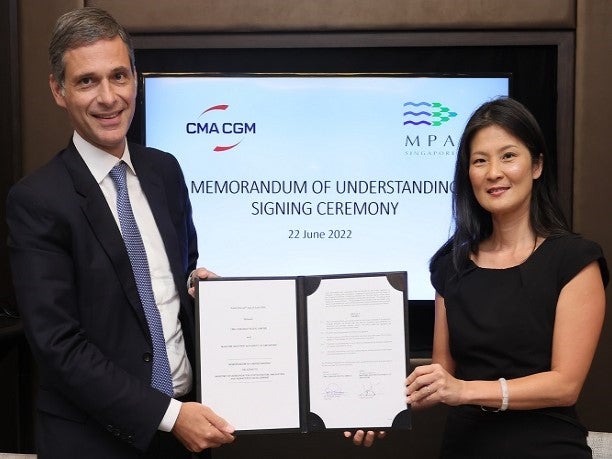
The Maritime and Port Authority (MPA) of Singapore has joined forces with CMA CGM Group to develop maritime decarbonisation, digitalisation and innovative solutions.

Under the memorandum of understanding (MoU) signed in this regard, the duo will study the use of zero and low-carbon marine fuels, including e-methanol, e-methane and biofuels, for commercial shipping applications.

They will also research carbon capture solutions.

Furthermore, the MoU will support the exploration of maritime cybersecurity and just-in-time shipping, accomplished through data exchanges and reporting for port and cargo documentation.

The partnership will also focus on innovations, such as shipboard automation and smarter solutions on board ships.

Both parties will also invest in Singapore-based incubators and accelerators to support marine tech startups in the city-state.

As part of its 2050 net-zero target, CMA CGM placed an order for ten dual-fuel LNG-powered vessels and six dual-fuel methanol-powered vessels.

Designed to run on e-methane, three of these ships will carry the Singapore flag.

Currently, CMA CGM Group has 29 e-methane-ready vessels. It is expected to have a total of 77 e-methane-ready vessels by the end of 2026.

CMA CGM Group chairman and CEO Rodolphe Saadé said: “Decarbonisation, digitalisation and innovation are strategic priorities for CMA CGM and the entire shipping industry. Given Singapore’s key position in our global network, I am very pleased to sign this partnership with the MPA.

“It will allow us to address the challenges ahead and strengthen our existing strong ties with Singapore, its industries and its digital ecosystem while reflecting our attachment to this country.”

Last month, CMA CGM signed an MoU with PSA Corporation to implement new digital solutions to reduce carbon emissions.

Source: https://www.ship-technology.com/news/cma-cgm-mpa-maritime-decarbonisation/


Cyber pirates hijacking on-board technology for key operations appear to be an emerging threat to world trade. The current economy, following the pandemic and the commencement of a war in Ukraine, is particularly vulnerable.

In February 2019, a large container ship sailing for New York identified a cyber intrusion on board that startled the US Coast Guard. Though the malware attack never controlled the vessel’s movement, authorities concluded that weak defenses exposed critical functions to “significant vulnerabilities.”

A maritime disaster didn’t happen that day, but a warning flare rose over an emerging threat to global trade: cyber piracy able to penetrate on-board technology that’s replacing old ways of steering, propulsion, navigation and other key operations. Such leaps in hacking capabilities could do enormous economic damage, particularly now, when supply chains are already stressed from the pandemic and the war in Ukraine, experts including a top Coast Guard official said.

Source: https://shippingwatch.com/carriers/article14193887.ece

Five years ago this week, Maersk said a cyber attack crippled its computer network, affecting its port terminal operations from India to the Netherlands, rippling across to nearly 60 countries and eventually causing as much as $300 million in damages.

It was, as Andy Jones refers to it in the parlance of cyber security experts, an “extinction event.”

Jones is the former chief information security officer at Maersk Line, and he has a podcast that recounts the event that unfolded and is worth listening to for advice on how to deal with hacking threats and actual intrusions.

The NotPetya attack in 2017 that hit Maersk and other global businesses seems so long ago given the bust-to-boom wave the shipping industry has ridden since then. Imagine if something that widespread happened today, as ports still struggle with economic imbalances caused by the pandemic.

Cyber threats are nothing new to maritime shipping and logistics more broadly. Every month seems to bring another event. Last week, UK delivery giant Yodel said its systems were compromised, though a spokesman said Monday the delivery network and customer service functions were fully operational.

Warning Flare

Now some experts, including a top US Coast Guard official, are sounding the alarm again about the rising risks not just on land, but on ships themselves. Such potential breaches of operational technology could do huge economic damage at a time when global supply chains are already frayed. (Click here for the full story today.)

Shipping is using much of its windfall profits from the pandemic era to upgrade technology, creating more digital linkages from land to water that are both a welcome step in a paper-laden business and a worry unless cyber precautions are taken.

“Ships and their systems were never designed to be connected in this manner and even a modern ship is a patchwork of different systems from different manufacturers who have all taken cyber security in various degrees of seriousness,” Jones said via email. “Some operators have taken this seriously, but with substantial fleets and ships that are probably over 30 years old, it is a very tall order.”

Across industry and government, there’s agreement that there needs to be more unified approach and more information sharing.

“Everybody needs to be all-in in this game and understand when there are vulnerabilities — getting that information out quickly is going to be thing that continues to help us close doors,” US Coast Guard Real Admiral Wayne Arguin told Bloomberg.

Brendan Murray in London

Source: https://www.bloomberg.com/news/newsletters/2022-06-28/supply-chain-latest-ships-embracing-tech-upgrades-see-cyber-risks-rise


Company DETAILS

SHIP IP LTD
VAT:BG 202572176
Rakovski STR.145
Sofia,
Bulgaria
Phone ( +359) 24929284
E-mail: sales(at)shipip.com

ISO 9001:2015 CERTIFIED