In conjunction with the Day of the Seafarer, the UAE Ministry of Energy and Infrastructure has launched ‘Salmeen,’ an initiative that aims to provide care to provide seafarers and those working in the maritime sector with comfort and safety. The initiative aims to cater to the seafarers needs, as they are one of the most important pillars of the maritime industry. ‘Salmeen’ contributes to enhancing the quality of life for seafarers and overcoming the challenges they face due to the pandemic and travel restrictions.

The UAE is a key logistics hub. It connects global shipping lines, and receives the largest number of ships heading to the region’s ports with over 21,000 ships annually. More than 27,000 local and international maritime companies work in the UAE with more than 17 million containers handled at the UAE ports each year. These achievements would not have been possible without the dedication of thousands of seafarers who arrive in the UAE waters on ships from all over the world.

Therefore, the initiative presents a comprehensive framework that includes all the Ministry’s achievements to improve the quality of life, within the UAE Government excellence system to care for and support seafarers. The impact extends beyond the UAE, to the whole world that is linked by the global trade based on the shipping sector and its heroes of seafarers.

Commenting on the initiative, H.E Eng. Suhail Al Mazrouei, Minister of Energy and Infrastructure in the UAE, said: “When we talk about the shipping sector in the UAE, we must recognise the influential role the UAE plays in the global maritime sector. The UAE is one of the best maritime hubs globally. Therefore; we introduce initiatives, laws and legislations that can develop the sector based on best practices, while taking care of the seafarers’ community who are key pillars of this industry, to help them overcome the challenges they face while performing their work. Launching the ‘Salmeen’ initiative in conjunction with the Day of Seafarers confirms our continuous support for seafarers and reflects our firm belief in the active role they play towards strengthening the role of the UAE as an unparalleled global maritime hub.

Al Mazrouei added, “Salmeen also strengthens the UAE’s position as one of the top countries in protecting the rights of seafarers, especially in such circumstances in which they played a prominent role in facing the impact of the pandemic on the global economy. Because of our role in the Ministry and our responsibility to put in place legislations and laws related to in the maritime sector, whilst we ensure compliance and implementation of these laws, we made sure that our legal system serves seafarers who significantly contribute to achieving the economic development of the UAE. The most recent of these achievements was the Cabinet’s decision regarding marine debris and violating ships, which obliges all ships carrying the UAE flag or sailing in its waters to ensure the rights of seafarers and provide their requirements.

Supporting seafarers is a major goal

The key pillars of the initiative aim to open the door for seafarers to get the support they need. This includes the best medical care, maritime education, training to build professional capabilities, as well as identifying and removing physical and social obstacles through effective cooperation between the public and private sectors. This promotes the idea of empowering ‘Our Blue Army’, which aims to enhance the impact of qualified seafarers in the industry, to inspire the younger generations.

H.E Eng. Hassan Mohamed Juma Al Mansouri, Undersecretary for Infrastructure and Transport Affairs, said: ”Seafarers are the backbone of our industry as they connect the world via the sea. Therefore, the UAE has taken proactive measures to protect their interests and improve their quality of life. The UAE is also one of the first member states of the International Maritime Organization to classify seafarers as priority workers during the peak of the Covid-19 pandemic, and provided them with support by facilitating safe crew change and safely sending them to their home countries, as well as providing medical treatment and COVID-19 vaccines. We recently honored the Mission to Seafarers in the Middle East & South Asia, a charity group that helps and supports seafarers in emergencies. We are fully aware of our vital role towards the maritime transport sector and the shipping industry in general, and seafarers in particular.

The Salmeen initiative will make all ship owners and maritime organisations responsible for supporting seafarers and providing them with full protection. The Ministry has in place an ongoing monitoring system to ensure the implementation of the laws and initiatives and turn them into results. Seafarers work around the clock to support business continuity and facilitate seaborne trade in the UAE. The initiative recognises their dedication to work under all circumstances.

H.E Eng. Hessa Al Malek, Advisor to the Minister for Maritime Transport Affairs, Ministry of Energy and Infrastructure, added: ”Seafarers are considered frontline workers in the maritime sector, and one of the pillars of the industry that constitutes an added economic value to the Gross National Product. The Ministry has made significant achievements in protecting and supporting seafarers. One of these achievements was contributing to the issuance of Cabinet resolution regarding marine debris and violating ships, and announcing the regulations that protect seafarers’ rights. Additionally, we have signed an agreement with the International Federation of Transport Workers to enhance cooperation in terms of supporting seafarers. This coincided with providing all forms of physical and moral support for them in the UAE, as well as free medical treatments and Covid-19 vaccines. Moreover, the UAE was one of the first countries to allow crew changes during the peak of the pandemic. It facilitated the safe exchange of more than 240,000 seafarers who were assisted to return to their home countries safely. We will always work to support the seafarers who are our “blue army” and the backbone of global trade.”
Source: UAE Ministry of Energy & Infrastructure
The Transportation Safety Board of Canada (TSB) recently released its investigation report into the fatal sinking of the fishing vessel Island Lady in the Labrador Sea in September 2021.

The TSB’s investigation into this occurrence could not determine with certainty the cause of the disappearance of Island Lady or its two-person crew.

The TSB said it is likely that the vessel sank and that both crewmembers entered the water unexpectedly.

The vessel or crew did not carry any operable distress alerting devices and there was no distress call received from the vessel. This resulted in a delay in search and rescue (SAR) efforts being initiated and a large search area, greatly reducing the crew’s chance of survival.

The investigation also revealed that while Island Lady was registered with the Department of Fisheries and Oceans (DFO) as a requirement of the licence to harvest marine resources, it was not registered with Transport Canada.

The TSB’s recent investigation into the sinking of the fishing vessel Sarah Anne identified that a large number of fishing vessels are operating in a similar manner.

As a result, the TSB issued a recommendation that DFO require all commercial fishing vessels to have a current and accurate Transport Canada registration.

The TSB also noted that accurate vessel registration gives Transport Canada an opportunity to provide safety oversight and make available up to date information to SAR authorities.

The TSB said the issue of commercial fishing safety has been on the TSB Watchlist since 2010. Despite various initiatives underway to enhance the safety culture within the commercial fishing industry, the same deficiencies on board fishing vessels continue to be found.

Source: https://www.bairdmaritime.com/fishing-boat-world/catching/canadian-transport-safety-board-issues-report-on-fatal-sinking-of-fishing-vessel-island-lady/


he Paris Memorandum of Understanding on Port State Control (Paris MoU) is currently conducting an inspection campaign to verify compliance with the requirements of the Polar Code. The inspection campaign goes from Monday June 13 to Friday July 1, 2022 and from Monday August 1 to Friday August 19 2022.

According to the Pais MoU, the inspection campaign is additional to the regular Concentrated Inspection Campaigns and is held in a different time of the year due to the seasonal voyage plans of the ships sailing to the Polar area.

A ship will be subject to only one inspection related to this inspection campaign during this period. Port State Control Officers (PSCOs) will use a pre-defined questionnaire to assess whether the information and equipment provided onboard complies with the relevant conventions. Polar Code elements in SOLAS and MARPOL will also be taken into account.

The Paris MoU listed the reasons for the campaign as: polar waters have a unique ecosystem that is vulnerable to human influences such as ship operation; polar waters impose additional navigational demands beyond those normally encountered in non-polar waters; and polar waters impose additional demands on the ships, their systems and operations beyond the existing requirements for normal operations at sea.

The goal of the campaign is to determine the level of compliance with the requirements of the Polar Code and also to create awareness amongst ship crews and ship owners with regard to the importance of compliance with the provisions of the code.

In addition, the Paris MoU said it wants to highlight the increased risk to ships operating in polar waters and the need for protection of the vulnerable polar environment; to send a signal to the industry that safety- and pollution prevention related requirements are mandatory and enforcement with the applicable requirements is high on the agenda of the member authorities; and to underline the responsibility of the Port State Control regime with regard to harmonized enforcement of compliance with the requirements of the code, thus improving the level of compliance and ensuring a level playing field.

The results of the campaign will be analyzed and findings will be presented to the Paris MoU Committee.

Source: https://www.cruiseindustrynews.com/cruise-news/27734-polar-code-inspection-underway-by-paris-mou.html


The Indian Coast Guard is monitoring for pollution after a general cargo ship sank off New Mangalore.

The 7,100-dwt Princess Miral (built 1990) grounded at Ullal on the south-western coast on 21 June.

All 15 Syrian seafarers on board were taken off the vessel, which eventually sank completely on 23 June.

India mobilised three aircraft and nine ships to the area in case of any oil spill.

A pollution control vessel, the ICGS Samudra Pavak, arrived from Porbandar in Gujarat on Saturday.

Booms have been placed across the river mouth nearby to contain any potential leakage.

Local officials said the Princess Miral was bound from Tianjin in China to Lebanon, with an 8,000-tonne cargo of steel coils, when it began taking on water.

All the seafarers had valid travel documents, police said.

Salvage plan being drawn up

A survey is taking place so that authorities can decide on a salvage plan and possible fuel removal.

The Mangalorean website reported Karnataka coastguard commander SB Venkatesh as saying the ship has 220 tonnes of oil on board.

Only a minor sheen from engine bilges has been observed so far and a spill is assessed as unlikely.

The Princess Miral’s commercial manager is listed as 7 Ocean Shipping of Turkey.

The vessel, classed by Universal Maritime Bureau, has no port state control detentions on its record since 2018.

Source: https://www.tradewindsnews.com/casualties/india-on-alert-for-pollution-after-turkish-cargo-ship-sinks/2-1-1246088


Seafarers are sharing their maritime voyages across social media to mark the Day of the Seafarer 2022.

The maritime world is changing, fast. Ships are now operating greener, with greater digitization, and with more diverse crews. As the lifeblood of the shipping industry, seafarers are at the heart of this evolution, implementing new regulations, learning new skills and adopting safer, more efficient working practices. As the world’s merchant fleet traverses the oceans, the crews onboard these ships continue their career journey.

The International Maritime Organization (IMO) is focusing on seafarer’s experiences, voyages and journeys as the theme of the 2022 Day of the Seafarer, drawing attention to how the onboard working environment continues to change. This focus aligns with UN Sustainable Development Goal 14: Conserve and sustainably use the oceans, seas and marine resources for sustainable development.

This year’s Day of the Seafarer theme – “Your voyage – then and now, share your journey” – invites seafarers across the globe to share images and information about what truly resonates with them – whether a positive experience or challenging circumstances.

IMO Secretary-General Kitack Lim said: “Every seafarer’s journey is unique. Yet many of the challenges and opportunities are shared.  On this Day of the Seafarer, we can look to the future. Seafarer’s voyages are changing – in the form of new technologies and equipment, increasing use of alternative fuels and further responsibilities for a greener and more sustainable future for the industry and for the marine environment.”

As a former seafarer himself, the Secretary-General is aware that maritime journeys can extend beyond being at sea to a career on land, and he encourages all seafarers – past and present – to be a part of the event. “I invite you to share photos from your first voyage and your most recent voyage on social media. We want to see how far you have come in your journey and celebrate your progress.”

Ongoing challenges

IMO Secretary-General Lim added, “On the International Day of the Seafarer on June 25th, it is important that we all remember the challenges that seafarers have faced over the past two years and are still facing, including difficulties to effect crew changes, lack of designation as key workers and inability to access medical care and vaccines.

“I also remain concerned about the seizure of vessels engaged in legitimate trade outside established legal processes. I urge all Member States to use relevant diplomatic channels to resolve their differences so that international shipping and especially seafarers are not unduly impacted. As I have said in the past, seafarers and shipping should not become collateral victims of larger political issues. The welfare of seafarers and the need for international shipping to move freely and unhindered is critical to the continuous operation of global supply chains, for the benefit of all peoples of the world.”

United Nations Secretary-General António Guterres said, “Seafarers worldwide have faced immense challenges stemming from the COVID-19 pandemic — including contracts extended long beyond their expiry dates and maximum periods of service, and challenges related to vaccinations, medical care and shore leave. This year’s theme — “Your Voyage, Then and Now” — is an opportunity to recognize the vital role seafarers play, and look to the future.

“Above all, this means listening to seafarers themselves. They know better than anyone their needs and what this industry needs to do to address key challenges. This includes the expansion of social protection, better working conditions, addressing the crew-change crisis, adopting new digital tools to enhance safety and efficiency, and making this industry greener and more sustainable,” he continued. Read the full speech here.

Join the campaign:  

As in previous years, the 2022 Day of the Seafarer event will predominantly be held on social media to draw attention to the contribution that seafarers make to shipping and world trade.

Participants in the campaign can use the hashtag for 2022 ‘#SeafarerJourney’ or the regular hashtag ‘#DayOfTheSeafarer’ and join in the conversation.

Seafarers are invited to post two photos using the hashtags: one of their first voyage and another of their most recent voyage. We would also like to know what has changed during your maritime voyage. Is shipping greener? Is the technology better? Are you more skilled? What have you learnt?

Supportive organizations, shipping companies and port organizations are also invited to show their appreciation for seafarers by resharing their posts or using the hashtags and discussing the importance of seafarer journeys.

Members of the public are encouraged to post about the many ways in which seafarer journeys benefit their lives (e.g. bringing them food, electronics, medicines, etc.) using the same hashtags.
Source: IMO


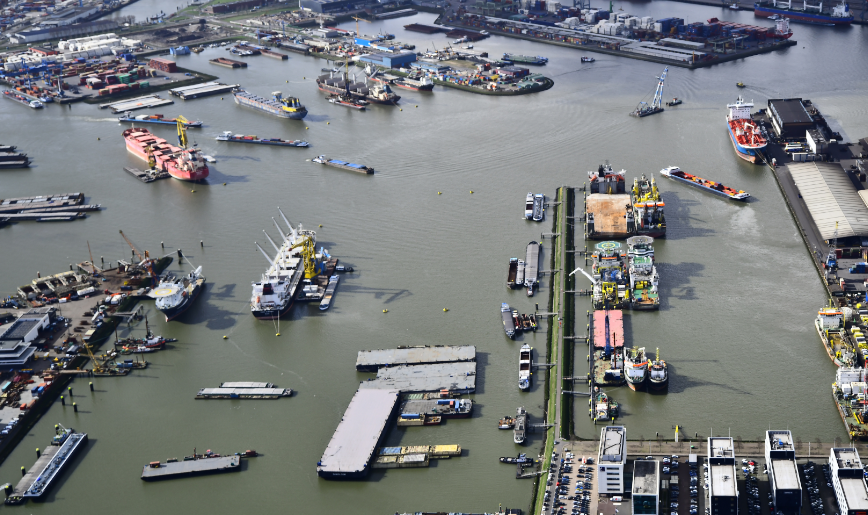
The Dutch Port of Rotterdam Authority and energy company Eneco revealed plans to construct shore-based power facilities in the Waalhaven, Rotterdam, so that moored Boskalis vessels can run on green electricity instead of fossil fuels.

Boskalis
Courtesy of Port of Rotterdam/Boskalis

As informed, the shore-based power installation will be built on the Boskalis site in the Waalhaven where vessels come for maintenance and mobilisation for offshore project. There are two berths on the quay at this location, which are both frequently used.

The intended completion date of the green shore power installation is 1 June 2023, and it will supply 2 GWh of green electricity per year. This is expected to reduce CO2 emissions by 1.6 kiloton per year.

Shore power is an important part of the energy transition and this project fits in with the joint shore power strategy of the Port of Rotterdam Authority and the City of Rotterdam, and with Eneco’s One Planet strategy, which aims to achieve climate neutrality by 2035.

At present, moored vessels often run on generators to provide the necessary power on board thereby creating emissions. Green shore power offers the opportunity to reduce these emissions by up to 90% by providing vessels with a clean source of energy and switching off generators also helps to reduce noise.

After the shore power electricity installation on the Rozenburg peninsula and the Hoek van Holland ferry terminal in Rotterdam, the Boskalis location in the Waalhaven will be the third quayside electricity installation for seagoing vessels in the Port of Rotterdam.

Eneco and the Port of Rotterdam Authority are implementing this project through the Joint Venture Rotterdam Shore Power. They own the shore power installation and offer the green shore power ‘as a service’.

Boskalis is realizing the grid connection under its own management. Eneco is supplying the green power to Boskalis, which comes from Dutch Eneco wind & solar sources. The project is co-financed by the City of Rotterdam and the European Union through the European Regional Development Fund.

Source: https://www.offshore-energy.biz/boskalis-vessels-to-switch-to-shore-power-in-the-port-of-rotterdam/


Another superyacht belonging to a sanctioned Russian oligarch has put into port in the UAE, a jurisdiction widely perceived as a safe haven for Russian assets.

The aerodynamic superyacht Madame Gu, the vessel of Russian billionaire and politician Andrei Skoch, can now be found at Port Rashid, Dubai. The vessel went dark on AIS in March, a few weeks after the invasion of Ukraine, but she has been spotted at the pier next to the decommissioned cruise ship Queen Elizabeth II at Mina Rashid.

Skoch has been listed on the U.S. Treasury’s specially designated persons list since 2018. The Treasury claims that in addition to his position in Russia’s parliament, Skoch “has longstanding ties to Russian organized criminal groups, including time spent leading one such enterprise.” Skoch denies these charges, and he has said that he has no idea why he has been named to the list. “They say that it is connected with Ukraine, but I don’t even know, because I haven’t been to Crimea, and I don’t have any ties with Ukraine,” Skoch told Gazeta.ru in 2018.

The EU also sanctioned Skoch this year, citing his support for recognition for the breakaway provinces of the Donetsk People’s Republic and the Luhansk People’s Republic, two Russian-controlled areas in occupied eastern Ukraine.

The Madame Gu is in good company in the UAE. The well-known M/Y A, a sleek modern yacht belonging to billionaire industrialist Andrey Melnichenko, has been at the port of Ras al-Khaimah since mid-March.

The UAE is (so far) out of reach of American and European sanctions enforcement. The nation has longstanding ties to Russia, and its government has insisted on neutrality on the question of the ongoing invasion of Ukraine. It is one of the three dozen nations that abstained from voting on a UN resolution to condemn it. However, its perceived proximity to Russian wealth and banking have drawn the scrutiny of Western governments, and the UAE is under pressure to align its policies with American and European sanctions.

The UAE’s political ties with the United States are also strong: it is a leading buyer of U.S. weapons exports and it is the home of Al Dhafra Air Base, the headquarters of the U.S. Air Force’s operations in the Middle East.

Source: https://www.maritime-executive.com/article/sanctioned-russian-billionaire-s-yacht-pulls-into-port-in-mina-rashid


Hudong-Zhonghua Shipbuilding Group Co. (Hudong-Zhonghua), a subsidiary of China State Shipbuilding Corporation (CSSC), has delivered the new world’s largest containership to Taiwanese shipping company Evergreen Marine.

The Ever Alot vessel has a carrying capacity of 24,004 TEU and measures 400 metres long by 61.5 metres wide, with a draft of 17 metres.

The giant ship has snatched the world’s largest containership record from Ever Ace, another Evergreen-flagged vessel that just last week entered the Port of Felixstowe.

The Ever Alot is the seventh vessel in the Evergreen A class and the first ship in the class, and the world, to surpass the 24,000 TEU mark. Once in operation, it will serve trade routes between Europe and the Far East.

The delivery was delayed due to the recent lockdowns in Shanghai and it will be followed by the Ever Aria as Hudong-Zhonghua is currently building nine 24,000 TEU ultra-large containerships – including three more Evergreen A class vessels.

Source: https://www.porttechnology.org/news/ever-alot-breaks-record-for-worlds-largest-containership/


Canadian traffic solutions company, SMATS, today announced the general availability of its Port Traffic Management Solution to equip port authorities and operators around the world to better manage drayage truck backlogs at terminal gates.

The technology is part of the solutions for alleviating cargo backlogs, which have rippled through the supply chain, causing supply shortages and adverse economic impacts. Long truck queues at terminal gates also contribute significantly to air and noise pollutions in and around ports, negating the industry’s progress towards its environmental commitments.

SMATS’ Port Traffic Management Solution includes next-generation IoT sensors to monitor truck movements, and a powerful data analytics and visualisation platform (iNodeTM), whose algorithms enable the accurate prediction of wait times leading to and at the terminal gates in real-time.

This vital information allows the terminal operators to actively optimise their service rates, and to timely communicate with the drayage truck drivers who can then plan their trips most efficiently.

“Our Port Traffic Management Solution can be used as a standalone solution, or as an addition to the Terminal Operating Systems (TOS) which many large ports have implemented,” said Amir Ghods, CEO of SMATS.

“What sets us apart is the accuracy in data collection, filtering, and prediction algorithms – all in real-time – which allows terminal operators to react quickly to diminish truck queues as they happen.”

SMATS’ Port Solution has proven to deliver on its intended impact. In Los Angeles, Fenix Marine Services manages the Ports of Los Angeles’ Pier 300, where SMATS’ solution was implemented to monitor truck queues outside the terminals to facilitate better decision-making with powerful predictive data.

“SMATS’ truck traffic wait-time monitoring allowed us to better measure and manage our traffic at the terminal gates,” said John Rosen, CTO at Fenix Marine Services.

“Real-time data has provided visibility where we had none and is helping us to better service the trucks.”

In Canada’s Port of Trois-Rivières, SMATS’ TRAFFICXHUB™ sensors were installed and collected traffic data with 92 per cent accuracy using Bluetooth beacons distributed to truckers. For the first time, the port authorities were empowered with actionable Key Performance Indicators (KPIs) that lead to data-informed decision-making and improved traffic flow.

Thanks to the support of Transport Canada, at Port of Trois-Rivières, Quebec, SMATS extends the capabilities of the solution to offer multiple analytics dashboards, including a smartphone application for truck drivers to communicate with terminals and access their expected turn-times based on their location and estimated time of arrival at the gate.

“We offer customisation options to supplement the capabilities of a variety of Terminal Operating Systems (TOS) and traffic networks,” said Amir Ghods.

“All with the goal to effectively help reduce the congestion issues that are negatively impacting the ports’ revenue objectives and the movement of global supply chain.”

For more information on incorporating SMATS’ Port Traffic Management Solution into your traffic management strategy, visit https://bit.ly/3n5ntkt.

Source: https://www.porttechnology.org/news/smats-launches-port-traffic-management-solution-for-terminal-traffic-monitoring-and-vita-predictive-data-on-truck-turn-times/


Two autonomous electric barges that were built by Cochin Shipyard Limited (CSL) for a Norwegian firm will begin their journey to Norway on board a yacht-transport carrier on Monday.

The 600-tonne electric barges named Maris and Teresa, each of which has a length of 67 metres, were placed on board the 210-metre-long mother vessel following an eight-hour effort on Sunday. The mother vessel owned by a Dutch firm was lowered 8.90 metres into the backwaters and its deck filled with water, following which tugs were used to pull the barges on board. This was followed by the raising of the mother vessel. The barges are expected to reach Norway in a month.

The electric barges were built for ASKO Maritime, the largest supermarket chain in Norway, which aims to achieve zero carbon emission in its logistics service by 2026.

After commissioning of the autonomous equipment and field trials in Norway, the vessels will operate as fully autonomous ferries that can transport 16 fully loaded trailers in one go.

Source: https://www.thehindu.com/news/national/kerala/autonomous-electric-barges-built-by-cochin-shipyard-to-begin-norway-trip/article65567408.ece


Company DETAILS

SHIP IP LTD
VAT:BG 202572176
Rakovski STR.145
Sofia,
Bulgaria
Phone ( +359) 24929284
E-mail: sales(at)shipip.com

ISO 9001:2015 CERTIFIED