Another superyacht belonging to a sanctioned Russian oligarch has put into port in the UAE, a jurisdiction widely perceived as a safe haven for Russian assets.

The aerodynamic superyacht Madame Gu, the vessel of Russian billionaire and politician Andrei Skoch, can now be found at Port Rashid, Dubai. The vessel went dark on AIS in March, a few weeks after the invasion of Ukraine, but she has been spotted at the pier next to the decommissioned cruise ship Queen Elizabeth II at Mina Rashid.

Skoch has been listed on the U.S. Treasury’s specially designated persons list since 2018. The Treasury claims that in addition to his position in Russia’s parliament, Skoch “has longstanding ties to Russian organized criminal groups, including time spent leading one such enterprise.” Skoch denies these charges, and he has said that he has no idea why he has been named to the list. “They say that it is connected with Ukraine, but I don’t even know, because I haven’t been to Crimea, and I don’t have any ties with Ukraine,” Skoch told Gazeta.ru in 2018.

The EU also sanctioned Skoch this year, citing his support for recognition for the breakaway provinces of the Donetsk People’s Republic and the Luhansk People’s Republic, two Russian-controlled areas in occupied eastern Ukraine.

The Madame Gu is in good company in the UAE. The well-known M/Y A, a sleek modern yacht belonging to billionaire industrialist Andrey Melnichenko, has been at the port of Ras al-Khaimah since mid-March.

The UAE is (so far) out of reach of American and European sanctions enforcement. The nation has longstanding ties to Russia, and its government has insisted on neutrality on the question of the ongoing invasion of Ukraine. It is one of the three dozen nations that abstained from voting on a UN resolution to condemn it. However, its perceived proximity to Russian wealth and banking have drawn the scrutiny of Western governments, and the UAE is under pressure to align its policies with American and European sanctions.

The UAE’s political ties with the United States are also strong: it is a leading buyer of U.S. weapons exports and it is the home of Al Dhafra Air Base, the headquarters of the U.S. Air Force’s operations in the Middle East.

Source: https://www.maritime-executive.com/article/sanctioned-russian-billionaire-s-yacht-pulls-into-port-in-mina-rashid
On June 25, the shipping industry observes the Day of the Seafarer. It could not come at a better time, as seafarers continue to face systemic welfare challenges. The war in Ukraine and the ongoing pandemic have made conditions even more difficult for many.

While the Day of the Seafarer is primarily intended to celebrate the gallant efforts of men and women in shipping, it is also a day to advocate for solutions to the many challenges they face.

The UAE took this direction in marking the day. Led by the Minister of Energy and Infrastructure, Hon. Suhail Al Mazrouei, he launched a new initiative named “Salmeen” to guide the UAE’s government efforts to prioritize welfare of the seafarers.

The key pillar of the initiative is to open the door for seafarers to get the support they need. This will entail identifying and removing physical and social barriers through cooperation between public and private sectors. It also includes a package to arrange medical care for seafarers, as well as maritime training and education opportunities.

“When we talk about the shipping sector in the UAE, we must recognize the influential role the UAE plays in the global maritime scene. Launching the ‘Salmeen’ initiative confirms our continuous support for seafarers and reflects our firm belief in the active role they play towards strengthening UAE as an unparalleled global maritime hub,” commented Suhail Mazrouei.

This initiative builds on the “Our Blue Army Scheme” launched by the Ministry in August last year. It gave seafarers the same status as front-line health workers, guaranteeing access to Covid-19 vaccines and allowing crew replacements when required.

Currently, UAE receives more than 21,000 ships annually and handles over 17 million containers at the country’s ports each year. As a busy maritime hub it is also a common jurisdiction for vessel abandonment, a major challenge for seafarer welfare, according to data compiled by RightShip.

Source: https://www.maritime-executive.com/article/on-day-of-the-seafarer-uae-launches-new-welfare-initiative


The Port of Tanjung Pelepas (PTP) in Malaysia has entered into an agreement to deploy Innovez One’s AI-powered Port Management Information System (PMIS) to improve efficiency and optimise its scheduling.

Port information management systems provider Innovez One said it will supply its MarineM solution to PTP to aid the port in its journey towards digitalisation.

The system’s integration at the port is scheduled by the early third quarter of 2022.

MarineM will provide an interface where agents can register their vessels and order services to support arrivals such as supplies, logistics and marine services.

Using algorithms powered by artificial intelligence (AI) and machine learning, MarineM’s planning module will automatically manage schedules and dispatch resources.

According to Innovez One, this AI-powered system can instantly reallocate resources if a vessel’s ETA changes, hence limiting waiting times and making PTP more resilient in the face of congestion.

MarineM will also enable agents to monitor the status of their orders in real time and will automate the billing process. It also includes a live map where port managers will be able to view the movements of each vessel.

“The transition of digitalisation and automation is speeding up in the entire maritime industry,” said Marco Neelsen, Chief Executive Officer of PTP.

“To secure efficient, sustainable operation and business competitiveness, PTP has proactively invested in its assets and infrastructure. PTP is committed to continue with the journey and further create values to our customers, shareholders and other stakeholders.”

“This significant technological milestone will unlock new efficiencies at the Port of Tanjung Pelepas and ensure that all pieces fall into place seamlessly to support ships’ arrivals and departures,” added David Yeo, CEO and founder of Innovez One.

“As recent months have demonstrated, the so-called first and last mile of the journey at sea is critical. Digitalisation is now more important than ever, in order to make ports more resilient to disruptions and avoid the multiplication of seemingly minor delays that can exacerbate port congestion.”

Earlier this year, PTP said it will invest RM750 million ($178.5 million) in expanding capacity.

Speaking to reporters at the PTP 11 million TEU milestone celebration, Marco Neelsen said capacity will grow from 11.5 million TEU to 12.5 million TEU within the first six months of 2022.

Source: https://www.porttechnology.org/news/malaysian-ptp-turns-to-ai-powered-management-system/


Hudong-Zhonghua Shipbuilding Group Co. (Hudong-Zhonghua), a subsidiary of China State Shipbuilding Corporation (CSSC), has delivered the new world’s largest containership to Taiwanese shipping company Evergreen Marine.

The Ever Alot vessel has a carrying capacity of 24,004 TEU and measures 400 metres long by 61.5 metres wide, with a draft of 17 metres.

The giant ship has snatched the world’s largest containership record from Ever Ace, another Evergreen-flagged vessel that just last week entered the Port of Felixstowe.

The Ever Alot is the seventh vessel in the Evergreen A class and the first ship in the class, and the world, to surpass the 24,000 TEU mark. Once in operation, it will serve trade routes between Europe and the Far East.

The delivery was delayed due to the recent lockdowns in Shanghai and it will be followed by the Ever Aria as Hudong-Zhonghua is currently building nine 24,000 TEU ultra-large containerships – including three more Evergreen A class vessels.

Source: https://www.porttechnology.org/news/ever-alot-breaks-record-for-worlds-largest-containership/


Canadian traffic solutions company, SMATS, today announced the general availability of its Port Traffic Management Solution to equip port authorities and operators around the world to better manage drayage truck backlogs at terminal gates.

The technology is part of the solutions for alleviating cargo backlogs, which have rippled through the supply chain, causing supply shortages and adverse economic impacts. Long truck queues at terminal gates also contribute significantly to air and noise pollutions in and around ports, negating the industry’s progress towards its environmental commitments.

SMATS’ Port Traffic Management Solution includes next-generation IoT sensors to monitor truck movements, and a powerful data analytics and visualisation platform (iNodeTM), whose algorithms enable the accurate prediction of wait times leading to and at the terminal gates in real-time.

This vital information allows the terminal operators to actively optimise their service rates, and to timely communicate with the drayage truck drivers who can then plan their trips most efficiently.

“Our Port Traffic Management Solution can be used as a standalone solution, or as an addition to the Terminal Operating Systems (TOS) which many large ports have implemented,” said Amir Ghods, CEO of SMATS.

“What sets us apart is the accuracy in data collection, filtering, and prediction algorithms – all in real-time – which allows terminal operators to react quickly to diminish truck queues as they happen.”

SMATS’ Port Solution has proven to deliver on its intended impact. In Los Angeles, Fenix Marine Services manages the Ports of Los Angeles’ Pier 300, where SMATS’ solution was implemented to monitor truck queues outside the terminals to facilitate better decision-making with powerful predictive data.

“SMATS’ truck traffic wait-time monitoring allowed us to better measure and manage our traffic at the terminal gates,” said John Rosen, CTO at Fenix Marine Services.

“Real-time data has provided visibility where we had none and is helping us to better service the trucks.”

In Canada’s Port of Trois-Rivières, SMATS’ TRAFFICXHUB™ sensors were installed and collected traffic data with 92 per cent accuracy using Bluetooth beacons distributed to truckers. For the first time, the port authorities were empowered with actionable Key Performance Indicators (KPIs) that lead to data-informed decision-making and improved traffic flow.

Thanks to the support of Transport Canada, at Port of Trois-Rivières, Quebec, SMATS extends the capabilities of the solution to offer multiple analytics dashboards, including a smartphone application for truck drivers to communicate with terminals and access their expected turn-times based on their location and estimated time of arrival at the gate.

“We offer customisation options to supplement the capabilities of a variety of Terminal Operating Systems (TOS) and traffic networks,” said Amir Ghods.

“All with the goal to effectively help reduce the congestion issues that are negatively impacting the ports’ revenue objectives and the movement of global supply chain.”

For more information on incorporating SMATS’ Port Traffic Management Solution into your traffic management strategy, visit https://bit.ly/3n5ntkt.

Source: https://www.porttechnology.org/news/smats-launches-port-traffic-management-solution-for-terminal-traffic-monitoring-and-vita-predictive-data-on-truck-turn-times/


Two autonomous electric barges that were built by Cochin Shipyard Limited (CSL) for a Norwegian firm will begin their journey to Norway on board a yacht-transport carrier on Monday.

The 600-tonne electric barges named Maris and Teresa, each of which has a length of 67 metres, were placed on board the 210-metre-long mother vessel following an eight-hour effort on Sunday. The mother vessel owned by a Dutch firm was lowered 8.90 metres into the backwaters and its deck filled with water, following which tugs were used to pull the barges on board. This was followed by the raising of the mother vessel. The barges are expected to reach Norway in a month.

The electric barges were built for ASKO Maritime, the largest supermarket chain in Norway, which aims to achieve zero carbon emission in its logistics service by 2026.

After commissioning of the autonomous equipment and field trials in Norway, the vessels will operate as fully autonomous ferries that can transport 16 fully loaded trailers in one go.

Source: https://www.thehindu.com/news/national/kerala/autonomous-electric-barges-built-by-cochin-shipyard-to-begin-norway-trip/article65567408.ece


Brittany Ferries Saint-Malo, set to carry passengers between the U.K. and France in the next few years, will be the largest hybrid vessel ever built, according to the operator. The vessel will boast a battery capacity of 11.5 MWh, approximately double that typically used for hybrid propulsion in marine vessels.

This super ship will integrate multiple systems allowing real-time energy optimization while sailing. Optimized energy efficiency, hybrid power, and shore-side plug-in have the potential to yield an improvement of up to 15% on greenhouse gas emissions compared with diesel propulsion – according to engine and battery supplier Wärtsilä.

In total, StenaRoRo is constructing three hybrid ships supplied with Wärtsilä hybrid technology. Two were specified by Brittany Ferries, with the recently named Saint-Malo (destined for St Malo – Portsmouth route) scheduled for delivery in 2024. Shortly thereafter, an as-yet-unnamed hybrid will join the fleet, running the company’s most popular Caen-Portsmouth route. The hybrids will replace Bretagne and Normandie, respectively, two of the longest-serving vessels in the family.

“Hybrid technology continues to move our fleet renewal program forward and will follow the introduction of two LNG-powered ships. From day one of operation, ports like St Malo in France and Portsmouth in the U.K. will benefit. Shore-side power capability means further benefits will be realized, as investment by ports in plug-in infrastructure allows,” said Christophe Mathieu Brittany Ferries, CEO.

Brittany Ferries’ work is expected to inspire other shipping companies to take a step towards more environmentally conscious engineering and perhaps replace or upgrade much of their existing carbon-intensive fleets.

“Stena wants to be a frontrunner in decarbonizing our fleet and, together with our partners, pushing developments towards zero-emission operations,” added Per Westling, MD StenaRoRo. “Hybridisation allows our vessels to be highly flexible as we adapt to future technology developments, including green fuels, fuel cells, bigger batteries, and solar or wind supported propulsion.”

As well as engines and batteries, marine specialist Wärtsilä will supply gearboxes and propellors for the hybrid ships. “This order further strengthens Wärtsilä’s leadership in the hybrid segment,” added Hakan Agnevall, President and CEO of Wärtsilä. “The extensive battery size will allow the vessels to operate with full power, using both propellors and all thrusters to maneuver emissions-free in and out of ports, even in bad weather. The built-in shore power solution will charge the batteries while berthed.

Source: https://www.inceptivemind.com/brittany-ferries-saint-malo-worlds-largest-hybrid-ship/25228/?amp


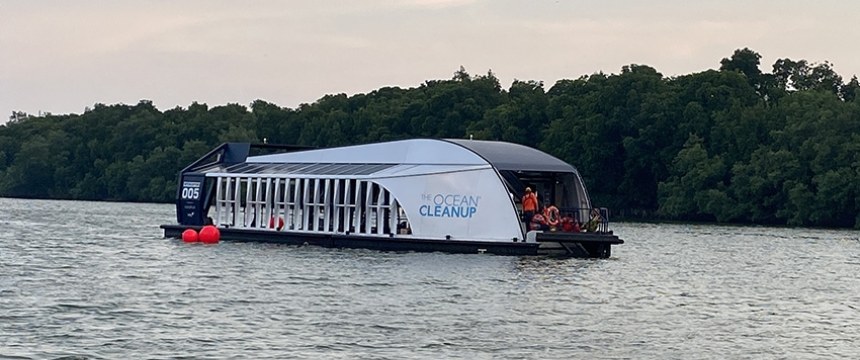
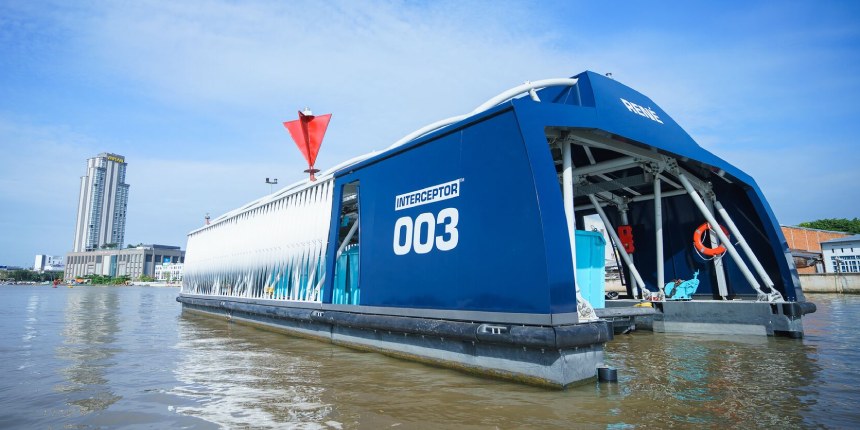
The newest pollution-collecting vessels in the fleet of Netherlands-based non-profit The Ocean Cleanup have begun undergoing a series of tests in Vietnam and Malaysia to allow their performance to be evaluated under operational conditions.

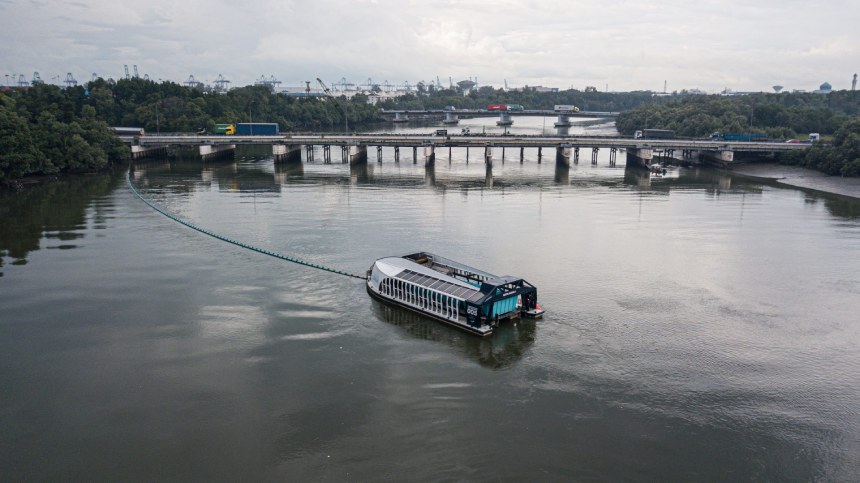
The tests on sisters Interceptor 003 and Interceptor 005 include an ongoing project where the vessels are being used to collect rubbish on the surfaces of rivers in the two countries. Interceptor 003 has been operating on Vietnam’s Can Tho River since December 2021 while Interceptor 005 has been deployed on the Klang River in Malaysia since earlier this month. The vessels have been placed in strategic locations in these rivers to make sure the main plastic flow is intercepted while still allowing other boats to pass.

Like their sister vessels, Interceptor 003 and Interceptor 005 are each fitted with a floating barrier that extends towards the front for funneling waste through the vessel’s mouth. River waste flowing with the current is guided by the barrier towards the opening of each vessel, eliminating the need for additional machinery to be used for actively removing waste from the surface of the water. All electronics on each vessel – including the conveyor belt, shuttle, lights, sensors, and data transmission – are solar-powered, thus further reducing reliance on carbon-emitting generators.

Photo: Konecranes

Thanks to the vessels’ catamaran design, the water flow path is optimised to pass through the system, carrying the plastic onto the conveyor belt. The conveyor continuously extracts the debris from the water and delivers the waste to a shuttle that automatically distributes the debris across six dumpsters. Using sensor data, the containers are filled equally until they reach their full total capacity of 50 cubic metres. The Ocean Cleanup claims that, under optimal operations, each vessel can extract up to 50,000 kilograms of plastic per day.

The vessels can work autonomously even for 24 hours straight until their onboard storage becomes full, though they can continue extracting debris even as their six 8.3-cubic-metre dumpsters are being emptied. When a vessel is almost full, it automatically sends a text message to the local operators to come and collect the waste. Operators then remove the vessel’s lower barge assembly, bring it to the side of the river, empty the dumpsters, send off the debris to local waste management facilities. The barge can be quickly and easily reinstalled in the vessel to resume regular rubbish collection operations afterwards.

Photo: The Ocean Cleanup

The Ocean Cleanup said the newer vessels also feature key improvements over the older vessels in its fleet. These include: a conveyor belt being widened to 2.5 metres to allow for a less obstructive flow and better distribution to the dumpsters and a widened hull and dumpsters to make the transfer of rubbish from the conveyor to the dumpsters easier and more effective. The vessels’ monocrystalline solar cell panels and smart energy storage system are also smaller but just as efficient as those of their predecessors.

The catamaran design also helps facilitate containerisation and fast deployment thanks to its modular construction that allows for easy assembly and disassembly.

Interceptor 003 and Interceptor 005 were built by Finnish company Konecranes via its various local partners in Southeast Asia on behalf of The Ocean Cleanup.

Photo: The Ocean Cleanup
Source: https://www.bairdmaritime.com/work-boat-world/small-craft-world/pollution-rubbish-cleanup/vessel-review-interceptor-003-autonomous-catamarans-take-on-river-cleanup-duties-in-southeast-asia/

Sir Robert is a 22.2-metre tug featuring two Caterpillar 3516 EUI marine diesels, producing a total of 3,280 kW and 50-tonnes pulling power, and can operate at a speed of 12 knots.

Sir Robert was delivered in Whangarei, New Zealand in November 2000 for the Port of Tauranga, named in honour of the late Sir Robert Owens, a successful businessman who played a key role in developed the Port of Tauranga.

Commissioned to replace Rotorua, which was sold to Australia after 33 years at the port, Sir Robert was intended to handle large ships and is a sister vessel for three tugs based in Auckland.

Photo: Propspeed

In order to cope with the demand of the thousands of large ships that berth in the Port of Tauranga each year, with 1,307 ships in the year ended June 30, 2021, Sir Robert needs to be operationally ready at all times with no sacrifice in performance. Reducing maintenance and saving time is essential for the tug, and so Propspeed was applied to the two propellers and four keel cooler tube sets.

“Following a recent dive inspection of the underwater hull,” said tug engineer Pete Frewin, “the divers’ report suggests that all areas coated in Propspeed are looking clean and free of marine build up. This includes the twin props as well as the four engine and auxiliary keel cooler tube sets.”

Mr Frewin said this inspection was completed in May and the vessel has been in operation for six months after its docking in September 2020.

Source: https://www.bairdmaritime.com/ausmarine/ausmarine-gear/gear-propspeed-coating-selected-for-nz-port-of-tauranga-tug/


In order to develop capabilities and solutions for maritime decarbonization, digitalization, and innovation, CMA CGM Group and the Maritime & Port Authority of Singapore (MPA) have signed a MoU.

In order to cooperatively develop capabilities and solutions in the areas of maritime decarbonization, digitalization, and innovation, CMA CGM Group and the Maritime and Port Authority of Singapore (MPA) have signed a Memorandum of Understanding (MOU).

The two sides want to develop a workforce that has the education and expertise needed in the future. The two parties will investigate the use of zero and low-carbon marine fuels, such as e-methanol, e-methane, and biofuels for commercial shipping, to hasten maritime decarbonization.

Another goal of this partnership is the research into technologies such as carbon capture solutions.

“Decarbonisation, digitalisation and innovation are strategic priorities for CMA CGM and the entire shipping industry,” noted Rodolphe Saadé, chairman and chief executive officer of the CMA CGM Group.

“Given Singapore’s key position in our global network, I am very pleased to sign this partnership with the Maritime and Port Authority. It will allow us to address the challenges ahead and strengthen our existing strong ties with Singapore, its industries, and its digital ecosystem, while reflecting our attachment to this country,” he added.

Three of the LNG vessels, ordered by the French company, that are also e-methane ready, will sail under the Singaporean flag. CMA CGM currently has an e-methane-ready fleet of 29 vessels in service and will have a total of 77 by 2026.

The MOU will explore various collaborative opportunities for greater digitalisation, such as maritime cyber security and just-in-time shipping, achieved through data exchanges for port and cargo documentation and reporting.

At the same time, the two parties will work together on innovations such as shipboard automation for more safety, efficiency, and smarter solutions onboard vessels.

They will also explore creating and investing in Singapore-based incubators and accelerators to develop Singapore-based marine technology start-ups. “We are happy to work with a like-minded partner like CMA CGM who shares our bold ambitions to make international shipping more sustainable and resilient, and who which also believes in taking pragmatic and concrete steps towards these aspirations,” stated Quah Ley Hoon, chief executive of Maritime and Port Authority of Singapore.

Source: https://www.maritimegateway.com/cma-cgm-in-collaboration-with-mpa-singapore/


Company DETAILS

SHIP IP LTD
VAT:BG 202572176
Rakovski STR.145
Sofia,
Bulgaria
Phone ( +359) 24929284
E-mail: sales(at)shipip.com

ISO 9001:2015 CERTIFIED