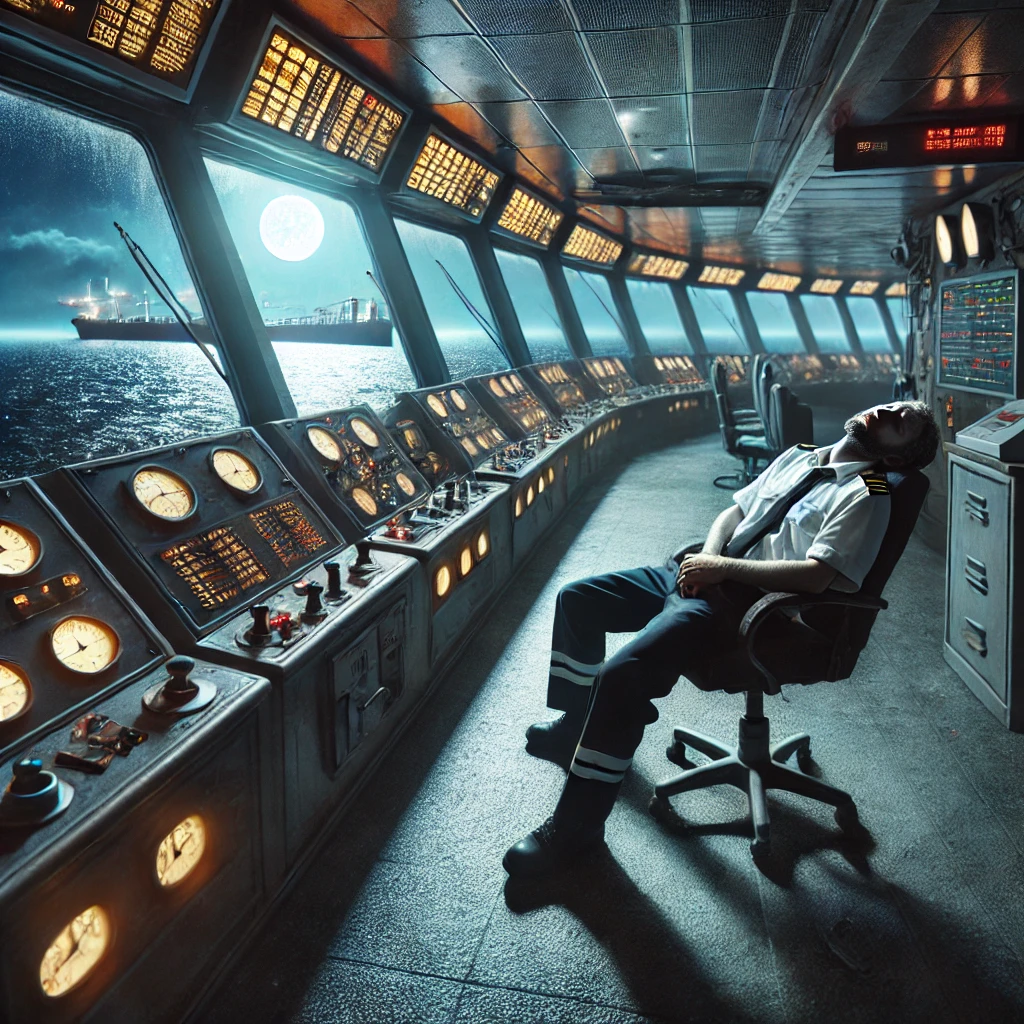
In a swift SAR mission, the Indian Coast Guard was able to save the lives of 15 mariners from Syria. These mariners were on a foreign-flagged ship named MV Princess Miral that had run aground on Tuesday, off New Mangalore. The ship was loaded with about 8000 tons of steel coil.

The SAR mission had been coordinated by ICG ships Amartya and Vikram. These braved poor weather conditions during the rescue mission. The crew members of the grounded ship had abandoned the vessel owing to a breach in the hull. There was water ingress in the holds. DIG S B Venkatesh, the commander and Coast Guard of Karnataka mentioned that the vessel had set sail for Malaysia from Lebanon.

Venkatesh added that the successful rescue operation has once again reaffirmed the capability of the ICG as a nodal agency for M-SAR.


Maritime Minister Robert Courts has announced government funding for 3 organizations to support projects developing seafarers’ wellbeing and maritime skills, diversity and careers.

Announcing the news at the Mersey Maritime Exchange in Liverpool, the minister also outlined how the funding will support a review of ‘ratings’ training. This will include roles such as deck, engine room, hospitality and catering in the maritime industry. It will be carried out by the Maritime Skills Commission.

£2.4 million will help to support green skills, alleviate seafarer mental health issues and work towards the maritime 2050 ambition to widen the diversity of the sector.

The funding aims to support the maritime sector to create a highly-skilled, well-supported workforce that people from all backgrounds want to join.

As recognized in the government’s Maritime 2050 report and brought into sharp focus during the coronavirus (COVID-19) pandemic, seafarers’ welfare and mental health remains a serious issue. These challenges have exposed a need to better understand welfare issues for seafarers and the paucity of facilities and other support available when needed.

Maritime Minister Robert Courts said:

Seafarer wellbeing is at the heart of our Maritime 2050 agenda and we know that mental health difficulties at sea affect thousands of seafarers. We are committed to tackling this and building a diverse, highly skilled and exciting sector across the board – from shipbuilders to bosuns.

This funding will help us tackle this problem by supporting the excellent work being done by charities and social organisations and fostering new programmes.

I am also pleased to be launching our recovery route map, which will help to build a resilient, innovative and future-facing maritime sector for generations to come.”

A package of 9 seafarer protection measures, announced in March, has already set out plans to establish a new framework to improve the long-term working conditions of seafarers, developed in consultation with industry and unions.

The UK has continued to be a leading voice in recognizing existing rights and working with industry and seafarer welfare organizations. In addition, the industry has developed mental health awareness training which is delivered to every new seafarer as part of their mandatory training. This funding aims to raise the profile and enhance delivery of successful programs – small, large, new and existing – to champion seafarer rights.

Also launched today (23 June 2022) is the government’s Maritime recovery route map. This brings together the government’s plans to help the sector recover from the impact of the pandemic while supercharging delivery of Maritime 2050. The report was developed jointly with industry. It follows the key Maritime 2050 themes including how we will support our outstanding workforce, stay competitive and drive green growth by delivering innovation and new technology.

Stuart Rivers, Chief Executive Officer of the Merchant Navy Welfare Board, said:

This significant investment in the maritime charity sector is both timely and extremely welcome. The maritime charities sector has been supporting seafarers through multiple crises over the past 2 years, despite the difficult fundraising conditions. Department for Transport’s funding will provide a real boost to seafarers’ welfare and enable improvements in skills and diversity for the wider sector.

The funding will support maritime skills, diversity, careers and seafarer wellbeing, with £230,000 of the funding allotted to Maritime UK to support green skills, a ratings review and drive forward careers and diversity plans and a further £140,000 to Ormiston Maritime Academy to promote maritime in schools in key target areas for regional growth.”

Ben Murray, Chief Executive Officer of Maritime UK, said:

To realize the vision that we have for the UK maritime sector in 2050, we need the best people from all backgrounds to offer new thinking on the big issues of our age. That means being an inclusive sector, one that invests in its people and prepares for the future.

Maritime UK is delighted that people and skills are at the heart of the government’s maritime recovery route map and the industry is determined to accelerate its work on priorities like diversity and green skills.”

Rachel Kitley, Principal of Cowes Enterprise College, which is part of Ormiston Academies Trust (OAT), said:

Our Maritime Futures initiative fulfils the educational aspirations of the government’s Maritime 2050 strategy. It seamlessly integrates robust disciplinary knowledge with hands-on maritime projects, raises awareness of the maritime sector and provides students with meaningful encounters with maritime employers.

We are thrilled that funding from Department for Transport will enable us to disseminate this model at pace, particularly in coastal communities. Simultaneously, Maritime Futures will contribute to raising attainment for students in disadvantaged areas and raise the profile of the maritime industry.”


Source:

With the rest of the world returning to the pre-pandemic levels of normality, China has maintained a strict zero-COVID policy. Lockdowns and rapid mass testing are still commonplace in Chinese cities. Unfortunately, for foreign businesses that depend on China to boost their global revenues, the cost of operation is becoming burdensome.

The European Union Chamber of Commerce in China was the first to sound the alarm based on findings of a flash survey it conducted in April. It involved 372 European companies primarily based in Shanghai. For nuance, the results were contrasted with an earlier Business Confidence Survey (BCS) that the European Chamber in partnership with Roland Berger conducted in mid- February.

Overall, China’s current COVID-19 containment policy is creating an uncertain business environment. 75 percent of the respondents reported a negative impact on overall operations, with businesses not knowing if their premises will be suddenly shut down or get enough staff to maintain operations.

The main impacts have been felt in logistics and warehousing, where 94 percent of the respondents said that they are negatively affected.

Supply chains have also taken a pounding, both upstream and downstream, affecting 92 percent of the respondents. The main challenges include access to raw materials or components needed for production, struggling to transport raw materials or delivery of finished products within China, and to the rest of the world.

However, in the face of these problems, it begs the question whether the companies are pondering to exit China. The survey found that the majority plan to stay, with only 11 percent of the businesses reporting plans to downsize their operations in China. This demonstrates that most European companies are committed to China in the long-term and prepared to weather any storm for now.

“The rewards of staying the course and navigating the storm are plain to see. With a market of 1.4 billion consumers, some of the world’s best manufacturing clusters and, in more recent years, a vibrant innovation ecosystem, European companies view it as imperative to be part of China’s growth story,” said Joerg Wuttke, the President of the EU Chamber of Commerce in China.

However, the Chinese market has lost a considerable amount of allure for many companies, with 78 percent indicating that China’s COVID-19 measures have made it less attractive destination for investment.

Some of the hard-hit sectors – fashion and textiles – are important to container shipping, an early indicator of a possible supply-chain shift in Asia.

“The main impact currently is the disruption of logistics to and from Europe, with 65 percent of the companies affected. Businesses have to adapt to new conditions, with rail freight between China and Europe no longer an option. Ships and trucks are also paying more for gas and oil due to rising material and energy costs,” notes the EU Chamber report.

Meanwhile, although the war in Ukraine is not an immediate concern for European businesses in China, a third of companies revealed the war is also a factor affecting China’s attractiveness as an investment destination. With China increasingly trading with Russia, and seemingly appearing as an ally, companies are concerned by geopolitical tensions, in particular the prospect of a deterioration in EU- China relations.


The Ukrainian military has launched a series of strikes on Snake Island, a small but strategic rocky outpost off Ukraine’s southern coast. It has been in Russian hands since the opening days of the war, and it is essential to the control of the sea lanes leading to and from Odesa. The Black Sea port is key to Ukraine’s grain export sector, and it is under Russian blockade.

Russia has fortified Snake Island with advanced air-defense systems and coastal defense anti-ship missile batteries, and this equipment has been targeted in a series of ongoing attacks. Satellite imaging provided by an American commercial operator shows at least three areas of the island that have been newly blackened by explosions and fires.

Ukraine has not confirmed the method of attack, and its Operational Command South has said only that “Snake Island was dealt a concentrated blow with the use of various forces and methods of destruction.”

Ukrainian forces also struck three offshore rigs located to the west of the Crimean Peninsula, claiming that Russian forces had installed surveillance and communications equipment on the structures. Gov. Sergey Aksyonov, head of the Moscow-controlled government of Crimea, said in a social media post that three were injured and seven were missing after the attack. State Duma deputy Mikhail Sheremet, a Russian elected official from Crimea, said that it was possible that “foreign long-range missiles” were used in the strike.

Previously, on June 17, Ukraine also claimed to have attacked and sunk a Russian supply tug, which was delivering military supplies to Snake Island. UK intelligence has confirmed the striek, which relied on two NATO-supplied Harpoon anti-ship missiles. It was Ukraine’s first claimed strike using Harpoon, a 1970s-era missile system which has been employed by more than 30 nations. Ukraine’s navy claimed that the supply tug had a Tor surface-to-air missile system on board – a practice that has become increasingly common for small Russian Navy vessels in the Black Sea.

“Ukrainian coastal defense capability has largely neutralized Russia’s ability to establish sea control and project maritime force in the northwestern Black Sea,” assessed the UK Ministry of Defence in a daily briefing Tuesday. “This has undermined the viability of Russia’s original operational design for the invasion, which involved holding the Odesa region at risk from the sea.”


During sea trials near Weymouth, UK, the Royal Navy destroyer HMS Duncan took on a search-and-rescue role at the request of HM Coastguard, saving a motor yacht that had drifted out to sea with a stalled engine.

At about 1730 hours Saturday, the Type 45 destroyer was at anchor in Weymouth Bay when her crew received a call from the coast guard about a nearby boat in distress. The yacht was adrift near Portland Bill and was being pulled out into the English Channel by the wind and the tide. It had no flares or radio gear on board.

Sea conditions were rough and worsening, with winds of up to 35 knots and low visibility, but the warship launched a 24-meter boat with an engineer and a medic aboard to find the yacht. The search was rough going in the surface conditions on scene, and the team was about to call off the effort when a member of the crew spotted the yacht’s mast.

Despite heavy seas, the boat crew maneuvered safely alongside and transferred over the engineer. He reassured the sole sailor aboard the yacht and made the necessary repairs to the engine. The team then handed off the response to the Weymouth RNLI lifeboat crew and returned to their ship.

“It took real skill to put us alongside in the heavy sea without hitting the other vessel, with waves crashing over the front of the boat,” said Petty Officer Tom Austin, the medical assistant on the launch. “The individual onboard was in the later stages of shock and clearly in a dire condition. I’m glad that we were able to make a difference.”

HMS Duncan is a Type 45 air defense destroyer commissioned in 2013, and she is the last in a series of six. Among other career highlights, she has played a role in strikes against the Islamic State in Iraq, served as flagship of NATO Standing Maritime Naval Group 2, and deployed to the Persian Gulf to protect shipping interests from Iranian interference.


Evergreen took delivery today on its newest containership, Ever Alot, which its Chinese builders are highlighting as both the world’s largest containership and their first 24,000 TEU construction. While the vessel is the same dimensions as the South Korean-built members of Evergreen’s A Class, the Chinese design resulted in a slight increase in capacity taking the ship to a rated capacity of 24,004 TEU. The South Korean-built Ever Ace delivered in the summer of 2021 by comparison is rated at 23,992 TEU.

The new Ever Alot is the first of the vessels China’s Hudong-Zhonghua Shipbuilding Co, a subsidiary of China State Shipbuilding Corporation is building for Evergreen. The vessel was delayed by the recent lockdowns in Shanghai, so she will be closely followed by a sister ship Ever Aria. The images released by CSSC show the sister ships side by side at the shipyard’s outfitting berth.

The Chinese-built ships were independently designed by Hudong-Zhonghua and the yard reports that it owns the ship’s intellectual property rights. To impress the magnitude of the ship Chinese media is providing a range of comparisons. The mega-ship measures 1,312 feet in length, which the shipyard highlights is nearly 200 feet longer than the current world’s largest aircraft carrier. It is 200 feet wide and has a deck area of more than 24,000 square meters, which the shipyard points out is about the size of three and a half soccer fields.

With a depth of just over 100 feet, the cargo hold they report can carry 240,000 tons of goods. The maximum stack of containers can be up to 25 stories high, equivalent to the height of a 22-story building, CCTV reported.


In addition to the containerships being built for Evergreen, last week on June 11, the same shipbuilder started simultaneous construction in two dry docks for two 24,000 TEU container ships being built for MSC. They explained that the staff has worked hard to accelerate the company’s resumption of work and production making possible the keel laying for the two vessels. These are the second and third vessels being built for MSC and the yard currently has four 24,000 containerships under construction between the dock and in outfitting.

They are highlighting several design features for the new 24,000 TEU class of vessels. They have incorporated a bubble drag reduction system and shaft generators. The air lubrication system they report not only effectively reduces the total energy consumption of the ship but also reduces the corresponding carbon emission by three to four percent. The use of shaft generators the shipyard says can reduce fuel consumption, optimize EEDI energy efficiency indicators, reduce greenhouse gas emissions, and at the same time significantly reduce the fuel costs of ships, with considerable economic and social benefits.

The “Hudong-type” design they report also employs a unique small bulbous bow, large-diameter propellers, and energy-saving ducts to give the ship a fast performance and low energy consumption.


Chinese and Indian buyers are keeping Russia’s oil export industry afloat, providing critical foreign revenue for the Russian government, according to the latest market data from research firm Kpler.

The numbers show that Asian refiners are now buying an extra 500,000 barrels a day, absorbing almost exactly the same amount that European buyers have cut back. Meanwhile, Indian imports have soared from a negligible volume last year to 840,000 barrels per day last month.

For perspective, according to numbers from TankerTrackers.com, all BRICS nations combined were buying 520,000 bpd of Russian oil in the month before the invasion.

One reason for the shift is price: Russian crude is trading at a heavy discount due to its invasion of Ukraine, and it is now worth about $30 a barrel less than Brent on the open market. The discount and geographic shift are a product of the efforts of NATO-allied nations to exit Russian energy. The U.S., UK and Canada have banned Russian oil imports, and the EU is taking steps to exclude Russian oil cargoes from its own borders and from the global marketplace. Working together with the UK, the EU plans to ban European companies from providing marine insurance cover for any Russian oil, anywhere in the world. This would exclude Russian cargoes from the overwhelming majority of the P&I and reinsurance markets.

However, Russian energy exporters say that they have already begun to arrange their own domestic insurance in order to keep commerce moving. State-owned shipping company Sovcomflot has new cover from another state-owned enterprise, the Russian National Reinsurance Company. In addition, Sovcomflot has reportedly arranged to have its fleet classed by a well-known class society by working through a subsidiary in Dubai.

While these workarounds might appear to subvert the allied pressure campaign on Moscow, the diversion of Russian oil may also come as a relief to some. If Russian crude were fully removed from the market, the price of Brent could soar to $185 a barrel, according to JP Morgan. This is not lost on the U.S. and its NATO allies: the FT reports that the White House has quietly asked its European partners to consider softening the insurance ban on Russian oil, fearing that extreme oil prices could damage the economy.


The Navy will move to monthly reporting of COVID-19 vaccine separations, the sea service announced in its now formerly weekly update.

The move comes after two weeks of active-duty separations in the single digits. Over the past two weeks, the Navy separated two active-duty sailors and 25 reservists, according to the update.

The latest separations bring the total to 998 active-duty and 209 reservists.

There are 3,371 active-duty sailors and 3,448 reservists who are not fully vaccinated, as mandated by the Department of Defense. This includes sailors with granted or pending exemptions as well as those who have submitted a religious accommodation request.

The Navy cannot currently separate anyone who submitted a religious exemption against the COVID-19 vaccine due to a legal ruling in the Fifth Circuit.

The lack of approved religious exemptions was debated in the House Armed Services Committee Wednesday as congressional members went through the proposed National Defense Authorization Act.

The Navy has approved 45 active-duty requests for religious exemptions, although it is unclear how many of the exemptions were for people who planned to retire or leave the service instead of getting vaccinated.

Among the amendments proposed before HASC was one extending the honorable or general discharge characterization for separations. HASC approved the amendment.

Natural immunity as an alternative has been used in multiple lawsuits against the military branches, including the Navy. It was cited in the case brought against the Navy by Navy SEALs and by a commanding officer who is unvaccinated.

Recently, lawsuits have begun mentioning the idea that the FDA-approved Pfizer vaccine, which is marked under brand name Comirnaty, is a different formula than the version of the Pfizer vaccine, which received emergency use authorization.

This was also the reasoning given in a recent board case for Lt. Bill Moseley, whose lawyer wrote in a statement that the Navy found that the two versions were different and that Moseley was only offered the EUA version.

The Navy could not comment on the specifics of the board, but did confirm that Moseley was retained by the Navy.

According to the FDA, Comirnaty and the EUA-version of Pfizer given to those older than 16 are the same. The formula is different for the EUA-version given to those under 16.

“The FDA-approved Comirnaty (COVID-19 Vaccine, mRNA) and the two EUA-authorized formulations of the Pfizer-BioNTech COVID-19 Vaccine for individuals 12 years of age and older, when prepared according to their respective instructions for use, can be used interchangeably,” according to the FDA.


  • he International Chamber of Shipping’s board appoints Mr. Emanuele Grimaldi, Managing Director of the Grimaldi Group, as chairman.
  • ICS recognises Day of the Seafarer, honouring the efforts of crews throughout the ongoing supply chain crisis.

22 June 2022, London – The board of the International Chamber of Shipping (ICS), representing 80% of the world’s merchant fleet, today appointed Emanuele Grimaldi, President and Managing Director of Grimaldi Euromed SpA, as Chairman of the Board.

Grimaldi, a former president of both Confitarma and European Community Shipowners Association (ECSA), was formally voted in as chair by the ICS Board of Directors, following the announcement of his nomination last year. Alongside ICS Secretary General, Guy Platten, his mandate will include working to find private and public solutions to a range of issues facing the sector, including decarbonisation, digitisation, diversity, and crew change.

He succeeds current chair, Esben Poulsson, Executive Chairman ENESEL PTE. LTD., who has served as ICS Chair since 2016, and who steps down after serving three terms of office.

Emanuele Grimaldi, ICS Chairman, commented on his appointment:

“I am honored to represent the shipping industry at this crucial juncture in our history. I hope to build on the legacy of my predecessor Esben Poulsson, and continue to drive meaningful change within the sector and work closely with UN bodies.

“The world is changing, and shipping must change with it. Fundamental transformation to our fuel supplies, our technology, and the skillsets of our workforce will define the direction shipping takes this decade. I’m excited to say that we are confronting the challenge head on.

“While we are not immune from the challenges that face the global economy, we are resilient. I am confident that the sector will remain a force for good on the international stage, facilitating the movement of vital supplies to those who need them most.”

This Saturday, June 25, the maritime sector will come together to honor the hard work and sacrifice of the 1.8 million seafarers who crew the global fleet, celebrating the UN Day of the Seafarer. This year’s theme is ‘Your voyage – then and now, share your journey,’ looking at seafarer voyages, and how they have both evolved and stayed the same throughout the history of this essential profession.

Guy Platten, Secretary General of the International Chamber of Shipping, remarked:

“I’m pleased to welcome longtime board member, Emanuele Grimaldi, to the position of Chairman. I have full faith in him and look forward to working closely together to advance the maritime sector and support our seafarers.

“I cannot thank outgoing chair, Esben Poulsson, enough for his six years of leadership and companionship. Expertly navigating ICS through several major events, including the Covid-19 crew change crisis, a rise in piracy, and the Suez Canal blockage.”


Mitsui O.S.K. Lines (MOL) has introduced a wholly owned subsidiary called EcoMOL, designed to tackle immediate greenhouse gas (GHG) emissions reduction by improving ships’ operational efficiency through digital solutions.

MOL has set a target to improve 5 per cent fuel-efficiency by the end of 2024. MOL believes that in the short-term, improving ship operational efficiency including ship’s ESD (energy sailing device) installations is the most effective and realistic solution.

MOL encourages the deployment of dynamic and innovative actions in daily operations, leveraging big data analysis and constant actual operation performance review. EcoMOL will stimulate these activities by collaborating with various stakeholders.

MOL also aims to further increase its group-wide human assets capitalising on the Filipino maritime experience.

MOL has set medium- to long-term targets of reducing GHG emissions intensity in marine transport by approximately 45 per cent by 2035 (versus 2019) and achieving net zero GHG emissions by 2050 with concerted effort throughout the group. Through five initiatives, including boosting operational efficiency (outlined in the figure above) in the MOL Group Environmental Vision 2.1, EcoMOL is expected to play a key role in achieving sustainable net zero GHG emissions and contribute to a low and decarbonised society.


Company DETAILS

SHIP IP LTD
VAT:BG 202572176
Rakovski STR.145
Sofia,
Bulgaria
Phone ( +359) 24929284
E-mail: sales(at)shipip.com

ISO 9001:2015 CERTIFIED