(WASHINGTON) — On Thursday, President Joe Biden, joined at the White House by Rep. John Garamendi, D-Calif., Sen. Amy Klobuchar, D-Minn., Sen. John Thune, R-S.D., and Rep. Dusty Johnson, R-S.D., signed the Ocean Shipping Reform Act into law.

In August 2021, Garamendi introduced the act with Johnson to provide the Federal Maritime Commission (FMC) with the regulatory power to support American exporters, protect consumers, and establish reciprocal trade opportunities to reduce the nation’s longstanding trade imbalance with countries like China.

Klobuchar and Thune sponsored the companion legislation in the Senate.

“Today is the culmination of over a year of hard work to crack down on longstanding inequities for American exporters and shippers in the international ocean shipping industry,” Garamendi said. “It shows that Republicans and Democrats can come together to solve critically important problems. American families and small businesses are facing shortages and rising prices during the COVID-19 pandemic and Putin’s war in Ukraine. Our bipartisan Ocean Shipping Reform Act will protect American businesses and consumers from unfair trade practices and price gouging by foreign-flagged ocean liners and address our nation’s longstanding trade imbalance with countries like China.”

The Ocean Shipping Reform Act will:

• Require ocean carriers to certify that late fees — known in maritime parlance as “detention and demurrage” charges — comply with federal regulations or face penalties.
• Shift burden of proof regarding the reasonableness of “detention or demurrage” charges from the invoiced party to the ocean carrier.
• Require ocean common carriers to report to the FMC each calendar quarter on total import/export tonnage and 20-foot equivalent units (TEUs, loaded/empty) per vessel that make port in the United States.
• Authorize the FMC to self-initiate investigations of ocean common carrier’s business practices and apply enforcement measures, as appropriate.
• Establish a new authority for the FMC to register shipping exchanges.

Statement from President Biden:

“Lowering prices for Americans is my top priority, and I applaud the Congress for passing the Ocean Shipping Reform Act on a bipartisan basis, which will help lower costs for American retailers, farmers and consumers. I want to thank Sen. Klobuchar, Sen. Thune, Rep. Garamendi, and Rep. Dusty Johnson for their leadership and helping drive forward this important legislation.

“In my State of the Union address, I called on Congress to address ocean carriers’ high prices and unfair practices because rising ocean shipping costs are a major contributing factor to increased costs for American families. During the pandemic, ocean carriers increased their prices by as much as 1,000 percent. And, too often, these ocean carriers are refusing to take American exports back to Asia, leaving with empty containers instead. That’s costing farmers and ranchers — and our economy — a lot of money.

“This bill will make progress reducing costs for families and ensuring fair treatment for American businesses — including farmers and ranchers.”

Statement from the World Shipping Council:

“Recent weeks have seen several attempts to demonize ocean carriers by deploying ‘us versus them’ rhetoric. That is not only inaccurate but dangerous, as it undermines the ability to understand and work towards solving the root causes of America’s supply chain problems. Ocean carriers are the longest link in the global supply chain that delivers vital supplies to American business, government and consumers. The supply chain is not foreign; it is global.

“It is understandable that regulators ask questions with the current market conditions. Liner shipping is a very closely monitored industry, and carriers have answered and will continue to answer those questions. But the fact is that ocean carriers actively compete against one another in the global marketplace, including on the shipping lanes most relevant for U.S. trade.

“The expert U.S. regulator that oversees international shipping – the Federal Maritime Commission – just completed a two-year investigation into the international ocean supply chain, finding that ocean carrier competition is ‘vigorous’ and that while ocean freight prices are high, they are ‘exacerbated by the pandemic, an unexpected and unprecedent surge in consumer spending particularly in the United States, and supply chain congestion, and are the product of the market forces of supply and demand.’

“The FMC also stated that ‘Competition officials of the European Union, China, and the Federal Maritime Commission regularly discuss our ocean shipping markets and we have, to date, observed no indication that the current prices for liner shipping are a result of collusive or illegal conduct on the part of the major ocean carriers in our markets.’

“The worn-out talking point that ‘there’s only nine major ocean shipping lines who ship from Asia to the United States’ is also untrue. While nine lines in and of itself is evidence of competition and not concentration, there are an additional 13 ocean liner companies that operated over 30 percent of the sailings from Asia to the U.S. so far this year. In fact, competition increased during the pandemic, with new shipping services entering the market and the share of the largest alliances dropping.

“The FMC investigation also reports that ‘the individual ocean carriers within each alliance continue to compete on pricing and marketing independently and vigorously. Individual ocean carriers within alliances continue to add and withdraw vessels from trades both inside and outside the alliances in which they participate and, particularly in the transpacific, new entrants have been entering the trade. The trans-Pacific is a highly contestable market.’

“There is no dispute that carriers, after two decades of low or no margins and cheap and abundant capacity for shippers, are actually making profits. These profits are invested in building capacity for the future on land and sea. In 2021, carriers ordered a record-breaking 561 vessels worth $43.4 billion, and 208 vessels worth $18.4 billion have been ordered year-to-date in 2022. But as long as America’s ports, rail yards and warehouses remain overloaded and unable to cope with the increased trade levels, vessels will remain stuck outside ports to the detriment of importers as well as exporters. Ocean carriers continue to move record volumes of cargo for our country and have invested heavily in new capacity – America needs to make the same commitment and invest in its landside logistics infrastructure.”

Autonomous systems company Sea Machines Robotics has unveiled its new AI-ris marine computer-vision navigation sensor, designed to improve safety and performance while vessels are underway by using artificial intelligence to track objects near the vessel.

AI-ris (Artificial Intelligence Recognition and Identification System) uses digital cameras and AI-processing to detect, track, classify and geolocate objects, vessel traffic and other potential obstacles to provide crews with enhanced situational awareness.

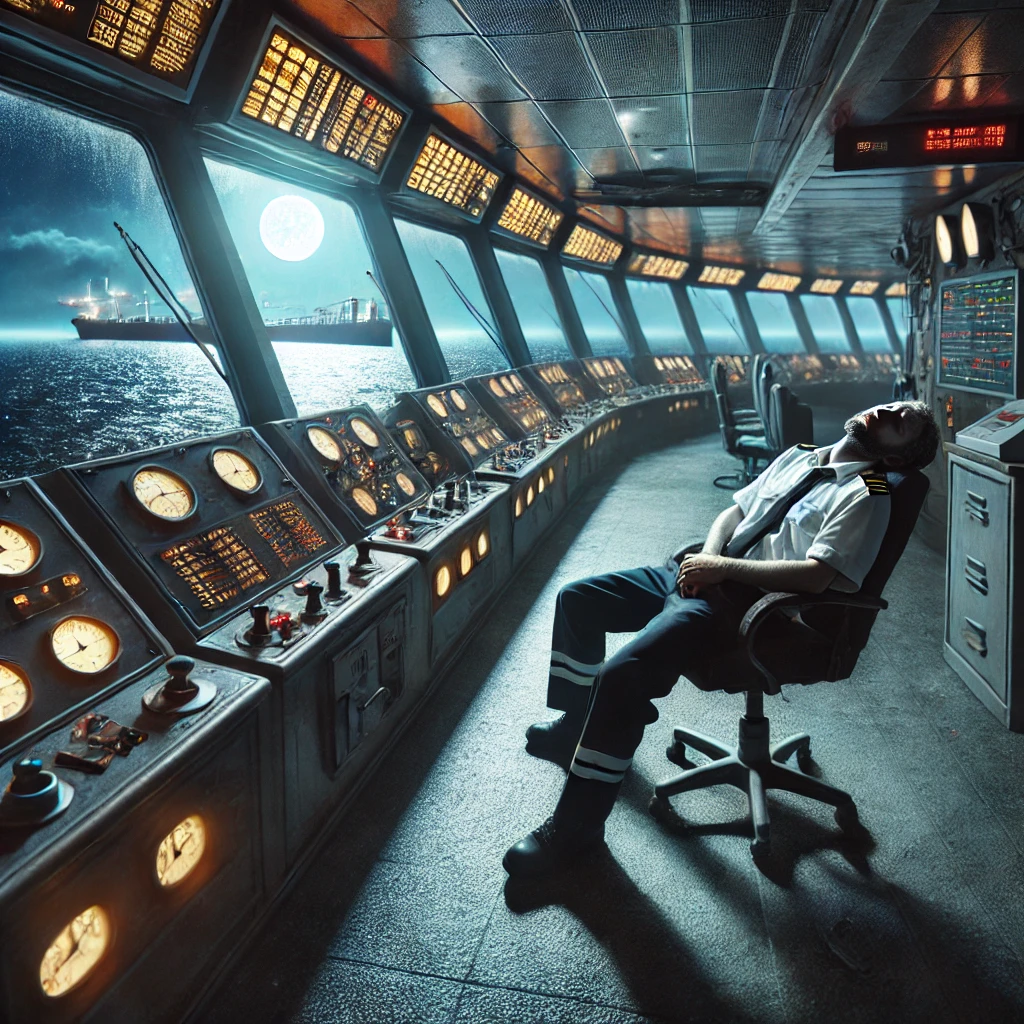
The system has been designed to mitigate against human fatigue, distraction and confusion in maritime operations, which can lead to incidents and accidents.

“AI-ris is always scanning for obstacles and can alert the operator of potentially dangerous situations. It also labels objects very small in size, like swimmers, kayakers or animals, to those very large, like another ship,” said CTO Trevor Vieweg, Sea Machines.

“With the ability to detect, classify and geolocate such targets via optical sensors, AI-ris augments and surpasses the capabilities of existing marine sensor technologies, like radar and automatic identification system (AIS), enabling greater performance and achieving the highest levels of safety. In the future, this technology may also help responders detect marine oil spills.”

AI-ris is available now and can be installed aboard existing vessels as well as newbuilds, the company says.


ABS has entered into a joint development project (JDP) with SpaceX to review the remotely controlled functions of autonomous rocket recovery droneships used for booster rocket recovery at sea.

The rocket recovery droneships are modified to include an expanded deck to increase the size of the landing platform, four thruster engines for propulsion and to hold on station, and blast shielding to protect electrical and engine equipment on deck. The droneships are entirely unmanned during landings, with a robot deployed on board to secure the rocket booster to the droneship before the vessel returns to port.

The project will review the design of one of SpaceX’s three rocket recovery droneships for compliance with the ABS Guide for Autonomous and Remote-Control Functions. Due to the unique and challenging operating requirements, ABS will apply a risk-based approach to the evaluation of the autonomous functions.


Strategic Marine (SMS) has partnered Sea Forrest Power Solutions (SFP) to develop and supply Asia’s First Hybrid Crew Transfer Vessel (CTV) targeted at the growing global offshore renewables sector.

When fully operational, 24 offshore service/industrial personnel and three crew members can be accommodated within the hybrid vessel travelling at a maximum of 26 knots. The parallel hybrid system boasts a reduction in main engine hours and maintenance, significantly reduces vessel noise and vibration and, depending on the vessel’s operational profile and charging facilities, is expected to reduce the vessel’s operational carbon footprint.

The CTV is designed to meet the specific requirements of Bureau Veritas Marine (Singapore). The scheduled delivery date will be around the 1st quarter 2023 and the CTV will be deployed in European waters.

The retrofittable system supplied by SFP utilizes Danfoss Editron motors and drivers. It uses a proprietary control system designed and developed inhouse by the SFP team in Singapore. The system is designed with architecture that allows for future firmware upgrades for efficiency improvement.

This vessel marks progression in Strategic Marine’s decarbonization goals across its product range and towards the sustainability and environmental roadmap for green maritime solutions for Singapore’s maritime industry.

The growing demands for more sustainable maritime solutions have provided Strategic Marine with opportunities to develop our capabilities and expertise into creating a greener standard for other industry players to learn from.

Commenting on the partnership, Chan Eng Yew, Chief Executive Officer of SMS, said that “Working with SFP and Danfoss to develop the first hybrid CTV in Southeast Asia places Strategic Marine on our first step towards our goals for marine sustainability and presenting a solution to the industry where we see a growing demand for hybrid vessels.  We are honored to partner with SFP and Danfoss in reaching this milestone.”

Partners to this vessel have gone into an MOU on 12 May to successfully complete and deliver the hybrid CTV.


Globalization makes the Malaysian maritime industry an international business which requires all relevant individuals to meet global standards.  The provision of Maritime Education and Training (MET) has been providing a significant talent pool for the port and shipping sector over the past decades.

In recent years, artificial intelligence, automation and digitalization are dramatically transforming the maritime business. These technologies have precipitated a profound social and economic revolution in the maritime industry. The future of the Malaysian MET must be envisioned in terms of local context as well as with an eye on the global stage.

Thus, we must learn to stay up to date with technological innovation. Future generations must be molded by inter-disciplinary learning, individually tailored and oriented on human skills.

Most MET programs now provide students with the opportunity to begin with theoretical knowledge that has been abstracted from applicability in the profession.  However, there seems to be a disconnect between theory and the “real” working world, and this is one of the biggest problems MET is facing right now.

To mitigate this problem, one strategy to assure educational quality and better prepare students for future jobs is to continuously update and included the latest technology and innovation into the curriculum and also to engage actively with the industry.

For the maritime industry to be sustainable, there is a need to switch from knowledge-based to competency-based training, and for working professionals to regularly learn and recertify their skills.  Therefore, collaboration between MET and the industry is important.

To meet the challenge of learning in this age of technology advancement and innovation, it is suggested that transformative learning be used by MET providers. Transformative learning is one theory of learning, and particularly focuses on adult education and young adult learning.

Transformative learning is also sometimes called transformational learning, and focuses on the idea that learners can adjust their thinking based on new information.  Transformative learning has three stages of “perspective transformation”, i.e., psychological (changes in understanding of the self), convictional (revision of belief systems), and behavioral (changes in lifestyle).

Focusing on transformative learning will help a new generation of students become professionals who are strong, curious, and creative, and will encourage students to learn how to be lifelong learners.  They will have the ability to adapt, be flexible, be able to recognize the importance of each scenario, appreciate other people’s perspectives, deal with rejection and failure, and keep moving forward regardless of the circumstances.

However, education is a long process, and so the government, MET providers and maritime stakeholders must work together and prioritize long-term plans which address the root of the problems over quick fixes.


BOSTON — Sea Machines Robotics Inc., a developer of autonomous command and control and advanced perception systems for the marine industries, has unveiled AI-ris, a new marine computer vision navigation sensor designed to improve safety and performance while vessels are underway, the company said June 21.

The company revealed this new technology during Seawork2022, the largest European commercial marine exhibition. Sea Machines’ AI-ris, (artificial intelligence recognition and identification system) uses digital cameras and AI-processing to detect, track, classify and geolocate objects, vessel traffic and other potential obstacles in the majority of operational conditions, day or night, to equip crew with best-in-class situational awareness. Computer vision helps improve safety for vessels and is also a critical technology for the advancement of autonomous command and control systems.

Boats and ships operate in the planet’s most dynamic environment and the limitations of conventional navigation sensors leave the bulk of perception work to the human eye and brain for continuous scanning of the waterway. Fatigue, distraction, and confusion can lead to misses and mistakes. The U.S. Coast Guard reported that in 2020, 36% of boating accidents were collisions and allisions, with the primary cause being improper lookouts and operator inattention. The commercial marine industry suffers from similar challenges. Sea Machines designed AI-ris to be ever alert, with the ability to deliver predictable operational results that can improve vessel reliability, as well as eliminate liabilities caused by human error.

“Sea Machines is dedicated to building the future of ocean mobility. We envision a future with fewer accidents at sea. We are revolutionizing marine navigation with data-driven intelligence, autonomy and connectivity,” said CEO Michael G. Johnson, Sea Machines. “AI-ris enables a tremendous performance and safety increase. The superior capabilities of computer vision and AI will ensure a safer, more productive voyage.”

“AI-ris is always scanning for obstacles and can alert the operator of potentially dangerous situations. It also labels objects very small in size, like swimmers, kayakers or animals, to those very large, like another ship,” said CTO Trevor Vieweg, Sea Machines. “With the ability to detect, classify and geolocate such targets via optical sensors, AI-ris augments and surpasses the capabilities of existing marine sensor technologies, like radar and automatic identification system, enabling greater performance and achieving the highest levels of safety. In the future, this technology may also help responders detect marine oil spills.”

AI-ris is commercially available now and can be installed aboard existing vessels, as well as new builds.


MASSPeople was launched in early 2021 with the task of bringing focus to the people behind the technology revolution currently gripping the maritime industry. The working group founded and chaired by Fugro with support from SeaBot Maritime has brought together multiple national maritime authorities representing the Netherlands, United Kingdom, Norway, Belgium, Denmark, France, New Zealand, Italy and Poland, to share in the challenge of developing world-class training and competency standards for the workforce of tomorrow. The involvement at the Flag State level is key for driving the conversation to the highest regulatory tables with the aim of aligning international standards and enabling MASS operators.

MASSPeople will work to develop new job profiles for the people involved in ensuring the safe operation of MASS. These profiles will inform recommendations on new competency standards for discussion at the International Maritime Organisation (IMO), where currently, a roadmap containing scope, steps and timelines is being prepared by the Maritime Safety Committee (MSC).

By focusing on the people who will operate this new technology, the group aims to ensure that workforce skills evolve effectively and align with high industry safety standards.

Ross Macfarlane, Fugro Remote Operations Program Manager UAE and Chairperson of the MASSPeople group, said: “By establishing MASSPeople, we are preparing for the future and the transition to remote and autonomous technology, which is already changing the way our industry operates. The involvement of the 9 Flag States in this group highlights the importance of people in the conversation when it comes to realising this new technology and how to effectively legislate for its introduction. This new technology contributes to creating a safe and liveable world, but ultimately, our people make change happen, and MASSPeople will ensure they are fully trained and supported in their important mission.”


Singapore-based Vallianz Holdings Limited has contracted Ulstein Design & Solutions BV for the development of a new, hybrid heavy transport vessel (HTV).

Designed for worldwide operations, the HTV will be deployed for the transportation of structures such as monopiles, jackets, transition pieces and turbine blades to support offshore wind farm projects, as well as heavy structure modules for LNG. It will also be able to support float over operations for offshore structures.

Featuring zero-emission capability, the DP-2 vessel will be the first of its kind, with a hybrid power system consisting of alternative dual fueled engines and a fully-classed battery energy storage system.

The new vessel, a customized Ulstein HX120 design, features the proven Ulstein X-Bow, which contributes to a reduced energy consumption and provides more comfortable and safer operations when sailing through waves.

With an overall length of 173.6 meters, the HTVwill have a free deck length of 145 meters. With a deck area of more than 6,000 square meters and deck strength of 25 tonnes per square meter, the new HTV can carry cargoes of up to 32,000 metric tonnes

The HTV’s electric battery system is to be provided by Canadian-based Shift Clean Energy, while Bureau Veritas will be responsible for the overall classification of the vessel.

To mark their collaboration, representatives from Vallianz, Ulstein, Shift and Bureau Veritas attended a signing ceremony held at Ulstein’s office in Rotterdam, in the Netherlands.

“This collaboration is a key development in the group’s strategy to build a stronger presence in the global offshore wind farm industry,” said Vallianz chairman Osman Ibrahim.

“In view of the anticipated increase in the size of monopiles and other components for offshore wind farms over the coming years, we believe there will be a growing demand for newer generation vessels like our HTV which can help to facilitate faster installation speed, better project economics and reduction of carbon footprint,” he added.


i4 Insight, a Lloyd’s Register subsidiary, has joined forces with Danelec, bringing together specialists in data collection and data analysis to provide customers with a more cost-effective solution to vessel performance optimisation.

Danelec currently works with over 10,000 vessels. This will provide copious amounts of new data which will be fed into the machine learning technology to allow it to jump to the next level of intelligence.

Joel Meltzner, i4 Insight CEO said; “Danelec are experts at accessing and collecting vessel data, they have equipment installed on thousands of vessels. Our new partnership now means that the Danelec data can be fed directly into our i4 fleet optimisation platform for AI analysis without any further equipment being installed. We can use this data to provide accurate and actionable insights for shipowners and charterers to improve vessel performance”

Casper Jensen, CEO of Danelec, said; “Partnering with i4 allows us to offer our customers a quick and easy plug-and-play solution to utilize the navigational and engine room data collected onboard to improve vessel efficiency while reducing their carbon-footprint to comply with upcoming emission reduction regulations”

Captain John Horner, who heads up the i4 Insight Alliance, said; “Our customers use the i4 Platform because they want one digital fleet performance platform and everything in one place. We pride ourselves on listening to customers and pushing the bar of innovation, so when we explored the possibility of Danelec joining the alliance it made a lot of sense.”

The goal of the i4 Alliance programme is to leverage the strengths from each partner to provide shipowners and charterers with more efficient and effective solutions centered around fleet management, vessel optimisation, and decarbonisation strategies.

“The key concept of the i4 Alliance, is not about simply adding unrelated partners but instead building a network of providers that complement one another and, more importantly, help shipping companies solve complex problems. This approach allows us to bring new, innovative, and integrated products and services to market very quickly, with the goal of exceeding our customers’ expectations,” said Meltzner.


(NEW YORK) — Americraft Marine on Monday announced the acquisition of St. Johns Ship Building, a full-service marine facility specializing in constructing and repairing Jones Act-compliant vessels, including those used to service offshore wind turbines.

Based in Palatka, Fla., near Jacksonville, St. Johns Ship Building specializes in the construction and repair of a wide variety of steel and aluminum vessels, including ferries, tugboats, deck and tank barges, landing craft, and general cargo vessels. It is also one of the few U.S. shipyards that builds vessels that support and service offshore wind farms.

Americraft Marine is a subsidiary of the Libra Group, a privately owned international business group whose subsidiaries own and operate assets in more than 50 countries. The announcement comes at a time of significant need for Jones Act-compliant vessels. The production of vessels in the United States has declined in recent years. In addition, significant shipbuilding capacity will be needed over the next 10 to 15 years to support the upcoming demand for vessels that construct and service renewable energy infrastructure.

On June 6, President Joe Biden invoked the Defense Production Act to address the urgent need for clean energy technologies made in America. This acquisition, long in the works, leverages the capabilities of St. Johns Ship Building in constructing offshore wind servicing vessels, along with Libra Group’s global experience in renewable energy and its maritime heritage.

With facilities including a storm-protected 100-acre inland campus with a 850-ton floating dry dock, St. Johns Ship Building is positioned to accelerate production of Jones Act-compliant vessels, particularly the construction and maintenance of offshore wind supply and support vessels. Americraft Marine intends to further bolster capacity at St. Johns Ship Building through workforce training, leveraging the yard’s expertise with the goal of creating a best-in-class, future-focused shipyard.

“As a group that has over 45 years of maritime heritage through our original subsidiary Lomar Shipping, as well as significant renewable energy experience through four global clean energy subsidiaries, we are proud to invest in the future of U.S. competitiveness and energy security,” said Libra Group Chairman and CEO George Logothetis. “With seasoned leaders who have decades of experience in the maritime industry and existing client relationships, Americraft Marine and St. Johns Ship Building will build upon and bolster the U.S. fleet, meeting government and customer needs while supporting the nation’s economic and clean energy future.”

The shipbuilding sector is critical to America’s strong industrial economy and provides economic opportunity to coastal communities through long-term jobs. It is also vital to U.S. energy independence, which has become more crucial due to ongoing trade tensions, the geopolitical landscape and economic climate.

“Americraft Marine is proud to acquire St. Johns Ship Building, which has the right leadership and skilled workforce to accelerate the future of U.S. shipbuilding and advance the urgent need for Jones Act-compliant, future-focused U.S. vessels,” said Omear Khalid, CEO of Americraft Marine. “Our goal is simple: to build a best-in-class, Jones Act-compliant shipyard. Americraft Marine will provide stable industrial jobs, invest in workforce training, and leverage St. Johns’ proven expertise as well as the historical maritime heritage of the Libra Group.”

The acquisition is the first for Americraft Marine, which anticipates future organic and acquisition-based growth that addresses the dire need for modern, state-of-the-art vessels, including those that are eco-friendly as more Jones Act-compliant vessels age out of work. The company expects future expansions to prioritize investments that are sustainable and position the U.S. for leadership in the clean energy future by building and maintaining vessels that support renewable energy projects.

– Americraft Marine


Company DETAILS

SHIP IP LTD
VAT:BG 202572176
Rakovski STR.145
Sofia,
Bulgaria
Phone ( +359) 24929284
E-mail: sales(at)shipip.com

ISO 9001:2015 CERTIFIED