A Hall Contracting backhoe dredge arrived in Port Hedland last week.

Due to its low clearance hull design, the dredge was transported from the Middle East on board a semi-submersible heavy load carrier.

After arriving at anchorage, the heavy load carrier was submersed, allowing the dredge to float off.

Now anchored at the Port of Port Hedland, prep work is underway on the dredge before dredging works commence at the Spoilbank Marina in early July.

Over the next few months, the backhoe dredge, accompanied by two split hopper barges, will start at the channel’s northern end and work toward the marina.

On completion, the 900-meter-long channel will be 2.5 meters deep at the lowest tide, enough to accommodate most recreational vessels.

Up to 190,000 cubic meters of marine sediments will be removed from the seabed and deposited at an existing offshore spoil ground, 12 kilometers away.


German trade union ver.di called on several thousand employees at German ports to take part in a 24-hour warning strike from Thursday morning, potentially further increasing difficulties at already strained ports.

Workers in Emden, Bremerhaven, Bremen, Brake, Wihelmshaven and Hamburg were called on to take part, after a fourth round of wage negotiations fell through. The union is demanding a pay rise of 1.20 euros ($1.26) per hour and inflation compensation over 12 months for some 12,000 workers.

The union had already called for temporary work stoppages to increase the pressure on employers at the start of June.

Ports are already clogged up as import containers are not being picked up and slots are in short supply, forcing shipping companies to go off schedule.

According to the Hamburg coordination office, half a dozen container ships are waiting to dock in Germany’s bay alone.

Industry experts expect the situation on the North Sea coast to worsen in the coming weeks, as many ships are on their way to Europe following the end of the lockdowns in China.


The computational fluid dynamics (CFD) industry faces increasing demand for efficiency, accuracy, and speed. In the shipping industry, rising fuel prices comprise more than half of expected shipping operating budgets, and especially when working with big volume vessels, even the most minor improvements in fuel consumption can save millions of dollars. Therefore, maximizing efficiency and optimizing every aspect of a vessel design is crucial, and CFD offers unprecedented possibilities for obtaining optimal design solutions.

Cadence® Fidelity™ Marine CFD simulation comprises dedicated, virtual naval architecture and marine design tools that function as a virtual towing tank, offering easy-to-use, scalable, highly automated optimization processes and unparalleled free surface modeling. Solve and optimize propulsion, resistance, seakeeping, wind studies, and maneuvering in your designs through our dedicated workflows and team. Equip yourself with the utmost accuracy and efficiency with Cadence CFD solutions.

With constantly changing sea, transport, loading, and racing conditions impacting the performance of your designs, hundreds or even thousands of simulation runs may be required for you to finalize a design and feel fully confident about the accuracy of its results. Automation is therefore crucial for minimizing turnaround speeds without compromising the accuracy of the results. Our solutions have automation in place for resistance at low and high Froude numbers, seakeeping, (self-)propulsion, trim optimization, open water propellers, and many other facets of ship CFD analysis. Our team of naval engineers has worked closely with our customers to create dedicated automation workflows. Whether you are deep in an America’s Cup or Vendee Globe campaign or are working to reduce drag and improve the propulsion efficiency of ships, you can trust our automated capabilities to provide you optimal results with accuracy and speed.

The Fidelity CFD platform is the end-to-end solution for all CFD-related applications. The dedicated tools within Fidelity CFD can solve each step of the simulation process quickly and efficiently. Furthermore, Fidelity CFD was designed with ease of use in mind with an intuitive and application-driven interface or through automated processes with the Python API or optimization module available.


Ocean Technologies Group (OTG) reports that it has developed a new Digital Delivery framework to manage content and software application updates, allowing relevant content to be delivered over-the-air (OTA) to users’ vessels and offices.

The hardware-agnostic service will be rolled out in stages to cover OTG’s maritime training brands, its TM Master fleet management operations software and its maritime HR package COMPAS.

“Since joining OTG, two things became clear to me immediately: One, our solutions are critical to teams onboard globally dispersed fleets. Two, reliance on physical logistics to get content or updates to ships is not only sub-optimal but has proved prone to disruption over the last two years of the pandemic,” said Ian Hepworth, Chief Technology Officer for Ocean Technologies Group.

“We are prioritising Digital Delivery to eliminate this risk and several others for our customers’ IT teams. Security is improved by eliminating the dependency on USB keys and email updates. Fewer machines need to be maintained on board as solutions can be installed as a virtual machine on existing hardware.”

“Finally, automation of data exchange ensures that everyone has the most up-to-date information, software, and content without needing to request it.”


Sea Machines Robotics has unveiled AI-ris, a computer-vision navigation sensor designed to improve safety and performance while vessels are underway. It uses digital cameras and AI-processing to detect, track, classify and geolocate objects, vessel traffic and other potential obstacles in the majority of operational conditions, day or night.

The company revealed AI-ris (Artificial Intelligence Recognition and Identification System) during Seawork2022, a European commercial marine exhibition. Computer vision helps improve safety for vessels and is also a critical technology for the advancement of autonomous command and control systems.

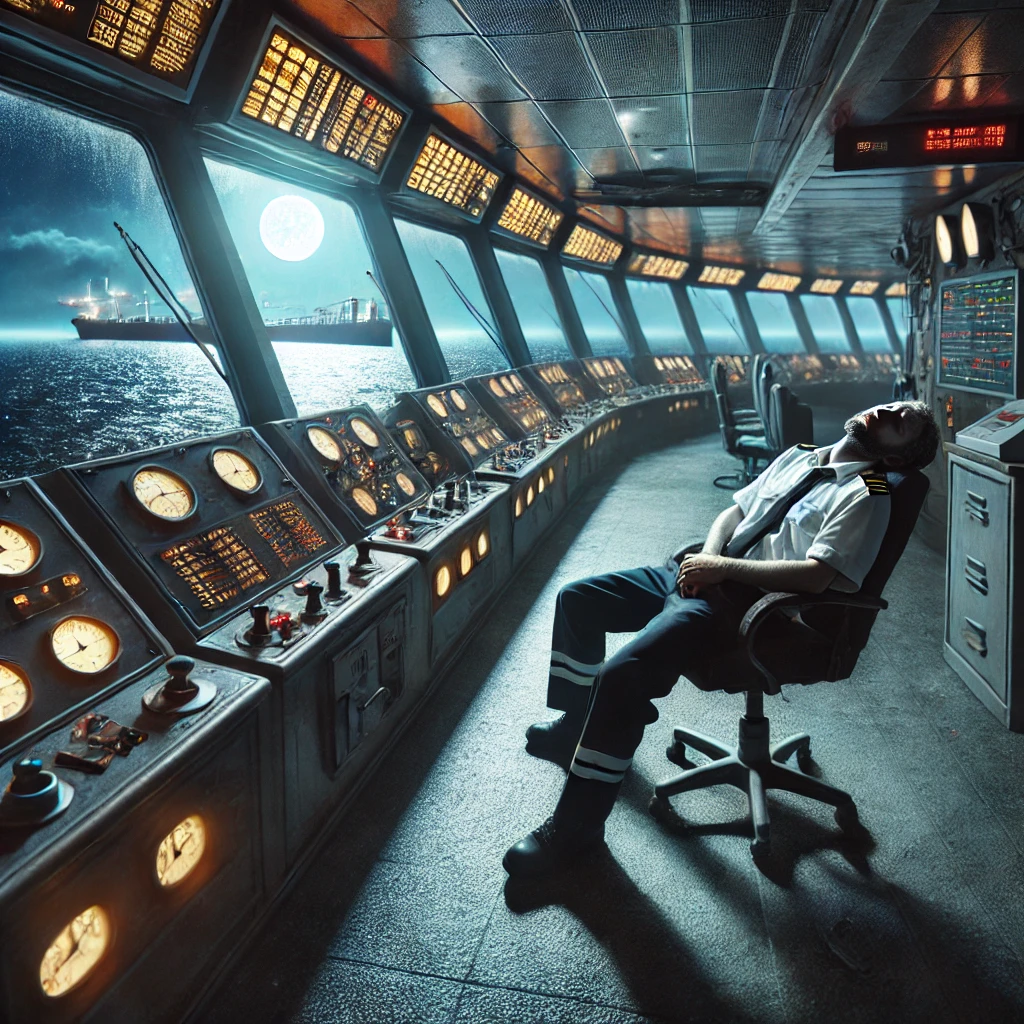
Conventional navigation sensors leave the bulk of perception work to the human eye and brain for continuous scanning of the waterway. Fatigue, distraction, and confusion can lead to misses and mistakes. The U.S. Coast Guard reported that in 2020, 36 per cent of boating accidents were collisions and allisions, with the primary cause being improper lookouts and operator inattention.


Ever-alert and always scanning

Sea Machines designed AI-ris to be ever-alert, with the ability to deliver predictable operational results that can improve vessel reliability, as well as eliminate liabilities caused by human error. Now commercially available, this technology can radically improve vessel safety.

‘We envision a future with fewer accidents at sea. We are revolutionising marine navigation with data-driven intelligence, autonomy and connectivity,’ says CEO Michael G. Johnson. ‘AI-ris enables a tremendous performance and safety increase. The superior capabilities of computer vision and AI will ensure a safer, more productive voyage.’

‘AI-ris is always scanning for obstacles and can alert the operator of potentially dangerous situations. It also labels objects very small in size, like swimmers, kayakers or animals, to those very large, like another ship,’ explains CTO Trevor Vieweg. ‘With the ability to detect, classify and geolocate such targets via optical sensors, AI-ris augments and surpasses the capabilities of existing marine sensor technologies, like radar and automatic identification system (AIS), enabling greater performance and achieving the highest levels of safety. In the future, this technology may also help responders detect marine oil spills.’


Autonomous Ship Expo is dedicated solely to showcasing the latest and next-generation solutions and technologies to enable varying degrees of automation – from anti-collision assistance to fully autonomous operation – across the ship and cargo handling sectors.

A truly global event, with exhibitors and visitors participating from all over the world, Autonomous Ship Expo conveniently brings together the latest autonomous navigation technology and automated onboard systems developers; sensor technology; e-navigation systems; automation software and maritime remote-control technology providers. Plus, leading companies that produce simulation, testing and validation solutions; cybersecurity and remote satellite communications that will help ship designers, fleet owners, naval architects, classification societies, port authorities, shipyards, terminal managers, equipment manufacturers and maritime research organizations prepare for the introduction of autonomous ships and operational challenges.

Autonomous Ship Expo Conference, which will run alongside the expo and will feature leading experts from around the world, who will present the latest technological innovations, case studies and research programs, providing a unique opportunity to exchange ideas and network with this pioneering community of maritime engineers.

Source: SMASH!


Two decades after the devastating Erika and Prestige accidents, the European maritime safety framework has evolved to become one of the most robust in the world. That’s according to the European Maritime Safety Report (EMSAFE), the first ever comprehensive overview of maritime safety in the European Union.

One of the key pillars of the EU safety framework is port state control, which results in over 14000 vessel checks each year by inspectors in EU ports, complemented by legislative initiatives like the specific EU survey regime for RoPax and high-speed craft, and the obligation for Member States to report and monitor accidents centrally for analysis and development of preventive actions. This legislation supports the implementation and enforcement of international conventions adopted at the International Maritime Organisation (IMO) by addressing specific risks and putting in place a centralised approach in support of maritime safety.

The EMSAFE report, published by the European Maritime Safety Agency (EMSA) also highlights the assistance that the Agency provides to the European Commission to check the implementation of EU legislation. In this regard, EMSA has carried out more than 300 visits to Member States on behalf of the Commission over the past two decades, as well as more than 300 inspections of EU recognised organisations, to which Member States are increasingly delegating tasks linked to their flag state responsibilities.

In addition, more than 70 inspections of maritime administrations, education, and training institutes in third countries were carried out in the same period, to assist the Commission in assessing compliance with the International Convention on Standards of Training, Certification, and Watchkeeping for Seafarers.

In 2020 alone more than 680 000 calls to EU ports were registered. The exchange of safety information between Member States in areas like dangerous cargo transported, vessel positioning data, and the registration of passengers, is therefore vital. Consequently, EMSA will continue to develop and improve SafeSeaNet, the EU-wide maritime data exchange, to offer facilitation services, simplify the fulfilment of reporting obligations, and support new and revised EU legislation. These developments consolidate the role of SafeSeaNet as the primary platform for maritime safety information in the EU.

EMSAFE is released at a time in which the EU Member State-flagged fleet is experiencing slower growth than that of world fleet (3.4% growth over the past five years as compared to 7% growth for the world fleet).


Although the average age of EU Member State-flagged vessels is broadly comparable to that of the world fleet, some ship categories are ageing, including passenger vessels, which have an average age of 28 years.

“Today’s report stands testimony to how the EU’s efforts to ensure maritime safety have been effective in preventing accidents and ensuring a high level of harmonised safety rules across the Union. At the same time, a single maritime accident can have catastrophic consequences for human life and the marine environment, so continuous vigilance and improvement remain essential. I welcome this worthwhile initiative, which provides an essential guide to the maritime safety situation and the issues with which we are confronted,” said EU Transport Commissioner, Adina Vălean.

“Safety is the cornerstone of all maritime activities. Without safety there can be no sustainability, no security, and no evolution of the maritime transport sector in the EU. Therefore, safety is at the heart of EMSA’s work, both now and in the future. But our report makes clear that maritime safety is, and always will be, a joint concern. Only by working together – at international, European, national, policy, industry, and stakeholder level – can we sustain the strong framework we have built over the past twenty years and continue to meet future challenges,” said the Executive Director of EMSA, Maja Markovčić Kostelac.

Future trends:

According to the report, maritime safety will continue to pose challenges in the short and medium term, not only in managing the current fleet, but also in the areas of digitalisation, emerging technologies, and sustainability.

  • The sector’s efforts to reach emission targets as part of the European Green Deal are also linked to maritime safety, especially given that the use of new fuels (hydrogen, methanol, ammonia, and biofuels) and power technologies (batteries and fuel cells) need to be underpinned by adequate safety standards.
  • In addition, the number of alternatively fuelled vehicles, including electric cars, increased by 29% between 2019 and 2021 in the EU, meaning that both passenger and cargo ships need to prepare for the safety risks of transporting more of these vehicles.
  • The report underlines that although autonomous ships offer new opportunities for industry, they also bring challenges in the regulatory and technical fields, including the need to develop a legal framework, standards, surveys, manoeuvres at sea and in port, and the qualifications of those on board, among others.


Source: EMSA

General cargo ship NAM THINH 126 issued distress signal at around noon Jun 22, being anchored at Hon Dau Anchorage, Hai Phong. The ship reported heavy portside list, danger of capsizing, 8 crew and 2 passengers going into life rafts. NAM THINH 126 was en route from Quy Nhon to Hai Phong with cargo of stones, she was caught in heavy swell while anchored, understood there was cargo shift, which caused capsizing and sinking. All 10 people were rescued. There are reportedly, some 153 tons of fuel on board, crew managed to seal off fuel tanks and fuel pipes before abandoning the ship, no leak reported so far.


Passenger ro-ro ship ANDROS QUEEN suffered fire in the morning Jun 21 at Perama Ship Repair Yard, Piraeus, in aft area, probably in engine room. Fire was extinguished by joint efforts of 2 SAR ships, 5 fire engines and crew, no injures reported, extent of damages unknown. The ship is undergoing repairs to be refitted for ferry services, since Apr 2022.


Navigare Capital Partners has entered into a new agreement with NJORD, a green technology business venture launched by Cargill, Mitsui and Maersk Tankers, which will see NJORD design and install a package of fuel-saving technologies on four Navigare-owned vessels.

The NJORD team will design and install a custom-made set-up for each of the ships, selecting from a portfolio of more than 15 technologies to optimise each vessel’s fuel performance. The goal is to achieve fuel and emission reductions of between six and 14 per cent per vessel on an annual basis, the new partners said.

As a first step, Navigare Capital Partners’ fleet of more than 20 vessels was screened to identify the fuel reduction potential. Following an analysis of the results, both parties decided to proceed with the first four vessels, one very large crude carrier and three container vessels.

“Aligned with our target of reaching net zero in 2050, and to ensure we are on the right trajectory, we will initiate a number of technological initiatives already at this stage,” said Mads Svensson, Technical Director, Navigare Capital Partners.

“With the perspective of our entire fleet, managed by several technical managers, we found it useful to take a similar approach across the fleet to streamline the process. Therefore, it was beneficial to engage with the NJORD team and gain from their experience to optimise our vessels.”

“With the best combination of green technologies installed on our fleet, at the timings we choose, it will enable us to keep our portfolio on trajectory towards a greener future.”


Company DETAILS

SHIP IP LTD
VAT:BG 202572176
Rakovski STR.145
Sofia,
Bulgaria
Phone ( +359) 24929284
E-mail: sales(at)shipip.com

ISO 9001:2015 CERTIFIED