UK Club’s Correspondent Vitsan has reported amendments and new provisions in the Turkish Environmental Law for Marine Pollution Incidents. These amendments were published in the Official Gazette on June 15th 2022.

The list of Category 4 pollutants, previously garbage and sewage discharge from the vessel, has been expanded to include:

  • Domestic wastewater
  • Water with detergent
  • Foam
  • Scrubber system washing waters
  • Similar washing waters and solid wastes etc.

New higher fines levels have been introduced for smaller vessels in respect of Category 4 pollution incidents.

Fines have also been introduced for use of fuels with sulphur content exceeding IMO designated limits.

If a marine pollution occurs within the “Special Environmental Protection Area” which is defined as The Marmara Sea (including the Istanbul Strait, Canakkale Strait and Izmit Bay), the potential level of fines will be doubled.

Terminals and Shore facilities will also be subjected to fines for failure to report pollution incidents.

https://www.ukpandi.com/news-and-resources/articles/2022/turkey-amendment-to-environmental-law-for-marine-pollution-incidents/


Vehicles carrier Lider Bulut (IMO 9198719) (Equasis and Marine Traffic name, Roro Feeder 1, AIS name report, Lider Bulut) developed a heavy starboard list and requested assistance when it was near Tuapse Port, Black Sea, Russia, during the evening of June 18. It was understood to have anchored on arrival from Samsun Turkey earlier in the day but to have developed a list – reportedly because of faulty ballasting – a few hours later. It heaved anchor and moved inshore. As of early June 19th the ship’s AIS was still on. The vessel was later confirmed by Russian Maritime Agency RosMoRechFlot to have been intentionally grounded, with water ingress. An SAR was underway and the ship was fenced off by several boom layers. There were 28 crew on board.

2000-built, Cyprus-flagged, 15,224 gt RoRo Feeder 1 is owned by Ugland Castor Car Carrier I AS care of Matrix ShipManagement Ltd of Limassol, Cyprus.

Two people on chemical/oil products tanker Nord Magic (IMO 9392793) which was anchored at Chittagong Anchorage, termed by the operator as “riding personnel”, died during the night of June 17th while checking empty cargo tank, according to local sources. They were taken to hospital but declared dead on arrival. The tanker arrived at Chittagong on June 15th after offloading cargo of soybean oil. There were 25 crew on board, mainly Indian nationals.

Norden said that “the two people who have very sadly passed away are not NSSM crew, they are riding personnel. The cause of the sad incident is still unknown.”

2009-built, Denmark-flagged, 29,266 gt Nord Magic is owned by Norden Asset Management AS of Hellerup, Denmark. It is managed by Norient Product Pool APS of Hellerup, Denmark. ISM manager is Norden Synergy Ship Management AS of Hellerup, Denmark. It is entered with North of England Club on behalf of Norden Asset Management AS. As of June 20th it was at anchor off Chittagong.

Fishing vessel Aleksandr Shalin (IMO 8832978) was in collision with fishing vessel Zaliv Petra (IMO 9130822) on June 16th in the Sea of Okhotsk, about 100nm southeast of Magadan. The Zaliv Petra was damaged at the hull on the starboard side aft. The vessel remained seaworthy and headed to the port of Busan for repairs. The Aleksandr Shalin suffered minor damage to the bow.

1990-built, Russia-flagged, 862 gt Aleksandr Shalin is owned and managed by Mag-Sea International of Magadan, Russia. As of June 19th the vessel was underway off Vladivostok, Russia.

1995-built, Russia-flagged, 748 gt Zaliv Petra is owned and managed by Sevrybflot LLC of Yuzhno-Sakhalinsk, Russia. As of June 18th it was underway off Busan, South Korea.

Passenger ship Aegean Odyssey (IMO 7225910) was asked to leave the port of Nice a few hours after its arrival on June 16th following complaints from residents about the fumes it was emitting. Following a decision taken by the harbour master’s office, the vessel, carrying 300 passengers, sailed within the hour, just before midnight. The decision by the harbour master’s office and with the backing of the municipal authorities was taken under port police law. Local residents had begun complaining around 19:00 local time following the release of smoke and the noise made by its engines. The maritime agent Medov France, based in Marseilles, in charge of the stopovers of the ship on behalf of a charter company, asked for explanations from the port authorities on this decision, indicating in particular that it harmed the “reputation” of the company. The ship arrived on June 17th in the port of Toulon.

1973-built, Panama-flagged, 12,094 gt Aegean Odyssey is owned by Aegean Odyssey Maritime Pan of Piraeus, Greece. It is managed by Aegean Experience Maritime Lib of Piraeus, Greece. It is entered with American Club on behalf of Aegean OdysseyMaritime Co SA. As of June 20th it was at Marseille Port.
GROUND-BREAKING MARINE PERCEPTION SENSOR PROVIDES HIGH-DEFINITION SITUATIONAL AWARENESS TO ELIMINATE AT-SEA COLLISIONS AND ALLISIONS, AND INCREASE OPERATIONAL PERFORMANCE​​​​

​​​​

(BOSTON; June 21, 2022) – Sea Machines Robotics, Inc., the leading developer of autonomous command and control and advanced perception systems for the marine industries, today unveiled AI-ris, a new marine computer-vision navigation sensor designed to improve safety and performance while vessels are underway. The company revealed this new technology during Seawork2022, the largest European commercial marine exhibition. Sea Machines’ AI-ris, (Artificial Intelligence Recognition and Identification System) uses digital cameras and AI-processing to detect, track, classify and geolocate objects, vessel traffic and other potential obstacles in the majority of operational conditions, day or night, to equip crew with best-in-class situational awareness. Computer vision helps improve safety for vessels and is also a critical technology for the advancement of autonomous command and control systems.

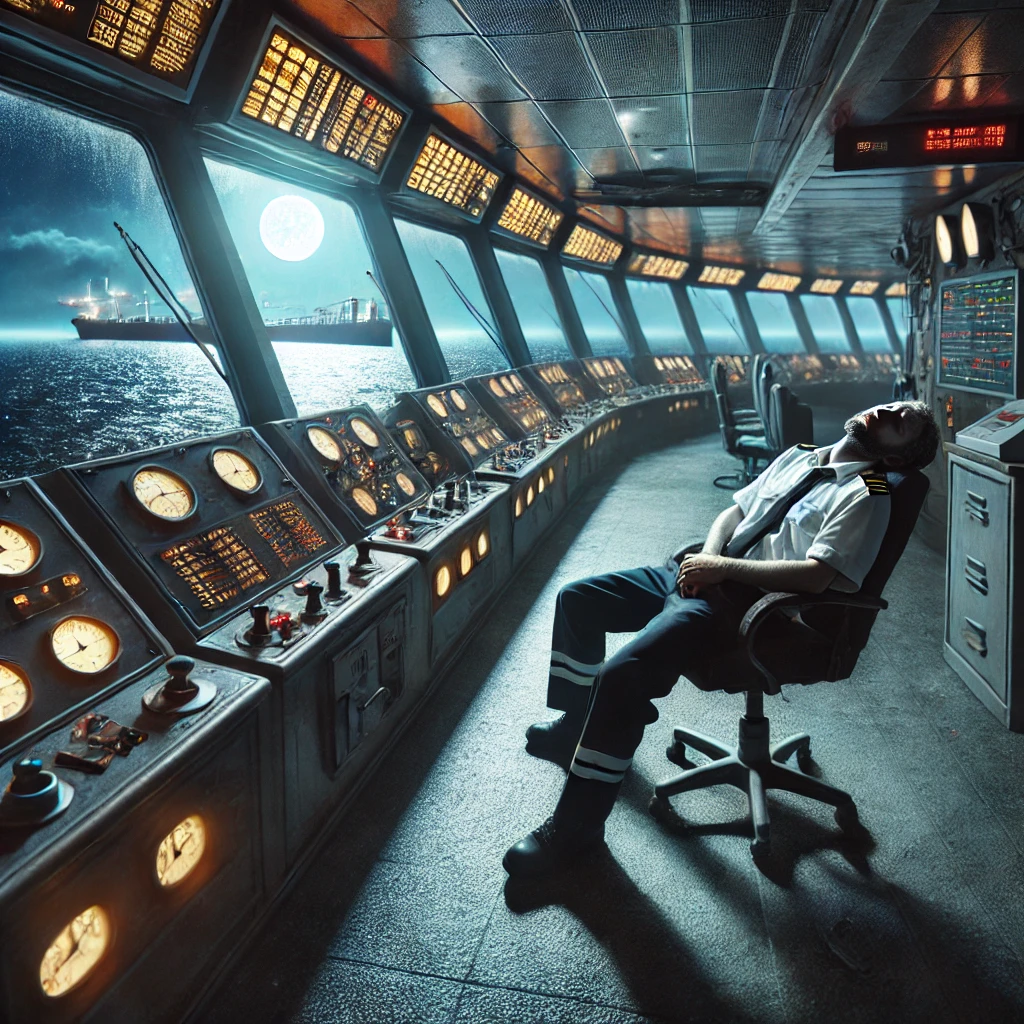
The need for this technology is clear. Boats and ships operate in the planet’s most dynamic environment and the limitations of conventional navigation sensors leave the bulk of perception work to the human eye and brain for continuous scanning of the waterway. Fatigue, distraction, and confusion can lead to misses and mistakes. The U.S. Coast Guard reported that in 2020, 36 percent of boating accidents were collisions and allisions, with the primary cause being improper lookouts and operator inattention. The commercial marine industry suffers from similar challenges. Sea Machines designed AI-ris to be ever-alert, with the ability to deliver predictable operational results that can improve vessel reliability, as well as eliminate liabilities caused by human error. Now commercially available, this technology can radically improve vessel safety.

“Sea Machines is dedicated to building the future of ocean mobility. We envision a future with fewer accidents at sea. We are revolutionizing marine navigation with data-driven intelligence, autonomy and connectivity,” said CEO Michael G. Johnson, Sea Machines. “AI-ris enables a tremendous performance and safety increase. The superior capabilities of computer vision and AI will ensure a safer, more productive voyage.”

“AI-ris is always scanning for obstacles and can alert the operator of potentially dangerous situations. It also labels objects very small in size, like swimmers, kayakers or animals, to those very large, like another ship,” said CTO Trevor Vieweg, Sea Machines. “With the ability to detect, classify and geolocate such targets via optical sensors, AI-ris augments and surpasses the capabilities of existing marine sensor technologies, like radar and automatic identification system (AIS), enabling greater performance and achieving the highest levels of safety. In the future, this technology may also help responders detect marine oil spills.”


The agreement links Marlink’s smart hybrid connectivity with the remote digital and safety services provided by BV. Having identified crossovers in their mutual customer base, the partners will collaborate to help enable maritime stakeholders to more easily adopt cyber-strengthened digital tools and applications using the Marlink network.

The partners have put in place a working group to support shipowners around improving the cyber security of vessel data collection and facilitating compliance with regulation. This aims to support remote and digital operation modes on a journey to smarter, remote and, ultimately, autonomous ships with zero-emissions.

The duo has also identified the need for dedicated channels of co-operation recognising a common interest in removing the barriers to smarter, cleaner vessel operations. The organisations will seize opportunities to work outside the silos that have held back the industry from accessing data that can lower operating costs, save fuel and drive compliance.

The partner program will be expanded over time, with a proactive approach towards new areas of collaboration bringing in new initiatives where possible, ultimately leading the industry into new eras around smart shipping, unmanned and autonomous vessels. As well as simplifying implementation of cyber security standards for shipyards, the agreement is ‘open source’ enabling third party application providers, start-ups and software developers to participate where appropriate.

“This is a partnership with real purpose whose foremost point is to take action to integrate digital tools and services that can bring value for shipowners and encourage and further develop cyber-secure, innovative Class operations,” said Matthieu de Tugny, president, Bureau Veritas, Marine & Offshore. “BV is dedicated to helping our clients understand and manage the challenges of decarbonisation and adopt the digital tools that can support the transition.”

“Shipowners face huge efficiency and compliance challenges over the next decade and these need to be considered now to create a future-proof path that can integrate core operational components onboard and ashore,” said Tore Morten Olsen, president, maritime, Marlink. “Digitalisation is critical to improving voyage optimisation and vessel performance, achieving regulatory compliance and meeting ESG goals, but shipowners shouldn’t have to act as project managers – this partnership means they can streamline and simplify their digital journey based on Class guidelines and recommendations.”


Boston-based Sea Machines Robotics, Inc. has just unveiled a new marine computer vision navigation system designed to improve safety and performance while vessels are underway.

Sea Machines’ new AI-ris, (Artificial Intelligence Recognition and Identification System) uses digital cameras and AI-processing to detect, track, classify and geolocate objects, vessel traffic and other potential obstacles in the majority of operational conditions, day or night, to equip crew with best-in-class situational awareness. Computer vision helps improve safety for vessels and is also a critical technology for the advancement of autonomous command and control systems.

The need for this technology is clear. Boats and ships operate in the planet’s most dynamic environment and the limitations of conventional navigation sensors leave the bulk of perception work to the human eye and brain for continuous scanning of the waterway.

Fatigue, distraction, and confusion can lead to misses and mistakes. The U.S. Coast Guard reported that in 2020, 36 percent of boating accidents were collisions and allisions, with the primary cause being improper lookouts and operator inattention.

The commercial marine industry suffers from similar challenges. Sea Machines designed AI-ris to be ever-alert, with the ability to deliver predictable operational results that can improve vessel reliability, as well as eliminate liabilities caused by human error. Now commercially available, this technology can radically improve vessel safety.

THE FUTURE OF OCEAN MOBILITY

“Sea Machines is dedicated to building the future of ocean mobility. We envision a future with fewer accidents at sea. We are revolutionizing marine navigation with data-driven intelligence, autonomy and connectivity,” said Sea Machines CEO Michael G. Johnson. “AI-ris enables a tremendous performance and safety increase. The superior capabilities of computer vision and AI will ensure a safer, more productive voyage.”

“AI-ris is always scanning for obstacles and can alert the operator of potentially dangerous situations. It also labels objects very small in size, like swimmers, kayakers or animals, to those very large, like another ship,” said Trevor Vieweg, CTO at Sea Machines. “With the ability to detect, classify and geolocate such targets via optical sensors, AI-ris augments and surpasses the capabilities of existing marine sensor technologies, like radar and automatic identification system (AIS), enabling greater performance and achieving the highest levels of safety. In the future, this technology may also help responders detect marine oil spills.”

The AI-ris navigation system is commercially available now and can be installed aboard existing vessels, as well as newbuilds.


RETIRED Vice Admiral Rene Villena Medina tendered his resignation as executive director of the STCW Office of the Maritime Industry Authority (Marina) on Friday (June 17).

In a letter to President-elect Ferdinand Marcos Jr., Medina said he resigned to give way to the new administration, adding that he already completed his tasks for the STCW Office.

“With the feeling of having accomplished nearly all the goals that I have set to do for this organization and to give way to your incoming administration, I am now tendering my courtesy resignation at the Marina, as the executive director of the STCW Office,” he said.

He believes he is leaving the office with a legacy of dignity and integrity that is expected of a public servant. “I am confident that the next in line can expect a smooth turn-over of all documents and responsibilities. It has been my pleasure and honor to serve this government, especially to be of service to our Filipino seafarers who continuously sail the seven seas.”

“May this courtesy resignation take effect upon approval,” Medina said.

Medina was appointed as executive director of the STCW Office on March 30, 2021. At that time, he was tasked to ensure the Philippines’ full compliance with the International Convention on Standards of Training, Certification and Watchkeeping (STCW) Convention, 1978, as amended.

Before his appointment, he served as the commander of the naval forces in Western Mindanao, the largest naval operating command in the country for two years.

In the earlier years of his career, Medina served the Philippine Coast Guard (PCG) in different capacities.

He was the port state control officer of South Harbor Manila, and the commander of the Sealift Amphibious Force and commander of Naval Education and Training Command.

Medina received the esteemed Order of the Lapu-Lapu, which was personally awarded to him by President Duterte. The Order of the Lapu-Lapu is a national order of merit granted to those who have exhibited an extraordinary standard of service in their respective positions.


The Coast Guard Office of Design and Engineering Standards has released Marine Safety Alert 05-22, to inform the Coast Guard Officers in Charge, Marine Inspection (OCMI) and the maritime industry that double block and bleed systems design, installed and operated in accordance with 74 SOLAS (14) II-2/5.5 are authorized under 46 CFR § 32.53-10(b) without the need for approval from the Coast Guard Marine Safety Center (MSC).

A “non-return device” functions in the Inert Gas System (IGS) to prevent hazardous or flammable cargo vapors from flowing from cargo areas back towards machinery spaces and possible ignition sources. The double block and bleed valve arrangement isolates or blocks the return of gas from the cargo area to the engine room and permits the bleeding of any residual gas in the IGS.

Title 46 CFR Subchapter D, Subpart 32.53 contains the applicability and technical requirements for IGS on tankship vessels. Currently, 46 CFR § 32.53-10(b) requires each IGS be “designed, constructed, and installed in accordance with the provisions of SOLAS II-2, Regulation 62 . . . .” However, Regulation 62, has been superseded by SOLAS Chapter II-2, Regulation 5.5.1 This revised regulation requires compliance with the International Maritime Organization (IMO) Fire Safety Systems Code (FSS Code), Chapter 15, which includes the ability of applicable vessels to use a double block and bleed system in addition to a deck water seal. 2

As such, a non-return device arranged as a double block and bleed in accordance with the FSS Code may be accepted without MSC approval. However, MSC approval or certification by a Recognized Organization (RO) under 46 CFR Part 8 must still be obtained for dry seal types. Coast Guard Port State Control Officers who examine a vessel without an MSC or RO approval for a dry deck seal type should issue a deficiency to be rectified prior to next U.S. port after sailing foreign (Code 40).

This notice should be utilized until changes are incorporated into the Code of Federal Regulations (CFR). Questions concerning this notice or vessel inert gas systems may be forwarded to Coast Guard Office of Design and Engineering Standards, at: typeapproval@uscg.mil.

1 Under SOLAS Chapter II-2, Regulation 5.5, the Administration has the ability, after giving consideration to the ship’s arrangement
and equipment, to accept other fixed installations.
Chapter 15 is amended by IMO Circular MSC.367(93). Paragraph 2.2.3.1.2 of IMO MSC.367(93) states, “The first non-return
device shall be a deck seal of the wet, semi-wet, or dry type or a double block and bleed arrangement.”


Three injured crew members have been taken to hospital following an explosion on a Mediterranean Shipping Co (MSC) container ship off France.

The blast occurred in the engine room of the 8,189-teu MSC Rachele (built 2005) on Tuesday morning, according to the French Mediterranean Maritime Authority.

The incident caused a fire on board and the ship lost power.

Regional emergency authorities were alerted when the vessel was about 40km off Cape Cepet, en route for Fos-sur-Mer.

Several army helicopters and medical teams were sent to the scene, and the three injured seafarers were airlifted from the boxship.

Two of the wounded were evacuated to the Sainte-Anne military hospital in Toulon, and the third to the Sainte-Musse hospital.

There has been no word on their condition.

Switzerland-based MSC has been contacted for further information.

France Bleu reported that the MSC Rachele had been due to be towed overnight to the port of Marseille by a towage company contracted by the shipowner. AIS data shows it anchored there on Wednesday morning.

French authorities ordered the activation of level two of the Organisation de la Reponse de Securite Civile (ORSEC) plan, making it possible to mobilise reinforcements and experts in the area.

Blaze brought under control

The fire on board the vessel was reported to be under control by the afternoon.

Damage to the Panama-flag ship is not yet known.

No immediate threat was identified in terms of pollution or maritime safety.

The MSC Rachele is entered with the North of England protection and indemnity club, as of May this year.

The ship has a clean port state control detention record stretching back to its delivery.


IMO is assisting Namibia’s maritime administration to put in place a legal framework that gives full and complete effect to IMO instruments dealing with maritime security. A five-day workshop (20-24 June) hosted by the Namibian Directorate of Maritime Affairs (DMA), in Walvis Bay, Namibia, is bringing together 26 participants from key national agencies*.

The event, which included a site visit to the Port of Walvis Bay, marks IMO’s first visit to Namibia under the EU Port Security Project. It is anticipated that future workshops will involve further collaboration between implementing partners IMO, UNODC and INTERPOL, with coordination from the Indian Ocean Commission (IOC) and funded by the European Union.

* the Office of the Attorney General; Office of the Prosecutor General; Ministry of Defence; Ministry of Home Affairs; Namibian Ports Authority (NAMPORT); Ministry of Environment; Forestry and Tourism; Ministry of Justice; Ministry of Fisheries and Marine Resources; Ministry of Mines and Energy.


he widely respected veteran association, which now represents more than 80% of the world fleet, deferred the celebration from last year as a result of the pandemic.

Chairman Esben Poulsson, who this week completes an outstandingly successful term as chairman, drew historical parallels in his speech to guests between the challenges which the organisation was set up to address and those which confront it today.

Under its original name, the International Shipping Conference, the organisation held its first meeting at the Hotel Victoria in London in 1921.  In the spirit of international cooperation which prevailed following the establishment of the League of Nations two years earlier, 14 national shipowner associations agreed to work together to respond to the international regulatory regime then emerging, and to promote the principle of freedom of the seas. The achievement of consultative status at the IMO in 1961 was the starting point for ICS’s role representing global shipping’s views at IMO meetings.

The organisation now includes 34 national associations, but its core purpose remains the same.  These days the key issues include decarbonisation, the theme of its one-day conference this week, and the industry response to digital technologies.

But a sharp focus at the dinner was on seafarer welfare, a subject on which the ICS has been outspoken throughout the pandemic.  There is little doubt that it will continue to be a big preoccupation under its new Chairman, Emanuele Grimaldi, supported by Secretary General Guy Platten.


Company DETAILS

SHIP IP LTD
VAT:BG 202572176
Rakovski STR.145
Sofia,
Bulgaria
Phone ( +359) 24929284
E-mail: sales(at)shipip.com

ISO 9001:2015 CERTIFIED