
A trio of Covid-19 related risks, inlcuding Business interruption (#1 with 41% responses), Pandemic outbreak (#2 with 40%), and Cyber incidents (#3 with 40%), makes the top three global business risks awaited this year, according to the 10th Allianz Risk Barometer 2021.

The Allianz Risk Barometer is an annual report identifying the top corporate risks for the next 12 months and beyond, based on the insight of more than 2,700 risk management experts from 92 countries and territories.

GET THE SAFETY4SEA IN YOUR INBOX!

The survey focused on large- and small- to mid-size enterprises and respondents were asked to select the industry about which they were particularly knowledgeable and to name up to three risks they believed to be most important.
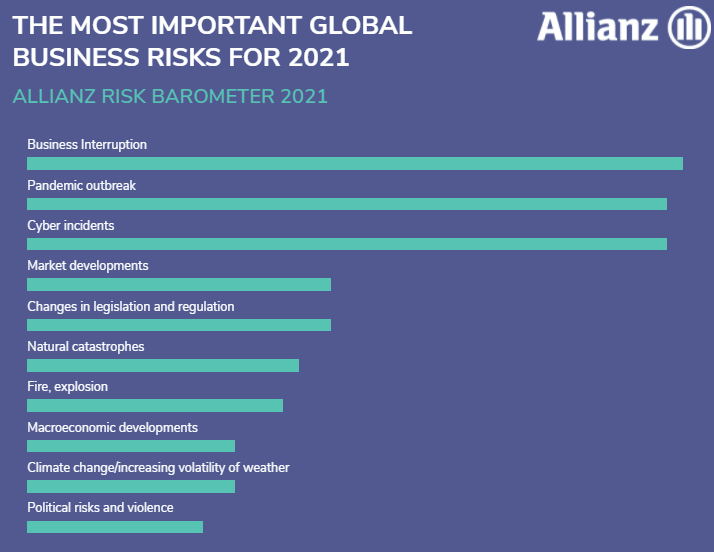
Source: Allianz Global Corporate & Specialty

All of the top three risks – and many of the others in this year’s top 10 – are interlinked, demonstrating the growing vulnerabilities and uncertainty of a highly globalized and connected world, where actions in one place can spread rapidly to have global effects, the report notes.

It is noted that, prior to the pandemic, business interruption had already finished at the top of the Allianz Risk Barometer seven times over the past decade. Meanwhile, cyber risk has regularly ranked in the top three corporate perils in recent years, coming first in 2020.

The pandemic has demonstrated just how vulnerable the world is to unpredictable and extreme events and has highlighted the downside of global production and supply chains,

…the report notes.

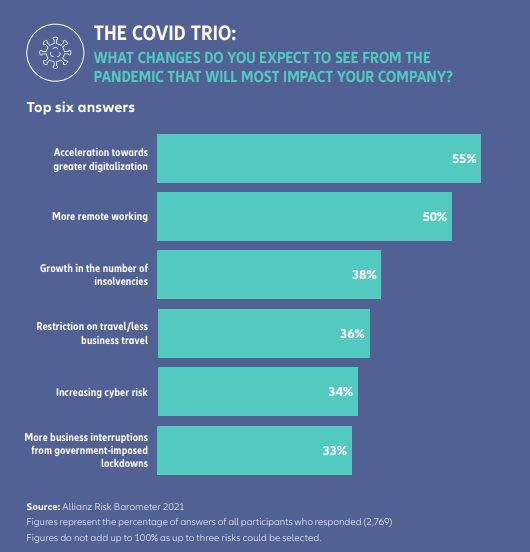
When asked which change caused by the pandemic will most impact businesses, Allianz Risk Barometer respondents cited the acceleration towards greater digitalization, followed by more remote working, growth in the number of insolvencies, restrictions on travel/ less business travel and increasing cyber risk.
The outbreak has also shown that business interruption is highly correlated with many of the risks of most concern to businesses today as identified in the Allianz Risk Barometer, such as natural catastrophes and climate change, political risks and civil unrest, and even rapid changes in markets, in addition to cyber.

A number of the climbers in 2021 – such as market developments, macroeconomic developments and political risks and violence – are in large part a consequence of the coronavirus outbreak. For example, the pandemic was accompanied by civil unrest in the US related to the Black Lives Matter movement, while anti-government protest movements simmer in parts of Latin America, Middle East and Asia, driven by inequality and a lack of democracy.

One of the big lessons learned from the pandemic is that extreme business interruption events are not just theoretical, but a real possibility.

For example, a new strain of Covid-19 even led to the sudden closure of UK ports and borders in late December 2020, coinciding with existing port congestion during the Christmas period and the end of the Brexit transition period. Other potential triggers for large-scale business interruption events in the future could include environmental or natural disasters, further disease outbreaks, a large-scale cyberattack or blackout, or even a solar storm.

The consequences of the pandemic are also likely to heighten business interruption risks in other areas in coming years. Even as the immediate health risks of the pandemic ebb with vaccinations, the accelerated push to digitalization will likely bring new risks, while the economic, societal, and political repercussions of the pandemic could also bring sources of disruption for years to come.

Looking forward, the pandemic shows companies need to prepare for a wider range of business interruption triggers and extreme events than previously. Building greater resilience in supply chains and business models will be critical for managing future exposures.

DOWNLOAD THE FULL ALLIANZ REPORT HERE

SOURCE READ THE FULL ARTICLE

https://safety4sea.com/what-to-watch-when-using-tow-ropes/


Dirty tanker rates saw mixed movement in May, although they remain at low levels, OPEC said in its latest monthly report for the month of June. The improving US market supported rates on the UK-US route, while very low rates on the Mideast-Asia Pacific route edged up amid anticipation of the end of seasonal maintenance. Meanwhile, clean rates were largely steady, with rates on the UK to US Atlantic Coast boosted earlier in the month, supported by disruptions on the Colonial Pipeline.


There has been a slight improvement in sentiment regarding the outlook for dirty tanker rates in 2H21, although scrapping will need to pick up to better balance ample tonnage supply with slightly improving cargo demand. Spot fixtures Global spot fixtures declined m-o-m in May, falling by 1.3 mb/d, or around 8%, to average 14.7 mb/d. Spot fixtures were around 2.2 mb/d, or 13%, lower than the same month last year. A pickup in departures to China helped support fixtures, although uncertainties due to lockdown measures in other Asian countries undercut further gains.

OPEC spot fixtures edged lower m-o-m in May, down by 0.1 mb/d, or a little over 1%, to average 10.0 mb/d. Higher flows to China were offset by lower volumes to Japan and India amid renewed lockdown measures. Compared with the same month last year, OPEC spot fixtures were around 9% lower, down by 0.9 mb/d. Fixtures from the Middle East-to-East provided the one bright note for the month, averaging 6.2 mb/d in May, representing an increase of 18% m-o-m or 0.9 mb/d. Gains were driven by increased inflows from the region to China, with the winding down of seasonal maintenance. Y-o-y, the route saw a decline of 0.7 mb/d, or just under 10%. Middle East-to-West fixtures declined 29%, or around 0.3 mb/d m-o-m, to average around 0.9 mb/d. The decrease was due to lower buying in the Eastern Mediterranean which offset increased flows to Italy. This was almost 0.2 mb/d, or 18%, lower than in the same month last year. Outside Middle East fixtures fell by more than 0.7 mb/d, or close to 20% m-o-m, to average 3.0 mb/d. Y-o-y, fixtures were down by just over 4%, or around 0.1 mb/d.

Sailings and arrivals
OPEC sailings were broadly unchanged in May from the previous month, averaging 21.4 mb/d. Y-o-y, OPEC sailings were slightly lower, down 0.1 mb/d, or less than 1%. Middle East sailings picked up m-o-m in May to average 15.7 mb/d. This represents a gain of 0.4 mb/d m-o-m or around 3%. Y-o-y, sailings from the region increased 1.3 mb/d, or 9%, compared with the same month last year. With the exception of West Asia, crude arrivals were higher m-o-m on all routes in May. Arrivals in North America averaged 8.5 mb/d, representing a gain of 0.2 mb/d m-o-m, or around 2%, and a 0.7 mb/d, or over 8% increase y-o-y. Arrivals in the Far East averaged 12.6 mb/d, an increase of 0.2 mb/d, or around 1% m-o-m, and a massive 4.3 mb/d, or 53%, higher than the same month last year. Arrivals in West Asia saw the sole m-o-m decline, falling 0.2 mb/d, or close to 3%, to average 6.3 mb/d. Y-o-y, West Asia arrivals were 1.7 mb/d, or 37%, higher.

Dirty tanker freight rates
Very large crude carriers (VLCCs) VLCC spot rates in May were broadly flat on average compared to the previous month, but were some 40% lower compared with the same month last year. Rates on the Middle East-to-East ticked up 3% m-o-m to average WS34 points, supported by flows to China ahead of the end of seasonal maintenance. Gains were tempered by lower flows to India and Japan, amid uncertainties due to renewed lockdown measures. Y-o-y, rates were 43% below the same month last year.

Rates on the Middle East-to-West route was unchanged on average m-o-m in May at WS22 points, amid steady buying by Italy. Y-o-y, rates were 35% lower. Meanwhile, the West Africa-to-East route showed gains of 3% m-o-m in May, averaging WS36, amid higher buying by China. Rates were 38% lower compared with May 2020.

Suezmax
Suezmax rates continued to slide in May, declining 13%. Compared with the same month last year, average Suezmax rates were 42% lower. On the West Africa-to-USGC route, rates averaged WS46, a decline of 13% compared to the month before. Y-o-y, rates were 39% lower than in April 2020. Meanwhile, spot freight rates on the USGC-to-Europe route fell 11% m-o-m to average WS39 points. This was 45% lower compared with the same month last year.

Aframax
Aframax rates recovered some of the decline seen in the previous month, rising 4% m-o-m in May. This was still 22% lower than the same month last year.


The biggest gains were seen on the Caribbean-to-USEC route, which rose 14% m-o-m to average WS103. Y-o-y, rates on the route were 16% lower. Med routes also experienced diverse movements m-o-m in May. The Cross-Med route averaged WS87 in May, representing an increase of 1% over the previous month. Compared to the same month last year, rates were 17% lower. In contrast, the Mediterranean-to-Northwest Europe (NWE) route declined 8% m-o-m in May to average WS78. Compared to the same month last year, rates on the route were 19% lower

Clean tanker freight rates
Clean spot freight rates slipped lower in May, declining 2% with losses East of Suez offsetting lesser gains West of Suez. Rates to the east declined 11% m-o-m, while rates to the west rose 3% over the same period. Compared to the same month last year, East of Suez rates were 52% lower while West of Suez rates were down 13%.


The Middle East-to-East route led losses in May, declining 22% to average WS93. The decline came amid uncertainty due to renewed lockdown measures in Japan. This represented a 63% decrease compared with the same month last year. A similar dynamic drove the m-o-m decline in clean freight rates on the Singaporeto-East route, which slipped 1% in May to average WS146. Rates were 40% lower compared with May 2020. In contrast, the Cross-Med and Med-to-NWE routes saw gains, increasing by 1% each, to average WS149 and WS159 points, respectively. Rates on the NWE-to-USEC route experienced the biggest gains m-o-m, up 7%, to average WS132 points. Rates were 8% lower compared with the same month last year.

Nikos Roussanoglou, Hellenic Shipping News Worldwide


SOURCE READ THE FULL ARTICLE

https://www.hellenicshippingnews.com/tanker-market-in-mixed-behavior-during-the-month-of-may/


General cargo ship RIVER THAMES ran aground on a beach Playa Migiom, southern coast of Formentera, Balearic islands, Spain, at around 0200 UTC Jun 8, while en route from Avero Portugal to Alexandria Egypt with cargo of pulp. Captain didn’t report accident to maritime authorities, they instead, were alerted by bystanders, and sent a SAR boat. Captain of the ship said RIVER THAMES was at anchor, but definitely it wasn’t the case. According to local sources, the ship managed to come off sand bank by own means, but according to AIS track, it’s not the case.

New FleetMon Vessel Safety Risk Reports Available: https://www.fleetmon.com/services/vessel-risk-rating/


SOURCE READ THE FULL ARTICLE

https://www.fleetmon.com/maritime-news/2021/34101/cargo-ship-ran-aground-formentera-beach-balearic-i/


Italy-flagged container ship ITAL LIBERA left Jakarta Anchorage on May 27, after being stuck there since Apr 19, and is sailing back to Europe, namely to Italy, to disembark Captain’s body. He allegedly, died from covid, 5 more crew were found test positive. Indonesian authorities, notwithstanding 1,5 month anchorage isolation, refused to accept Captain’s body, along with other SEA nations, so operator of the ship, Hapag-Lloyd, had no other choice except to re-direct the ship back to Europe, and declare a Force Majeure.
Initial news: https://www.fleetmon.com/maritime-news/2021/33561/master-italian-container-ship-died-ship-banned-ent/
New FleetMon Vessel Safety Risk Reports Available: https://www.fleetmon.com/services/vessel-risk-rating/


SOURCE READ THE FULL ARTICLE

https://www.fleetmon.com/maritime-news/2021/34093/disembark-captain-who-died-2-months-ago-ships-retu/


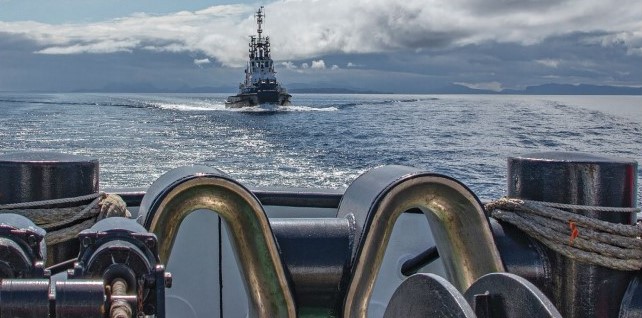
The British Tugowners Association (BTA) published guidance in order to explain how does an operator purchase a rope that does the job required of it, what does success look like for the procurement process, and what does an unsuccessful towing system look like.

All too often when a tow rope parts or breaks, the assumed solution is that the rope was not large enough or did not have a high enough Minimum Breaking Load, say the report.

Whilst this may be correct in the occasional occurrence, this is not the right answer in the main. The importance of proper rope selection, handling, inspection, and retirement cannot be overstated

Tow ropes safety

Tow rope certificates vary considerably from manufacturer to manufacturer and between retailers and resellers. Such variety can lead to a lack of clarity and confusion of the rope purchased and not facilitate rope comparison.

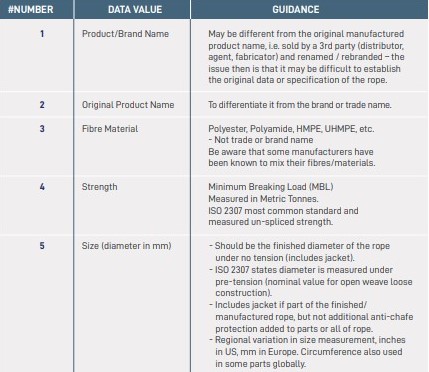
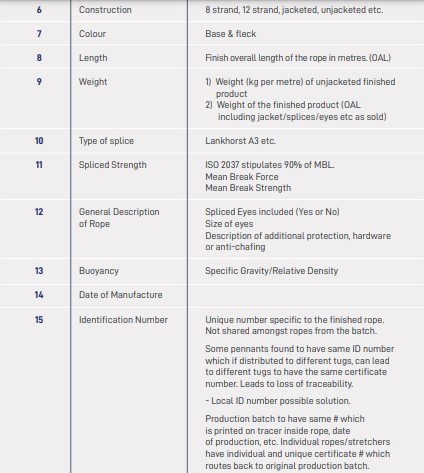
BTA in collaboration with tow rope manufacturers have comprised the following list of data variables which it expects to see on a tow rope certificate. Noting that individual manufacturers wish to retain stylistic control, the BTA suggests harmonisation of tow rope certificates rather than standardisation.

Credit: BTA

In addition, to ensure appropriate and adequate space for annotations, the BTA recommends the inclusion of a table on the rear of the certificate for such information and signatures.

In fact, rope manufacturers, suppliers and Classification Societies are increasingly providing rope certificates in digital format with the ability to note annotations. However, for the purpose of safety and security, information provided on original certificate should be ‘protected/locked’ by the supplier to prevent amendments to the original characteristics.

Annotations should only be allowed to add notes during the life of the rope, and not amend or delete original information or earlier annotations

Furthemore, record keeping is essential for the safe use of mooring and towing ropes. It is not uncommon for crews to move between vessels and it is very likely that at some point a Master will be asked to perform a tow using a rope they are not familiar with.

When this occurs, it is necessary for the Master to understand the life of that rope, informing their understanding when making their inspections

This information should be readily available and easily linked to the rope it describes. There are many methodologies for maintaining this information. Some operators mark their certificates, some keep an online log, some maintain a rope register.

As well as keeping readily accessible records of a ropes life it is necessary to be able to easily link those records to the specific rope they refer to. “Keeping track of the colourings of the rope may not be enough.”

Moreover, rigid identification tags can sometimes be found in use. These bring with them concerns of damage to the rope should they become caught between the rope and some part of the assisted vessel or tug. They are also highly susceptible to being damaged themselves and thus becoming lost.

Whichever method of identifying ropes is put into practice, the ropes in use, and in storage, should be clearly identifiable with their characteristics and life easily traceable

SOURCE READ THE FULL ARTICLE

https://safety4sea.com/what-to-watch-when-using-tow-ropes/


North Amercia's first LNG-fueled cruise ship
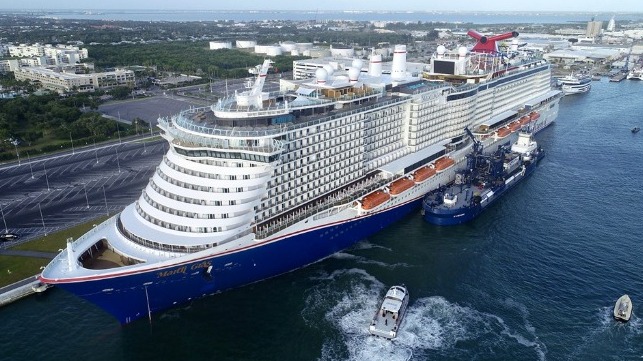
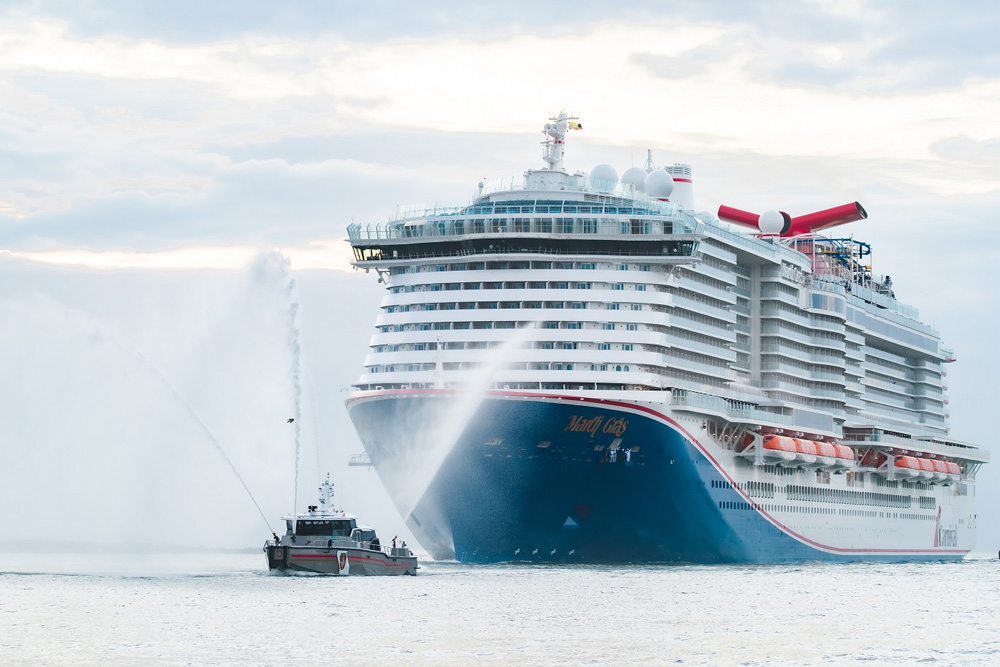
Mardi Gras during its first LNG fueling in Port Canaveral (Carnival Cruise Line)

PUBLISHED JUN 11, 2021 9:12 PM BY THE MARITIME EXECUTIVE


North America’s first LNG-fueled cruise ship is preparing for its maiden voyage in July. Carnival Cruise Line’s new Mardi Gras recently arrived in Florida to prepare for its entry into service and as the next step conducted the first-ever LNG fueling at Port Canaveral, Florida.

The 180,000 gross ton cruise ship, which was delivered from Meyer Turku to Carnival Cruise Line in December 2020, is one of only three operational cruise ships that operate fully on LNG. The vessel is based on a design developed by the cruise line’s parent company, Carnival Corporation, and which is also the basis for the AIDAnova, which was the world’s first LNG-fueled cruise ship, and the CostaSmeralda. Before the introduction of the ships that operating full-time on LNG, AIDA began using LNG as part of dual-fuel operations on two cruise ships, which used LNG supplied by tank trucks while in port.

“Today was another milestone in what promises to be many ‘firsts’ for Mardi Gras,” said Christine Duffy, president of Carnival Cruise Line after the cruise ship refueled on June 9. “Many thanks to our partners at Shell and Port Canaveral for their role in bringing LNG to the Americas.”


Mardi Gras’ maiden arrival in Port Canaveral (Carnival Cruise Line)


After being delivered to Carnival, the Mardi Gras remained in Europe for a few months before beginning its first Atlantic crossing bound for its homeport of Port Canaveral. Welcoming festivities were hosted and more than an estimated 1,500 local residents and port employees lined up to see the giant cruise ship arrive in Port Canaveral for the first time on June 4.

Mardi Gras has been five years in the making and today’s arrival is a historic milestone for our company not to mention a truly emotional moment for everyone here at Carnival Cruise Line,” said Duffy. Introduced as part of the company’s upcoming fiftieth birthday in 2022, the ship also bears the name of the line’s first cruise ship, a secondhand ocean liner that launched the Carnival empire.

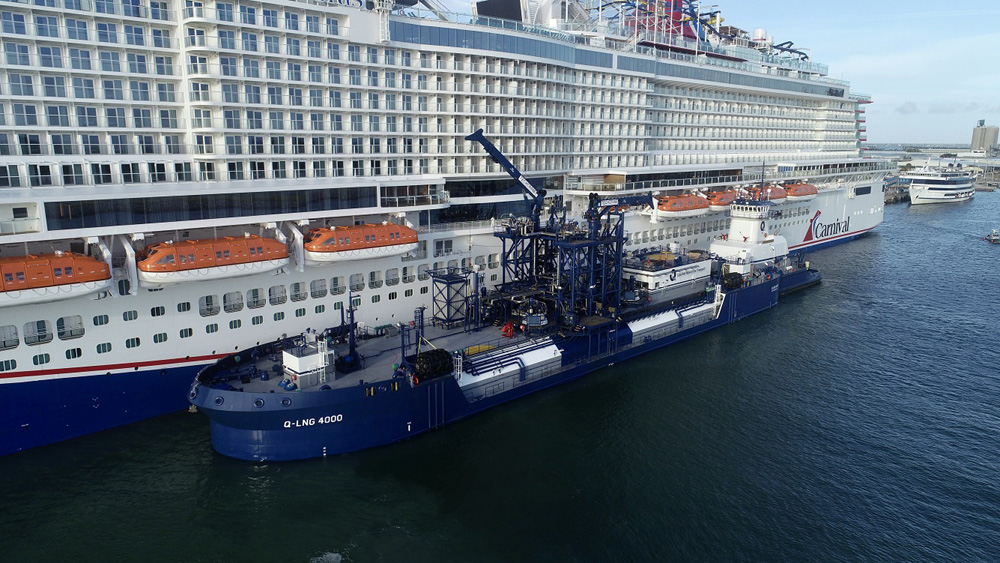
In preparation for the cruise ship’s entry into service, Carnival entered into an agreement with Shell, which is working with Q-LNG and Harvey Gulf for the LNG fueling operations. Docked at Terminal 3 in Port Canaveral, the Q-LNG Transport barge came alongside the cruise ship on June 9 for a first trial refueling. The process, which took nearly eight hours, topped up the cruise ship’s LNG tanks with approximately 2,700 cubic meters of the gas. The Mardi Gras has a capacity of 3,600 cubic meters of LNG, enough to power the cruise ship’s four engines for approximately 14 days. The newly built barge, which will regularly fuel the cruise ship, has a capacity of 4,000 cubic meters and operates from a terminal near Savannah, Georgia.


Fuel barge alongside for the first fueling in Port Canaveral (Carnival Cruise Line)


“Yesterday the Q-LNG 4000 preformed the first LNG fueling operation in North America in Port Canaveral, Florida,” said Chad Verret, President of Q-LNG Transport. “The operation was completed without any complications and conducted as planned. I would like to thank all involved in making this historic moment.”

Carnival Cruise Line also announced this week plans for its next wave of the summer restart of guest operations, including the first cruise for the Mardi Gras and the return of additional ships in August. Mardi Gras will start operating her seven-day cruises from Port Canaveral on Saturday, July 31, with what are being called pre-inaugural sailings to the eastern and western Caribbean. The company is beginning the process of ramping up the Mardi Gras’ crew to a full contingent of 1,750 in preparation for its entry into service.

Carnival Cruise Line is building a sister ship to the Mardi Gras, named Carnival Celebration, due to enter service in 2022for PortMiami. AIDA and Costa also have sister ships under construction as part of the growing wave of LNG-fueled cruise ships on order for the industry. By 2027, more than two dozen LNG-fueled cruise ships are due to be in service, representing nearly a quarter of all the new cruise ships currently on order.


SOURCE READ THE FULL ARTICLE

https://www.maritime-executive.com/article/north-america-s-first-lng-cruise-ship-fuels-preparing-for-mv


Bulk carrier ALIS arrived at Algeciras on May 25 and remains anchored since the arrival, being under quarantine. Ship was/is en route from Chennai India to Europa Point Gibraltar, via Suez. According to Spanish source, one crew died of cardiorespiratory attack and taken to Motril port, Spain, two more were taken to hospital in Malaga, all 3 positive tested. Five more crew are also tested positive but being healthy in all respects, remain on board.
Here’s the mystery of it: Prior to death and illnesses bulk carrier made a short stop at Kaloi Limenes anchorage, Crete, on May 17. Bulk carrier is operated by Greek company. Did she stop for crew change, for vaccination or for supplies?

New FleetMon Vessel Safety Risk Reports Available: https://www.fleetmon.com/services/vessel-risk-rating/


SOURCE READ THE FULL ARTICLE

https://www.fleetmon.com/maritime-news/2021/34109/1-bulk-carrier-crew-died-2-hospital-why/


Mobile Alabama port enhancements
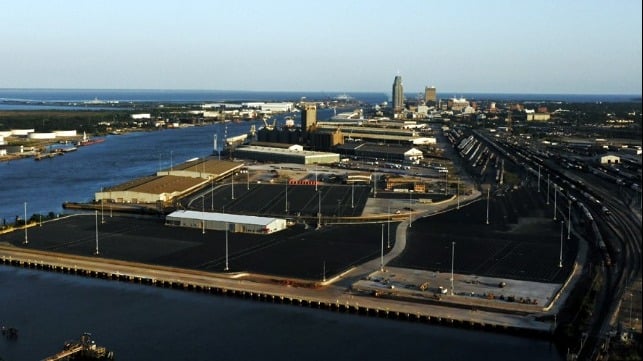
New 57 arce vehicle processing center opened in the port of Mobile (AIT)

PUBLISHED JUN 11, 2021 7:29 PM BY THE MARITIME EXECUTIVE


A new $60 million vehicle processing center with a ro-ro terminal has opened in the port of Mobile, Alabama. The new facility, which will be operated by a partnership between an Argentine and Chilean company, is part of an ongoing effort by the Alabama State Port Authority (ASPA) to expand and improve operations in the port.

Known as the AutoMOBILE International Processing Center, the ro-ro terminal and automotive rail ramp facility opened 17 months after a concession agreement was signed with Terminal Zarate, S.A., a Grupo Murchison company, headquartered in Buenos Aires, Argentina, and Neltume Ports, headquartered in Santiago, Chile.

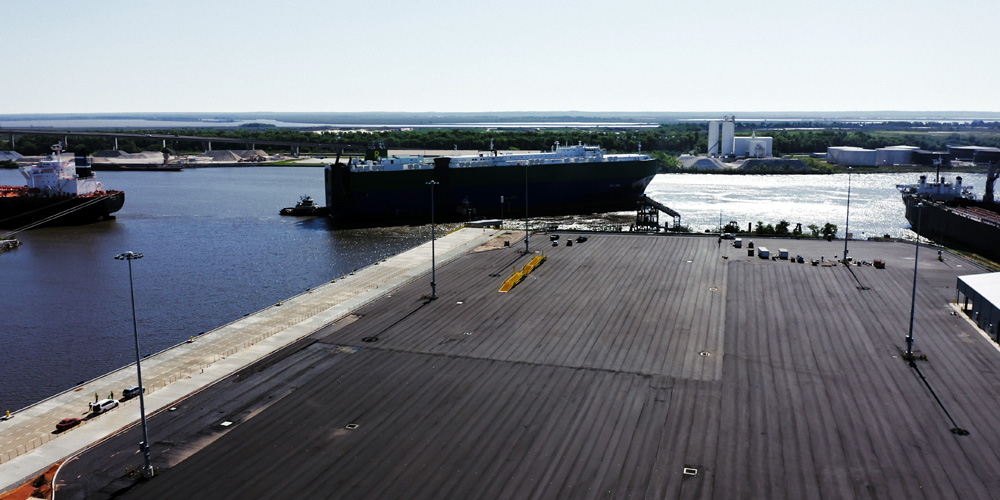
The new 57-acre terminal is located on the ASPA’s main port multimodal complex. The facility, which is expected to have an annual throughput of 150,000 vehicles, offers storage for up to 7,000 vehicles. It has 1,500 feet of berth space which will initially be maintained with a 40-foot draft. According to the managers of the facility, this makes the terminal capable of handling all the pure car and truck carrying transport vessels currently in service.

During the dedication ceremony, the port also highlighted that the facility has access to five Class I railroads and a rail ferry service with connections throughout North America, as well as access to major U.S. interstate and highway systems. The operators said the appeal of the location on the Gulf Coast is its easy access both for long haul carriers using the Panama Canal and short sea transport to Mexico and Central America.


The opening of the new facility is part of a broader effort to expand operations in the Port of Mobile. In the spring of 2020, the Alabama Port Authority completed its 400-foot container dock extension at the APM Terminals Mobile facility, permitting it for the first time to simultaneously handled two container ships at the newly expanded berth. The berth extension now enables two 8,000-10,000 TEU vessels to be handled at the same time. The quay extension was part of a $50 million Phase 3 expansion that increased terminal capacity at the 10-year-old APM Terminals Mobile intermodal container complex at the Port of Mobile.

In May 2021, work began on the next major project, which is construction of a deeper and wider Mobile Ship Channel and improvements to the lower harbor turning basin. The U.S. Army Corps of Engineers executed two construction contracts for a multi-phase, $365.7 million construction program designed to deepen the existing Bar, Bay and River Channels Bar, by five feet to a project depth of 50 feet, with additional depths for wave allowances, advanced maintenance, and allowable over depth for dredging. The project also includes widening the Bay Channel by 100 feet for three nautical miles to accommodate two-way vessel traffic and other safety improvements.


SOURCE READ THE FULL ARTICLE

https://www.maritime-executive.com/article/new-vehicle-terminal-opens-as-part-of-mobile-alabama-port-enhancement


X-Press Pearl environmental damage oil leak
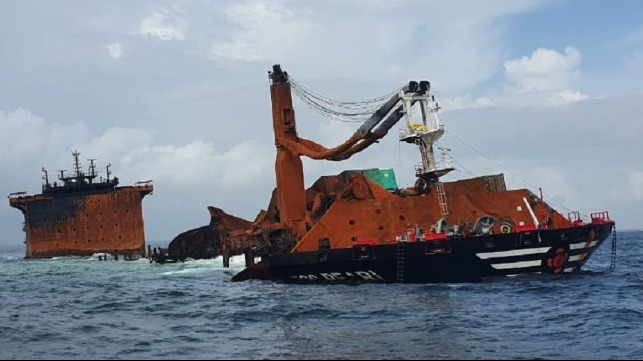
X-Press Pearl remains in the same position off Colombo, Sri Lanka (Sri Lanka Ports Authority)

PUBLISHED JUN 11, 2021 4:44 PM BY THE MARITIME EXECUTIVE


Sri Lanka officials conducted a briefing to detail the scope of the environmental damage resulting from the fire and sinking of the containership X-Press Pearl last month. Government representatives and the shipping line continue to refute reports of additional pollution and possible oil leaks from the vessel, which remains partially submerged off Colombo. At the same time, additional international aid is being sent to help the country deal with what has been called the worst environmental disaster in the history of Sri Lanka.

Seeking to address reports that appeared in international media and on the Internet of oil leaking from the vessel, the government officials said divers have continued to inspect the hull and found no breaches in the bunker tanks. They suggested the light sheen and discoloration seen trailing from the vessel is not bunker fuel but possibly oil from the destroyed containers and other debris that fell into the ocean.

A team of international experts from the UK is assisting Sri Lanka and performing tests on the sheen seen drifting away from the vessel to determine its composition. According to the International Tanker Owners’ Pollution Federation, which has two representatives in Sri Lanka assisting, no oil pollution has been reported onshore.

After reviewing the manifests from the vessel’s cargo, they are now reporting that it was carrying 193 different items. In addition to the highlighted nitric acid, other chemicals including methanol and sodium hydroxide were among the contents of the containers. More than 800 of the containers were transporting either plastic or polythene, contributing to the reports of widespread plastic pollution in the ocean and washing up.

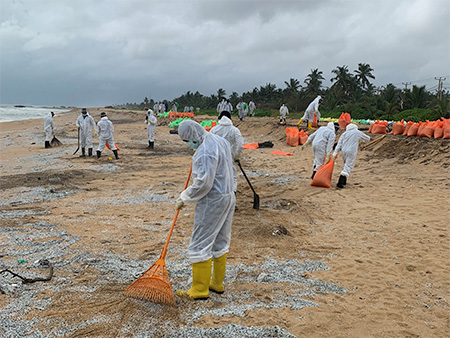
“The pollutants of particular concern are nurdles (a small plastic pellet used as a raw material in plastic manufacturing), as they have the potential to spread over vast distances, and recovery of these small plastic pellets can be difficult and protracted,” reported ITOPF. They estimate that the extent of the debris has already spread more than 80 miles along the coastline.


Beach cleaning efforts to clear nurdles (ITOPF)


Environmental officials said more than 50 containers of material have been recovered along the beaches. They estimated that each container holds more than 60 tons of debris. At the same time, Sri Lanka’s Central Environmental Authority has instructed the salvage company that the next step should be to recover containers that fell overboard to stop additional pollution.

“A large portion of the plastic that had washed ashore due to the sinking of the ship has now been collected,” Minister of Environment Mahinda Amaraweera said during the briefing. “We do not know how many more were eaten by fish in the ocean. According to the information I have, plastic pallets piled up on the beach have been collected and stored in containers for destruction,” he said.

More distrusting though are the growing reports of fish, turtles, and a dolphin washing up on shore having died after consuming the plastic pellets. As a result, a ban remains in effect for all fishing along the coastline in the affected region.

Seeking to provide immediate aid to the families whose livelihoods were impacted by the emergency, Chargé d’affaires Martin Kelly at the U.S. Embassy in Sri Lanka announced $100,000 in immediate assistance. He said it would be distributed through the U.S. Agency for International Development (USAID)’s implementing partners.

The Minister of Environment predicted that the damage to the environment will last for 20 years. “I say that the damage caused by the sinking of the X-Press Pearl cannot be measured in dollars. This caused a great deal of environmental damage and all those involved in this destruction should be legally punished.”

Sri Lanka is continuing to investigate the disaster, centering on when the chemical leak was discovered. Port and harbor officials contend that they were not properly notified by the ship and its agents. There have also been acquisitions that emails between the containership’s captain and the agent were deleted, causing the Sri Lanka police to order recovery of any missing emails. At the same time, they are continuing to review information from the vessel’s recovered VDR device.


SOURCE READ THE FULL ARTICLE

https://www.maritime-executive.com/article/x-press-pearl-pollution-spreads-but-reports-of-oil-leaks-are-refuted


BAL Container Line, a privately owned China-based carrier, has become the latest entrant into the Transpacific and Asia-Europe lanes, attracted by the unprecedented hike in freight rates.

BAL completed its maiden Transpacific voyage when its chartered 2,190TEU vessel, Queen Esther, arrived in Los Angeles on 10 June, after departing from Ningbo-Zhoushan Port on 26 May.

BAL has scheduled more transpacific sailings in the next weeks with chartered feeders departing from different ports in China and arriving at the Port of Los Angeles.

Based in Qingdao in China’s Shandong province, BAL was incorporated in August 2012 and is a subsidiary of Shandong Lcang International Logistics, which is owned by Chinese businessman Xu Xin. BAL commercially manages five group-owned feeder vessels that are chartered out to other operators.

Prior to venturing into the Transpacific and Asia-Europe lanes, BAL offered shipping services by purchasing slots on Emirates Shipping Line’s GALEX service, which serves the East Asia-Persian Gulf route and Sinokor Merchant Marine’s CSC service, which serves the China-India route.

In May, the intra-Asia line, BAL did an one-off Asia-Europe service, with A Daisen sailing from Shanghai and Ningbo-Zhoushan to Rotterdam. Another one-off Asia-Europe sailing was launched on 5 June, when the 1,206TEU BAL Peace commenced its voyage from Ningbo-Zhoushan and Da Chan Bay and is scheduled to arrive in Zeebrugge and Rotterdam on 5 and 8 July, respectively.

“Currently, Asia-Europe container shipping market is challenging to shippers, who are facing high freight costs and an equipment shortage. We decided to use our own ships to increase the capacity of China-Europe routes, and solve our customers’ difficulties,” said Xu in an interview on Chinese television.

Soaring freight rates on the Transpacific and Asia-Europe rates have recently lured liner operators such as Wan Hai Lines and China United Lines, which were primarily intra-Asia carriers, to start solo services on these trades.

SOURCE READ THE FULL ARTICLE

BAL Container Line ventures into long-haul lanes


Company DETAILS

SHIP IP LTD
VAT:BG 202572176
Rakovski STR.145
Sofia,
Bulgaria
Phone ( +359) 24929284
E-mail: sales(at)shipip.com

ISO 9001:2015 CERTIFIED