A US Naval ship provided emergency assistance to 15 crew members of a sinking general cargo ship in the Gulf of Aden, on 7 June.
The Military Sealift Command oiler ‘USNS Patuxent’ was notified by the UK Maritime Trade Operations watch center that the motor vessel ‘Falcon Line’ had experienced engine failure and was taking on water.
GET THE SAFETY4SEA IN YOUR INBOX!
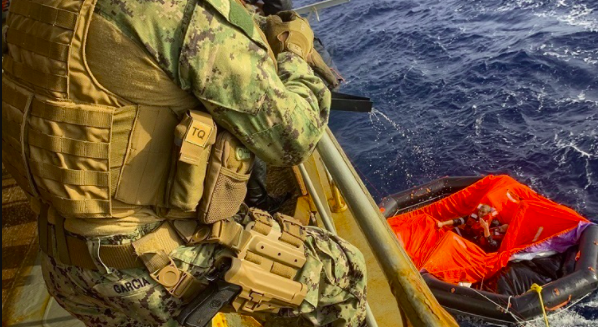
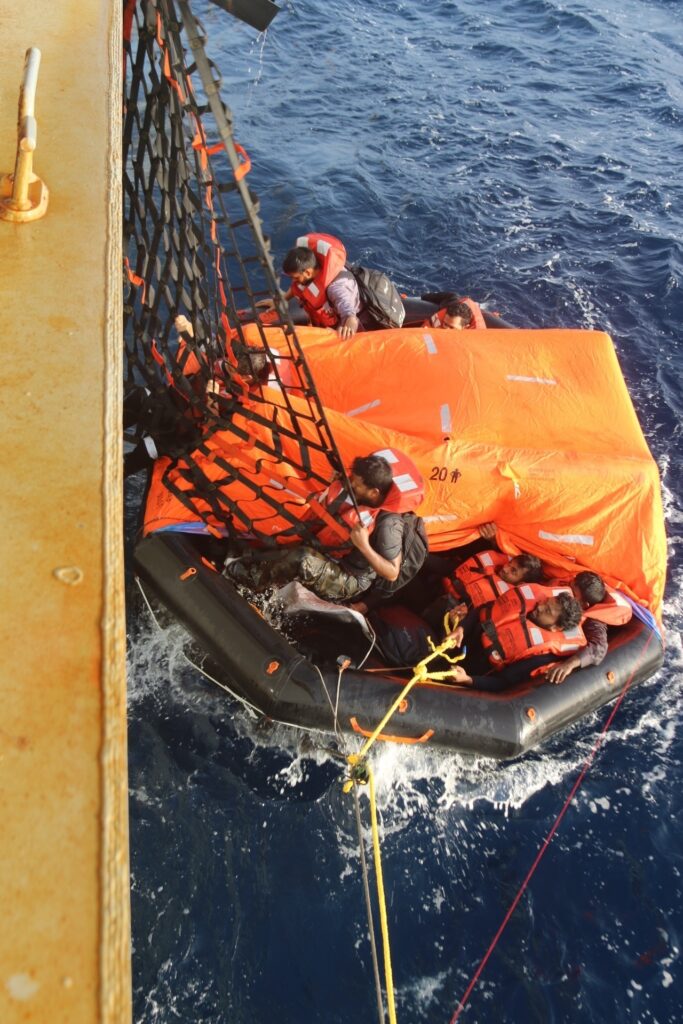
Upon arriving on the scene, Patuxent shielded the Falcon Line crew from heavy winds and high seas so the crew could board lifeboats, the US Navy informed. The naval ship safely recovered the 15 crew members and provided them with food, water and medical screening.
210608-N-N0748-1002 GULF OF ADEN (June 8, 2021) – Crew members of a motor vessel Falcon Line climb aboard the Military Sealift Command (MSC) fleet replenishment oiler USNS Patuxent (T-AO 201) during rescue operations in the Gulf of Aden, June 8. Patuxent is deployed to the U.S. 5th Fleet area of operations in support of naval operations to ensure maritime stability and security in the Central Region, connecting the Mediterranean and Pacific through the western Indian Ocean and three strategic choke points / Credit: U.S. Navy
The US 5th Fleet is now coordinating with the owner of Falcon Line and other authorities to determine the most appropriate location to debark the crew members.
SOLAS Convention (1974) outlines the obligation of all mariners to provide assistance to those in distress at sea.
As professional mariners, our forces have a duty to help those in need at sea. The sailors and civilian mariners aboard ships like Patuxent have answered this call before, and they will continue to do so whenever possible,
…said Navy Capt. Michael O’Driscoll, commander of Task Force (TF) 53.
The US 5th Fleet area of operations encompasses about 2.5 million square miles of water area and includes the Arabian Gulf, Gulf of Oman, Red Sea, and parts of the Indian Ocean.
OCIMF released a new information paper to provide guidance on the Handling, Storage, Use, Maintenance and Testing of STS Hoses.
Namely, OCIMF offers guidance to STS Service Providers, Masters, and operators of ships that use hose assemblies to transfer liquid-bulk cargoes via STS and to minimise hose damage from improper handling and storing.
To remind, hose strings used during Ship-to-Ship (STS) transfers in a side-by-side configuration are a critical link between the two ships. They are subjected to repeated lifting, bending and folding and to the dynamic forces of ship movements at sea. All of these can result in loads and stresses within the hose.
To provide greater reliability and longer life, hoses should be handled, stored, maintained, inspected and tested correctly at appropriate intervals.
Information about the size, length, type and quantity of the hose strings being delivered should be provided to the ships involved in the transfer so they can prepare their manifolds in advance. Any hoses supplied for the transfer should be provided with the most recent test certificate for tests undertaken at intervals not exceeding one year. More stringent testing frequency may apply based on local regulations.
When employed, the STS Provider’s representative should be on deck in the manifold region of one of the vessels and visible to both ship’s crew in order to ensure safe hose-handling practices are observed during hose connection and disconnection.
A competent ship’s officer should be on deck during the handling and assembly of the STS transfer hoses and take a lead role in the management of STS hose operations aboard their ship, including:
Lifting hoses from the Lightering Support Vessel (LSV) onto the ship
Hose deployment to other ship including verification of hose securing/supporting arrangement
Hose string assembly
Hose connection
Hose deployment to the other ship
Hose disconnection and draining
Hose recovery
Disassembly
Lowering hoses down from the ship deck into the LSV
In 1990, a new type of rubber cargo hose was developed to meet the unique requirements of offshore STS transfers. It is important to note that rubber STS hoses do not conform to any internationally recognised standard such as the International Standards Organization (ISO), British Standards (BS) or European Standards (EN). Manufacturers generally align with BS EN 1765 Rubber Hose Assemblies for Oil Suction and Discharge Services for the assemblies.
Rubber STS hose assemblies closely align with the specifics of EN 1765 Type L (Light Weight) Hoses. Type L hoses are helix-free, do not suffer permanent deformation and are designed to be used where light weight, ease of handling and increased flexibility is required. They differ from the standard in that:
They feature a heavy-duty design with a high burst safety factor.
The cover may be designed to be more durable but with reduced oil-resistant properties.
STS hoses are commonly rated for 15 bar Maximum Working Pressure (MWP).
Other hose types may be used in STS operations depending on geographical location, local requirements and other specific operational needs. Further guidance on specific hose types should be sought from the hose manufacturer.
After a recent incident, the Union of Captains and Deck Officials (UCOC) of the Panama Canal warned about the “imminent risk” that the the use of “deficient equipment” poses.
According to the UCOC, on June 4 an LPG gas tanker that was in transit almost collided with the structures of the Miraflores Locks.
UCOC added that the tugs in the Panama Canal ”do not meet the standards required to attend to daily operation.”
The union explained that during the maneuver, the tugboats suffered damage to their machines. However, thanks to the expertise of the tugboat captain, it was possible to brake the ship in time, avoiding an accident.
That is why, as professionals responsible for the maritime industry, we ask the administration of the ACP to conduct an exhaustive investigation into the true causes of this fact, which transcended public opinion through social networks
UCOC stated.
What is more, the union hoghlighted that the following must be clarified in reference to the incident:
Did the tugs arrive on time for their assignment?
Where they moored to the ship correctly and according to the procedures?
The bow tug did not push the vessel when moored and did not deviate it from its course.
The stern tug did not push the vessel when moored and did not increase its speed.
On the other hand, the UCOC denounced the alleged intentions by the administration to use ”these deficient and unreliable equipment in the Expanded Canal”, as such an action entails a risk of possible damage to the canal facilities, and potential injuries.
We want to express once again, as Tug Captains and Deck Officers, our commitment to continue working so that our nation’s greatest asset, the Panama Canal, continues to offer the world a free, safe, reliable and uninterrupted transit
Jun 12 UPDATE: Tanker is still adrift as of 0700 UTC Jun 12, with sister-ship NAVIGATOR SATURN (IMO 9177569) circling around, so looks like there’s some serious problem they’re dealing with.
UPDATE, management Statement:
Tanker suffered a loss of power but the crew remain on board and have not abandoned the ship.
Jun 11: LPG tanker NAVIGATOR NEPTUNE on Jun 11 is reported abandoned, adrift in the Pacific 615 nm NW of Honolulu, information requires confirmation, more details. The ship’s en route from Houston USA to Kaohsiung Taiwan, ETA Jun 26. As of 0630 UTC Jun 11 AIS was on, the ship adrift, sister ship NAVIGATOR SATURN (IMO 9177569) looks like she’s steaming to distressed NAVIGATOR NEPTUNE.
Awaiting updates, confirmation.
Bulk carrier ALBERTA suffered rudder failure or jam, in the afternoon Jun 11 in Dardanelles north of Canakkale, while transiting the Strait in northern direction. Two SAR tugs took the ship under control, she transited the Strait, understood assisted or escorted by tugs, and was anchored in Marmara sea off the Strait in Sevketiye waters. As of 0530 UTC Jun 12, she was still at anchor. Bulk carrier is en route from Singapore to Ambarli Turkey, Marmara sea, with cargo of steel.
UPDATE Jun 11 1400 UTC: Still aground, refloating is planned to take place at night Jun 11 with high tide, obviously. The ship is loaded with manure. No hull breaches, no leaks reported. Fairway traffic is not affected.
Jun 11 0330 UTC: General cargo ship RIX EMERALD aground in Randers Fjord Denmark since around 1400 UTC Jun 10. Looks like she strayed off fairway. She’s en route from Rostock to Randers. In the same position as of 0340 UTC Jun 11.
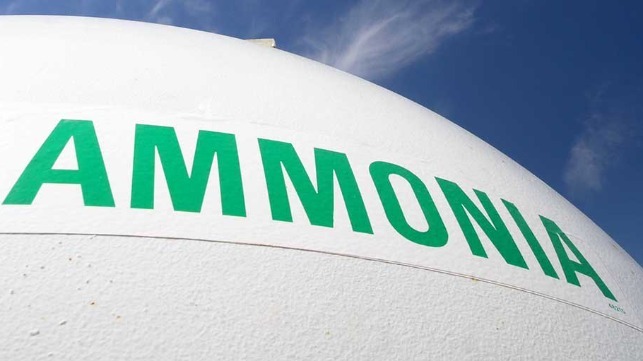
New hydrogen and ammonia fuel partnership announcements are becoming as common as long-term charters and vessel sales, but a new joint study group that debuted Friday is more significant than most.
Twenty-three well-known enterprises – including ABS, DNV and ClassNK – have entered into a memorandum of understanding on a joint study of common issues in the use of ammonia as a marine fuel.
The group includes firms from a range of sectors including energy, mining, power utilities, chemical, terminal, shipping, shipbuilding, manufacturing, bunkering, and classification organizations.
“Ammonia is a fuel with significant potential for marine applications and ABS is committed to supporting its safe adoption by the industry. It offers shipowners and operators a zero-carbon tank-to-wake emissions profile but is not without challenges,” said ABS Chairman, President and CEO Christopher J. Wiernicki. “This kind of cross-industry collaboration is vital if we are to better understand the risks and the enhanced safety requirements created by alternate fuels.”
The 23 founding signatories are a who’s who of the maritime, commodity and energy industries, including ABS, ClassNK, DNV, Equinor, Total (now TotalEnergies), Fortescue, Anglo American, Genco, Jera, K-Line, MAN, Mitsui E&S, Trafigura, Vale, Uniper and Itochu, among others.
The study will examine (1) safety assessments of NH3 fueled vessels; (2) safety assessments of NH3 bunkering; (3) NH3 fuel specifications; and (4) the net CO2 emissions of NH3 production. The working group plans to draw on the expertise of some NH3 producers, international organizations, and port authorities and regulators in potential bunkering countries.
“Ammonia is already a globally traded and transported commodity, but for it to be widely accepted as a marine fuel we need to help demystify the risks and safety measures needed so that they are understood by policymakers and the maritime industry,” said Rasmus Bach Nielsen, the global head of fuel decarbonisation at Trafigura.
The purpose of the study also aims to support the development of ammonia-fueled vessels and the development of a worldwide supply chain for ammonia, led by Itochu and other partners. Itochu has commercial ambitions to develop ammonia bunkering facilities in Japan and in Singapore, one of the world’s primary marine fuel hubs.
SOURCE READ THE FULL ARTICLEhttps://www.maritime-executive.com/article/23-major-maritime-stakeholders-launch-ammonia-bunkering-study
The restart of cruise operations continues to be challenged by COVID-19 despite efforts to create a bubble environment aboard the ships. This week, two cruise ships operating in different parts of the world both reported passengers that tested positive for the virus despite a range of precautions enacted by the cruise lines. However, unlike 2020 when the outbreaks were widespread, the cruise lines’ protocols appear to be working.
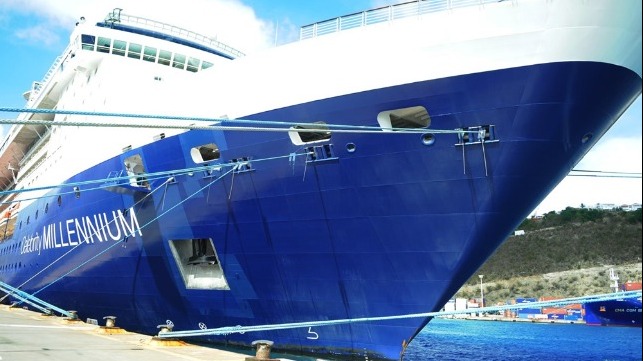
Royal Caribbean Group’s Celebrity Cruises confirmed reports that two passengers sharing a cabin aboard the line’s Celebrity Millennium tested positive yesterday as part of routine tests and were placed in isolation. Both passengers are reported to be asymptomatic and under the supervision of the expanded medical team aboard the cruise ship during the last scheduled day of the week-long cruise
The Celebrity Millennium was five days into its much-celebrated return to service highlighted as the first large cruise ship to resume sailing in the western hemisphere and be offered for sale to American travelers. The cruise ship began its first cruise from St. Maarten in the Caribbean on June 5 carrying a reduced capacity of just 600 passengers and an additional 600 in crew.
The protocols established by Celebrity Cruises for the return to service included the requirement that all crew and passengers be fully vaccinated against the virus. In addition, passengers had been required to take a COVID-19 test within 72-hours of their departure from St. Maarten as well as tests before going ashore. Aboard the ship, passengers were not being required to wear face covers or maintain social distances, but crew members were wearing face coverings when interacting with passengers. From the details released, it is unclear if the positive tests are thought to be breakthrough cases of the virus, which rarely occurs among vaccinated individuals, or if this is an instance of inaccurate tests.
Celebrity Cruises reports that contact tracing and testing are in place for any close contacts for the two passengers. Further, all passengers are going to be required to take an antigen test before tomorrow’s scheduled disembarkation in St. Maarten.
Earlier in the week, MSC Cruises also confirmed that two passengers sailing in the Mediterranean aboard the line’s MSC Seaside had tested positive for the virus also during routine tests during the cruise. MSC reported that the passengers, who were not traveling together, along with the traveling companions, were isolated aboard the ship and disembarked at the next port of call in Sicily. MSC Cruises, unlike Celebrity Cruises, is not requiring all passengers to be vaccinated but is conducting testing prior to boarding the ship and mid-week during the cruise. Again, in this instance, the protocols identified the passengers and reduced the risk of transmission on the ship.
The cruise industry is continuing to move forward with additional sailings with more ships scheduled to resume cruising in the coming weeks. Industry executives point to the availability of vaccinations and the fact that science has learned so much more about controlling the virus in the past year. They believe their protocols are effective and said they are prepared to revise procedures if required.
In Singapore, where two cruise ships continued to sail during the recently increased restrictions, the government has announced plans to begin to reduce the limitations on the cruise ships. The cruise lines will be permitted to increase the number of passengers onboard to a maximum of 50 percent of capacity and later in the month they will be permitted to reopening the restaurants for meal service. Singapore has been limiting meals to take out food and meals in cabins similar to restrictions imposed in the city.
Cruise lines operating from U.S. ports, including Carnival Cruise Line, Norwegian Cruise Line, and MSC Cruises, each announced this week additional restart dates for sailing from ports in Florida, Texas, California, and New York, in addition to the plans for Alaska cruises from Seattle. However, the situation regarding requiring passengers to provide proof of vaccination remains unresolved in Florida and Texas, where the states have banned businesses from requiring vaccine passports. The cruise lines are hoping to find an agreement between the states and the CDC, while at the same time the federal judge hearing Florida’s lawsuit said he would issue a ruling soon on the motion for an injunction to end the CDC’s restrictions on cruising.
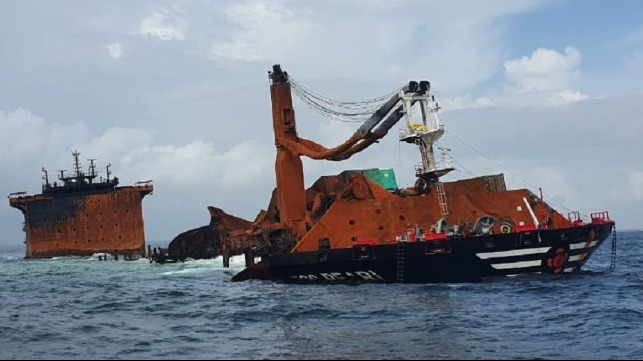
Sri Lanka officials conducted a briefing to detail the scope of the environmental damage resulting from the fire and sinking of the containership X-Press Pearl last month. Government representatives and the shipping line continue to refute reports of additional pollution and possible oil leaks from the vessel, which remains partially submerged off Colombo. At the same time, additional international aid is being sent to help the country deal with what has been called the worst environmental disaster in the history of Sri Lanka.
Seeking to address reports that appeared in international media and on the Internet of oil leaking from the vessel, the government officials said divers have continued to inspect the hull and found no breaches in the bunker tanks. They suggested the light sheen and discoloration seen trailing from the vessel is not bunker fuel but possibly oil from the destroyed containers and other debris that fell into the ocean.
A team of international experts from the UK is assisting Sri Lanka and performing tests on the sheen seen drifting away from the vessel to determine its composition. According to the International Tanker Owners’ Pollution Federation, which has two representatives in Sri Lanka assisting, no oil pollution has been reported onshore.
After reviewing the manifests from the vessel’s cargo, they are now reporting that it was carrying 193 different items. In addition to the highlighted nitric acid, other chemicals including methanol and sodium hydroxide were among the contents of the containers. More than 800 of the containers were transporting either plastic or polythene, contributing to the reports of widespread plastic pollution in the ocean and washing up.
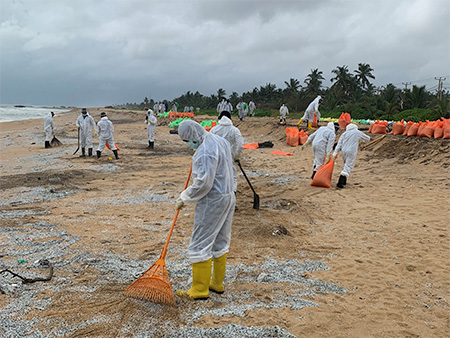
“The pollutants of particular concern are nurdles (a small plastic pellet used as a raw material in plastic manufacturing), as they have the potential to spread over vast distances, and recovery of these small plastic pellets can be difficult and protracted,” reported ITOPF. They estimate that the extent of the debris has already spread more than 80 miles along the coastline.
Beach cleaning efforts to clear nurdles (ITOPF)
Environmental officials said more than 50 containers of material have been recovered along the beaches. They estimated that each container holds more than 60 tons of debris. At the same time, Sri Lanka’s Central Environmental Authority has instructed the salvage company that the next step should be to recover containers that fell overboard to stop additional pollution.
“A large portion of the plastic that had washed ashore due to the sinking of the ship has now been collected,” Minister of Environment Mahinda Amaraweera said during the briefing. “We do not know how many more were eaten by fish in the ocean. According to the information I have, plastic pallets piled up on the beach have been collected and stored in containers for destruction,” he said.
More distrusting though are the growing reports of fish, turtles, and a dolphin washing up on shore having died after consuming the plastic pellets. As a result, a ban remains in effect for all fishing along the coastline in the affected region.
Seeking to provide immediate aid to the families whose livelihoods were impacted by the emergency, Chargé d’affaires Martin Kelly at the U.S. Embassy in Sri Lanka announced $100,000 in immediate assistance. He said it would be distributed through the U.S. Agency for International Development (USAID)’s implementing partners.
The Minister of Environment predicted that the damage to the environment will last for 20 years. “I say that the damage caused by the sinking of the X-Press Pearl cannot be measured in dollars. This caused a great deal of environmental damage and all those involved in this destruction should be legally punished.”
Sri Lanka is continuing to investigate the disaster, centering on when the chemical leak was discovered. Port and harbor officials contend that they were not properly notified by the ship and its agents. There have also been acquisitions that emails between the containership’s captain and the agent were deleted, causing the Sri Lanka police to order recovery of any missing emails. At the same time, they are continuing to review information from the vessel’s recovered VDR device.
Shipping companies, such as Maersk and MSC, are rerouting thier ships from Hamburg as a result of high yard density and exceptional waiting time.
Climate activists of the Extinction Rebellion have been protesting for days, blocking roads and the Köhlbrand Bridge, an important traffic artery in the Port of Hamburg.
As a result, Maersk has decided to exclude Hamburg on the next four voyages and divert into Bremerhaven.
“The Hamburg Eurogate Port operations have been heavily impacted by congestion, go slow actions and protests that are still ongoing and beyond our control,” Maersk said.
MSC also had to divert two of its ships to discharge in Wilhelmshaven.
Extinction Rebellion blocked the bridge for several hours last Wednesday and then again of Friday.
Officials at the Port of Hamburg declined to comment when contacted by Splash.
For shippers, already facing sky-high rates on the Asia-Europe tradelane, the Hamburg disruption adds to pressure being felt from the partial closure of Yantian Port in southern China thanks to an outbreak of Covid-19.
This website uses cookies to improve your experience. We'll assume you're ok with this, but you can opt-out if you wish. Cookie settingsACCEPT
Privacy & Cookies Policy
Privacy Overview
This website uses cookies to improve your experience while you navigate through the website. Out of these cookies, the cookies that are categorized as necessary are stored on your browser as they are essential for the working of basic functionalities of the website. We also use third-party cookies that help us analyze and understand how you use this website. These cookies will be stored in your browser only with your consent. You also have the option to opt-out of these cookies. But opting out of some of these cookies may have an effect on your browsing experience.
Necessary cookies are absolutely essential for the website to function properly. This category only includes cookies that ensures basic functionalities and security features of the website. These cookies do not store any personal information.
Any cookies that may not be particularly necessary for the website to function and is used specifically to collect user personal data via analytics, ads, other embedded contents are termed as non-necessary cookies. It is mandatory to procure user consent prior to running these cookies on your website.