Crescent Capital’s European specialty lending strategy provided unitranche financing to support the acquisition of NAVTOR by Accel-KKR, a global software-focused investment firm headquartered in California’s Silicon Valley. Crescent also provided an acquisition facility to further accelerate NAVTOR’s growth through strategic M&A. Terms of the financing were not disclosed.

NAVTOR provides navigational software for the maritime industry. Its cloud-based e-navigation solutions include electronic navigational charts (ENCs), digital maritime publications, route optimization and fleet management across an integrated platform. The global maritime e-navigational industry is on a multi-year technological expansion in large part due to new regulations, an increased focus on safety and ESG goals, and advances in technology.

“This financing for NAVTOR will be instrumental in the company’s plans to accelerate its organic growth strategies and expand further through M&A. NAVTOR is the clear leader in navigational software for the maritime industry driven by its superior technological product suite, and we are proud to support its growth in its next chapter with Accel-KKR. The company is well-positioned to take advantage of the continued digitization of the maritime industry, ensuring safe passage of vessels and crew members through different territories,” Christine Vanden Beukel, managing director and head of Crescent’s European specialty lending strategy, said. “This transaction continues to demonstrate Crescent’s ability to provide customized financing solutions to top-tier sponsors investing in market-leading companies with clear competitive advantages and mission-critical products.”

Crescent Capital is a global credit investment manager with approximately $28 billion of assets under management. The firm focuses on below investment grade credit through strategies that invest in marketable and privately-originated debt securities, including senior bank loans, high yield bonds, as well as private senior, unitranche and junior debt securities.
Source: abfjournal


Maritime navigation technology company NAVTOR has announced that it has been acquired by Accel-KKR, a software-focused investment firm headquartered in Silicon Valley.

The investment is Accel-KKR’s 42nd completed investment in the EMEA region since 2013, when it established a European headquarters, and the firm’s 15th completed investment globally since the second half of March 2020.

NAVTOR will use the new funding available from the deal to expand its customer base and portfolio of cloud-based e-navigation systems, which includes Electronic Navigational Charts (ENCs), digital maritime publications, route optimisation and fleet management services, which can all be connected within an integrated platform.

“The entire NAVTOR team is very excited to work with Accel-KKR in our continued momentum as a leader in the e-navigational space,” said Tor Svanes, CEO and Founder of NAVTOR.

“Through a relentless focus on serving the needs of commercial seafaring fleet managers and navigators, we have built a superior technological offering with an industry-leading reputation for customer service and support. We look forward to writing NAVTOR’s next chapter together with the AKKR team.”

Maurice Hernandez, Head of the European office at Accel-KKR, noted that the size of the global maritime industry and the continuing digitalisation of vessel fleets offered substantial opportunities for the future development of a technology company like NAVTOR.

“Pairing NAVTOR’s mission-critical software and the deep domain expertise of its management team with AKKR’s know-how in accelerating growth in software companies will lead to exciting outcomes for the marketplace and customers. We look forward to working closely with the NAVTOR team in the coming months and years,” he said.

Source: smartmaritimenetwork


The Department of State will conduct a public meeting at 9:00 a.m. on Wednesday, September 23, 2020, by way of teleconference. Members of the public may participate up to the capacity of the teleconference phone line, which will handle 500 participants. To access the teleconference line, participants should call (202) 475-4000 and use Participant Code: 839 604 42#. The primary purpose of the meeting is to prepare for the forty fourth session of the International Maritime Organization’s (IMO) Facilitation Committee to be held virtually from September 28 to October 2, 2020.

The agenda items to be considered include:

Start Printed Page 53433

—Decisions of other IMO bodies

—Consideration and adoption of proposed amendments to the Convention

—Review and update of the annex of the FAL Convention

—Application of single-window concept

—Review and revision of the IMO Compendium on Facilitation and Electronic Business

—Developing guidance for authentication, integrity and confidentiality of content

—For the purpose of exchange via a maritime single window

—Consideration of descriptions of Maritime Services in the context of e-navigation

—Development of amendments to the Recommendations on the establishment of National Facilitation Committees (FAL.5/Circ.2)

—Development of guidelines on creating a tool to measure domestic implementation of the FAL Convention

—Unsafe mixed migration by sea

—Consideration and analysis of reports and information on persons rescued at sea and stowaways

—Guidance to address maritime corruption

—Regulatory scoping exercise for the use of Maritime Autonomous Surface Ships (MASS)

—Technical cooperation activities related to facilitation of maritime traffic relations with other organizations

—Application of the Committee’s procedures on organization and method of work

—Work program

—Any other business

Please note: The Committee may, on short notice, adjust the FAL 44 agenda to accommodate the constraints associated with the virtual meeting format. Those who plan to participate may contact the meeting coordinator, Mr. James Bull, by email at James.T.Bull@uscg.mil, by phone at (202) 372-1144, or in writing at 2703 Martin Luther King Jr. Ave. SE, Stop 7509, Washington, DC 20593-7509 prior to the meeting with any questions or requests for reasonable accommodation. Any requests for reasonable accommodation must be received by September 16, 2020. Requests received after that date will be considered, but might not be possible to fulfill.

Additional information regarding this and other IMO public meetings may be found at: https://www.dco.uscg.mil/​IMO.

Jeremy M. Greenwood,

Coast Guard Liaison Officer, Office of Ocean and Polar Affairs, Department of State.

[FR Doc. 2020-19002 Filed 8-27-20; 8:45 am]

BILLING CODE 4710-09-P


Norwegian maritime navigation software provider Navtor has received a majority investment from American technology-focused private equity firm Accel-KKR.

Navtor provides e-navigation solutions including electronic navigational charts (ENCs), digital maritime publications, route optimisation and fleet management across an integrated platform.

According to Navtor, the global maritime e-navigational industry is expanding due to new regulations, an increased focus on safety and ESG goals and advances in technology.

“The sheer size of the global maritime industry and the continuing digitization of fleets bode well for the future of Navtor,” said Maurice Hernandez, head of the European office at Accel-KKR. “Pairing Navtor’s mission-critical software and the deep domain expertise of its management team with AKKR’s know-how in accelerating growth in software companies will lead to exciting outcomes for the marketplace and customers. We look forward to working closely with the NAVTOR team in the coming months and years.”

Accel-KKR was founded in 2000 as a partnership between Accel Partners and KKR.


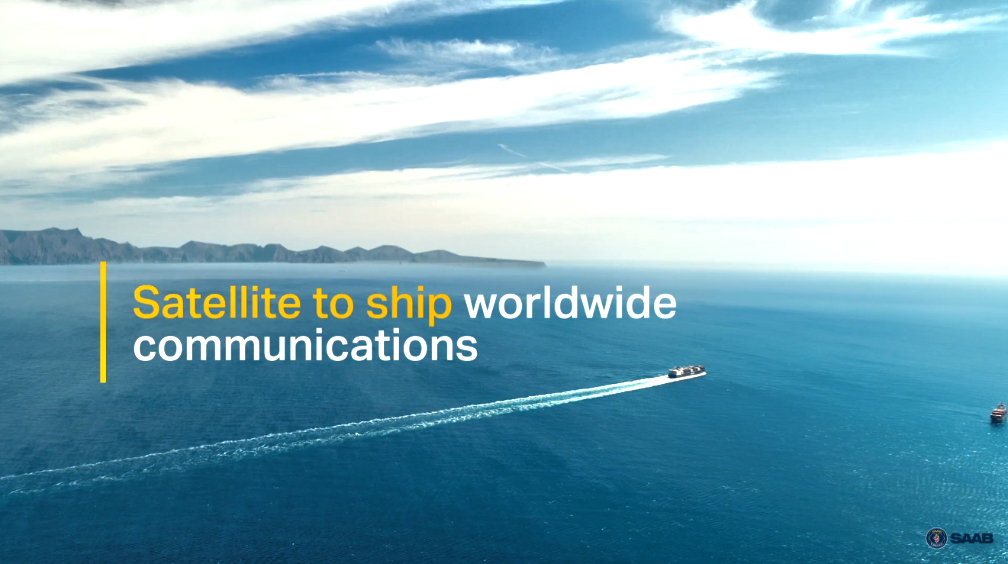
Saab, Orbcomm and AAC Clyde Space signed a contract for a new satellite that will use the VHF Data Exchange System (VDES) for maritime communications.

They are planning to build and launch a nanosatellite into low Earth orbit (LEO) to test using VDES for communications, extending current coastal VDES into the oceans.

Saab expects a successful trial will lead to a new constellation of these small VDES satellites for global coverage.

Saab chief strategy officer Christian Hedelin said this investment will open new applications for data exchange and internet of things (IoT).

“This is a very exciting project where Saab is testing new technology in space, which we think will become the enabler of future secure communication services and applications,” he said.

This VDES package will enable safer, more sustainable and greener shipping with spin-off potential for other industries.

Satellite VDES will also be a new automatic vessel tracking standard augmenting existing networks, such as the automatic identification system (AIS). All ships in service with VDES can carry out two-way communications with each other across the globe, like a secure wireless internet for shipping, Saab said.

VDES will enable better vessel positioning and communications, with 32 times more bandwidth than AIS. It will facilitate better e-navigation due to its greater capabilities for transferring voyage data. VDES could also be used as a communications channel for data between an unmanned vessel and onshore control centre.

E-navigation and other solutions based on the VDES technology have the potential to deal with the growing global maritime traffic, leading to safer and more optimal traffic management, which will save a lot of fuel and emissions, said Mr Hedelin.

“With the deployment of this technology, we will also contribute to a more sustainable society,” he said.

AAC Clyde Space will manufacture the spacecraft, while Orbcomm will contribute its satellite operating, vessel tracking and IoT experience and Saab the VDES technology.

This project is co-funded by the Swedish Transport Administration (Trafikverket).

“The new LEO nanosatellites are part of what is now called new-space and this project is a good example of how industry can develop powerful and cost efficient space-based solutions,” said Mr Hedelin.

“Saab entering into this business with its technology is a significant opportunity for all involved.”

This initial project will test and develop these technologies in preparation of a future operational VDES satellite constellation with global coverage.

The VDES project will begin in October 2020, followed by the launch of the demonstration satellite in the middle of 2022. After this, commissioning, testing and demonstration will continue until Q1 2023.
Source: rivieramm


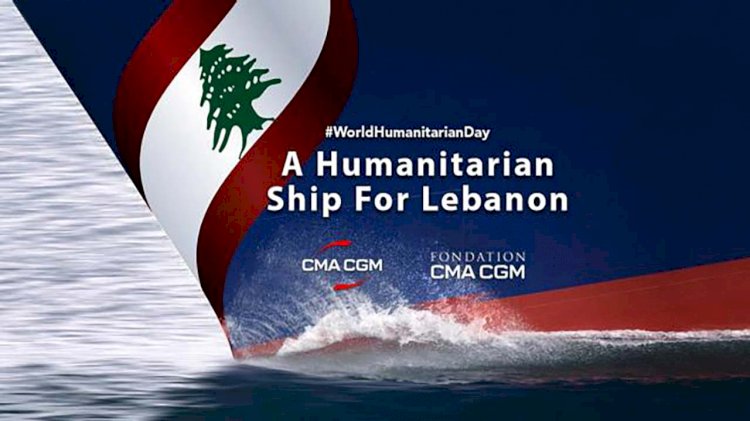
CMA CGM Group launches “A Humanitarian Ship for Lebanon” campaign

By launching “A Humanitarian Ship for Lebanon” campaign, the CMA CGM Group contributes to international solidarity efforts by transporting medical equipment and essential goods and products to support the Lebanese population, following the devastating explosions that hit Beirut.

The campaign will allow for the transport of emergency equipment and essential goods and products provided by the CMA CGM Foundation’s NGO partners and the Group’s partner companies. The initiative also has the support of deeply engaged French public institutions which have been highly mobilized (Crisis and Support Centre of the French Ministry for Europe and foreign affairs, the Provence-Alpes-Côte d’Azur region, the Bouches-du-Rhône department, the City of Marseille, Marseille’s Naval Fire Brigade, Marseille’s Public Hospitals – APHM).

One of the CMA CGM Group’s ro-ro vessels will be deviated from its usual service to travel from Marseille to Beirut in the very near future (the date is to be determined). Roll-on/roll-off or ro-ro vessels are perfectly suited to the needs of humanitarian transportation. They can carry containers, motor vehicles (fire engines, ambulances, civil engineering vehicles) and pallets. The CMA CGM Group is bearing all shipping and port operation costs and providing a storage facility in Marseille until the vessel departs.

The CMA CGM Group is mobilizing its teams to centralize, consolidate and transport the humanitarian supplies of participating organizations which have a clearly identified and vetted structure to receive them on Lebanese soil. The CMA CGM Group is setting up an operational unit in Marseille and Beirut to review requests and organize delivery as quickly as possible.

Source:


Bulk carriers are the workhorses of international maritime trade. Those responsible for operating them need to manage significant risks inherent to the dry bulk trade. Certain cargoes can deplete oxygen, catch fire, explode, corrode holds or simply deteriorate. At terminals, the Master may come under pressure to accept cargoes that are too hot or wet, which could endanger vessel and crew.
The dry bulk sector has made huge efforts to improve safety, but “there is no room for complacency and more work is needed,” says Intercargo Secretary General Dr Kostas Gkonis.

With the support of Intercargo and vetting organisation RightShip, The Nautical Institute has responded by publishing A Guide to Bulk Carrier Operations.

In the words of RightShip General Manager David Peel, the book has been designed as “a comprehensive end-to-end guide to exemplary safety practices that will be useful for all participants in our workforce, including shipowners, ports, terminals, charterers and associations”.

This highly practical guide draws on the expertise of more than 20 contributing experts representing a wide range of disciplines involved with the dry bulk trades. The book takes the reader through the essentials at each stage of the voyage, from preparation and loading, to care of the cargo and ship at sea, and finally arrival and discharge.

Subjects covered include strength and stability, hatch cover care, enclosed spaces, charterparties, legislation, draught surveys, deballasting, monitoring hazardous cargoes, spontaneous combustion, fumigation, coal fires, liquefaction and oxygen-depletion, safe mooring and access, ship-shore communication and ship/shore damage.

Clear diagrams and photographs complement the text along with tips, checklists and case studies.
The common-sense approach and straightforward language mean that, as Dr Gkonis says, this book “is indeed a pleasure to read!”
• To purchase your copy of A Guide to Bulk Carrier Operations please email pubs.admin@nautinst.org (price: £65; ISBN: 978 1 906915 77 3; NI ref: 0397).

The Nautical Institute is an international representative body for maritime professionals involved in the control of seagoing ships. It provides a wide range of services to enhance the professional standing and knowledge of members, who are drawn from all sectors of the maritime world. Founded in 1972, the Institute has over 40 branches worldwide and some 7,000 members in more than 120 countries.
Source: The Nautical Institute


Our fleet consists of 23 well maintained Suezmax tankers with a cargo lifting capacity of 1 million barrels of crude oil each. We focus solely on the Suezmax market. We believe Suezmax vessels are more versatile and the one-million-barrel market offers more options in trading than the Very Large Crude Carriers (VLCC) with their two-million-barrel lifting capacity.

We take extra care to maintain our vessels to the highest standards for the safety of crew, cargo and the environment. The outcome of the inspections of our ships by oil companies (“vetting”) reflects the good quality and maintenance of our fleet.

The operations of our Suezmax fleet have not been materially affected by the Covid-19 pandemic. Main challenges have been related to crew changes and we are following guidance issued by health authorities and international shipping trade associations to safeguard our seafarers. The future macro- economic effects of Covid-19 remain uncertain.

NAT has one of the largest fleets of Suezmax tankers in the world. In a capital intensive industry like ours, careful maintenance of our existing fleet and the timing & financing of expansion are key elements to ensure both our financial stability and our commitment to paying cash dividends.

All our vessels are running on IMO compliant fuel and we do not regard installing scrubbers as an alternative of any interest.

Results for the first half and second quarter ending June 30, 2020

For the 2nd quarter of 2020, the net income was positive with $49.1 million or $0.33 per share. This is a further improvement from the 1st quarter of 2020 that saw a net income of $39.5 million or $0.27 per share. The second quarter last year (2019) saw a net loss of $14.9 million or -$0.11 per share.

EBITDA (non-GAAP expression) came in at $73.7 million for the three months ending June 30, 2020, compared to the previous quarter (1Q 2020), which generated an EBITDA of $64.9 million.

Development of our EBITDA and Time Charter Equivalent (TCE) over the last 6 quarters are illustrated below:

For detailed information about our statement of operations (P&L), balance sheet, cash flow and reconciliation of certain Non-GAAP financial measures, we refer to the tables on page 5 and 6 of this press release.

Financing

The current cash position (including restricted cash) of the Company is $144 million or $0.96 per share. The last close of the NAT share before the release of this report was $4.50 per share.

Our Long Term Debt and other non-current liabilities stood at $318.9 million as per June 30, 2020. Our total long term liabilities have been reduced with in excess of $110 million over the last 18 months. Our Net Debt is $256 million or about $11 million per ship.

Our fleet is financed through two financing arrangements;

1) The $306 million 5-year senior secured credit facility entered into on February 12, 2019 with CLMG Corp., funded by Beal Bank of Dallas, Texas. The total outstanding (including current portion of the debt), is $264.7 million as per June 30, 2020. Including extra down payment after 2Q20 reporting of $ 31.9 million the total outstanding amount is expected to be $228.8 million at September 30, 2020.

1) The $129.5 million Ocean Yield Financing was entered into in December 2017 and drawn upon during 2018, to finance three of our vessels. The remaining long term amount under this financing is now $108 million. The total outstanding (including current portion) is $116.1.

Current portion of long term debt includes $44.8 million related to the $306 million 5-year senior secured credit facility and $7.5 million is related to the $129.5 million Vessel Financing.

During the quarter, the Company issued 2,459,083 shares, with gross proceeds of $15.3 million under its $40 million At-the-market Offering (“ATM”). Following this issuance, the Company has a total of 149,689,717 common shares outstanding. No further issuance under the ATM has been conducted at this date. An aggregate of $33.8 million in gross proceeds has been raised under the ATM in total since it was established in March 29, 2019.

Dividend

Cash dividends are a priority.

For the second quarter of 2020 a cash dividend of 20 cents ($0.20) per share was declared on May 20, 2020. This is an increase from the previous quarter when we paid out 14 cents ($0.14) per share.

Payment of the dividend will be on or about September 4, 2020, to shareholders of record on August 28, 2020.

Our dividend will always be a reflection of our cash earnings. A strong tanker market means strong dividends.

World Economy and the Tanker Market

What is good for the world economy and world trade is positive for the crude oil tanker business.
A low oil price is good for the world economy and works as a stimulus for recovery after that last few months of virus lock-downs. We see encouraging signals of improved Asian economies, boding well for the world economy and the tanker markets going forward.

The ordering activity for new ships is muted and the orderbook in percent of the existing tanker fleet has not been lower in decades. This is one of the main reasons for the good tanker market we have seen this year and for our long term optimism. The world’s Suezmax fleet (excl. shuttle, product & Jones Act tankers) counted 522 vessels at the end of June 2020. During the second quarter of 2020, 3 conventional Suezmax vessels were delivered from the shipyards. For the remainder of 2020 we expect to see a total of 13 additions to the world Suezmax fleet (excl. shuttle, product & Jones Act). We currently see 22 conventional Suezmax tankers scheduled for delivery in 2021 and 12 in 2022.

The supply of tanker tonnage is inelastic in the short-term. When there are too many ships in an area, rates tend to go down. When there is scarcity of ships, rates tend to go up. Short-term spot tanker rates may be expected to be volatile.

Corporate Governance/Conflict of Interests

It is vital to ensure that there is no conflict of interests among shareholders, management, affiliates and related parties. Interests must be aligned. From time to time in the shipping industry, we see that questionable transactions take place which are not in harmony with sound corporate governance principles, both as to transparency and related party aspects. We have zero tolerance for corruption.

Strategy Going Forward

The NAT strategy is built on expanding and maintaining a homogenous and top quality fleet, leveraging on our industry network and close customer relationships with major oil companies. Employment of our ships with major oil companies is a priority.

A strong balance sheet, combined with a homogenous fleet and economies of scale is giving a low cash break-even level, enabling NAT to distribute free cashflow to our shareholders.

This strategy will be positive in a strong tanker market. In an improved market, higher dividends can be expected.

Our dividend policy should continue to enable us to achieve a competitive cash yield.

Our fleet of 23 more or less identical vessels is a special feature of NAT that is particularly valuable to our customers.

NAT is firmly committed to protecting its underlying earnings and dividend potential. We shall safeguard and further strengthen this position in a deliberate, predictable and transparent way.

Full Report

Source: Nordic American Tankers Limited

AAC Clyde Space along with ORBCOMM Inc. and Saab will be collaborating on the development of a next generation VDES (VHF Data Exchange System) satellite, the first of an intended, cutting-edge LEO satellite to, as the company stated, “revolutionize maritime communications.”

VDES (info video at this direct link…) has the potential to the transform the international maritime sector and improve the safety of sea fairing vessels, from the broadcast of maritime safety information to route exchange. It supports direct ship-to-ship and ship-to-coast communication, but its key characteristic is that it supports two-way communications, this means that vessels can have two-way communications globally.

Additionally, when compared to other global comms systems available already, VDES is standardized and intended for every ships bridge so there would potentially be no need for new custom hardware onboard the ship, apart from the mandatory equipment.

Many small vessels currently use satellite AIS, automatic identification system, but with up to 32 times more bandwidth than current AIS services, VDES can be integrated with e-navigation systems, providing savings in fuel and emissions of up to 25 percent, while aiding maritime navigation and safety. The higher rate communications and flexibility of the service would be able to support a variety of services from vessel traffic services to search and rescue.

The space-based maritime communication infrastructure will increase VDES range from the shoreline to anywhere in the ocean, converting what is currently a predominantly coastal system into a global maritime system.

The satellite will carry a VDES payload from Saab for two-way communication between satellite and ground. ORBCOMM will integrate the data in its distribution centre for maritime communications.

The EPIC 3U demonstration satellite will be assembled at AAC Clyde Space’s new integration facility in Uppsala, Sweden. After demonstrating its VDES capabilities, the EPIC 3U satellite will also deliver AIS data to ORBCOMM, which will then be distributed to its government and commercial customers for ship tracking and other maritime navigational and safety efforts.

AAC Clyde Space, ORBCOMM Inc. and Saab have received a grant from the Swedish Transport Administration (Trafikverket) to build, launch and commission a smallsat with global coverage. The Swedish space project is expected to start in October of 2020, with the launch of the demonstration satellite in mid-2022, followed by on-orbit demonstration and testing, which will end in the first quarter of 2023.

Source: satnews


According to an announcement by the Maritime and Port Authority of Singapore
(MPA), Singapore has been elected for the first time to the Council of the
International Association of Marine Aids to Navigation and Lighthouse
Authorities (IALA). The election took place at the 13th Session of the IALA
General Assembly on 29 May 2018, in Incheon, the Republic of Korea.

Established in 1957, IALA is a non-profit, international technical
association that seek to harmonise aids to navigation worldwide and ensure that
the movements of vessels are safe, expeditious and cost effective while
protecting the environment. The association comprises marine aids to navigation
authorities, manufacturers, consultants, and scientific and training institutes
around the world.

Through its mission, IALA fosters safe,
economic, and efficient movement of vessels for the benefit of the
international maritime community. The principal organs of the IALA are the
Assembly, the Council and five Committees. The IALA General Assembly is held
every four years. In between the Assembly sessions, the activities of the IALA
are governed by the IALA Council. The IALA Council comprises 21 Councillors
elected by the IALA General Assembly and 3 further non-elected Councillors.
Council membership is for four years and members are eligible for
re-election.

Following its successful election, Singapore
will serve a four-year term from 2018 to 2022. Membership of the Council will
enable Singapore to contribute further to IALA’s mission of ensuring that
seafarers are provided with effective and harmonised marine aids to navigation
worldwide for safe navigation and protection of the environment.

“Singapore is honoured to be elected to the
IALA Council and is grateful for the support of our fellow IALA National
Members. We are heartened that our contributions are valued and recognised by
IALA National Members, and look forward to close collaboration to further the
IALA’s vision of achieving the safe and efficient movement of vessels through
the improvement and harmonisation of marine aids to navigation worldwide,” said
Mr Andrew Tan, Chief Executive of the MPA.

This is the first time Singapore ran for a
seat on the IALA Council, although Singapore has been an IALA National Member
since 1973.

As one of the world’s busiest ports situated
along a key maritime trade route, ensuring safe, open, efficient, and
sustainable shipping has always been important to Singapore. One of Singapore’s
initiatives toward this goal is the development of standardised automatic
reporting and improvement of communication of vessel traffic services, which is
in line with IALA’s efforts in e-navigation.

Since 1973, as an IALA National Member,
Singapore has played an active role at the various IALA Committees such as the
E-Navigation Committee (ENAV) and the Vessel Traffic Services Committee (VTSC),
and their respective working groups.

Singapore was the first Asian country to host
the Vessel Traffic Services Symposium in partnership with IALA in 2000. MPA has
also co-organised and hosted various IALA workshops and courses such as the
E-NAV workshop in 2012, the Regional Forum on Vessel Traffic Services in 2013,
the IALA’s Risk Management Course in 2015 and the e-Navigation forum in 2017.

To mark the 45th year of
Singapore’s membership of IALA, Singapore has launched a 5-year technical co-operation and capacity building package for IALA
and its National Members from 2019-2023.

Valued at S$1 million, the package comprises
fellowships, scholarships, workshops, networking events, and courses to enhance
IALA National Members’ capacity-building and human resource development.

Mr Francis Zachariae, Secretary-General of
IALA, welcomed Singapore’s commitment for a technical co-operation and capacity
building package to IALA.

“I would like to express my sincere
appreciation to the Government of Singapore for its continued support to IALA
and encourage other IALA National Members to follow this good example,” said Mr
Zachariae.

The package will be implemented through the
MPA Academy, MPA’s training arm, in collaboration with the IALA Worldwide
Academy, IALA’s arm for technical assistance and capacity building.

Source: opengovasia


Company DETAILS

SHIP IP LTD
VAT:BG 202572176
Rakovski STR.145
Sofia,
Bulgaria
Phone ( +359) 24929284
E-mail: sales(at)shipip.com

ISO 9001:2015 CERTIFIED