THE US has backed up recent warnings of doubling down on its sanctions against Venezuela by putting four Greek-managed tankers on its blacklist.
The four vessels and their registered owning companies were added on Tuesday to the “specially designated nationals” or SDN list maintained by the Treasury Department’s Office of Foreign Assets Control (Ofac).
At least one of the shipping companies targeted has been informed by its flag state that the tanker will be deregistered immediately.
The vessels that have fallen foul of US scrutiny were named as the 2007-built aframax Athens Voyager, the three year-old suezmax tanker Chios I, and two very large crude carriers – the 2006-built Seahero and the 2003-built Voyager I.
The companies managing the vessels include names that are among the most prominent in the industry.
According to Lloyd’s List Intelligence and other databases, the tankers are respectively managed by Chemnav Shipmanagement, Dynacom Tankers, Thenamaris and NGM Energy.
Lloyd’s List has approached each of the companies for comment but executives did not immediately respond by Tuesday evening.
The Marshall Islands (RMI) maritime administration said that it was in the process of deregistering the Voyager I, which it said was the first RMI-flagged vessel to appear on the SDN list.
“The US SDN updates issued today have been captured by our system and the entities and the vessel are being annulled or deregistered today,” the flag said in a written response.
In addition to being the flag state for the Voyager I, the Marshall Islands is the country of incorporation for the entities owning two of the other tankers that have been blacklisted.
The flag administration said that it had a “largely unique” record among flag states of vetting vessels and owners for sanctions compliance.
But it added: “However, the RMI recognises that this is a constantly evolving space, recognises the statutory obligations upon vessels for AIS [Automatic Identification System] and LRIT [Long Range Identification and Tracking System] compliance, and recognises the difficulty that some owners and operators may face for wholly lawful reasons.”
The Athens Voyager trades under the flag of Panama that just days ago signaled a more determined approach to steer clear of sanctions trouble by introducing fines on vessels that turn off or interfere with their signal transponders.
The Seahero is registered in the Bahamas while the Maltese-flagged Chios I is the sole member of the quartet registered in the EU.
Ofac did not provide details of when and how the vessels were adjudged to have breached sanctions.
While in the past Venezuelan oil and products have not been specifically outlawed, the Trump administration has been seeking to tighten the noose on the South American country and just last month issued new guidance to the maritime industry aimed at clamping down on practices intended to defeat vessel tracking systems.
That advisory, however, focused on trade with Iran, North Korea and Syria.
“The United States reiterates that the exploitation of Venezuela’s oil assets for the benefit of the illegitimate regime of President Nicolas Maduro is unacceptable, and those that facilitate such activity risk losing access to the US financial system,’’ the State Department said in a statement on its website.
Legal experts have warned shipping companies in recent weeks that they should expect a stricter stance from Ofac as the US government tries to enforce its sanctions policy.
Source: https://lloydslist.maritimeintelligence.informa.com/
CHICAGO, May 29, 2020 /PRNewswire/ — According to the new market research report “Marine Battery Market by Battery Type (Lithium, Fuel Cell, Lead-acid), Propulsion Type (Fully Electric, Hybrid, Conventional), Application, Sales Channel, Ship Range, Nominal Capacity, Battery Design, Battery Function, and Region – Global Forecast to 2025″, published by MarketsandMarkets™, the Marine Battery Market is estimated to be USD 250 million in 2020 and is projected to reach USD 812 million by 2025, at a CAGR 48.1% from 2020 to 2025. Implementation of sulfur 2020 rule and rise in the conversion of propulsion systems in passenger vessels are the major factors anticipated to boost the demand for marine batteries during the forecast period. The rise in seaborne trade across the globe, growing maritime tourism industry, and the development of lithium batteries are the other factors anticipated to fuel the growth of the marine battery market.
Ask for PDF Brochure:
https://www.marketsandmarkets.com/pdfdownloadNew.asp?id=210222319
75–150 kW segment to register the highest CAGR from 2020 to 2025
By ship power, the 75–150 kW segment of the marine battery market is projected to register the highest CAGR during the forecast period. Medium-size passenger ferries are considered under ships having power between 75 and 150 kW. The need for a reduced or zero-emission transport system is high across countries. As per the International Maritime Organization’s MARPOL convention for the prevention of pollution from ships, the sulfur content present in the fuel of ships need to be reduced from 3.5% to 0.5% from January 2020. Countries such as Japan, New Zealand, and Australia are also moving toward using battery propelled fully electric ferries for passenger transport. Norway has incorporated fully electric and hybrid technologies in its ferries.
50–100 KM segment is projected to register the highest CAGR from 2020 to 2025
By ship range, the 50–100 KM segment is estimated to witness the highest CAGR during the forecast period. This segment includes inland container vessels, small cruise ships, fishing vessels, and research vessels. Yara’s (Norway) 120 TEU container ship, Yara Birkeland, can travel 56 km and is a fully electric ship. Another all-electric ship was constructed by Guangzhou Shipyard International Company Ltd. in December 2017. This ship can travel 80 km on a single charge. Operational and fuel cost savings are benefits offered by fully electric ships for operators, but the high capital expenditure and port side development are major challenges faced by ship manufacturers.
Browse in-depth TOC on “Marine Battery Market”
203 – Tables
50 – Figures
223 – Pages
Inquiry Before Buying:
https://www.marketsandmarkets.com/Enquiry_Before_BuyingNew.asp?id=210222319
Europe marine battery market is projected to register the highest CAGR from 2020 to 2025
By region, Europe is expected to witness substantial growth in the marine battery market during the forecast period. International shipping is a large and growing source of greenhouse gas emissions. Thus, the European Union and the International Maritime Organization have come up with regulations on CO2 emissions and the presence of sulfur in fuel. Awareness about carbon emissions is leading shipowners and integrators to switch from traditional diesel-driven engines to battery propulsion systems. Domestic shipping in European countries has already been experimenting with battery-electric propulsion, and this trend is expected to continue.
The marine battery market has been gaining traction over the past few years due to the presence of several established companies as well as startups. Some of the major market players are Corvus Energy (Canada), Akasol AG (Germany), EST-Floattech (Netherlands), Siemens (Germany), Spear Power Systems (US), Echandia Marine (Sweden), Sterling PBES Energy Solutions (Canada), Furukawa Battery Solutions (Japan), Lithium Werks (Netherlands), Exide Technologies (US), Craftsman Marine (Netherlands), PowerTech Systems (France), Kokam Co. Ltd. (South Korea), Toshiba Corporation (Japan), XALT Energy (US), EverExceed Industrial Co. Ltd. (China), U.S. Battery (US), Lifeline Batteries (US), Saft (France), Forsee Power (France) and Leclanché (Switzerland).
Related Reports:
Electric Ships Market by Power Source (Fully Electric, Hybrid, Plug-In Hybrid), Autonomy (Manned electric ships, Remotely-operated, Fully Autonomous), Ship Type (Bulk Carrier, Gas Tanker, Tankers, Barge, Passenger Cruise, Aircraft Carrier, Amphibious, Destroyer, Frigate) and Region – Global Forecast to 2030
Autonomous Ships Market by Autonomy (Fully Autonomous, Remote Operations, Partial Automation), Ship Type (Commercial, Defense), End Use (Linefit, Retrofit), Solution (Systems, Software, Structures), and Region – Global Forecast to 2030
About MarketsandMarkets™
MarketsandMarkets™ provides quantified B2B research on 30,000 high growth niche opportunities/threats which will impact 70% to 80% of worldwide companies’ revenues. Currently servicing 7500 customers worldwide including 80% of global Fortune 1000 companies as clients. Almost 75,000 top officers across eight industries worldwide approach MarketsandMarkets™ for their painpoints around revenues decisions.
Our 850 fulltime analyst and SMEs at MarketsandMarkets™ are tracking global high growth markets following the “Growth Engagement Model – GEM”. The GEM aims at proactive collaboration with the clients to identify new opportunities, identify most important customers, write “Attack, avoid and defend” strategies, identify sources of incremental revenues for both the company and its competitors. MarketsandMarkets™ now coming up with 1,500 MicroQuadrants (Positioning top players across leaders, emerging companies, innovators, strategic players) annually in high growth emerging segments. MarketsandMarkets™ is determined to benefit more than 10,000 companies this year for their revenue planning and help them take their innovations/disruptions early to the market by providing them research ahead of the curve.
MarketsandMarkets’s flagship competitive intelligence and market research platform, “Knowledge Store” connects over 200,000 markets and entire value chains for deeper understanding of the unmet insights along with market sizing and forecasts of niche markets.
Explosion followed by fire occurred on board of Nigerian cargo ship GOD’S LOVE at Lome port, Togo, on May 15. One crew died, several were injured, was reportedly, extinguished. It is not clear what this GOD’S LOVE ship is. According to IMO number (looking still valid, with operational AIS), it’s a container ship broken up long time ago, and simultaneously, it’s a tanker, positioned at Lome. Take your guess.
14 crew of container ship LOG IN JATOBA were found virus test positive in Santos port, Brazil, according to The National Health Surveillance Agency (Anvisa) official statement issued on May 14. The ship – understood after completing cargo operations – was taken on Santos outer Anchorage, and put under quarantine, which will last until May 26. Container ship MSC GISELLE is under quarantine since May 9 until May 23, also anchored. Understood there was one test positive crew, he was taken to hospital. Container ship BARBARA is under quarantine until May 17, Santos outer Anchorage – see details here https://www.fleetmon.com/maritime-news/2020/29633/panamax-container-ship-under-quarantine-until-may-/
Also, there are 4 cruise ships stuck in Santos, all with crew only: MSC SEAVIEW (quarantine to end on May 15, no corona cases), COSTA FASCINOSA (no corona cases); MSC MUSICA (quarantine ended May 5); MSC POESIA (no test positive cases, no quarantine).
Container ship BARBARA is put under quarantine until May 17 at Santos Anchorage, Brazil, until May 16, after 10 crew tested positive for what’s called coronavirus. Results of the test became known on May 9. The ship arrived at Santos on May 1 and was taken to anchorage on May 2, understood after completing cargo works. Understood no crew was and is in need of intensive care or hospitalization, and most of those found positive don’t have any illness symptoms.
A new research study has been presented by Industrygrowthinsights.com offering a comprehensive analysis on the Global Maritime Safety Market where user can benefit from the complete market research report with all the required useful information about this market. This is a latest report, covering the current COVID-19 impact on the market. The pandemic of Coronavirus (COVID-19) has affected every aspect of life globally. This has brought along several changes in market conditions. The rapidly changing market scenario and initial and future assessment of the impact is covered in the report. The report discusses all major market aspects with expert opinion on current market status along with historic data. This market report is a detailed study on the growth, investment opportunities, market statistics, growing competition analysis, major key players, industry facts, important figures, sales, prices, revenues, gross margins, market shares, business strategies, top regions, demand, and developments.
The Maritime Safety Market report provides a detailed analysis of the global market size, regional and country-level market size, segment growth, market share, competitive landscape, sales analysis, impact of domestic and global market players, value chain optimization, trade regulations, recent developments, opportunity analysis, strategic market growth analysis, product launches, and technological innovations.
Get a Free Sample Copy of the Maritime Safety Market Report with Latest Industry Trends @ https://industrygrowthinsights.com/request-sample/?reportId=200226
Major Players Covered in this Report are:
Bae Systems
Elbit Systems
Harris
Honeywell International
Kongsberg Gruppen
Northrop Grumman
Raytheon
Saab Group
Leonardo-Finmeccanica
Signalis
Global Maritime Safety Market Segmentation
This market has been divided into Types, Applications, and Regions. The growth of each segment provides an accurate calculation and forecast of sales by Types and Applications, in terms of volume and value for the period between 2020 and 2026. This analysis can help you expand your business by targeting qualified niche markets. Market share data is available on the global and regional level. Regions covered in the report are North America, Europe, Asia Pacific, the Middle East & Africa, and Latin America. Research analysts understand the competitive strengths and provide competitive analysis for each competitor separately.
By Types:
Surveillance & Tracking
Detectors
GIS
Communication
SCADA
Screening & Scanning
By Applications:
Port
Safety Of Ships
Coastal Monitoring
To get Incredible Discounts on this Premium Report, Click Here @ https://industrygrowthinsights.com/ask-for-discount/?reportId=200226
Global Maritime Safety Market Regions and Countries Level Analysis
Regional analysis is a highly comprehensive part of this report. This segmentation sheds light on the sales of the Maritime Safety on regional- and country-level. This data provides a detailed and accurate country-wise volume analysis and region-wise market size analysis of the global market.
The report offers an in-depth assessment of the growth and other aspects of the market in key countries including the US, Canada, Mexico, Germany, France, the UK, Russia, Italy, China, Japan, South Korea, India, Australia, Brazil, and Saudi Arabia. The competitive landscape chapter of the global market report provides key information about market players such as company overview, total revenue (financials), market potential, global presence, Maritime Safety sales and revenue generated, market share, prices, production sites and facilities, products offered, and strategies adopted. This study provides Maritime Safety sales, revenue, and market share for each player covered in this report for a period between 2016 and 2020.
Make an Inquiry of this Report @ https://industrygrowthinsights.com/enquiry-before-buying/?reportId=200226
Why Choose Us:
Table of Contents
1. Executive Summary
2. Assumptions and Acronyms Used
3. Research Methodology
4. Market Overview
5. Global Market Analysis and Forecast, by Types
6. Global Market Analysis and Forecast, by Applications
7. Global Market Analysis and Forecast, by Regions
8. North America Market Analysis and Forecast
9. Latin America Market Analysis and Forecast
10. Europe Market Analysis and Forecast
11. Asia Pacific Market Analysis and Forecast
12. Middle East & Africa Market Analysis and Forecast
13. Competition Landscape
About Industrygrowthinsights:
INDUSTRYGROWTHINSIGHTS has set its benchmark in the market research industry by providing syndicated and customized research report to the clients. The database of the company is updated on a daily basis to prompt the clients with the latest trends and in-depth analysis of the industry. Our pool of database contains various industry verticals that include: IT & Telecom, Food Beverage, Automotive, Healthcare, Chemicals and Energy, Consumer foods, Food and beverages, and many more. Each and every report goes through the proper research methodology, validated from the professionals and analysts to ensure the eminent quality reports.
In two recent articles, Sea Piracy in 2025: Piracy 2.0? and Countering Gulf of Guinea Piracy Towards 2025 I tried to map out the possible evolution of piracy within Gulf of Guinea until 2025. Then I analyzed the different possible actions to reduce this threat. This analysis cannot be complete without integrating the main actor, the seafarer. This third article therefore concerns the how seafarers must adapt to the rapid evolution of pirate activities.
It’s noticeable that this domain for seafarers is based on regulatory documentation that is low in volume and weak in practical guidance. The Ship Security Plan (SSP) is the basis for maritime security regulations. This document, established after the USS Cole, Limburg and September 11 attacks, was mainly focused on maritime terrorism. The content has been lightly modified since, integrating some requirements arising from the evolution of piracy.
The ISPS regulation does not go deeper on practical measures concerning vessel, crew members, equipment and procedures when looking at piracy. To cover the seafarers practical needs a group of associations published a document called Best Management Practices in early 2000. This document, dedicated to deter piracy and enhance maritime security in the Red sea, Gulf of Aden, Indian Ocean and Arabian sea has been reviewed several times since (Last review BMP 5 –June 2018). To respond to the specific Gulf of Guinea environment, one document, Guideline for Owners, Operators and Masters for Protection against Piracy in the Gulf of Guinea Region has been established by the same structure.
Finally, as the piracy epicenter as moved from East Africa to West Africa, one new document BMP West Africa has been issued beginning 2020 to provide threat mitigation guidance on counter-piracy/armed robbery at sea and to help companies and mariners to risk assess voyages while operating along the West African coast.
Despite the evolution of communications at sea, the captain is an isolated leader. His or her job requires quick decisions concerning a wide variety of situations. If the situation allows, he can try to establish a telephone connection but, the handset hung up, he becomes again, isolated. A piracy attack is a dynamic event testing a captain’s competency and reactivity. This situation can be illustrated by the Captain Phillips movie scene where Tom Hanks calls the MSCHOA. As with everything else, a captain must be informed, trained, prepared.
This readiness must not only apply to seafarers, it should be also concern the vessel. “If you ignore both your enemy and yourself, you will only count your fights by your defeats.” This citation should be a guide for a captain or ship security officer (SSO) operating within the Gulf of Guinea. The pirates’ boarding rate within Gulf of Guinea is very high. As said in my previous article, there are several reasons for this. Some are linked to the combination of operational capacities of pirates and the lack of military responses (PMSC / escort vessel) but it is obvious that somet of the reasons are linked to another conjunction: ignorance of West Africa pirates, to their profiles and their modes of action.
As such, it would be interesting to test the captains/SSOs to make them draw Gulf of Guinea pirates. To help their sketches, we can try to characterize them by some elements:
Use of fiber speed boat, eight to 10 meters long, usually sporting colored flags (mainly red or white), usually motorized by two outboard engines, 150/200 Hp, more than six men onboard (usually eight to 10), men armed with AK 47, speed boat fitted with an aluminum ladder eight to 10 meters long. Pirates can operate on one sole speed boat, sometimes in pairs.
It’s noteworthy that numerous specialized articles speaking about Gulf of Guinea piracy are illustrated by a very well-known picture showing a speed boat having a mounted Cal 50 machine gun and transporting……MEND militants. If the picture is beautiful, it’s not related to real Gulf of Guinea pirates. Sometimes this picture is replaced by the view of one skiff transporting Somalian sea pirates. This pictorial materialization may disturb the initial perception of what a Gulf of Guinea pirate is.
The fiber vessels don’t offer a strong Radar Cross Section, navigational radars have limited capacities. The pirates’ speed boat emerges on the radar screen at about three nautical miles when the sea state is under three and the speed is high. It’s highly recommended that one radar be set on short pulse/ short range, the AC SEA/AC RAIN setting in accordance. It’s possible that watchkeepers will detect the approach by the noise before sight or radar screen. The approach axes can be various but the CPA (Closest Point of Approach) is …0.
The time of the attack varies too and is evolving regularly. In 2018, almost two thirds of the piracy attacks was conducted by daylight. Currently, piracy attacks within Gulf of Guinea are mainly conducted at night time and mainly at the beginning or end of the night.
The location is, of course, one of the important facts to analyze. My previous article, Sea Piracy in 2025 analyzed the current trend of attack attempts very deep offshore …..or within non protected anchorage areas along the West African coast from Luanda till Abidjan.
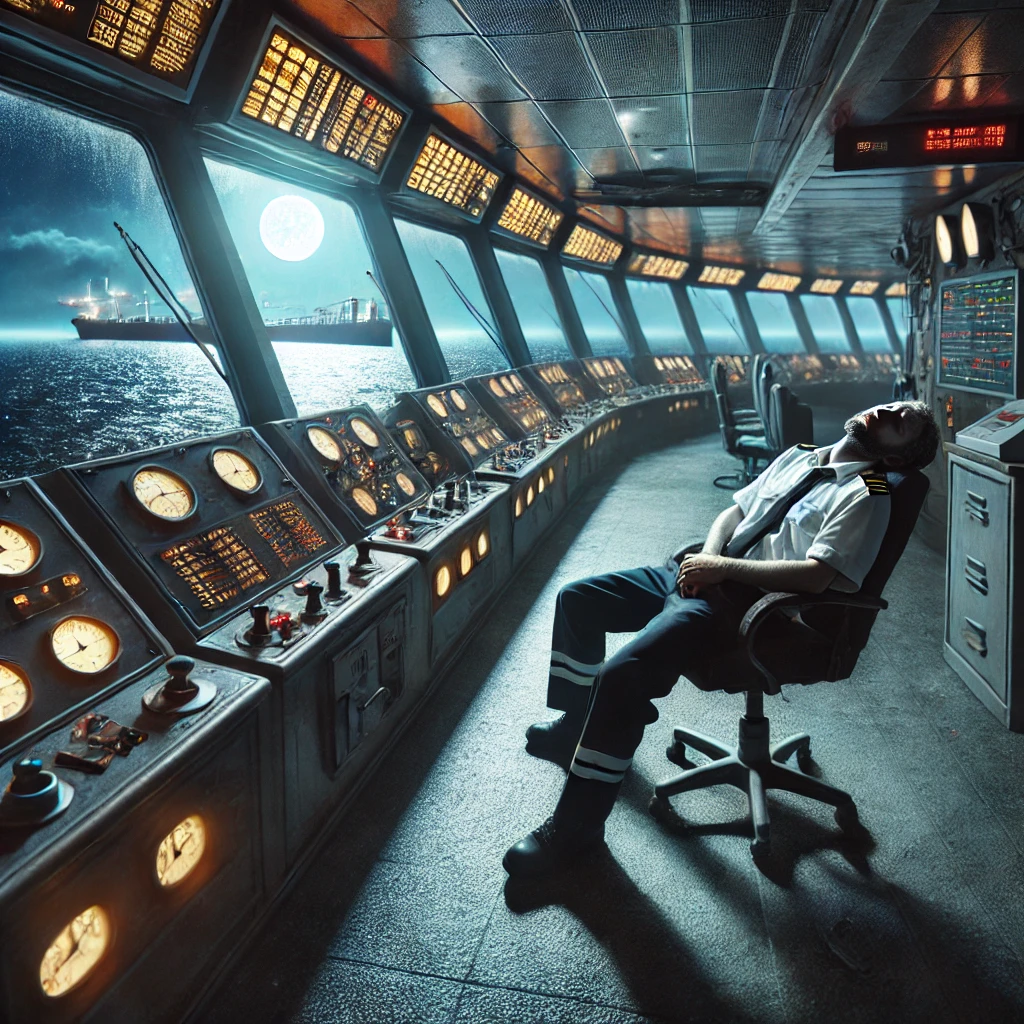
This first enemy analysis realized, and to remind on the Sun Tzu citation, it may be even more important to know yourself. Turning back to the Gulf of Guinea piracy data, one element is alarming: it’s the number of vessels boarded without alarm/alert: No VHF.M distress call, no SSAS (Ship Security Alert System) alert, no vessel internal alert. The personnel on bridge duty discover the pirates when one is directly pointing a gun at them on the other side of the bridge glass.
For at least two cases in the last few months, the pirates have used….the pilot ladder left along the hull by night. These observation led to at least two main reflections: the seafarers had misjudged the threat and, because of this error, had not applied the adapted basic security measures.
Reviewing the current trends, appreciating more precisely the Gulf of Guinea pirates’ modus operandi, it’s obvious that the area located between San Pedro and Luanda and taking a range of 200 nautical from the shore must be considered as High Risk Area for piracy. (Conakry Anchorage is a specific bubble which should be considered too.) This area is globally characterized on the specific chart established by the MDAT-GOG. Within this area, as said before, the pirates are currently acting on two modes:
Piracy attack deep/very deep offshore: Action is characterized by a direct attack against a vessel en route day or night. The detection of the threat is facilitated by the sparse maritime traffic, but the vessel is usually alone, not protected.
Maritime criminality within anchorage area: The pirates operate in discretion, by night against vessels anchored or on stand by. The detection of the threat is complicated by the numerous speed boats/canoes fishing in the area, but the vessel can benefit from security support from navy assets protecting the area.
The objective of these two pirates process is the same: kidnapping of crew members.
This being posed, and as the threat is focused on abduction, it is interesting to revisit the maritime operators possible internal self responses in 10 main actions:
• Secure the vessel as much as possible by a security escort vessel or an embarked military security team: The pirates are focusing on soft targets!
• Optimize your detection means for locating pirates as early as possible: One speed boat sailing 30 knots is along board six minutes after detection at three nautical miles!
• Be able to classify the threat as soon as possible, using the piracy criteria declined above: Personnel on duty on the bridge should be informed, trained and regularly refreshed about local pirates.
Raise the alarm about the attack by all means available (VHF.M 16 / SSAS/ GMDSS/ PHONE / HORN-SIREN/LIGHT)
• Optimize internal alert systems to ensure all crew members will be aware of the alert sent.
Conduct regular anti-piracy drills: piracy attack / alert / immediate communication / mustering / lock down control / anti-boarding measures / move to safe haven.
• As soon as you operate within a high risk area, lock your vessel. All external doors locked, all portholes secured. Try to slow down the pirates progression onboard the vessel after boarding by the use of specific items (wire rack or other) on external stairs.
• Use the navigation lights only, no deck light, all portholes blinded. By night level 4 or 5, when navigation lights are off, after change of course /speed, the vessel targeted disappears for pirates sailing onboard speed boat without radar, AIS or night vision goggles.
• Optimize the vessel’s readiness by using simple and efficient systems. As the maritime industry is strongly impacted by the general economic situation, focus on low cost equipment rather than hoping for the use of means that are certainly effective but financially unaffordable. As an example, one general public autonomous sensor sending sound, light and possibly video, set up on the obliged path from deck to bridge, can efficiently alert the watchkeeping team in case of initial surveillance/detection failure.
• Consider the first internal door from navigation bridge to accommodations and lower decks as one essential element of your safe haven. Reinforce this door, reinforce the frame, complete the hardening with a mobile forestay. This first internal door will create an emergency initial secured bubble allowing a short time to alert and gather the crew in emergency in case of a late alert, pirates being already onboard. The four or five minutes it will take pirates to destroy this door will allow you to secure the full crew within the real final citadel.
Of course, this list is not exhaustive. It’s established on the analysis of hundred of maritime piracy acts within the Gulf of Guinea and is mainly dedicated to avoiding crewmembers being kidnapped. It can be completed and/or adapted depending of vessel configuration and the good sense.
François Morizur is a maritime security expert and former French Navy officer.
Source:
https://www.maritime-executive.com/blog/seafarers-must-adapt-to-the-rapid-evolution-of-piracy

Two crewmembers have been kidnapped from a general cargo vessel off Equatorial Guinea in the Gulf of Guinea, according to security company Dryad Global.
The incident occurred two nautical miles from Malabo on May 9. The pirates reportedly used ladders to board the Rio Mitong from a speedboat. A Russian and a Ukrainian are believed to have been kidnapped.
The latest incident follows a report from Dryad of a suspicious approach by a speedboat against a tanker 22 nautical miles off Cameroon several hours earlier.
Since then, at Luba Anchorage, also in Equatorial Guinea, there are unconfirmed reports that two Russian seafarers have been kidnapped from the research vessel MV Djibloho. A report from maritime security company Praesidium International indicates that three seafarers may have been kidnapped: two Russians and one national from Equatorial Guinea.
It is unclear what order the incidents occurred in or whether the same group of pirates are involved.
There have been other reports of suspicious activity in the region over the last two days, including a report of a speedboat circling an offshore platform off Mayumba, Gabon.
“Whilst the trend of incidents within West Africa is showing a gradual decline, there is an upward trend in severity of incidents notably those involving kidnap for ransom,” reports Dryad.
Source:
https://www.maritime-executive.com/article/two-kidnapped-off-equatorial-guinea