
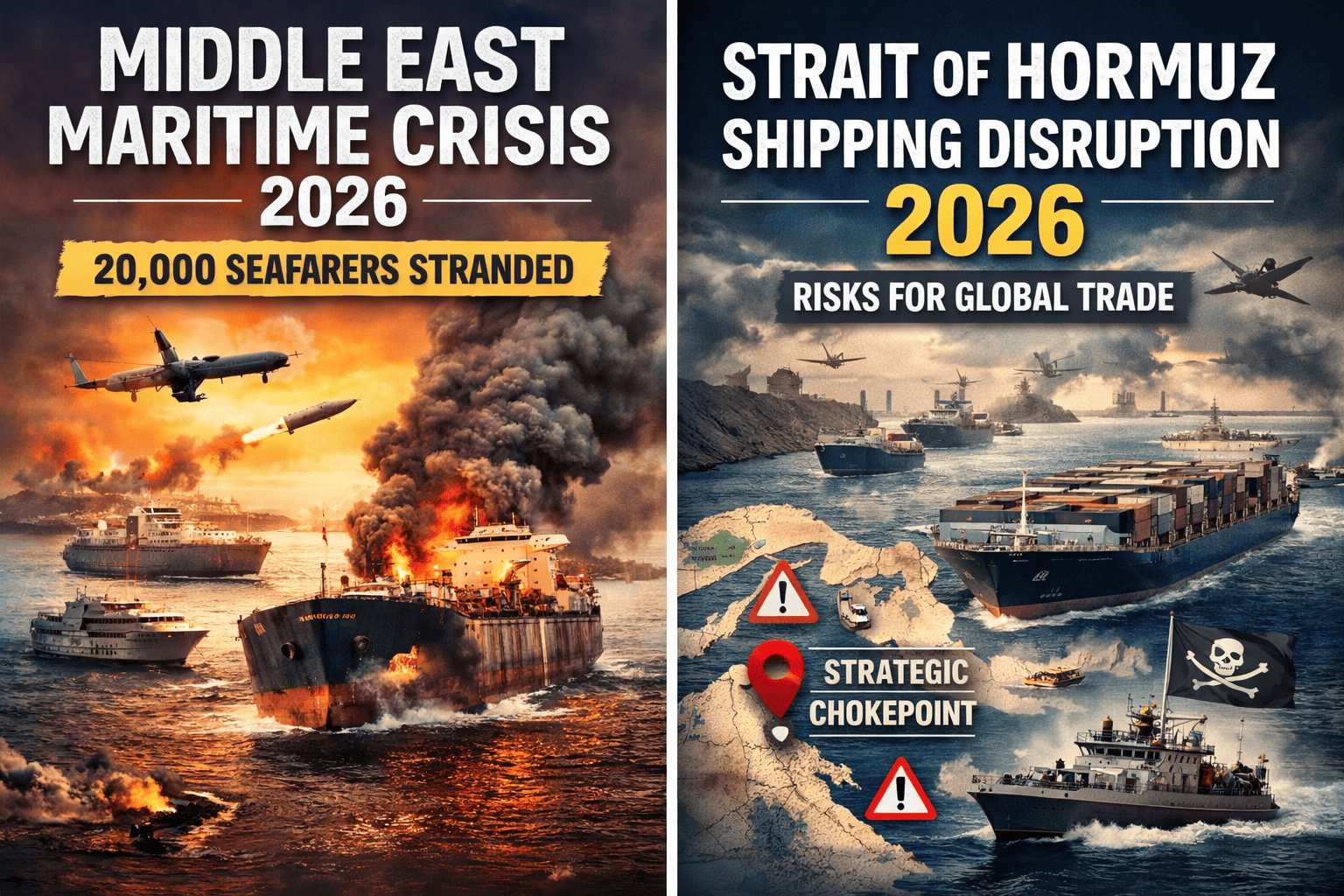

Strait of Hormuz Shipping Disruption Raises Global Maritime Concerns
The Strait of Hormuz, one of the world’s most strategically important maritime chokepoints, is currently experiencing severe disruption due to escalating security tensions in the Middle East.
Industry reports from maritime authorities and shipping companies indicate that several major carriers have temporarily suspended transit through the region. This development is already impacting tanker traffic, container services, and regional energy supply routes.
Major Shipping Lines Reroute Vessels
Leading operators including Maersk, Hapag-Lloyd, and NYK Line have adopted precautionary measures, temporarily halting transits through the Strait of Hormuz while monitoring the evolving situation.
The disruption has resulted in vessels seeking alternative routes or waiting at safe anchorage areas in nearby waters.
As of early March 2026, maritime analysts estimate that more than 150 vessels are currently delaying passage through the strait.
Insurance and Risk Levels Increase
War risk insurance providers have already classified the Persian Gulf region as a high-risk operational zone. Although coverage remains available, ship operators are facing increased premiums and stricter voyage approvals.
Ship managers are therefore conducting additional risk assessments before allowing vessels to enter the region.
Operational Impact for Shipowners and Managers
For shipowners and technical managers, the situation highlights the importance of maintaining robust operational monitoring and safety procedures.
Companies must ensure that:
- vessel maintenance and safety systems remain fully operational
- crew reporting procedures are clearly established
- emergency response plans are updated and accessible