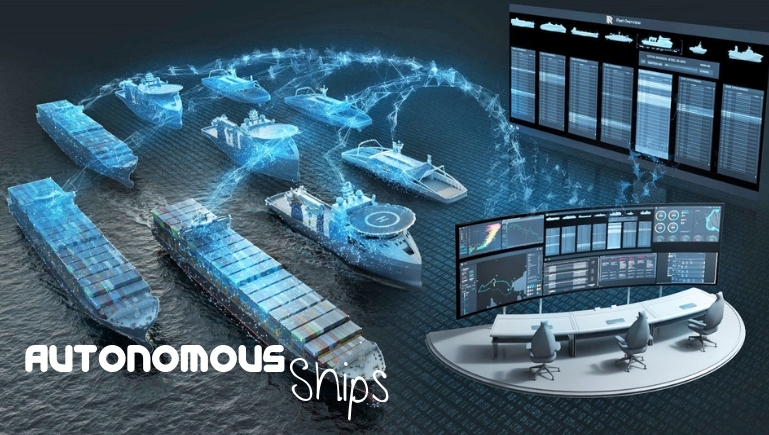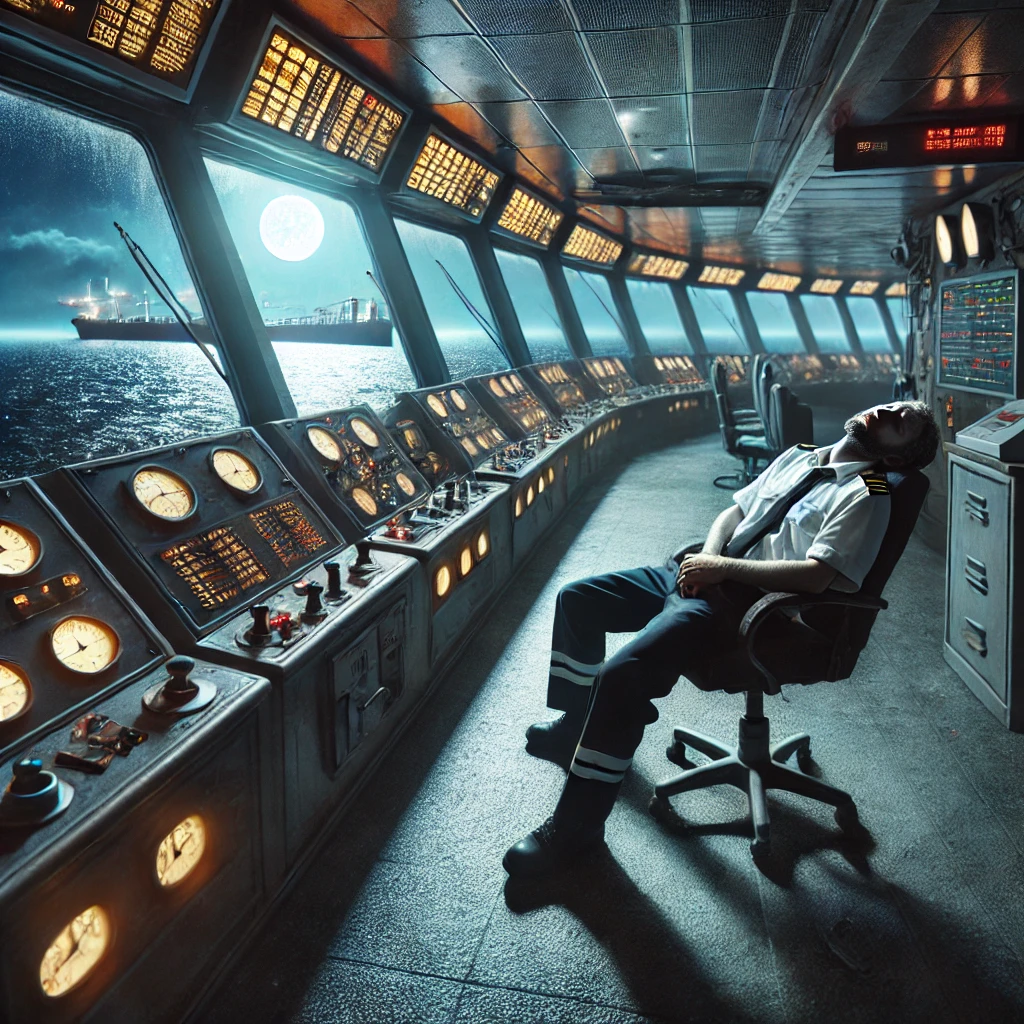
Classification society Korean Register (KR) has agreed to collaborate with Samsung Heavy Industries (SHI) and KLCSM on autonomous navigation systems for ships.

The three parties signed a memorandum of understanding (MoU) to conduct joint research on the application of autonomous navigation systems for mid-sized to large-sized vessels.

As part of the agreement, KLCSM’s fleet of operating ships will be equipped with SHI’s autonomous navigation system, called Samsung Autonomous Ship (SAS), for risk assessments.

What should market participants prioritise when aiming to develop a clear view of ESG risks and opportunities? Andrea Blackman, global head of Moody’s ESG Solutions, discusses how attitudes and expectations are changing, and the role ‘comprehensive coverage’ must play in greening the global economy.

As urgency around the climate crisis heightens, the world is seeing a greater call for accountability and transparency. Market and investor pressure is mounting on the private sector to transition to a low-carbon economy, making corporate ESG disclosures a critical piece of the puzzle.

Vague claims around sustainability will not pass muster with investors and regulators. Rather, they are calling for precise data around companies’ ESG impacts, be that in the form of understanding nature-related risk, biodiversity loss, human rights considerations or other ESG factors.

The system will also support the development and certification of cybersecurity systems, as well as provide a review of the conformity of different agreements and standards for future approval of ship registries.

Additionally, KR, SHI and KLCSM agreed to work together to commercialise autonomous navigation systems through the Marine Equipment Directive (MED) certification of SHI’s Electronic Chart Display and Information System (ECDIS) modules.

KR Plan Approval Center head Yeon Kyujin said: “I am quite confident that our strong collaboration will accelerate the commercialisation of autonomous ship equipment and technology, and enhance the quality and competitiveness of the equipment by establishing an actual ship-based autonomous operating system.”

KLCSM Corporation Managing Department director Kwon O-gil said: “With this latest joint cooperation, more autonomous navigation systems will be successfully applied to ships, which will further increase the efficiency of ship management.

“We also expect to improve vessel safety and improve the environment of ship operations amid a current shortage of sailors.”

What should market participants prioritise when aiming to develop a clear view of ESG risks and opportunities? Andrea Blackman, global head of Moody’s ESG Solutions, discusses how attitudes and expectations are changing, and the role ‘comprehensive coverage’ must play in greening the global economy.

As urgency around the climate crisis heightens, the world is seeing a greater call for accountability and transparency. Market and investor pressure is mounting on the private sector to transition to a low-carbon economy, making corporate ESG disclosures a critical piece of the puzzle.

Vague claims around sustainability will not pass muster with investors and regulators. Rather, they are calling for precise data around companies’ ESG impacts, be that in the form of understanding nature-related risk, biodiversity loss, human rights considerations or other ESG factors.

Founded in 1960, KR offers verification and certification services for ships and other maritime structures. It has been a member of the International Association of Classification Societies (IACS) since 1988.

Recently, KR granted approval in principle (AIP) for a methanol dual-fuel very large crude oil carrier (VLCC).

Source: https://www.ship-technology.com/news/kr-autonomous-navigation-systems-ships/

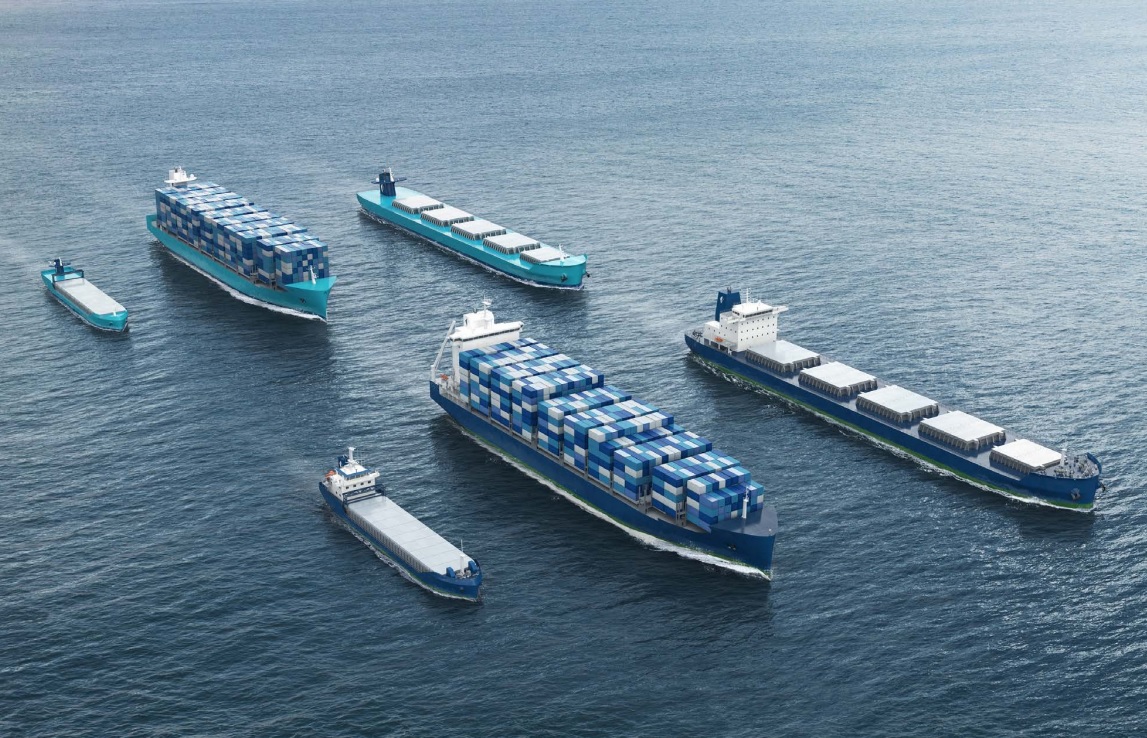
The possibility now exists for ships to navigate the globe with no one at the helm. This capability has been demonstrated in the United States, Europe and Japan by autonomous workboats, survey vessels, and coastwise voyages by autonomous cargo vessels and ferries with the development of larger vessels capable of making trans-oceanic voyages coming soon. Despite this new reality, aside from a patchwork of voluntary best practices, there are no international standards for the safe design, operation or maintenance of autonomous vessels.

Recognizing this gap, the International Maritime Organization (IMO) has recently completed a so-called Regulatory Scoping Exercise (RSE) to begin the process of creating a framework for Maritime Autonomous Surface Ships (known as MASS) to enable their safe operation within existing IMO instruments, the most significant being the Regulations for Preventing Collisions at Sea (COLREGS).

Source: https://www.blankrome.com/publications/autonomous-cargo-ships-and-new-collision-regulations


Product tanker ALGOSCOTIA made an emergency call at port of Baie-Comeau, Quebec Province, Canada, about a month ago, after encountering rudder problems. Tanker was suuposed to fix the problem and resume voyage, but she has been stuck in port for a month or more, waiting for spare parts, and will probably remain at port until at least Jul 20. Tanker is berthed along pier which is used by local fishermen, understood anglers, during mackerel season, but because of tanker berth is closed for strollers and anglers, hence locals concerns and displeasure.

Source: https://www.fleetmon.com/maritime-news/2022/38805/algoma-tanker-stuck-port-rudder-issues-locals-angr/


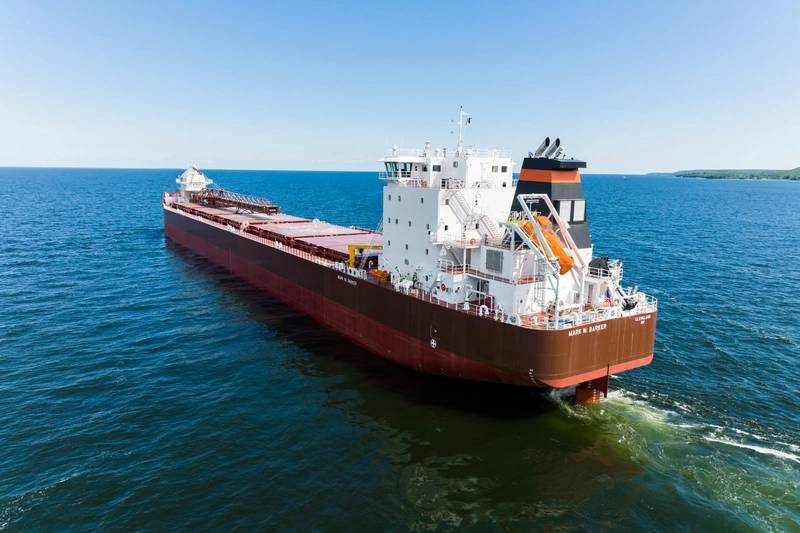
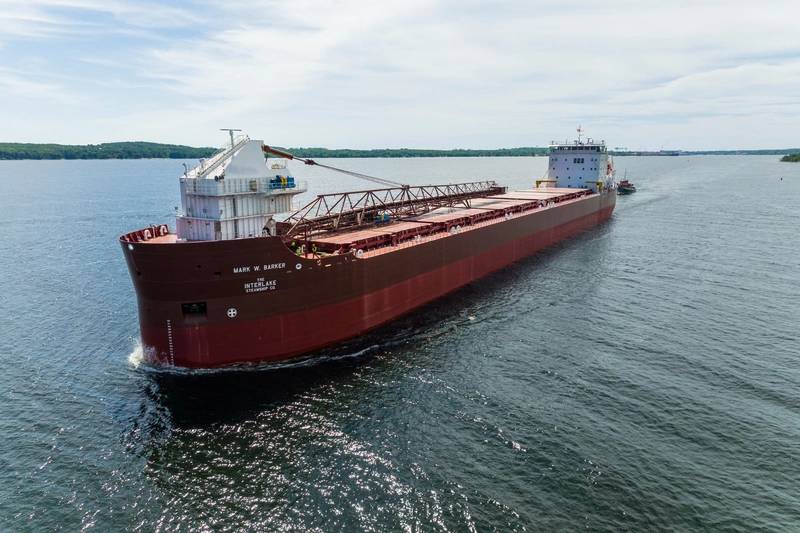
The Interlake Steamship Company said its new vessel, the Mark W. Barker, departed from Sturgeon Bay, Wis. shipyard Fincantieri Bay Shipbuilding last week for the first stage of underway testing.

The 639-foot-long vessel is the first new Great Lakes bulk carrier to be built in the U.S. in nearly four decades.

The builders trial marks the first time the ship has sailed under its own power. Personnel from Fincantieri and Interlake are on board for the trials.

“This is the beginning of a process that has several stages. It’s the pretest to the test so to speak,” said Mark W. Barker, president of The Interlake Steamship Company and the vessel’s namesake. “There are multiple stages where the vessel will depart and return to the shipyard so necessary adjustments can be made. This is a normal process to prepare for the U.S. Coast Guard sea trials and to ensure that the vessel is truly ready to go operational on the Lakes.”

Once in service, the new River-class, self-unloading bulk carrier will transport raw materials such as salt, iron ore, and stone to support manufacturing throughout the Great Lakes region.

(Photo: The Interlake Steamship Company) 

(Photo: The Interlake Steamship Company)

Source:https://www.marinelink.com/news/first-modern-usbuilt-laker-begins-sea-497975


Report has emerged, that bulk carrier KHARIS TRINITY on Jul 7 suffered deck machinery cargo collapse in Arabian sea off western coast of India off Kannur, while en route from China to Mumbai. The ship anchored off Kannur, on Jul 8 moved to Cochin, to reload and secure cargo. On Jul 10 bulk carrier left port and anchored at Cochin outer anchorage, as of 1400 UTC Jul 11 was in the same position. Understood no cargo was lost overboard, it’s damaged but not lost.

Source: https://www.fleetmon.com/maritime-news/2022/38801/korean-bulk-carrier-deck-cargo-collapse/


(www.MaritimeCyprus.com) The landscape of maritime commerce is rapidly shifting as advances in digital technology drive industry towards increased automation. Globally, in Norway and Finland, vessels like the Yara Birkeland and Finnferries’ Falco, respectively, have demonstrated through the future of research and development in this space.

Additionally, we looked at the risks and challenges that must be overcome to enable safe and secure deployment of autonomous technology in the maritime domain. With new this technology comes risks that challenge the norms of safety and operational requirements.
Accordingly, the US Coast Guard must understand these emerging technologies and their limitations, in order to provide a clear path towards sensible, prudent regulation in alignment with our global partners. Further, Captains of the Port must continue to engage with maritime stakeholders to manage new autonomous vessel projects, research, and testing while minimizing risks to local waterways.

Globally, the International Maritime Organization continues its efforts, working with maritime nations to establish governance of autonomous vessels and chart the path forward for modifications to international conventions. In parallel, domestic efforts are ongoing as the U.S. Coast Guard is currently evaluating amendments to regulations and policy needed to keep pace with the forthcoming changes brought by autonomous shipping. Concurrently, industry continues to innovate and develop new and exciting systems that highlight gaps in current international and domestic requirements. We will work through these challenges together to ensure alignment in our mutual goals for a continued safe, prosperous, and technologically advanced maritime sector.

As we move forward, autonomous technology provides a tremendous opportunity for our maritime workforce and creates a demand signal for young leaders who understand the technology and can help shape the future operating environment. We are excited to see
contributions from the maritime academies who are integrating autonomous technology into their curriculums to train the next generation of mariners. There are also articles from some of the USCG junior officers who recently earned post graduate degrees and others who are pursuing excellence in the field.

Autonomous technology brings new challenges, pushing the bounds of international and domestic laws, regulations, and standards. In many cases, these guiding documents will require modifications to account for the changing risk profile these vessels and systems pose. Internationally, work on this front continues through the International Maritime Organization. Domestically, the US Coast Guard continues to address policy and regulatory
gaps while working closely with Captains of the Port and Officers in Charge, Marine Inspection to ensure a consistent and standardized approach to these new vessel projects is employed.

As this technology progresses, mariners’ roles are changing. In the future, these positions will likely be increasingly technical and work in concert with automated systems in the course of vessel navigation, engineering, and maintenance. Solutions to the challenges presented by autonomous vessels are not simple. They will require close cooperation between the technology industry, vessel operators, and regulators.

Read more on the subject, in this edition of Proceedings, Spring 2022 edition of the US Coast Guard Journal of Safety & Security at Sea, highlighting the innovative developments in autonomous vessel technology and the challenges faced by industry and regulators in the drive towards greater automation in the maritime landscape:


Source: USCG


Cargo ship ND 3525 with 2700 tons of limestone on board sank in Van Uc river estuary, Haiphong, Gulf of Tonkin, on Jul 11. Ship’s hold or holds were flooded by big waves brought by thunderstorm. 5 crew were rescued by Vietnamese Border Guard. The ship according to photos, is resting on bottom, remaining partially above waterline.

Source: https://www.fleetmon.com/maritime-news/2022/38809/vietnamese-coaster-sunk-thunderstorm/


Takeover talks between Mediterranean Shipping Company and Global Ports Holding have been terminated. The operator primarily of cruise ports around the world as well as some container terminals announced today that it has been notified by MSC that the shipping company’s shipping services company does not intend to make an offer for GHP.

A month ago, GHP announced that its majority shareholder, Global Yat?r?m Holding, had been approached by SAS Shipping Agencies Services Sarl, a wholly-owned subsidiary of MSC Mediterranean Shipping Company Holdings about making a potential cash offer to acquire GHP. At the time, the company said discussions were ongoing between the companies. Under rules governing the process, MSC had till July 13 to “either announce a firm intention to make an offer,” or to announce that they did not intend to make an offer for GPH. The deadline, however, could have been extended with the consent of the takeover panel.

Commenting on their plans for GHP now that the talks have been concluded, Mehmet Kutman, Co-Founder, CEO and Chairman of GPH said, “The board is wholly committed to the successful execution of our long-term strategy to grow the business and create value for all shareholders while providing industry-leading investment and service levels at our cruise ports for the benefit of all stakeholders.”

GPH intends to continue its strategic direction as an independent port operator with open access cruise port concessions and arm’s length treatment of berthing rights for all its customers. The GPH board said it is focused on the delivery of its strategic goals and long-term value creation, which reflects the strength of GPH and its growing network of cruise ports.

Similar to other cruise-related businesses, Global Ports reported that it was greatly impacted by the nearly two-year suspension of many cruise operations during the pandemic and due to the ongoing impact on the industry. Only recently have most of the cruise lines been able to restart nearly all of their ships, but even still passenger counts remain down compared to before the pandemic. The company used the time during the suspension in the global cruise industry to continue to enhance its portfolio but also reported that it was in refinancing discussions with its bondholders.

The company reported yesterday that it has grown the total number of cruise ports it operates to 22 across the Caribbean, Mediterranean, South Atlantic, Asia, and Northern European cruise regions. Their latest agreement forms a joint venture with the company’s local partner Sepcan S.L. and has agreed to the terms of a 40-year concession agreement to operate Las Palmas de Gran Canaria Cruise Port, Canary Islands, Spain. GHP will hold 80 percent of the JV company and has agreed to invest approximately €40 million into constructing a new cruise terminal in Las Palmas and modular terminal facilities in Arrecife and Fuerteventura.

Management continues to believe that strong opportunities exist as an independent port operator. The company looks to use its portfolio enhancements along with its strong position with key ports to benefit as the cruise industry continues its recovery and resumes its long-term growth.

Source: https://www.maritime-executive.com/article/msc-ends-takeover-talks-for-cruise-port-operator-global-ports-holdings


Jul 13 UPDATE: Understood tanker was to be dry docked at Temryuk port and at the time fire broke out, was entering ship repair yard basin. Fire disabled the ship, pilot on board anchored tanker in basin, but later, because of threat of explosion, took AHMET TELLI to outer anchorage, with tugs assistance. As of morning Jul 13, remained at anchor.

Fire erupted in engine room of tanker AHMET TELLI at Temryuk port, Azov sea, Russia, in the evening Jul 9. Circumstances unclear, information given in statement issued by Russian Salvage Agency is so confused that it’s almost impossible to find out how it happened, what was tanker’s status at the time of fire, and what followed. Understood tanker was taken or moved to Temryuk outer anchorage, where she lost anchor, circumstances unknown. Tanker underwent dry docking prior to fire, understood in Temryuk, so all tanks were degassed and didn’t contain any cargo or residues. Fire was extinguished with the help of Russian Salvage Agency local branch firefighters. Tanker’s Chief Officer inhaled toxic fire emissions and had to be hospitalized, injures said to be not life-threatening. AIS is on, as of 1320 UTC Jul 12 tanker remained at anchorage.

Source: https://www.fleetmon.com/maritime-news/2022/38837/tanker-fire-azov-sea-russia/


Italian shipbuilding group Fincantieri said it has secured a contract to build up to three “ultra-luxury” cruise ships for an unnamed international buyer.

The €1.2 billion deal is for one vessel to be delivered by the end of 2025, with options for two additional vessels, Fincantieri said.

Fincantieri did not share any specifics about the cruise ships’ size and technical details.

The cruise ship order is one of only a handful placed since the cruise industry was derailed by the COVID-19 pandemic, but marks a sign of confidence for the badly hit sector.

Fincantieri, which last week signed a memorandum of agreement (MOA) with MSC Group’s luxury travel brand Explora Journeys for the construction of two cruise ships, has been ramping up build activity after agreeing in 2020 to reschedule deliveries for many of its cruise customers.

Some of the business’ biggest names, including Royal Caribbean and Norwegian Cruise Line, are rumored to be contemplating new orders.

Source: https://www.marinelink.com/news/fincantieri-bags-ultraluxury-cruise-ship-498023


Company DETAILS

SHIP IP LTD
VAT:BG 202572176
Rakovski STR.145
Sofia,
Bulgaria
Phone ( +359) 24929284
E-mail: sales(at)shipip.com

ISO 9001:2015 CERTIFIED