Cargotec, together with leading and ICT companies, will establish world’s first ecosystem aimed at creating autonomous marine transport system to the Baltic Sea by 2025.
The initiative is largely financed by Tekes, the Finnish Funding Agency for innovation. In addition to Cargotec, the main investing companies are Ericsson, Meyer Turku, Rolls-Royce, Tieto and Wärtsilä. The ecosystem platform is being handled by DIMECC, a leading co-creation ecosystem provider.
“For decades, Cargotec’s business areas MacGregor and Kalmar have been pioneering solutions on-board and at ports for efficient and safe cargo flow solutions,” says Soili Mäkinen, CIO at Cargotec. “This initiative is in line with our ambitions, and we are excited to be part of it. We invite all industry stakeholders to collaborate in this area.”
“MacGregor is committed to maximising the lifetime profitability of its customers’ operations. We understand, that this is best done in close cooperation with customers and other stakeholders,” says Pasi Lehtonen, SVP, Marketing, Business Development and Strategy, MacGregor. “In order to boost industry transformation, MacGregor has called for an industry renewal discussion under the theme “So much potential – let’s not waste it“. Productivity developments will be driven by advancements in connectivity and digitalisation, along with new business models and capabilities. Autonomous maritime transportation is a perfect example of such new capability.”
“Kalmar is pleased to collaborate with industry leaders in finding ways to expand automation in the maritime logistics chain. This initiative has great potential to help in increasing safety and productivity not only in container ports but in the whole maritime industry,” says Tommi Pettersson, Vice President, Software and Automation Development, Kalmar.
Cargotec is on a drive to become a world leader in intelligent cargo handling, and it is increasing its focus on software, services and digital business. The above initiative supports this goal.
Source; https://logisticsvoices.co.uk/cargotec-part-worlds-first-ecosystem-initiative-autonomous-ships/

According to a document released by China’s Ministry of Transport, Ministry of Foreign Affairs, National Health Commission, General Administration of Customs and National Immigration Administration, before sailing for domestic market, the quarantine period for international trading vessel is to be reduced from 14 days to seven days from when the vessel arrived at the port of entry. All the crew members on board the vessel will need to have five Covid tests during the seven coming days upon arrival.

Once the vessel completed the process for adjusting oceangoing routes to domestic routes, the crew members’ health monitoring period will be shortened from 14 days to three days, and will be required to take a covid-test on the third day.

The policy adjustment could shorten the waiting time of the vessels transferring from international to domestic market reducing operation costs for the owners and provide a stronger support for transportation demands.

China is continuing to maintain a zero Covid policy, however, has relaxed some its most stringent quarantine measures for international arrivals.


The U.S. Coast Guard is investing in increased reach in the South Pacific, where it is often the most visible U.S. government presence in far-flung island nations. Its new fast response cutters – small but seaworthy long-range patrol vessels – have been a key asset for this effort, and several are permanently forward-deployed at Guam and Honolulu. Their relatively high 28-knot speed and their 2,500-nm range are valuable for extended reach in the wide expanse of the Pacific Ocean.

One of these FRCs – the Honolulu-based USCGC Oliver Berry – recently deployed to the Republic of Kiribati to help fend off the worst effects of a drought. The Berry headed to the remote island of Kirimati (Christmas Island) after the republic declared an emergency over the local shortage of drinking water.

Kiritimati – the world’s biggest coral atoll – is located about 1,200 miles to the south of Hawaii. It is the largest island in Kiribati, and it has a population of about 7,000 people. The low-lying atoll has relatively limited groundwater resources, and a severe drought over the past six months has endangered its water supply. The government of Kiribati issued a nationwide disaster declaration in June due to the growing hazard, and the Coast Guard joined other international partners to mount a response.

Over two days, the crew of the Berry carried out offloads of potable drinking water, working with representatives of the aid organization UNICEF. They maintained strict COVID-19 precautions to protect the island’s inhabitants. In addition, they carried out a law-enforcement patrol of a part of the Kiribati EEZ, contributing to the USCG’s regional maritime-security partnership effort.

Courtesy USCG

“Our crew is excited and humbled for the opportunity to support the people of Kiribati,” said Lt. Micah Howell, commanding officer of the Berry. “Thanks to the coordination efforts of the U.S. Agency for International Development’s Bureau of Humanitarian Assistance, the United Nations International Children’s Emergency Fund, and the Kiribati Government, we are able to provide safe drinking water to the Island of Kiritimati at a time when it is needed most.”

Source: https://www.maritime-executive.com/article/u-s-coast-guard-brings-water-to-drought-stricken-pacific-island


Fleet Management Limited (FLEET) has launched a new integrated ship management unit – MaruFleet Management Pte Ltd (“MaruFleet”) – in Singapore in collaboration with MMSL Pte. Ltd. (MMSL), a Singapore subsidiary of Marubeni Corporation (Marubeni).

MaruFleet will provide dedicated ship management services to MMSL. This aims to safeguard Marubeni’s good technical management performance and deliver more operational and quality control for all its owned tonnage.

Mr Kishore Rajvanshy, FLEET Managing Director, said the relationship between FLEET and Marubeni began in 2014 when FLEET began to manage MMSL’s first Supramax bulk carrier, MV Crimson Queen. This has expanded to seven ships as of early 2022.

“We are delighted to launch this company with Marubeni,” Mr Rajvanshy said. “MaruFleet will exclusively service and be tailored to Marubeni’s requirements. This means Marubeni will be able to rely on and readily access a dedicated team of professionals for all its ship management needs globally.”

“We are humbled and honoured to be entrusted with this responsibility, which is a reflection of our consistent performance and strong working relationship with Marubeni and the MMSL team.”

Mr Tomohiro Endo, Managing Director of MMSL, said that MMSL has 10 years’ experience in own ship management, and now it’s time to step up to the next stage with MaruFleet to meet higher safety and environmental requirements. MaruFleet is a collaboration between MMSL’s expert staff and FLEET’s professionals with a sophisticated global management system.

“We see our relationship with FLEET as a partnership,” Mr Endo said. “We share the same philosophy and vision in growing our businesses through a clear focus on safety, quality and technical management.”

“We have a proven track record in recent years in working well with the FLEET team to deliver strong performance. We are looking forward to bringing our respective strengths and competitive advantages to MaruFleet – FLEET in ship management, and us in ship ownership.”

The establishment of MaruFleet is set to make FLEET the leading ship management company in Singapore in the coming months.

Source: https://www.maritime-executive.com/corporate/fleet-management-and-marubeni-establish-new-company-in-singapore


Indian seafarers working onboard coastal ships – both Indian and foreign flagged vessels are denied entry into Indian ports as the port health authorities are not sure about allowing them entry due to COVID-19 protocols.

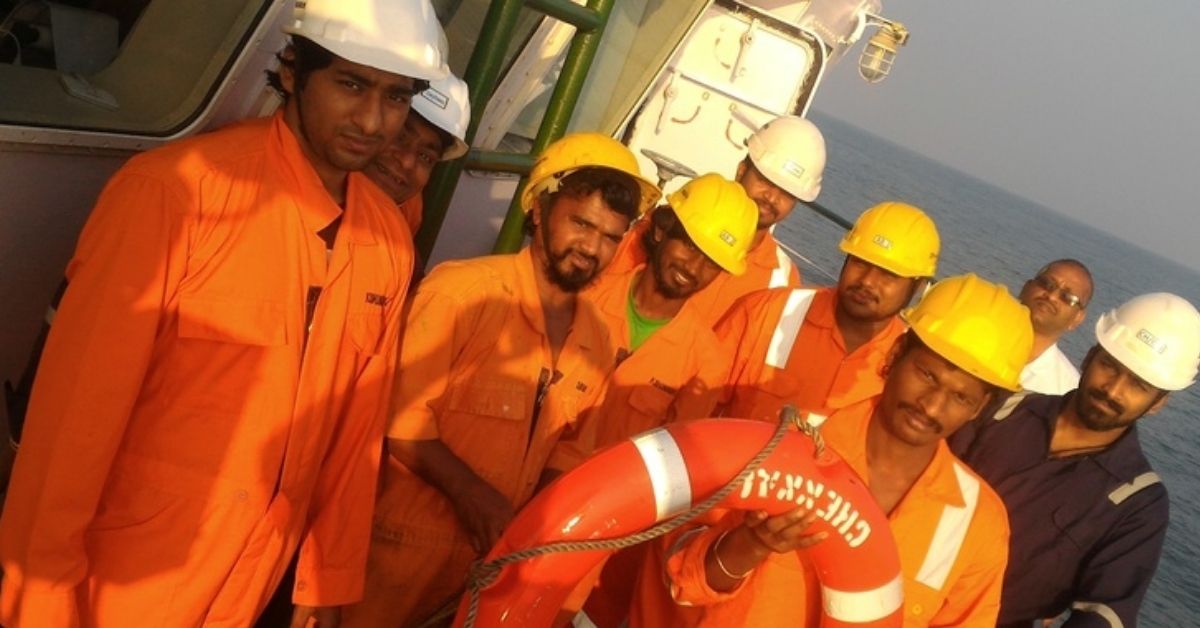
Indian seafarers working onboard coastal ships – both Indian and foreign flagged vessels are denied entry into Indian ports as the port health authorities are not sure about allowing them entry due to COVID-19 protocols. Recently seafarers onboard Bulk Carrier MV Maithili have reported that they were not allowed shore leave to visit their relatives upon arriving at the Chennai Port. The seafarers have sent a representation to the International Transport Workers’ Federation (ITF) in Chennai.

Seafarers generally avail shore leave when their ship is docked at a port. It can range from a couple of hours to a few days, wherein they unboard the ship to visit their relatives.  In a similar incident, family of a seafarer was not allowed to board MV CS Satira even though the seafarer had taken permission from the shp owner, but the port health officer denied permission due to COVID protocols.

As per information reported by officials from the London-based International Transport Workers’ Federation (ITF), though Covid restrictions have been relaxed across India, the Ministry of Health has directed port health officers not to let crew leave ships due to the pandemic. “When foreign tourists are allowed to move freely across the country, how can seafarers be unwelcome in their own country,” questioned a seafarer. A sailors’ helpline coordinator argued, “Cruise ship Empress is operating between Chennai and Visakhapatnam Ports moving thousands of passengers, without any restrictions related to COVID. The travellers are free to enter and leave the port. Similarly, airline pilots and cabin crew are allowed to enter and leave the airport freely. Only seafarers are being cornered.”

Source: https://www.maritimegateway.com/covid-protocols-deny-shore-leaves-to-seafarers/


The Paris and Tokyo MoU’s will be carrying a joint Concentrated Inspection Campaign (CIC) on Standards of Training, Certification and Watchkeeping for Seafarers (STCW) starting on 1 September until 30 November.  It is anticipated that the CIC will focus on the evaluation of competences of the Master, officers and crew when performing duties and during emergency scenarios. These are explained in detail in Appendix 7 of Res. A.1155(32) “Guidelines for control of operational requirements.” This appendix was completely revised and published in the beginning of 2022. It covers a huge variety of operational inspection areas – from efficient communication between crew members, and assessing navigational controls such as ECDIS, to voyage planning or safe navigation, and witnessing emergency drills.

Source: https://shippingmatters.ca/port-state-control-cic-to-focus-on-stcw/


(www>MaritimeCyprus.com) ClassNK has released the latest version 2.0.0 of “PrimeShip-PSC Intelligence”, a mobile app to assist the improvement of Port State Control (PSC) performance and ship management systems, provided free of charge.

Based on the database of PSC reports inputted by ship managers, shipowners, and ClassNK, “PrimeShip-PSC Intelligence” provides various functions helping improve ship management systems, including the indication of trends of the PSC findings pointed out by each country or port and output of checklists according to the trends, with a PC version for ship management companies and a mobile app for seafarers.

The latest version of the mobile app enables users to use pinpoint PSC checklists based on actual deficiencies, and any checklists and report forms stipulated in the safety management manual, which have been created on the PC version. In addition, typical deficiencies for each month in the countries and ports set by the user and timely PSC-related information are delivered.

Introductory video of the mobile app


Information to use this application, etc.
URL: https://www.classnk.or.jp/hp/en/activities/portal/psc-intelligence.html


ClassNK has also published Annual Report on Port State Control, which outlines information about ships detained by PSC and deficiencies found on board from many port states in 2021.

ClassNK website HOME > Information Services > Port State Control
https://www.classnk.or.jp/hp/en/info_service/psc/


ClassNK will continue to contribute to improving customers’ ship management systems by providing valuable information and services related to PSC.


The federal government has gotten involved in a dispute onboard a ship anchored in Halifax harbour following complaints from Ukrainian crew members that the company is keeping them from returning home.

The crew has been on board since November, initially for a six-month contract, which was extended. They were then asked to work another extension, which they refused.

“They’ve never been home since [the war]. They want to go home, contact their families, and make sure everybody’s safe,” said Karl Risser, an inspector with the International Transport Workers’ Federation.

MSC Manzanillo departed Portugal in late June and arrived in Halifax on July 5, when it was detained by Transport Canada.

Karl Risser stands in front of the Halifax Harbour. George's Island and a detained cargo ship can be seen in the background.

Karl Risser is the ITF inspector for Atlantic Canada. He’s been dealing with complaints from Ukrainian crew members on board this vessel, and others, for several months. (Mark Crosby/CBC)

Risser said Transport Canada “did the right thing” in detaining the ship in Halifax for inspection. Its next port of call is New York, which he worries could complicate things for Ukrainian crew members trying to get home.

Canada is a signatory to the Maritime Labour Convention, which outlines rights for seafarers. Among them is the right to go home at the end of a contract. The U.S. is not a signatory of the convention.

“We’re not sure if the seafarers’ rights will be upheld in the United States, and there could be issues with visas with these guys that aren’t an issue here in Canada,” Risser said.

In an email statement to CBC News, Transport Canada confirmed it briefly detained the MSC Manzanillo.

A cargo ship, MSC Manzanillo, in the Halifax Harbour.

MSC Manzanillo arrived in Halifax harbour on July 5 and was detained by Transport Canada. (Mark Crosby/CBC)

“To verify the crew members’ seafarer employment agreement, Transport Canada inspectors issued a deficiency notice under the Maritime Labour Convention. The vessel had to remain alongside at the Port of Halifax pending verification of all items to the satisfaction of Transport Canada,” the statement said. 

Following verifications by inspectors, the detention was lifted on July 6, the statement said.

No further details were provided.

According to the Atlantic Pilotage Authority, MSC Manzanillo was set to depart Halifax at 6 p.m. Wednesday.

Nine Ukrainan crew members on board

There are nine crew members from Ukraine with contracts that have expired.

“These guys are real heroes keeping our supply chain going and we have to respect their rights as seafarers to be repatriated home at the end of their contract,” Risser said.

ITF has been dealing with complaints from Ukrainian crew members on board this vessel, and others, for several months.

“It’s a continuing problem to get these guys home, but it’s important that we live up to our obligation … We’re anxiously awaiting to see the employer’s plan to see these guys repatriated home, and give these seafarers answers,” he said.

Source: https://www.cbc.ca/news/canada/nova-scotia/cargo-ship-detained-halifax-ukrainian-crew-1.6511862


It’s been another bumper month for long-term contracted ocean freight rates, as the cost of securing container shipments climbed by 10.1% in June. Following on the heels of a record 30.1% hike in May, this now means rates stand 169.8% higher than this time last year, with just two months of declines in the last 18 months. Despite a degree of macro-economic uncertainty clouding the horizon, all major trades saw prices moving up, with some corridors showing significant gains.


Oslo-based Xeneta has released the figures, drawn from its Xeneta Shipping Index (XSI®) Public Indices for the contract market, which crowd-sources and aggregates real-time data from the world’s leading shippers to deliver market insights. Those insights, notes Xeneta CEO Patrik Berglund, continue to confound commentators.

A question of sustainability
“Rates developments that would have been front page news a few years ago are in danger of becoming the norm in a market environment that is historically hot,” he states. “After last month’s colossal rise, we see another hike of 10%, pushing cargo owners to the limits, while the carriers fill their pockets. Again, we have to question, is this sustainable? And the signs are gathering that, well, it might not be.”

Berglund points to falling spot rates – that may increasingly tempt shippers away from traditional contracts – in addition to looming industrial action in ports (in Europe and, potentially, the US) that could further damage schedule reliability only just recovering from recent congestion and COVID-induced disruption. In addition, there’s the fact that the US has signed into law the Ocean Shipping Reform Act, designed to stop shipping companies from profiteering, and the looming shadow of widespread inflation that may impact upon consumer demand and slow economic activity.

Frayed relationships
“The carriers have had it all ‘their own way’ for the last 18 months or so,” Berglund comments, “but will they now be studying this wide array of factors with some concern? Not while rates continue to rise, but the relationship between their community, shippers and, to some extent, other key society stakeholders has been damaged by disruption, poor quality services (in terms of reliability) and runaway rates increases.

“We’ve already seen some cargo owners looking to distance themselves from traditional carriers and, for example, charter their own vessels, and you have to ask what will happen next? Will shippers continue to pay sky-high contracted rates in an atmosphere of declining demand, inflation, geopolitical uncertainty, disruption and the ongoing threat of COVID restrictions? Something, one feels, has to give.”

Xeneta CEO Patrik Berglund

Xeneta CEO Patrik Berglund ​

The only way is up
For the time being, however, the rates arrows continue to point skywards across the board. According to June’s XSI®, which maps developments across all significant trade corridors, import and export benchmarks showed universal growth.

European imports index continued their recent climb, rising 13.7% to stand 163.4% higher than the equivalent period last year. The regional export index jumped by 6.2% and is now 148.2% up year-on-year. Similar signs were seen for Far East imports and exports, with the former rising 5% (up 62.5% against June 21) and the latter jumping 11.6%. The export benchmark is now a mighty 200.6% up year-on-year. This performance was mirrored by the US import figure, which climbed 8.6% over the month to stand 203.2% against last June. Growth on exports was more modest, with a 0.3% rise taking the index 41.7% up year-on-year.

“As we enter another period of turmoil, shippers will transform themselves into risk-averse buyers. Top of mind for them will be which trades they will procure on the spot market and which on the contract market, and their duration. They will aim to strike the best possible balance between both markets depending on their own business needs,” surmizes Berglund.

Stay tuned
He concludes: “The carriers are acutely aware of how their strategies have paid dividends, and won’t want to relinquish this position of power in contract negotiations. But at the same time, they, like the shippers, cannot control the macro-factors that dictate the wider economy. The complexity of the situation makes it difficult to forecast how this will develop, but, one thing’s for certain, develop it will. Stay tuned to the latest market intelligence to give you the understanding your business needs.”

Xeneta’s XSI® is compiled from the latest crowd-sourced ocean freight rate data aggregated worldwide. Companies participating in the benchmarking and market analytics platform include names such as ABB, Electrolux, Continental, Unilever, Nestle, L’Oréal, Thyssenkrupp, Volvo Group and John Deere, amongst others.
Source: Xeneta


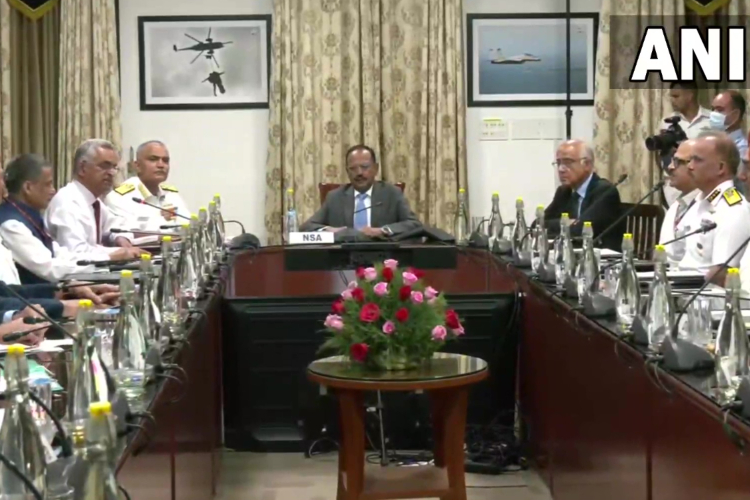
National Security Advisor Ajit Doval has said that in the current complex and challenging geopolitical situation, it’s necessary to focus on maritime security. He said, “he trajectory of this nation is well defined, we know where we’re going. And when our time comes, India will not be able to become the power it deserves to be unless it has a very strong maritime system. This is perfect timing for it.”

He said, “in the national security discourse importance of land and maritime borders are very different. You cannot fence them, put 24×7 vigilance, the concept of sovereignty in land borders is territorial and well-defined.”

Doval said this on Thursday while addressing the first meeting of the Multi-agency Maritime Security Group to discuss important policy matters affecting maritime security. The meeting was presided over by the National Maritime Security Coordinator, Vice Admiral Retd. Ashok Kumar.

He said, “Indian ocean is a great asset to us. With the cardinal principle of security, our vulnerabilities are directly proportional to our assets. More we develop, the more assets we create; the more prosperous we get, the greater would be vulnerability and greater would be the need for security.

Ajit Doval presiding over the meeting of multi-agency Maritime Security Group

During the meeting, Doval said,” In the changing geopolitical scenario, the Indian ocean which has been an ocean of peace is gradually becoming competitive. We see a potential of having a clash of interest, we need to protect it and be vigilant.”

Ajit Doval said, “We have responsibility towards neighbours be it disaster management or security for them, we’ve been doing it. We recently had an example of countries coming together when Colombo Security Conclave was held to tackle maritime threats in Indian ocean.”

We have a responsibility towards our neighbours, whether it is disaster management or safety for them, we have been doing this. We had an example of countries coming together recently when the Colombo Security Conference was held to deal with maritime threats in the Indian Ocean. We know where we are going… If India does not have a very strong maritime security system, it will not be able to become the power it deserves. This is the perfect time for it. Intelligence agencies provided important information about smuggling, gun running, counter-terrorism, and espionage.”

Source: https://www.awazthevoice.in/india-news/nsa-doval-says-maritime-security-a-priority-area-for-india-13106.html/


Company DETAILS

SHIP IP LTD
VAT:BG 202572176
Rakovski STR.145
Sofia,
Bulgaria
Phone ( +359) 24929284
E-mail: sales(at)shipip.com

ISO 9001:2015 CERTIFIED