Kongsberg Digital’s suite of simulation systems provides efficient and realistic training for maritime students and crew so building vital skills promoting safety, cost-efficiency, and sustainability in operations at sea. MARINA is a leading maritime authority, representing the largest number of seafarers in the world. Partnership with Kongsberg Digital means that MARINA can provide simulation technology for research, operations and training, increasing the knowledge and competency of their workforce.

MARINA aims to bring the Philippines to the forefront of transformation in the maritime sector. Kongsberg Digital will contribute to this endeavour with its extensive experience in simulation studies related to autonomous shipping, digital twin and vessel insight. This MOU aims to contribute towards the realization of the Maritime Industry Development Plan (MIDP) through the use of innovative and modern simulation technologies and the two partners will cooperate on several areas.

“With this MOU, MARINA and Kongsberg Digital will work together to adopt and leverage more advanced methodologies and tools within the maritime education and training segment as well as forming best practices. This will lead to a more competent and agile seafaring workforce, prepared to adapt to the everchanging maritime landscape,” says VAdm Robert A. Empedrad AFP (Ret), Maritime Industry Authority in the Philippines, MARINA.

“We are very pleased to announce this MOU, which signals the start of a mutually beneficial partnership with MARINA. This forward-thinking organization shares Kongsberg Digitals´ understanding of the significance of maritime education and training, and the recognition that it is only feasible to secure highly qualified crew through innovative and high-quality training methodologies,” says Andreas Jagtøyen, Executive Vice President Digital Ocean, Kongsberg Digital.

Source: https://workboat365.com/commercial-marine-news/training/kongsberg-digital-signs-prestigious-mou-with-maritime-industry-authority-in-the-philippines/


A joint European / Japanese research project aims to lower the energy requirements and costs for manufacturing green methanol, the future fuel of choice for Maersk and one of the leading candidates for decarbonizing deep-sea shipping.

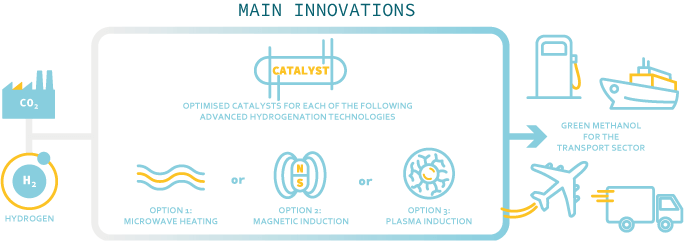
Methanol can be synthesized from carbon dioxide and hydrogen at high temperature, then converted to methanol for use as fuel. If the carbon comes from CO2 capture and the hydrogen feedstock is produced using renewable power, the product – green methanol – is considered a net-zero fuel.

However, it takes a lot of energy to make. CO2 is a stable, unreactive molecule, and it takes a push (a catalyst and a lot of heat) to get it to react with hydrogen. In 2018, researchers at Penn State found a way to do it using a palladium-copper catalyst at a relatively cool temperature of 350-480 degrees Fahrenheit, but this is still quite hot. Maintaining that kind of temperature requires industrial scale heating, which raises energy consumption and cost of production.

Courtesy Laurelin

The Laurelin project, a four-year international research initiative, hopes to cut that cost down. Its experts hail from Belgium, Germany, Japan, Netherlands, Spain and the United Kingdom, and they are combining their efforts to survey multiple combinations of catalysts and reaction chambers in search of the best arrangement.

“Reducing the e-methanol production costs would lead to an increase in the opportunities to use it as fuel. This would directly benefits society thanks to the reduction in GHG emissions and costs, creating further jobs and wealth,” explained Professor Teruoki Tago of the Tokyo Institute of Technology.

The team will test out more than 100 different catalyst materials and three reactor technologies (microwave heating, magnetic induction and plasma induction). “Catalysts are the key for methanol to become the main product, minimising the production of undesired complex mixtures,” explains Adolfo Benedito Borrás, head of technical coordination for the project.

If successful, the Laurelin project’s efforts would complement the push for higher efficiency in green hydrogen production, and would help expand the availability of green methanol for shipping.

The initiative has about $4.8 million in funding from the EU and additional funding from Japan.

Source: https://www.maritime-executive.com/article/joint-eu-japan-project-aims-to-reduce-cost-of-green-methanol


[Brief] State-owned Russian port operator Rosmorport has issued a commendation to a marine pilot who helped navigate a burning chemical tanker out of the Sea of Azov port of Temryuk last week.

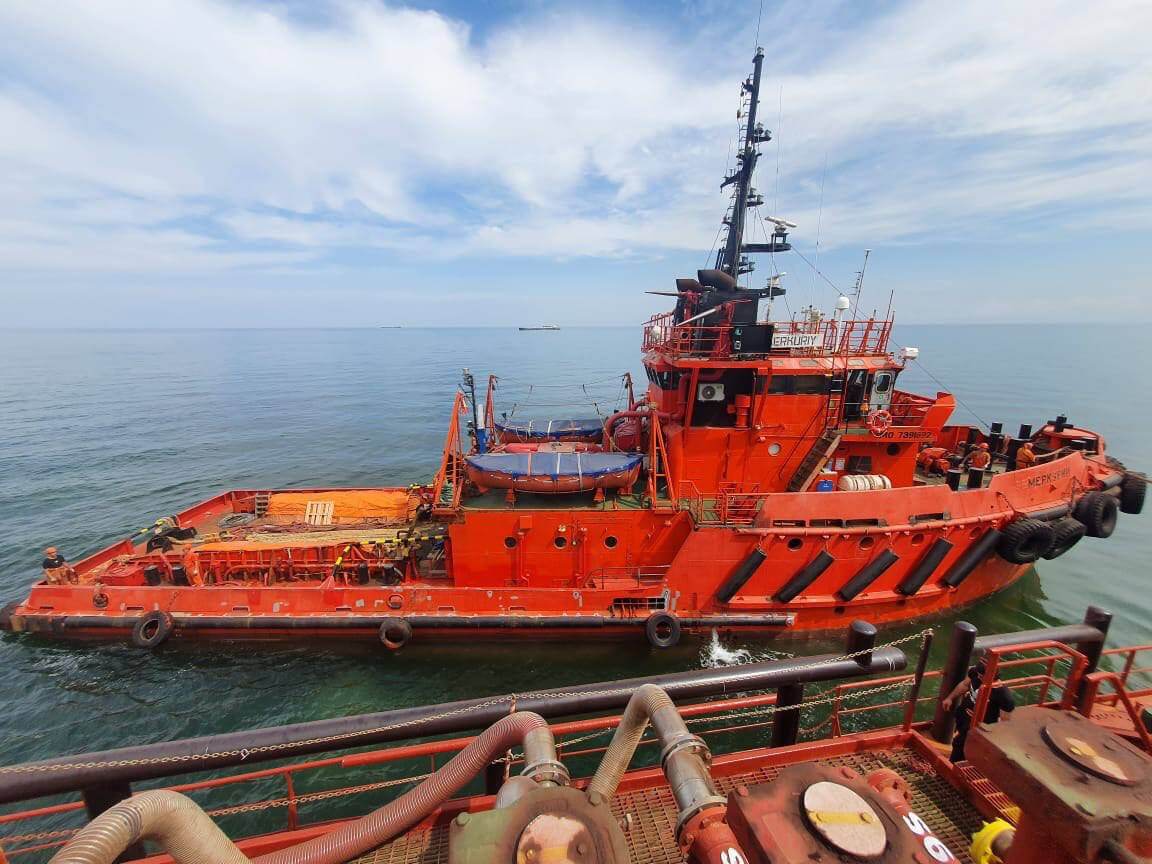
According to Rosmorport, pilot Konstantin Dereberya was assigned to bring the Turkish chemical tanker Ahmet Telli into port at Temryuk on July 9. The vessel navigated into the port, but once within the complex, a fire started in the engine room. The blaze disabled the main engine, leaving the vessel adrift and on fire.

The Telli dropped anchor as a precautionary measure, but as the fire grew, it became clear that it would be necessary to move the vessel out of the port. The fire could not be extinguished and raised the possibility of an explosion aboard the vessel. This could potentially spread fire to nearby marine terminals.

Dereberya remained aboard the vessel and helped direct the operation to tow it to the outer anchorage, and for his efforts he has been awarded a commendation. Once the ship was safely outside the port, the fire was extinguished by first responders of Russia’s Marine Rescue Service.

The Telli’s chief engineer was injured in the blaze and was taken to a hospital for treatment. The injuries are reportedly not life-threatening.

Courtesy Russian Marine Rescue Service

Source: https://www.maritime-executive.com/article/burning-chemical-tanker-towed-out-of-port-of-temryuk


The UK MAIB has published a report on the death of a chief officer who was struck in the head by a tensioned mooring line aboard a bulker in 2021, finding that a short-handed operation and an unfamiliarity with the mooring arrangement contributed to his death.

On August 29, 2021, the bulker Teal Bay arrived at Kavkaz, Russia, to rendezvous with a transloading vessel and take on grain from small powered barges. With guidance from the local pilot, Teal Bay tied up with the geared bulker Kavkaz V on the Kavkaz’s port side. The crew had never made fast to another vessel of this size, nor had they conducted ship-to-ship loading operations in this manner before. They used a combination of three head lines, three stern lines, two bow spring lines and two stern spring lines. (Spring line naming conventions vary among maritime nations, and “stern spring line” refers here to an forward-leading spring line originating from the stern.)

The transloading operation got under way, and the crane operators aboard the Kavkaz V scooped up grain from small barges on Kavkaz’s starboard side, swung the cargo over the deck and over the port side, depositing it into Teal Bay’s holds. As the operation proceeded and her holds filled up, Teal Bay’s freeboard decreased. Over the course of the next day, her main deck level dropped to about 25 feet below the deck of the Kavkaz, and her mooring lines took on an upward lead.

At about 2220 on August 30, loading was nearly complete. The third officer aboard Kavkaz V asked Teal Bay to move ahead so that the crane operator could reach another part of Teal Bay’s hold. Teal Bay’s master decided to warp ahead, since this was a small move. He could have treated this as a full mooring operation per the SMS, but this would have meant waking up the off-watch crew to add more personnel on deck. He did not want to wake the crew, so he sent the chief mate to the stern and the third mate to the bow, each with one AB.

At about 2235, as the team on the bow slacked off their spring line, the AB on the stern spring line activated the winch to pull in and warp the ship ahead. The line was run through an open roller fairlead, and the chief mate was standing next to the fairlead near the deck edge, where he would have been able to watch and supervise the evolution. As soon as the line came under tension – with a vertical lead towards the Kavkaz’s higher main deck level – the line popped up and out of the roller fairlead and struck the chief mate in the head. He fell immediately unconscious to the deck.
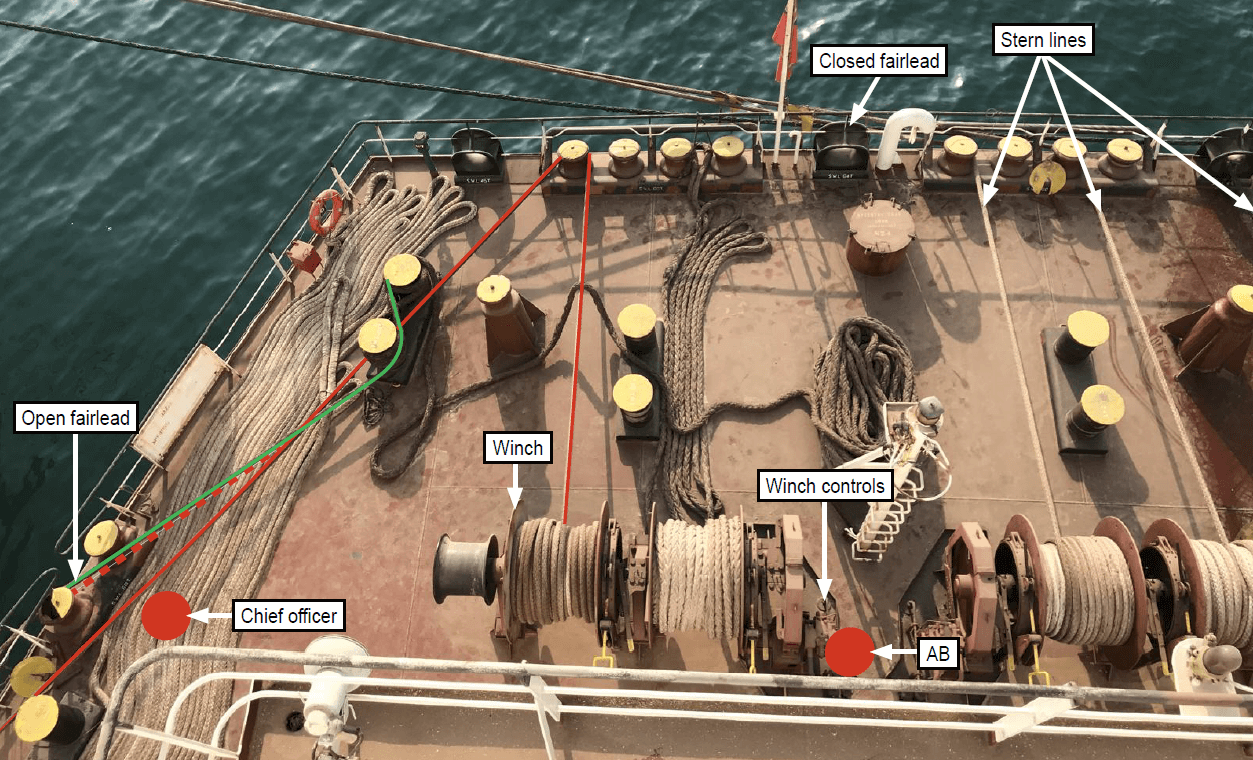
The open fairlead and chief mate’s position (far left) and a diagram of the mooring arrangements (MAIB)
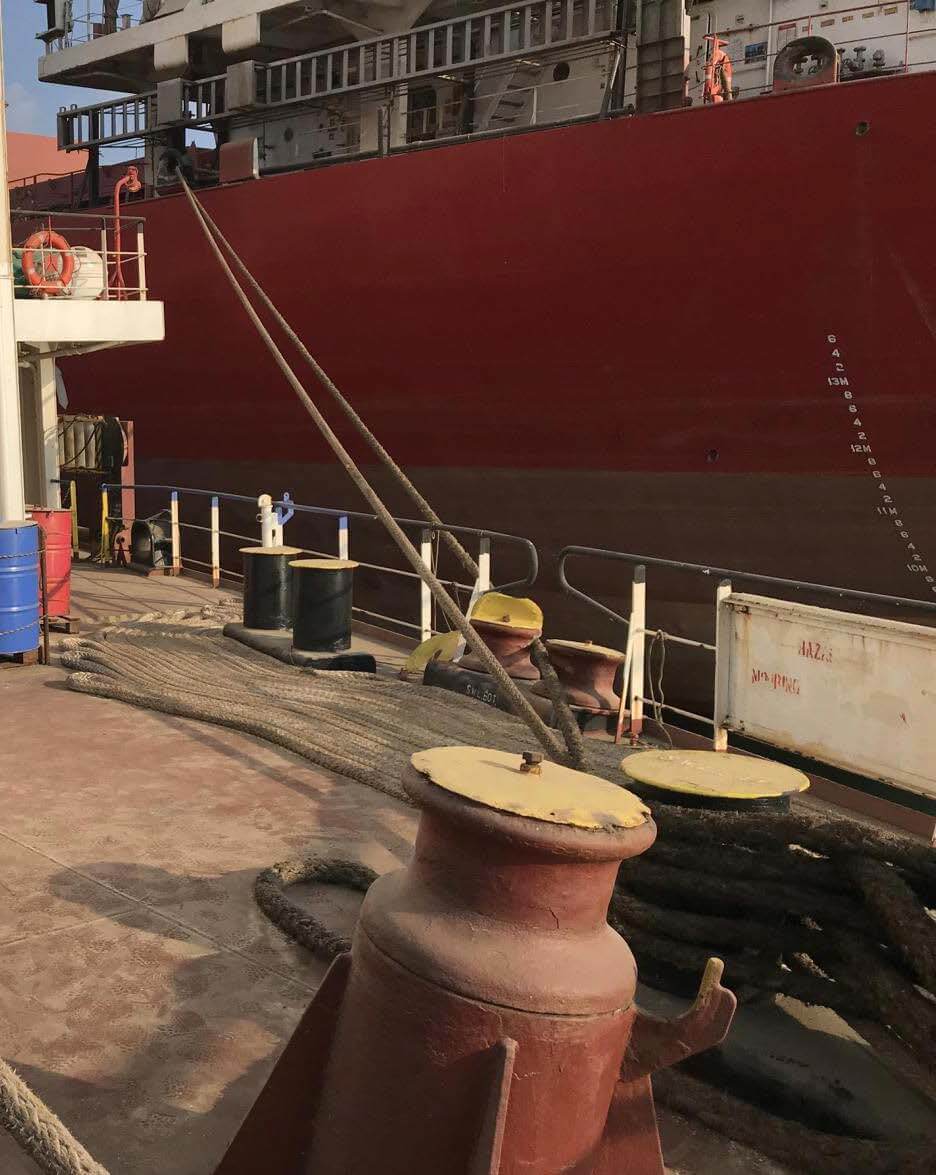
The open fairlead (center) and the substantial height difference between the decks of the Teal Bay and Kavkaz (MAIB)

The local maritime rescue coordination center was contacted and Teal Bay’s second officer gave the chief mate first aid, including oxygen. The victim had a pulse and was breathing, and there were no outward signs of injury.

A tug arrived to evacuate the victim at 2316, but the crew would not take him aboard before receiving permission from the port. Alternate arrangements for a helicopter were discussed but none were available. The tug ultimately took the chief mate aboard, getting under way for shore at 2350. At this point, the officer’s pulse had weakened. By the time a paramedic met the tugboat at the pier at 0045, the chief mate had no vital signs.

An autopsy determined that he had died from a brain hemmorhage resulting from blunt force trauma.

Through its investigation, MAIB determined that the crew’s decision to run the line through an open roller fairlead, combined with the vertical lead from the deck of the Teal Bay to the deck of the Kavkaz, allowed the line to pop out of the fairlead when it came under tension. The appropriate choice would have been to select a closed roller fairlead; the crew may not have known this as they were unfamiliar with this particular mooring operation. No risk assessment was conducted before the evolution, and so the opportunity to identify this hazard was lost.

The short distance of the move and the desire to complete the loading operation quickly could have motivated the master to warp ahead without making a fuller assessment of the situation. As the captain did not bring out the crew for a full mooring operation, the chief mate was operating with fewer people on hand than he usually would have, and was tasked with supervising both the aft deck and the evolution as a whole. If the full crew had turned out, the chief mate would not have been on the stern.

The extra time taken up in making medevac arrangements reduced the officer’s chances of survival, MAIB determined, though it is impossible to know whether he would have survived even with prompt care.

Among other post-casualty recommendations, the shipmanager has been advised to remove all open fairleads from its fleet and replace them with closed or universal type fairleads, which will not release a line with an upward lead.

Source: https://www.maritime-executive.com/article/uk-maib-improper-mooring-arrangement-led-to-chief-mate-s-death
The Vatican is pushing for shipping lines and governments across the globe to allow seafarers to take shore leave in order to enhance their wellbeing and reduce the pressures of being aboard ships for months on end.

Cardinal Michael Czerny, prefect of the Dicastery for Promoting Integral Human Development, said that even after the easing of COVID-19 restrictions, the rights of seafarers continue to be violated by being denied shore leave.

In a message during Sea Sunday, Cardinal Czerny noted that although the Maritime Labor Convention (MLC) requires companies to provide decent and clean accommodation, nourishing food, a safe working environment, proper hours of work and shore leave to seafarers, the significant gains made since MLC came into force in 2013 continue to be seriously undermined.

“Let us take the issue of shore leave. The ability to leave the vessel and go ashore, if only for a short time, is crucial for seafarers’ wellbeing. Most of us take for granted the freedom we have to go outside, enjoy open spaces, place our feet on firm ground or soft grass and see different people. But seafarers have no such freedom. They cannot leave the ship, and every day they walk on metal [decks] and see the same faces. The only way they can share in the freedom we enjoy is to have access to shore leave. They may only have a couple of hours but that can make all the difference,” said Cardinal Czerny.

Shipping companies and ports are facing criticism for preventing shore leave at a time when countries are opening their borders and lifting COVID-19 restrictions. At the height of the pandemic and before the vaccination campaign for seafarers began, governments and companies canceled all shore leave and seafarers were required to stay on board to avoid infections and spreading the virus. Official restrictions still exist in many ports, and even where they do not, seafarers may face pressure to stay on board in order to minimize the chance of bringing COVID back onto the ship.

The Vatican believes that although the situation is improving around the world as countries open their borders and lift restrictions, enabling people to move freely again, seafarers continue to be prohibited from going ashore.

“This is a gross injustice. Even though they are fully vaccinated, seafarers are frequently denied the free movement we enjoy,” observed Cardinal Czerny.

The push by the Vatican for seafarers to be granted shore leave comes when COVID-19 cases are rising globally. The World Health Organization sees Europe as the center of the resurgence with some countries in Asia also witnessing a spike in infections.

South Korea, for instance, has introduced anti-epidemic measures to counter the resurgence that has seen infections rate rise by 86.5 percent in a span of a week, largely due to the BA.5 variant. China is also seeing an increase in infection numbers with the financial capital Shanghai recording 69 new infections Sunday, the most since late May and up from 57 the day before.

Source: https://www.maritime-executive.com/article/vatican-calls-for-access-to-shore-leave-for-seafarers-wellbeing


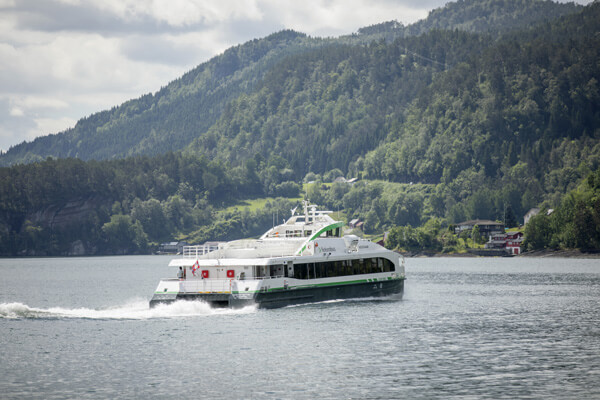
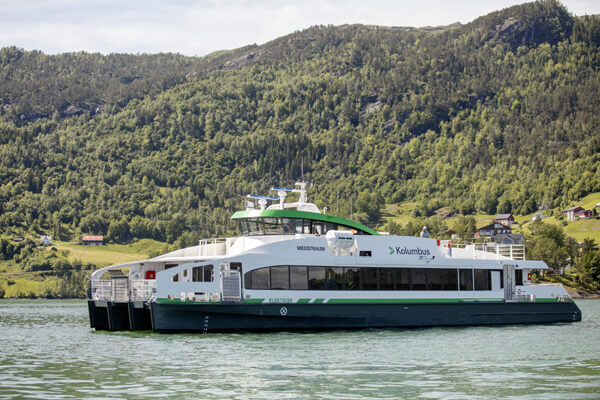
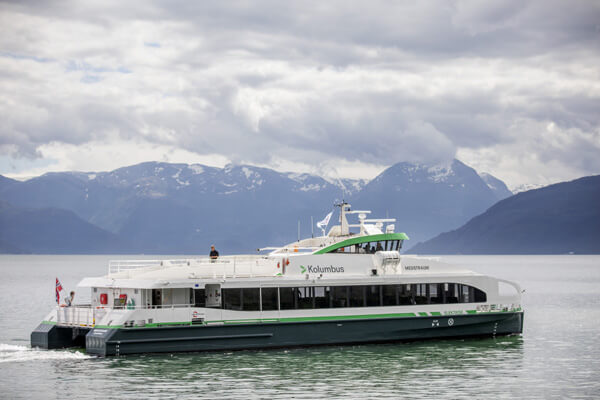
The world’s first fully electric and zero-emission fast ferry, classed as a high-speed craft, recently completed construction and is being delivered to its new homeport in Stavanger, Norway. After final trials, the vessel, MS Medstraum, is scheduled to begin regular commuter service in Norway as a further demonstration of the future electric ferries.

The vessel was built using a unique modular manufacturing method at the Norwegian shipyard, Fjellstrand. According to the shipyard, modularisation helped to cut both production costs and engineering costs and will contribute to making electric-powered high-speed vessels competitive in terms of both cost and the environment.

“It’s been challenging building this ship, as it’s never been done before, but we’ve learned a lot. Fast ferries require a lot of energy so we needed to make Medstraum lighter and a lot more efficient than traditional fast ferries,” said Edmund Tolo, head of research and development at Fjellstrand AS.

The Medstraum is approximately 260 gross tons. The vessel is approximately 98 feet long with a capacity up to 147 passengers and operated by a crew of three. It will sail a regular service between Stavanger, Byøyene, and Hommersåk in Norway for Kolumbus. The typical schedule is for sailings lasting between 35 and 40 minutes.


“It is revolutionary that a vessel of this size can operate at 23 knots for an entire hour by electricity alone,” said Tolo. The shipyard reports that the vessel achieved a maximum speed of 27 knots. The catamaran has two electric 550 kW motors and a 1524 kWh battery capacity with charging power of 2.3 MW.

Fjellstrand shipyard in Hardanger, Norway notes that the world’s first fully-electric ferry, Ampere, was built just seven years ago in 2015. They estimate that there are now approximately 70 emission-free ferries operating in Norway, but this is the first to be classed as a high-speed craft.

“Not only have the project partners developed and demonstrated a new and emission-free propulsion system that can maintain higher speeds than before, but we have also adopted a completely new modular design and construction methods that will revolutionize the way we build boats in the future,” said Hege Økland, CEO of Maritime CleanTech, the cluster organization that initiated and established the EU-funded TrAM-project, which resulted in Medstraum.


“We are very happy to finally get this flagship delivered,” said Mikal Dahle Project Manager at Kolumbus. The company which currently has ten conventional fast ferries, estimates the Medstraum will cut its emissions by 1,500 tons a year, despite operating on its least energy-demanding route.

The project to develop the fast ferry involved a broad coalition of companies located in Norway, Germany, and the Netherlands and also involved both the University at Strathclyde in Great Britain as well as the National Technical University in Athens. The Medstraum was classed by DNV.

The vessel cost approximately $11 million to build with 50 percent of the cost underwritten by the European Union as a demonstration project.


Source: https://www.maritime-executive.com/article/world-s-first-electric-fast-ferry-is-ready-to-enter-service


GPH made the announcement on 12 July after MSC subsidiary SAS Shipping Agencies Services Sarl (SAS) had approached the firm in June with a potential cash offer.

“GPH’s board of directors has now terminated these talks with SAS,” the announcement wrote.

“GPH’s board of directors remains confident in GPH’s strategic direction as an independent port operator with open access cruise port concessions and arm’s length treatment of berthing rights for all its customers.

“The GPH board continues to be focussed on delivery of our strategic goals and long-term value creation, that reflects the strategic strength of GPH and its growing network of cruise ports, for the benefit of all shareholders.”

Global Ports shares fell 17 per cent to 94.10 pence each in London on 12 July.

Global Ports Holding Plc is the world’s largest cruise port operator with an established presence in the Caribbean, Mediterranean, Asia-Pacific regions, including extensive commercial port operations in Montenegro.

Mehmet Kutman, Co-Founder, CEO and Chairman of GPH said: “The board of GPH is wholly committed to the successful execution of our long-term strategy to grow the business and create value for all shareholders while providing industry-leading investment and service levels at our cruise ports for the benefit of all stakeholders.”

The announcement had been made by GPH without the agreement or approval of SAS.

In April MSC Group entered into a €5.7 billion share purchase agreement with Bolloré SE for the 100 per cent acquisition of Bolloré Africa Logistics.

Source: https://www.porttechnology.org/news/msc-global-ports-holding-takeover-talks-scrapped/


HMM will expand its service network with an eco-friendly container fleet of 1.2 million TEU by 2026.

HMM also plans to secure logistics infrastructure such as terminals in key locations to reinforce its profit structure.

Moreover, the bulk fleet will be cemented with a fleet of 55 ships, substantially increased by 90 per cent from the current 29 ships.

HMM will plough its funding into a range of initiatives, including securing core assets such as ships, terminals, and logistics facilities throughout the upcoming five years from 2022 to 2026.

The firm will continue to enhance environmentally-friendly services for carbon neutrality in 2050 and explore the likelihood of ordering ships using alternative fuels in the future. HMM will also make enterprise-wide R&D efforts into the use of carbon-neutral fuels in cooperation with industrial players, the company said in its announcement.

On digitalisation, HMM recently launched ‘Hi Quote’, an online sales platform based on its own technological capabilities. HMM plans to integrate its inland logistics network into Hi Quote and apply freight rate solutions powered by Artificial Intelligence at a later date.

Kim Kyung Bae, HMM President & CEO, said: “Our strategy is to ensure perpetual growth of HMM under the new vision – a global leading company generating sustainable value for the world.

“We will continue to drive efforts for contribution to the global community.”

HMM recorded its best-ever quarterly profits in Q1 2022 owing to higher freight rates.

The company posted a growth in revenue by 103 per cent to KRW 4.9 trillion ($3.8 billion) in Q1 2022.

Source: https://www.porttechnology.org/news/hmm-rolls-out-cash-spending-vision-with-11-5-billion-investment-plan/


The development of low sulfur fuels through the introduction of IMO2020 has been the most significant change to the way in which the global fleet has been powered since the introduction of the diesel engines in the maritime industry a little over 100 years ago.
Whilst the use of low sulfur fuels has clear benefits on emissions reductions, what has been proven is that challenges around fuel quality -especially early 2020- have brought real issues for modern 2-stroke marine engines.


For not only are these engines sensitive to corrosion but they also face an increased risk of engine deposit build up – potentially leading to problems including notably ring pack damage.
What is without question is that selecting the right cylinder oil in tandem with a properly managed Monitoring Programme in the post IMO2020 landscape has never been more important than it is today.

Selecting the Right Lubricant
Here at Lubmarine we have developed a range of tailored lubrication formulations designed specifically to manage today’s modern marine engines, for all IMO2020 compliant fuels including LNG.
Our premium product Talusia Universal is a fully OEM approved cylinder oil with a patented chemistry, proven with over 125,000,000 successful operating hours.

Tests show that Talusia Universal demonstrates a significant cleaning ability (detergency) and provides higher residual BN, enabling ship operators to optimize their feed rate and maintain the lube oil into the safe limits determined by the OEM’s.
Additionally, Talusia Universal has been approved by WinGD as a “Dual Fuel validated” product, one of the few cylinder oils on the market to have obtained this achievement.

The latest entry in the Lubmarine Talusia range of cylinder lubricant is Talusia HD 40 for which MAN ES has granted a NOL Category II meaning this product has excellent overall performance with a special focus on cleaning ability and is applicable for all engines types and recommended for MAN B&W two-stroke engines Mark 9 and higher, providing operators with increased safety margins for very demanding engines.

“We are delighted with this latest recognition from MAN ES and we believe this new generation of cylinder lubricant will provide added safety margin for the ship operators,” said Stuart Fuller, Lubmarine’s Market Liaison & Product Manager responsible for MAN ES.

Source: Serge Dal Farra, Lubmarine Marketing Manager

Taking a Multi-Layered Approach to Engine Cleanliness
Using the right lubricant in the right amount to deliver optimum performance and effective engine cleanliness is just one piece in the puzzle.

Rising to the challenge requires an understanding of the multiple operating parameters of the engine, combined with smart engine monitoring and drain oil analysis and interpretation – something that can only be achieved with the support of a lubricant specialist.
By carefully and regularly monitoring lubricant and vessel machinery condition, ship owners together with their oil supplier can proactively detect and react to any abnormalities.
All OEM guidelines recommend careful engine monitoring and a sophisticated intelligence-led approach allowing for the most prudent management of two stroke marine engines.

Implementing A Robust Monitoring Programme
Implementing an effective Drain Oil Analysis Programme is a simple, reliable and a proven way of helping optimize operations through lubricant consumption and component wear analysis.
LubInsight Neo: Tapping into the Benefits of A New Range of Inter-connected Onboard Digital Analysis Services
We are now taking this approach to new and data-focused levels, with the launch of a new range of fully digitalized, interconnected global on-board lubricant sampling and testing services.

Operators on board are guided through easy to follow, step-by-step on screen instructions when carrying out drain oil analysis without the need for specialist training, with the highly accurate test results uploaded onto the customers’ dedicated Lubmarine portal.
Not only do the new services – LubInsight Neo – enable vessel operators and owners to upgrade their onboard testing laboratory facilities, but they also deliver real-time interconnectivity between crews on the vessel, all on shore operations, owners, operators and global teams involved in the running and maintenance of the vessel.

Serge Dal Farra

The Human Element – Specialist Knowledge and Interpretation
The third layer in achieving optimum engine performance including its cleanliness profile is to enlist the support of highly experienced engineers to assist with lubrication optimization and any lubrication issues vessel operators might be experiencing.
This level of support can include:
• Ship engine inspections and trouble-shooting
• Lubrication survey and technical investigations
• Shipyard and switchover support
• Crew and onshore teams trainings from lubrication basics to high level lubrication strategies

Conclusion
There is no single solution to achieving the benefits that LOFR optimization can deliver. It takes a multilayered approach, utilizing the tools and knowledge with the support of a technical team and the infrastructure of a specialist lubricant manufacturer with the range of services available to support vessel operators.
Source: Serge Dal Farra, Lubmarine Marketing Manager


Panama Canal Authority (PCA) said the new structure will assume a simplified, value-based pricing structure, reducing the number of tariffs from 430 to fewer than 60.

On transits of vessels in ballast condition for all market segments except for containerships, tolls will be calculated by applying 85 per cent of the laden toll instead of the originally proposed 9 per cent.

On containerships, the charge for empty containers will be reduced to $2/TEU in 2023, $4/TEU in 2024, and $6/TEU in 2025, instead of the $5, $6.50, and $8 that were initially proposed for each year, respectively.

All other tariffs will be implemented gradually from January 2023 to January 2025 at the originally proposed levels, including the proposed modifications to the loyalty program for containerships, which will be phased out by January 2025.

Incentives for return voyages applicable to containerships and liquefied natural gas (LNG) vessels will be eliminated by January 2023 when the new structure comes into effect.

“The proposal aims to strengthen the tolls structure in a way that is consistent with the value provided by the Canal transit service while providing greater visibility and predictability to customers,” said Panama Canal Administrator Ricaurte Vásquez Morales.

The tolls proposal was issued on 1 April 2022 and went through a formal consultation period during which 17 interested parties submitted their comments or opinions in writing.

The public hearing was held in Panama on 20 May 2022 with the participation of seven parties, representing local and international customers.

The visibility charge currently applied to full container vessels, and classified as Other Marine Services, will be eliminated prior to the implementation of the new tolls to avoid an overlap with the Total TEU capacity (TTA) charge.

In June 2021 the PCA increased its waterway’s maximum allowable length for commercial and non-commercial vessels transiting the Neopanamax Locks.

The PCA said the maximum length overall (LOA) for regular transits of the Neopanamax Locks is 370.33 metres, an increase from 367.28 metres.

The increase means that now 96.8 per cent of the world’s fleet of containerships can transit the Panama Canal, shortening routes and benefiting economies around the world.

Source: https://www.porttechnology.org/news/panama-canal-toll-restructure-receives-governmental-approval/


Company DETAILS

SHIP IP LTD
VAT:BG 202572176
Rakovski STR.145
Sofia,
Bulgaria
Phone ( +359) 24929284
E-mail: sales(at)shipip.com

ISO 9001:2015 CERTIFIED