The first initiative launched is the opening of its new Centre for Maritime Efficiency (CME). The key role of CME is to enable PIL to grow its competencies in managing ship and fleet energy-efficiency performance.

The CME’s responsibilities include traffic optimisation and route analysis aimed at minimising energy usage by PIL’s fleet.

The CME will be equipped with a digital system that houses all relevant operational data and applications in a single platform to facilitate comprehensive, centralised and efficient coordination.

With the new CME, PIL will be able to: reduce greenhouse gas (GHG) emissions generated from its operations; enhance fleet safety and security; maximise cost-effectiveness through efficient traffic and route-based management of PIL’s fleet; and improve provision of more training berths for seafarers and creating a bridge for a ship-to-shore career path.

Lars Kastrup, new CEO of PIL, said: “The rolling out of this new Centre for Maritime Efficiency is timely as we forge ahead to become a more efficient shipping line committed to reducing our carbon footprint.

“This is also aligned with our aim to better leverage technology and digitalisation in our operations for enhanced operational effectiveness. At the end of the day, we aim to deliver quality service and good connectivity to our customers, who are increasingly expecting container shipping services to be nimble and flexible to meet their evolving needs.”

PIL has also signed Memorandum of Understanding (MoU) with Singapore Polytechnic’s Centre of Excellence in Maritime Safety (CEMS) to collaborate on a ‘Training with Technology’ project.

This project aims to leverage the latest technologies to enhance the competency of seafarers in safe navigation through technical and soft skills training.

PIL and CEMS will jointly explore the effectiveness of using immersive, simulation and remote technology to deliver safety-related and ship navigation training in demanding traffic and sea states.

The data and knowledge collected from this project will be utilised for research and collaboration between the two partners towards the objective of strengthening the standards of maritime safety.

Source: https://www.porttechnology.org/news/pil-launches-initiatives-to-enhance-efficiency-and-safety/
Container xChange’s new Demurrage & Detention Benchmark 2022 report, published today, compares Demurrage & Detention (D&D) rates* imposed on customers by the world’s ten largest shipping lines across 60 of the world’s biggest container ports.


The report notes that global average D&D charges levied by container lines on customers two weeks after cargo were discharged from the vessel increased by 38% for standard-sized containers from $586 in 2020 to $868 in 2021. So far in 2022, average D&D charges by major ports have declined to an average of $664 per container by 26%, although fees remain far higher than pre-pandemic at around 12%.

The U.S. came out worse regarding D&D costs in regional comparisons in Container xChange’s Demurrage & Detention Benchmark 2022 report. By region, D&D charges in May in the US were the highest at $2,692 per container. This compared to $549 in Europe, $482 in India, $453 in China and $366 in the ‘Rest of Asia’.

“Throughout this pandemic, as shipping costs have soared and inflation has become a threat to the global economy, it has become critical for shippers to develop visibility into container operations to manage costs like Demurrage and Detention. China leads the world in maritime exports and even though it has some of the busiest ports in the world, they’ve ensured they are the most efficient – even during lockdowns.” said Christian Roeloffs, co-founder of Container xChange.

Shanghai, Qingdao and Ningbo – which are 3 of only 8 ports that increased in Demurrage and detention (D&D) charges in 2022, still exhibit a much lower D&D charge in general, ranking #43, #52 and #42 on the global list respectively. On average, the D&D charges at these 8 Chinese ports rose from $390 in 2020 to $700 in 2021 – a staggering rise of 79.4%. The average D&D charges for these 8 ports in China fell to $614, declining by 12.2%.

For Hong Kong, where the container congestion was the worst, there was a 105% hike in its D&D charges from $813. Hong Kong recorded a fall of 8.9% in its D&D charges, coming down to $1515. The trend reversed slightly, with D&D charges falling in some of the major ports but continuing to increase in Dalian, Ningbo, Qingdao, and Shanghai.

Yichang, Rugao & Zhenjiang in China are amongst the ports with the lowest demurrage and detention charges after two weeks.

“The main reasons for lower congestion in ports like Busan, Qingdao, and Port Kelang are higher port productivity combined with less COVID-19 restrictions. Furthermore, fewer imports were received in these ports, which have also fewer direct calls from the major shipping lines. This helped achieve better productivity. Port Kelang and Qingdao had equipment shortages during the pandemic, therefore, you can see fewer D&D charge occurrences. In addition, Busan is also one of the largest transhipment ports in Northeast Asia. And although its container capacity is the largest, a considerable proportion of its traffic is not destined to South Korea.”, commented Drewry, a shipping maritime research company.
Source: Container xChange


Ocean Technologies Group (OTG) has received approval from Bahamas Maritime Authority to offer an e-learning course on standards of training, certification and watchkeeping (STCW) ice navigation.

Safe navigation through ice passages and avoiding their many hazards depends on the knowledge and skills of the senior bridge team. As new routes open, crew certified to navigate ice are in demand. However, the number of officers with the requisite experience to operate in these waters and those able to teach the new generation ice navigation skills is under pressure globally, further limiting supply.

E-learning may provide the answer, allowing seafarers to study remotely whilst obtaining certification to recognised standards. The Bahamas Maritime Authority has approved an innovative new course from OTG: “Ice Navigation in Polar Waters”, that combines e-learning, interactive scenarios, and in-person assessment to provide navigational officers with the requisite understanding of the hazards of manoeuvring in ice and transiting the polar regions.

Meeting the requirements of The Polar Code and the IMO STCW Convention and Code, this comprehensive STCW Course comprises nine modules and covers topics such as regulations, ice characteristics, voyage planning, vessel performance in polar waters, ice breaker operations, and crew preparation and safety.

The learning portion of the course can be carried out entirely online, with a final assessment being taken out under supervision at a Marlins Approved Test Centre. After completing all nine modules and the online simulator exercise, the learner takes an informal self-assessment: if they feel ready, they can apply for formal assessment and certification. This structure allows seafarers to study at their own pace, eliminating the need for extended travel and ensures a high-quality result.

“STCW Ice Navigation at Basic Level is a long course that would traditionally require 4 – 5 days’ attendance at an on-shore training centre. Adding travel time, officers may need to spend a week away from home, often during their vacation time. Access via our self-directed learning platform means seafarers can take regulatory training at a pace and location that suits them, fitting it in around their personal lives more easily,” said Catherine Logie, Ocean Technologies Group, director of direct to consumer services.

Our global network of Approved Test Centres in almost every crew region enables seafarers to take a supervised assessment locally,” she continued.

Source: https://thedigitalship.com/news/maritime-software/item/7958-otg-gains-bahamas-maritime-authority-approval-for-e-learning-course-on-stcw-ice-navigation


The value of global trade rose to a record US$7.7 trillion in Q1 2022, an increase of about $1 trillion relative to Q1 2021, according to UNCTAD’s Global Trade Update published on 7 July.

The growth, which represents a rise of about $250 million relative to Q4 2021, is fueled by rising commodity prices, as trade volumes have increased to a much lower extent. Though expected to remain positive, trade growth has continued to slow during Q2 2022.

“The war in Ukraine is starting to influence international trade, largely through increases in prices,” the report says. It adds that rising interest rates and the winding down of economic stimulus packages will likely have a negative impact on trade volumes for the rest of 2022.

Volatility in commodity prices and geopolitical factors will also continue to make trade developments uncertain.

Trade growth strong for both developed and developing countries

According to the report, trade growth rates in Q1 2022 remained strong across all geographic regions, although somewhat lower in the East Asia and Pacific regions.

Export growth has been generally stronger in commodity-exporting regions, as commodity prices have increased.

Trade in merchandise goods reached about $6.1 trillion, an increase of about 25% relative to Q1 2021, and a jump of about 3.6% relative to Q4 2021.

The value of merchandise exports from developing countries was about 25% higher in Q1 2022 than in Q1 2021. In comparison, this figure is about 14% for developed countries.

Merchandise trade between developing countries also strongly grew during Q1 2022. Trade in services grew to about $1.6 trillion, an increase of about 22% relative to Q1 2021, and a rise of about 1.7% relative to Q4 2021.

Substantial increases across sectors

The report shows that most economic sectors recorded substantial year-over-year increases in the value of their trade in Q1 2022.

High fuel prices are behind the strong increase in the value of trade in the energy sector. Trade growth was also above average for metals and chemicals. By contrast, trade in the transportation sector and in communication equipment has remained below the levels of 2021 and 2019.

Slower economic growth, war in Ukraine dim prospects

The report says the evolution of world trade for the remainder of 2022 is likely to be affected by slower-than-expected economic growth due to rising interest rates, inflationary pressures and concerns over debt sustainability in many economies.

The report states that the war in Ukraine is affecting international trade by putting further upward pressure on the international prices of energy and primary commodities.

In the short term, because of the inelastic global demand for food and energy products, rising food and energy prices would likely result in higher trade values, and marginally lower trade volumes.

Other factors expected to influence global trade this year are continuing challenges for global supply chains, regionalization trends and policies supporting the transition towards a greener global economy.

Source: https://maritimefairtrade.org/global-trade-hits-record-us7-7-trillion-in-q1-2022/


Past reporting of inspections carried out has been sparse.  In welcoming the IMO’s revised guidelines for inspections, the international freight transport insurer TT Club exhorts governments to report findings to IMO on 2021 inspections, as well as to increase the volume of inspections carried out.  This would helpfully inform the international maritime regulator and support industry players who are striving to ensure safety and reduce dangerous incidents.

Revised Guidelines for the Implementation of the Inspection of Cargo Transport Units (CTUs) issued last month by the IMO are aimed at helping governments to implement a uniform and safe inspection program.  The IMO Circular (MSC.1/Circ.1649) seeks to broaden the inspections undertaken and align fully with safety guidance developed during the last decade (previous guidelines date from 2012).

Specifically, governments are now requested to select from all cargo types, rather than simply declared dangerous goods, for inspection. Further the guidance takes account of the issuance of the CTU Code, revisions of container safety regulations and the need to minimize the movement of invasive pests. The Circular additionally notes the continuing low rate of submission of inspection reports and encourages an increase in such inspections.

Peregrine Storrs-Fox, TT’s Risk Management Director, said: “With the string of container ship fire casualties and fatal incidents at storage facilities, most recently at Chittagong (Chattogram), in our minds, our current concerns are manifest. They constantly remind us of the importance of adequate safety procedures in packing, handling and transporting the array of cargoes that have the potential to cause catastrophic incidents.

“With only five of the 179 governments affiliated with IMO submitting reports on inspections at the last Carriage of Cargoes and Containers (CCC) sub-committee meeting in September 2021, the industry urgently seeks more collaborative support from governments in combatting the potential circumstances and cargo packing practices that cause dangerous incidents.

“It would be much appreciated if more national reports undertaken during 2021 can still be reported for consideration at the next CCC this September.  However, TT calls for a viable sample of inspections in future based on the new guidelines. In this regard, TT would urge strongly that governments enter dialogue with industry to understand how the latter can work with enforcement agencies to improve safety.”

TT itself has long campaigned for an increased awareness of the issues surrounding the transport of dangerous goods, and all potentially hazardous cargoes.  It is dedicated to improving standards for the safe and secure packing of all cargoes in cargo transport units.

There is a plethora of industry generated guidance on best practice relating to packing and handling of cargoes, including the Quick Guide to the CTU Code, along with a Checklist of actions required of those packing cargo in freight containers, published by the Cargo Integrity Group and available in several languages.

Such work by industry groups can only be strengthened by a partnership with governments.  Their action on inspections, with the help of the new revisions to the IMO guidelines and use of that body’s reporting system is crucial.

Storrs-Fox concluded: “The international supply chains that service the trade in a myriad of commodities are complex and notoriously susceptible to disruption.  Congestion and delays increase the challenges involved in maintaining safety levels in an environment where the demand for reliable delivery of goods is high.  Such circumstances require an even higher level of attention to safe practices.

“The collection of information on the effective use and/or mis-use of these practices needs to be enhanced by a much higher level of rigorous inspections and report submissions from governments, but working from the understanding that this is a shared problem.”

Source: https://maritimefairtrade.org/tt-club-urges-imo-member-states-to-increase-container-cargo-inspections-and-submit-reports-urgently/


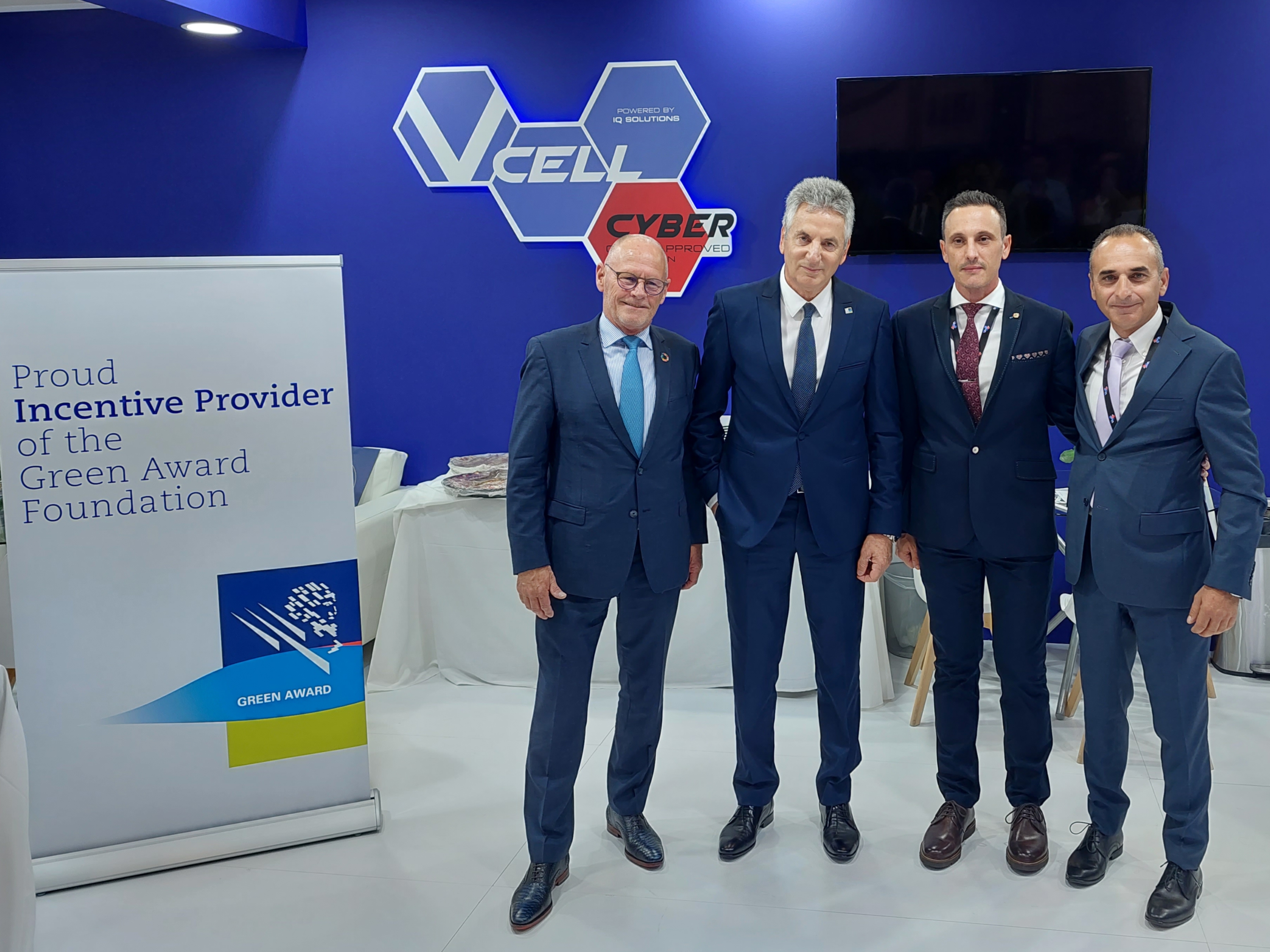
Green Award welcomes IQ Solutions SA as an incentive provider. With reference by the Chairman of the Green Award Foundation, Captain Dimitrios to the ceremony (presentation of Green Award Flag and a Plaque) on 7 June 2022 at Posidonia Exhibition, Athens. The Greek company provides certified cyber secure ICT Solutions and Services for the Maritime Industry. They give a complete managed information technology and communications for vessels with a Green Award certificate a discount of:

• 10% for certified companies (seagoing shipping)
• 15% for certified seagoing ships
• 15% for certified inland ships
• 10% for other participating Incentive Providers
The team of IQ Solutions SA is highly skilled engineers and consultants, experienced in large and complex IT projects, tackle the cyber security in the most credible, effective, and highly professional manner. IQ Solutions SA is a Maritime ICT Integrator with unique Intellectual Property, offering ICT solutions Type Approved for Cyber Security by IACS members & Flag States.

From left to right: Jan Fransen, Executive Director of the Green Award foundation, Capt. Dimitrios Mattheou, Chairman of the Green Award foundation, Panagiotis Gavalas, IQ Solutions Director of Operations and Paris Papanastasiou CEO and Managing Director of IQ Solutions.

Specialized products & services are presented below:
• VCell Cyber
Type Approved/certified for Cyber Security (by BV and ABS) end-to-end vessel ICT solution, providing a managed, enhanced, fully controllable and monitored ICT environment, consisted of highly available, redundant, and secure infrastructure covering servers, clients, managed networking, and printing.
• VTalos
Universal Vessel USB Protection Unit, certified by ABS, designed to control, and protect from a sensitive onboard Cyber Security issue, the use of USB devices on vessel networks & devices.
• Ermis
Augmented Reality solution for vessels making onboard remote view, inspection, assistance and knowledge transfer direct and immediate, without the need of shore experts to be physically present onboard.

Captain Dimitris Mattheou, Chairman of the Green Award Foundation comments, “We are happy to welcome IQ Solutions to the Green Award scheme and see many synergies. Digital integrations become a greater reality for the maritime industry.Quality standards is not only what they promise but also what they provide. Green Award, along with IQ Solutions and the rest of our distinguished incentive providers, fairly represent the determined, passionate, faithful, devoted and pioneering sailors of Green Shipping.”
Source: IQ Solutions SA


Following a recent uptick in orders, Kongsberg Maritime’s Sensor and Robotics division has announced that it has secured over NOK 450M in contracts for HUGIN AUV in Q2 2022.
The order income consists of a healthy mix of recurring business with existing customers and new customers that will utilize the HUGIN platform in their operations.
The use of AUVs is a vital piece in the technology puzzle that must be solved to enable sustainable oceans. The vehicles can operate autonomously over a long period of time and collect environmental data, performing multiple survey operations for multiple applications in a cost-effective way compared with conventional surveys.

Since the first dive of the iconic HUGIN autonomous underwater vehicle (AUV) prototype on 7 March 1993, Kongsberg Maritime has been spearheading the development of the sector, and with the latest release of HUGIN Edge, Kongsberg Maritime offers complementary AUV solutions for the rising AUV Market.

“These latest contracts are a true acknowledgement of a team effort over many years, and it shows that Kongsberg Maritime offers the right technology and solutions for the growing AUV market. We see that customers put AUVs into operation in many applications, and we believe that Autonomous Underwater Vehicles will be used in even more applications in the future,” says SVP Stene Førsund, Kongsberg Maritime.

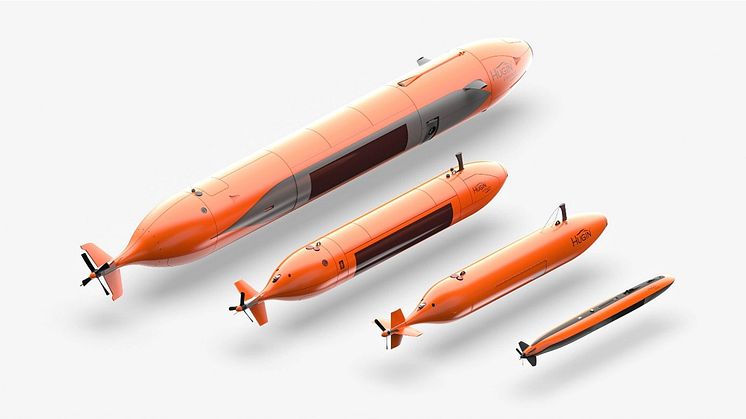
HUGIN AUVs can be optimized for a range of subsea industries

HUGIN AUVs can be optimized for a range of subsea industries

The HUGIN range of autonomous underwater vehicles is characterised by great manoeuvrability and high accuracy of stabilisation. Hydrodynamic shape, accurate instruments and excellent battery capacity means these AUVs can be optimised for a variety of industries from oil & gas and renewables to defence and research.

“Our expansion to a wider portfolio of HUGIN AUV models has been well received by the market. In addition to the underlying and increasing demand for marine robots we are now also addressing new applications and by this increasing the addressable market with our wider portfolio. Our robotic solutions are more sustainable, safe and cost effective than traditional methods within the ocean space domain”, says SVP Marine Robotics, Thomas Nygaard, Kongsberg Maritime.

Over time, the range of HUGIN AUVs has evolved to go deeper, longer and carry a larger payload of sensitive data-collecting sensors which has made HUGIN the most successful commercial off-the-shelf autonomous underwater vehicle ever made.
Source: Kongsberg Maritime


Ship owners have been upping their newbuilding contracting activity with more deals being reported after each passing week. In its latest weekly report, shipbroker Allied commented that “the impressive performance in terms of newbuilding orders continued for yet another week while the lion share of the market still belongs to the Containership sector. In terms of market share by shipbuilders for these units, the majority have been snapped up by Chinese shipbuilders, something that may soon be negatively affected by the surge in new Covid-19 cases that emerged during the weekend across several areas in China and could consequently lead to new lockdown measures in place relatively soon. At the same time, buying interest continues to also hold for Gas units, and in particular LNG units, with the Qatar LNG project further contributing and significantly increasing demand noted for fresh orders. At the same time, we continue to see sluggish demand for dry bulk and tanker units for yet another week, although we did see some activity emerge this week from Japanese shipbuilders for Handysize dry bulk units”.


Source: Allied Shipbroking

Banchero Costa added in a separate note this week, that “in the gas market an order for 8 x 174,000 cbm LNG carrier was placed by European owners at Hyundai Heavy, deliveries expected during 2nd half of 2026. Again at Hyundai, Capital Gas ordered 2 x 174,000 cbm LNG carrier, dely mid 2026, vessels are priced around $245mln each. Turkish owner Pasco Gas signed at Hyundai Mipo 1 + 1 x 40,000 cbm LPG carrier with delivery during 1st half of 2025.

Source: banchero costa &c s.p.a

The vessels, to be dual fuel, are priced around $64mln each. In the container segment MTT, Malaysia, exercised options for three more 1,800 teu units at Penglai shipyard that will be delivered in 2024. MPC Container placed an order for 2 x 1,300teu carriers, methanol fuelled, at Taizhou Sanfu. Dely expected in 2024, price estimated around $39mln each”.

Meanwhile, Allied added that “on the dry bulk side, it was a rather strong week for the SnP market, given the firm number of transactions coming to light. For the time being, only the Capesize market remains sluggish in terms of activity taking place, that comes though, rather inline with the general volatility and periodical asymmetries noted in its respective freight rates. All-in-all, a lot will depend on the side of freight earnings, where a considerable pressure is currently in place, as to whether we are about to continue to see a fair volume taking place or not. On the tanker side, a modest flow of fresh secondhand deals appeared in the market as of the past week. At the same time though, activity was skewed in favour of the smaller size segments, somehow inline with the overall incremental recovery from the side of freight earnings. Hopefully, with many having already taken a more bullish stance, we can expect buying appetite to remain firm in the near term at least”, the shipbroker concluded.

Source: Allied Shipbroking

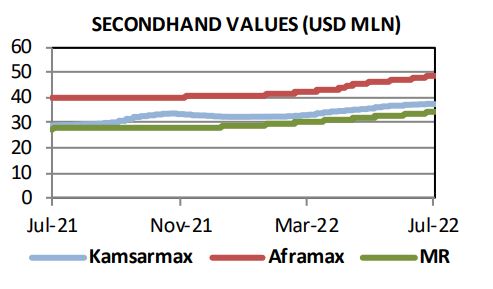
Similarly, Banchero Costa also noted that “a slightly quiet week for second hand activity, more focused on vintage tonnage. In the Supramax segment, according to marker rumours, the Mamaba Point 56,000 dwt built 2009 Mitsui (BWTS fitted) is sold to undisclosed buyers around $20.2/20.3 Mln. The Medi Bangkok 53,000 dwt built 2006 Imabari (BWTS fitted) is reported sold with a short BBHP structure at a comparable level of about $17.5 Mln.

Source: banchero costa &c s.p.a

In the Handysize sector the Yangtze Spirit 35,000 dwt built 2012 Dongze (BWTS fitted) is reported sold for $17.2 Mln and the similar age, but smaller Vantage Rider 29,000 dwt built 2011 Nantong Nikka is reported sold to Middle Easter buyers for $15 Mln. In the tanker market asset prices kept increasing. The Magnus 115,000 dwt built 2005 Samsung (BWTS fitted) is reported sold to Greek buyers for $22.5 Mln and the sister Kronviken built 2006 (BWTS fitted) is reported sold too to Greeks for a price close to $25 Mln. The product tanker Explorer II 47,000 dwt built 2005 Onomichi is sold to undisclosed at a price a little over $12 Mln marking a significant hike”.
Nikos Roussanoglou, Hellenic Shipping News Worldwide


A Pakistan delegation led by Secretary Commerce, Sualeh Ahmad Faruqui will visit Afghanistan on July 17-18, 2022 for talks on import of coal for power generation, well informed sources told Business Recorder.

The delegation visit is scheduled amid threats by Chinese company generating electricity on imported coal that they will revert to South African coal if NEPRA fails to resolve its issues related to payments.

Sharing the details, sources said, during the third meeting of Border Management Committee (BMC) under the chairmanship of Federal Minister for Defence, Khawaja Asif it was decided that a working level delegation will be sent to Afghanistan to discuss the issues related to cross-border trade of coal.

Proposed composition of the delegation as follows: (i) Secretary Commerce (Lead); (ii) Additional Secretary-1, Power Division; (iii) representatives from Military Operation Directorate; (iv) representatives from Inter-Services Intelligence (ISI); (v) Director General Afghanistan, Ministry of Foreign Affairs; (vi) Riaz Ahmed Khan, Joint Secretary (PE/FIA), Ministry of Interior; (vii) Mariya Qazi, Joint Secretary, Ministry of Commerce; (viii) Brig Muhammad Abid, Director Border Terminals, NLC; and (ix) Ahmed Raza Khan, Chief Collector KPK, FBR.

Key issues for discussion include declaration of 24/7 operations at Torkham, Kharlachi and Ghulam Khan border terminals, deployment of additional HR to ensure smooth operations, improvement in infrastructure on Afghan side and cross border movement of vehicles.

The sources said expenditures in respect of participation of members of delegation will be met through their respective organisations/ministries.
Source: Business Recorder


Dockworkers across major North Sea ports in Germany have yet again paralyzed operations after staging the longest strike in four decades following the collapse of the latest round of negotiations to resolve a protracted collective bargaining agreement dispute.


Trade union giant United Services Union (Ver.di) has called for a 48-hour workforce strike across terminals in the country after collective labor agreement negotiations with the Central Association of German Seaport Companies (ZDS) failed to reach a successful conclusion. The strike, set to run from 0600 on Thursday until 0600 on Saturday, is the third industrial action in as many weeks and the longest in more than 40 years.

German container shipping line Hamburg Süd said that it has been forced to observe a full stoppage for rail, road and ocean freight for both import and export across its German terminals for the duration of the strike. It directly affects operations in Bremerhaven, Hamburg and Wilhemshaven.

“We have evaluated all impacted vessels and have no plans to omit ports or stop operations. Our aim is to return to business as usual serving your global logistics needs from 0600 on Saturday,” said Hamburg Süd in a statement.

The company added that in the interest of minimizing any further disruption to supply chains, it will be keeping a close eye on developments up to and during the next round of negotiations between ver.di and ZDS.

“Please note that at this stage, negotiations are still ongoing between the parties and there could be changes to the scheduled strike action at the very last minute, including the possibility of an agreement being reached and the strike being cancelled,” it said.

The longstanding collective bargaining agreement dispute has paralyzed operations at Germany’s busiest ports owing to the fact that ver.di represents approximately 12,000 workers at the seaports of Emden, Bremerhaven, Bremen, Brake, Wilhelmshaven and Hamburg.

In the dispute that has involved six rounds of negotiations all ending in a standoff, ver.di is demanding a 14 percent increase across the 58 collective bargaining companies including at the primary ports of Hamburg and Bremerhaven. The union is also demanding an annual bonus of up to $1,200 due in part to rampant inflation, which is driving up the cost of living.

During the sixth round of negotiations last week, employers tabled an offer that included a permanent increase in wages from June 1, 2022 of between 5.18 percent for employees in automobile handling and eight percent for employees in full container companies as well as 3.5 percent for companies with job security. From June 1, 2023, wages are then to increase permanently by a further 3.1 percent, or two percent for companies with guaranteed employment, over a total period of 24 months.

While ver.di termed the offer of a permanent increase in wages of eight percent for the employees of the full container companies as welcome, it remained steadfast that employers are not meeting demands for a real inflation compensation.

“It would also be important to secure real wages in 2023 in order to create an actual compensation for inflation for the employees,” said ver.di negotiator Maya Schwiegershausen-Güth.

Germany, Europe’s largest economy, is facing skyrocketing inflation, with food and energy inflation made worse as a result of Russia’s invasion of Ukraine.

The latest round of industrial action by German dockworkers is the third in as many weeks. Last month, the trade union called two strikes, one in early June lasting four hours and another in late June running for 12 hours.

With Germany being one of the most critical maritime hubs in Europe, the 24-hour strike is bound to have adverse supply chain impacts across the continent coming at a time when major European ports are grappling with a congestion crisis.

Source: Maritime Executive


Company DETAILS

SHIP IP LTD
VAT:BG 202572176
Rakovski STR.145
Sofia,
Bulgaria
Phone ( +359) 24929284
E-mail: sales(at)shipip.com

ISO 9001:2015 CERTIFIED