

New e-Navigation technologies developed by the ACCSEAS (Accessibility for Shipping, Efficiency Advantages and Sustainability) project could improve the safety and efficiency of ships across the notoriously busy shipping lanes of the North Sea Region, following successful trials.

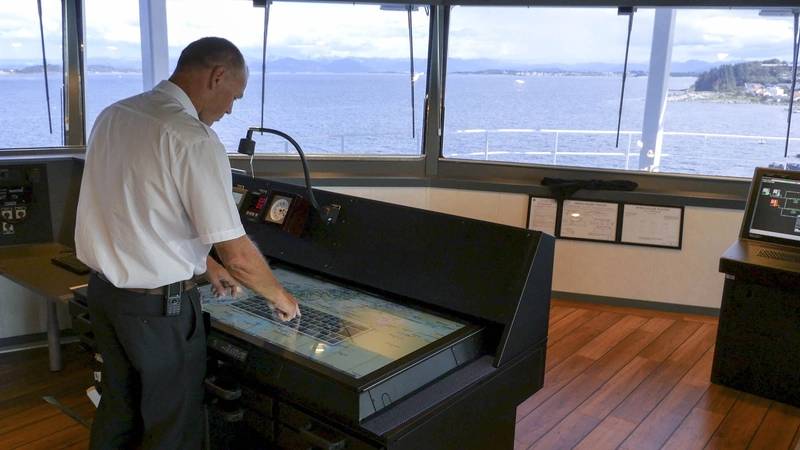
ACCSEAS successfully completed its first demonstration of e-Navigation techniques on board a working passenger ship in the North Sea. The prototype equipment was installed on the bridge of P&O’s Pride of Hull vessel and at Vessel Traffic Services (VTS) Humber.

Working with P&O Chief Officer, Joop Loonstra and Deputy VTS Manager, Shane Winterton, the ACCSEAS team set up a live communication between the ship and VTS Humber on the approach to Humber Estuary and compared the e-Navigation services with more traditional platforms.

The trials were successful and have demonstrated that e-Navigation technologies have the potential to transform the way that data is delivered to mariners by collating all information into one display and ensuring back-up mechanisms are in place. The suite of solutions will not only increase the safety and efficiency of navigation, but also allow better interaction with VTS centres. The team on board also showed how e-Loran seamlessly took over when the ship’s GPS signal was lost demonstrating the benefit of Resilient Position, Navigation and Timing (PNT).

Shane Winterton, Deputy VTS Manager, Humber said: “ABP Humber Estuary Services has been proud to assist ACCSEAS in the development and testing of their new electronic navigation system here upon the Humber. ACCSEAS has created a well designed and resilient system, with valid functions of real worth to the wider navigational community.”

Improved navigation techniques are particularly important in the North Sea region where an increase in shipping traffic, vessel size and competition for marine space is putting growing pressure on the North Sea’s marine areas. These issues pose serious safety and environmental concerns, whilst impacting the economic prosperity of the shipping industry. With over 90% of all goods transported by sea, the safety and efficiency of vessel traffic movements significantly impacts the industry’s economic efficiency and carbon footprint.

Winterton continued: “The enhanced safety of vessel movements within confined waters provided by the system is achieved through a thoughtful process of route exchange and dynamic no go area under keel clearance modelling. ACCSEAS should be congratulated on the very successful trial of their system which they tested in real world scenarios between the P&O ferry Pride of Hull and VTS Humber on one of the busiest and most important estuaries in the UK.”

Alwyn Williams, Project Manager of ACCSEAS said: “The results of this trial show a successful outcome for the ACCSEAS programme, but more importantly, a significant step for the application of e-Navigation within the industry. Mariners can be confident that these systems will provide them with quicker, more accurate information and allow shipping to become more adaptive in an environment that can often be fast-changing.”

These technologies will be demonstrated at the final ACCSEAS Conference “Navigating the North Sea Region into the Future” in February 2015. The conference aims to build upon the success of the second ACCSEAS Annual Conference held in Edinburgh earlier this year and will bring together a global audience to explore the implementation of the ACCSEAS e-Navigation test-bed services and present the concluding results of this engaging North Sea Region project.

Technologies tested included:

  • No-Go Area Service – No-Go Area is an on board service that would provide vessels a live picture of where it cannot safely go along its intended route, highlighting concerns such as environmentally protected areas and shallow stretches of water
  • Resilient Position Navigation Timing (PNT) – A robust service that provides, primarily, the mariner with their position and navigation – Using back-up systems that mitigate the vulnerability of GNSS.
  • Tactical Route Exchange & route suggestion – This service allows mariners to communicate their intended routes with each other and Vessel Traffic Services. It will also allow VTS centres to suggest the most efficient/safe routes to the vessel
  • Inter-VTS Exchange Services – This is a harmonised means of sharing VTS information between different operators, possibly in different countries, to give Vessel Traffic Service a greater situational awareness
  • Maritime Safety Information/Notices to Mariners Services (MSI/NM) – This service provides the mariner with this information in an electronic form for quick display on an ECDIS.

Source: accseas


Trading worldwide without electronic tools is no longer an option, young navigators and crew are switched on to digital technology and they want to have this new technology at their fingertips rather than the messy, slow and labour and paper-intensive methods of the past.

Tor Svanes, the founder and CEO of NAVTOR, believes that electronic chart and display information systems (ECDIS) is now a must have navigational tool in the modern era.

ECDIS has become the modus operandi on all ships, even those working on vessels that are not so modern.

“Navigating the future of shipping is crucial and young navigators no longer want to use paper charts, they are time consuming and far less accurate than their electronic counterparts,” explained Svanes.

According to Svanes, modern ECDIS systems overlaid with passage planning, regulatory information and weather reports, among other things is far easier operationally for crew. Svanes accepts that in the beginning there were teething problems, but he adds, “There is very little negativity about ECDIS these days, it has more integration with other systems and other equipment while updating charts with other data is a simple download.”That means that systems are always up to date and with modern systems the standardization of the display is simple, believes Svanes. What is more with new displays all reports can be available in one window.

According to Svanes, modern ECDIS systems overlaid with passage planning, regulatory information and weather reports, among other things is far easier operationally for crew. Photo: Navtor
The biggest change for ECDIS will come in 2024

However, the biggest change for ECDIS will come in 2024 with the changes to chart formats. “Practically it won’t be that much of change,” Svanes partially corrects himself, “But the systems upgrades may mean that some operators will require new systems,” he admits.

There won’t be any “backwards regulation” says Svanes but operators will need a system that complies with the new standard. And that will offer charts with more data and more detail, finer scale and more accurate, clearer displays.

What is more is that new chart displays will have the capability of displaying new regulations or regional regulations on screen allowing crew to plan a voyage with accuracy and knowledge of the weather conditions and the different regulatory regimes it will be sailing into.

A significant example is the latest offering from the International Maritime Organization (IMO) which introduced the IMO 2020 sulfur cap on 1 January 2020. Following the sulfur regulation there will be a regulation on the carriage of HFO, ballast regulations will be in place and a raft of decarbonization measures expected in the near future.

Other more regional regulations, such as the discussions over a new Mediterranean emissions control area (ECA), which have started the process for an all Mediterranean agreement to match those in the Baltic and the US, and it is these regional rules that make the regulatory map complex for vessel operators.

In addition to the international and regional rules there are an increasing number of port rules, these regulations are very localized and can vary widely, meaning masters have a tough time knowing which regulations apply at the various destinations to which they are travelling, with a number of ports called on any particular voyage.

“Navigating the future in shipping necessarily requires the industry to navigate away from its old operational measures and into a digital realm that is developing fast, and is fast developing the maritime sector,” said Svanes. Photo: Navtor

It is important for masters to be aware of local regulations. For example Port Everglades in the U.S. prohibits the discharge of ballast water, including the discharge of treated ballast water within the port. Whereas in Abu Dhabi, in the United Arab Emirates, above the water line hull cleaning and painting is prohibited as is boiler and economizer blow down, grey water discharge and underwater hull cleaning.

Failure to meet these complex regulations can be costly with severe fines, particularly in the EU and US waters, the need for clarity is real. NAVTOR’s Memorandum of Understanding (MoU) that it signed with Total Marine Solutions (TMS) offers owners and operators the kind of clarity that is needed to avoid falling foul of regulatory authorities.

Complex regulations often require advanced and costly mitigation technologies such as ballast water treatment systems or scrubbers, or even just low sulphur fuel where crew will need to test blends, make sure that tanks are cleaned and that the switch to a more expensive fuel is safe.

As the regulations change masters need to know which rules apply in each region and what mitigating actions need to be implemented to make certain that the vessel that they are operating remains compliant in all jurisdictions.

TMS launched its Ocean Guardian software in 2017 and it is designed to offer advice to crew and simplify the regulatory requirements as the ship heads into new regional jurisdictions, pertaining to port restrictions as well as mandatory rules on emissions and ballast water, so that the crew are prepared for what lies ahead.

Alexandra Anagnostis-Irons, President of TMS, said, ““This kind of collaboration – with expert partners leveraging each other’s skills and technology – is the way forward for an increasingly demanding maritime industry.”
In offering an e-navigation system with regulatory updates NAVTOR MD Tor Svanes believes that the most pressing issue for the service provider here is to make certain that all the information is correct and is up to date.

Gaute Fossmark, the environmental officer at NAVTOR, believes that this is a crucial issue for the combined systems. “Using data supplied by TMS the updating of changes to regulations is fully automatic, so that the customer does not need to worry about updates to the software, they see no updates,” he said.

TMS’s technical department makes certain that all data is harvested and updates its systems on a bi-weekly basis, while NAVTOR updates its electronic navigation chart (ENC) every week.

Fossmark believes that the regulatory regime is becoming increasingly complex with new rules applied at ports, “regional and port regulations are the hardest to get hold of,” according to Fossmark, with special rules applied by some ports for items such as waste management.
These changes offer substantial cultural and work-related changes for crew, but the biggest change so far has been the switch to ECDIS from paper charts. The next move will be an upgrade to the systems expected in 2024 which will see higher definition charts and better software.

“Navigating the future in shipping necessarily requires the industry to navigate away from its old operational measures and into a digital realm that is developing fast, and is fast developing the maritime sector,” concluded Svanes.

Source: marinelink


Historically, vetting was performed by retirees from the oil majors. Their judgements were to a large extent trusted by industry as they were known to the various parties and they in turn knew the values and the cultures of the various companies that they were interacting with.

In the intervening years vetting has moved on considerably, but there is a general sense that the quality of discussions between inspectors and operators has declined.

In 1992 the SIRE system came into force. One of its primary drivers was to reduce the vetting burden, and within a year a uniform inspection format was designed to replace the individual programmes in place. The system ran relatively smoothly following its introduction.

The next major step change came in 1999 in the wake of the Erika incident. Inevitably, this incident led to increased focus on clearance and vetting. Almost overnight a whole generation of vessels – notably single hull VLCCs – became unacceptable overnight.

A further step change came in the wake of the 2002 Prestige incident. Pior to that oil companies had basically taken the view that owners had a ‘right’ to get their ship inspected. Following Prestige the attitude increasingly taken was that if a vessel did not correspond with the oil companies minimum age and type requirements they no longer felt an automatic obligation to inspect the vessel. Oil companies also stopped issuing letters saying that a vessel was satisfactory, confining themselves in writing to thanking owners for participating in their onboard inspection programme: nothing more nothing less.

There is a popular view in industry that this marked an important turning point in the quality of dialogue between the stakeholders in the vetting process. Vetting organisation typically felt – for fear of litigation if something went wrong – that they could no longer tell the owner whether a ship passed an inspection.

Around 2004, the Oil Companies International Marine Forum (OCIMF) issued the Tanker Self-Management Assessment scheme, an ambitious effort to get owners to focus on a continuous quality approach.

Fast forwarding to the present, it can be seen that impressive steps have been taken toward harmonising requirements and harnessing new technology. But the cost and complexity of compliance has multiplied too. Many now see vetting ‘as an industry within the industry’, with an annual estimated cost of US$300 million – US$500 million.

Today the likelihood that an inspector is a former Master is increasingly remote. Now it is not unusual for former Masters to be lured out of retirement, back into their shipowning companies at some expense, so that the letter of an oil major’s matrix requirement can be fulfilled. It is open to question whether such an approach fulfils the spirit of oil majors’ safety requirements.

Many within the industry regard inspectors as ‘distant contractors’ with less of a relationship with the oil companies than their predecessors. In parallel, people within the vetting organisations have changed, and many new owners, operators and trading entities have entered into the market, increasing the distance between owner/operator and vetting organisation.

Wallem’s head of shipmanagement in Europe, Dave Martin, makes the point in this issue that another of the inspection companies makes it a key performance indicator for inspectors to achieve a certain number of observations per ship. “This reduces the value of the inspection from one about quality of operation to one that is purely observations,” he says.

Other tensions are being reported in the wider industry. Inspections are supposed to be done in an operational mode according to SIRE, but many oil companies will only accept them when they are done in discharge ports, which places huge constraints and pressures on crew and vessel operations. The number of inspections that vessels need to field is another concern. And there are now stories circulating of oil companies insisting that the CEO of a shipping company routinely visit vessels. While a visit from top management can be good for morale and motivation, it is questionable whether this should be enshrined within the Vessel Inspection Questionnaire that is the bible that inspectors use, and can cite as authority for a negative observation.

So what’s the bottom line? Industry needs one system that is trusted, harmonised and transparent. Useful headway is being made in this direction through industry associations, notably Intertanko and OCIMF, but the industry mood music indicates we are not there yet. TST

Source: rivieramm


This process applies to vessels regulated by the  SIRE and EBIS programs, cargo ships, and tugs.

On May 11th, 2020 a new process has been implemented with the following main changes:

  • Vessels are required to be screened each time they are nominated by Repsol Group.
  • Repsol Vetting does not pre-approve vessels.
  • Technical Operators of the vessels that need to pass the vetting process do not need to fill out the Repsol Vetting questionnaire.

The Vetting assessment starts with a request from any Commercial department within Repsol Group and is regulated by the Repsol Vetting Process and Marine Safety Criteria document, which can be downloaded below.

If you are interested in arranging an individual inspection for your vessel at your own expense, please email us a formal request at least five days beforehand indicating the port, date, local agents, and type of operations. Our main inspection areas are located in Europe and America.

Source: repsol


OECD figures have estimated one billion TEU in transit by 2030, with Asia leading the increase in volume. Today over 400 million lithium ion batteries and over 15 billion aerosols are said to be produced annually. All these numbers suggest that the container fire risk may get worse; it is estimated that onboard today’s largest vessels of 22,000 TEU, there is more than 4 times the risk of having that one problem container onboard and the consequences of a fire is also more than 4 times as great.

Major fire accidents at sea

2019 produced a significant number of hazardous cargo fires onboard with the most reported being as follows:

  • On 3 January, the containership “Yantian Express” sustained major fire off Bermuda. 198 containers onboard the ‘Yantian Express’ were estimated to be a total loss.
  • On 29 January, fire broke out in the engine room onboard Maersk’s Panamax containership “Olga Maersk” on route from Panama to Cartagena.
  • On 31 January, Vietnamese Coast Guard responded to a cargo fire on the container ship “APL Vancouver” off Vung Ro, Vietnam.
  • On 14 February, ER Kobe that suffered a fire when three containers on deck loaded with charcoal caught fire while the boxship was heading from Haiphong to Qingdao and later became engulfed in flames again.
  • On 10 March, Italian con/ro “Grande America” caught fire, approximately 140 nm off Finistère, forcing all 27 members of her crew to abandon ship; it sank after two days.
  • On 28 May, fire onboard KMTC containership was reported due to mis-declared chemical cargoes of calcium hypochlorite and chlorinated paraffin wax.

Tacking misdeclaration may well be a first line of defense

Experts from the Gard P&I Club noted that most container fires are associated with cargo misdeclaration which remains a key industry challenge. Namely, between 2014 and 2017, Gard was involved in 13 container cargo fire cases of some significance; six cases involved calcium hypochlorite which is very common chemical product used for water purification, but at the same time it can be very hazardous. In this regard, the International Group of P&I Clubs together with CINS jointly issue guidelines that can essentially be considered “IMDG Code plus precautions”.

‘No matter how carefully cargo is booked, there will still be fires originating in containers’, Gard’s Alf Martin pointed out during a conference on containership fires in Arendal in October, suggesting that a holistic approach is vital. TT Club mentioned that approximately two out of three fire incidents are the result of poor practice in the overall packing process of dangerous goods, which are often misidentified or undeclared. Moreover, the way large containerships are constructed today poses many challenging to the crew when a major fire breaks out since the accommodation, lifeboats and rafts are in close vicinity to containers.

SOLAS and firefighting: Where we stand

Industry stakeholders have identified that the SOLAS requirements may not be adequate for today’s larger container carriers. It is also noted that there are still certain fire safety arrangements not included in the SOLAS Regulations.

‘’We believe the mode of firefighting set out in SOLAS is not suitable for a modern containership…We suggest creating individual fire compartments below deck to prevent fire from spreading. These compartments would be fitted with fixed Co2 and water-based firefighting systems.’’ alerted IUMI’s Helle Hammer.

According to SOLAS, containerships built after 1 January 2016 must have:

  • At least one water mist lance capable of penetrating a container wall.
  • If 5 or more tiers of containers are carried on or above weather deck, ships with a breadth up to 30 meters are to have at least two mobile water monitors, and for vessels with a breadth exceeding 30 meters there are to be at least four.

However, when it comes to modern large container vessels, there is no regulation demanding firefighting means when cargo on deck rises 30meters above deck level.

IUMI calls for action

During the IMO’s 101st Maritime Safety Committee (MSC) meeting in June 2019, IUMI raised its concerns and received support from various quarters, including IACS. Now, in partnership with the German flag state, IUMI is calling for additional support from flag administrations and other stakeholders to bring this issue to IMO’s agenda in 2020.

In light of Gard’s conference in Arendal, Norwaty, Christen Guddal, Chief Claims Officer at Gard highlighted that serious cargo-related fires on board container ships have occurred at the rate of about one a month. The increased size and cargo capacity of container ships have a real impact on the potential severity of such incidents.

In addition, IUMI took the chance to alert on the situation and call the shipping industry to improve its existent onboard firefighting systems and seafarers’ training, as both seem to lack of efficiency in these challenging times. Helle Hammer, Chair of IUMI’s Policy Forum noted that fire-fighting capabilities onboard containerships are deficient and therefore, industry needs to see more headway to improve the safety of the crew, the environment, the cargo and the ships themselves.

The issue of mis-declaration or non-declaration of cargo seriously affects the safety implications of a vessel and result to incidents. This is because cargo areas have high potential of fire eruption, so all precautions should be taken to ensure that inflammable cargoes are kept in isolated conditions. Concerning mis-declaration of cargoes, Hapag Lloyd previously announced a penalty of USD 15,000 per container for those who fail to properly offer and declare hazardous cargoes prior to their shipment.

In the same length, IUMI proposes IMO to strengthen fire protection in the cargo area of container vessels; amend SOLAS by explicitly including active and/or passive fire protection on board new container vessels; and consider the need to address the firefighting equipment of existing container vessels.

Previously, IUMI had launched a position paper to IMO, providing recommendations on improving firefighting systems onboard vessels as follows:

  • Responsible authorities, class and relevant industry stakeholders should engage in discussions on how to further improve the fire detection, protection and firefighting capabilities on board container vessels.
  • Implementation of new and improved measures to fight fires on container vessels will not only protect the vessel and the cargo, but also the lives and wellbeing of the crew.

Concluding Gard’s conference, Mr Martin shared his suggestions to move forward with effective firefighting and highlighted that there is a need for much faster alarms from a cargo hold on fire; water monitors permanently installed on lashing bridges; build higher lashing bridges on deck or install “masts” to improve the reach of fire monitors; protect hatch covers by water to stop a fire going through; install water sprinkler systems in all cargo holds, not just in holds for dangerous cargoes; arrange for water curtains to protect superstructure and lifesaving craft and insulate all boundaries of the engine room in purpose- built container vessels, not just the decks.

Source: safety4sea


Aiming to test the use of Remotely Piloted Aircraft Systems (RPAS) in enhancing the maritime awareness picture in the French Mediterranean Sea, Secrétariat Général de la Mer requested the European Maritime Safety Agency (EMSA) to set-up a multipurpose maritime surveillance operation, having the Navy (Marine Nationale) and customs (Douanes) as the strategic and tactical leaders of the operation.


Operational missions started on 23 September for an initial period of three months.

reactCredits: France Air Force

The RPAS service will consist of general maritime surveillance over waters under French sovereignty and jurisdiction in the Mediterranean Sea, more specifically, encompassing:

• maritime monitoring and surveillance in support of coast-guard functions – maritime safety and security, supporting further maritime domain situational awareness, fisheries control and law enforcement; and

• maritime environmental protection, namely oil spill detection and characterisation, identification of targets possibly connected and where needed offering support to oil spill response. Marine Nationale and Douanes will command and monitor the missions remotely from Toulon and Marseille respectively and the RPAS will be operated from the French Air Force Base (BA125) of Istres.


The contractor operating the RPAS is the consortium REACT (with partners CLS and TEKEVER) and the aircraft to be used is the AR-5 unmanned fixed wing aircraft. This asset has a payload comprising a maritime radar, electro-optical and infra-red cameras, AIS receiver and EPIRB antenna. It is ready to fly under SATCOM and can perform night and day operations.

Source : EMSA

More vessels are being detained by port state control (PSC) because of ecdis deficiencies. The Australian Maritime Safety Authority (AMSA) has detained eight ships in the first five months of this year for having deficiencies in ecdis set-up and crew competence on the electronic navigation device. This is double the amount as the second half of last year.

In response, AMSA released Marine Notice 8/2016 about the proper operation of ecdis, and advised shipowners that this will be a priority for its inspectors. The main deficiencies AMSA inspectors are finding are:

  • the latest version of electronic navigational charts (ENCs) are not used for preparing a voyage plan before departure of the vessel
  • large scale charts are not used for preparing a passage plan
  • a disk of ENC is delivered by the shipowner or management company agent after arrival of the vessel in port
  • the degree of crew’s familiarisation with ecdis is insufficient
  • description in the Safety Management System (SMS) on operation of ecdis is insufficient.

Shipowners should ensure the latest versions of ENCs are installed on ecdis and the crew can demonstrate to inspectors the necessary operation for safety navigation. AMSA said this should include demonstrating under keel clearance, safety depth and manual position fixing.  If a crew member has a training certificate for ecdis but cannot demonstrate such operations, the PSC inspector could detain the vessel due to a lack of skills for important navigation equipment.

Classification societies have recommended that shipowners and managers should ensure crew members are familiar with the proper operation of ecdis and ships are ready to meet the PSC requirements before arrival in any Australian port. AMSA is not alone as other PSC authorities have raised similar comments concerning ecdis.

In response to PSC concerns, Da Gama Maritime has reiterated steps that shipowners and managers should conduct to ensure vessels continue to meet IMO requirements and do not cause a navigation incident. Da Gama recommends ecdis alerts should be set up correctly to reduce alarm fatigue on the bridge. The safety contour is the most important alert to set up correctly. “The safety contour needs to be of greater value than the draft of your vessel, but low enough to provide safe water to navigate,” it said in a newsletter.

Da Gama warned against overloading ecdis with data. It recommends crew should consider whether they need so much information on the primary ecdis for navigaion. Some of the weather information could be displayed instead on the back-up ecdis or route planning station. For good ecdis housekeeping, Da Gama recommended operators only load ENCs they expect to use and updates in areas they are operating in. They should back-up the routes, tracks and settings regularly and not switch off ecdis in port. They should also respond to requests from service desk emails in a timely manner.

In the longer term, shipowners and managers should ensure onboard ecdis is updated with the new presentation library standards from the International Hydrographic Organization. Crew will need to be familiarised in the changes to software and operation of ecdis once these updates are installed.

Source: rivieramm


Industry experts predict an imminent spike in vessel detention rates as inspections and surveys resumed, on 20 July, as COVID-19 restrictions ease, with crew wellbeing and rights issues expected to be one of the top reasons for detentions.

Following the UK Maritime Coastguard Agency (MCA) announcement of a phased resumption of inspection activities, beginning 20 July, Mark McGurran, group managing director AqualisBraemar, told SAS he expects to see an increase in Maritime Labour Convention (MLC) deficiencies caused by lack of crew changes due to COVID-19 travel restrictions.

“MLC deficiencies might also be more frequent in the immediate future as many seafarers have been stuck on board longer than the usual maximum periods due to travel restrictions, closed borders and unfortunately sometimes the lack of compassion and cooperation from local authorities,” said McGurran.

Capt. Matt Turner AFNI, a former Paris MoU PSC Officer (UK), agreed with McGurran that MLC violations will be “high on the ‘detainable deficiencies’ list” as more inspectors begin making their way on board ships. Turner also predicted a rise in International Safety Management (ISM) Code failures, as certain shipping companies have exploited the widespread use of extensions and dispensations granted by Flag States, and will expect them to be automatically accepted by Port State Control Officers (PSCO).

“I think we will see a large increase in vessels being detained by PSC MoU’s, partly due to the attempt at wholesale disregard of Conventions by the commercially focused Flag States,” Turner told SAS. “[Such Flag States] continue to issue dispensation and exemption letters well beyond the scope that the Conventions allow, to suit their commercial objectives”. One may question, at what point would a Flag State withdraw certification if a vessel is not in compliance, Turner put forward.

Due to the suspension of ship surveys and inspections, three-month short-term certificates were issued to ensure vessel compliance. The MCA in its announcement on 6 July stated that these would remain valid until their expiration, but specified to SAS that going forward such certificates would only be issued in exceptional circumstances beyond the 20 July resumption of inspection activities.

Claudia Ohlmeier, maritime group leader PSC, DNV GL, estimated that, as well as MLC and ISM issues, PSC regimes will probably focus on the implementation of new requirements that entered into force in 2020. “For example, since March 2020 high-Sulphur fuel oil cannot be carried in fuel oil tanks unless the vessel is fitted with a fully operational exhaust gas cleaning system or other approved equivalent arrangement e.g. a fully operational scrubber,” explained Ohlmeier.

McGurran also predicted that deficiencies in relation to certification might also be on the rise as, due to backlogs, shipping companies may not have been able to arrange for surveys and the renewal of certain statutory trading certificates.

The suspension of PSC inspections was announced by all 10 PSC regimes at a virtual summit hosted by the International Maritime Organization, on 8 April. The regimes agreed to a more targeted approach during COVID-19, to ensure the safety of their surveyors and inspectors. As such, inspections were greatly reduced; according to data provided by DNV GL, on average there were 70 vessel detentions a month under the Tokyo MoU in the last quarter of 2019, which fell to between 14-20 detentions during the months of the COVID-19 outbreak. DNV GL data also shows a resumption of inspection activities, inspection rates under the Tokyo MoU rose from 1117 in April to 1640 in May 2020.

The announcement made by the MCA may be the first of many and signal a return to normalcy when it comes to inspections. The phased approach means that currently only survey and inspection of UK flagged vessels will be carried out, with PSC inspections expected to be resumed imminently.

During the COVID-19 restrictions there has been a reliance on remote surveys to protect crew and inspectors from spreading or contracting the virus. Questions have arisen over whether this trend will continue, as well as over the effectiveness of remote surveys.

“The real observed situation onboard by a PSCO [port state control officer] may differ greatly from the video streamed attendance that a Class Society or Flag State may have been involved in,” commented Turner. He also raised concerns over the use and scope of checklists to provide the same level of inspection that a formally trained PSCO with the freedom to wander around and ‘smell’ deficiencies will be able to.

McGurran agreed stating that remote surveys were limited in effectiveness. “Physical attendance where possible is of paramount importance, especially for more critical issues; no technology has yet been invented that can effectively replace the basics. The intuition and senses of an impartial, experienced surveyor remains the best means to assess any situation,” he said.

Ohlmeier, on the other hand put forward that remote surveys are equal to in-person surveys in their assurance and scope and that it is only in the delivery that they differ. However, all three agreed that remote surveys will not fully replace the role of a physical surveyor on board yet. “We do not, however, view remote surveys as being a solution for all surveys. In most cases, we will still prefer an in-person survey to benefit from the professional judgment and instinct of our highly experienced surveyors,” concluded Ohlmeier.

Source: safetyatsea


During July, there were zero new detentions of foreign flagged vessels in a UK port.

1. In response to one of the recommendations of Lord Donaldson’s inquiry into the prevention of pollution from merchant shipping, and in compliance with the EU Directive on Port State Control (2009/16/EC as amended), the Maritime and Coastguard Agency (MCA) publishes details of the foreign flagged vessels detained in UK ports each month.

2. The UK is part of a regional agreement on port state control known as the Paris Memorandum of Understanding on Port State Control (Paris MOU) and information on all ships that are inspected is held centrally in an electronic database known as THETIS. This allows the ships with a high risk rating and poor detention records to be targeted for future inspection.

3. Inspections of foreign flagged ships in UK ports are undertaken by surveyors from the Maritime and Coastguard Agency. When a ship is found to be not in compliance with applicable convention requirements, a deficiency may be raised. If any of their deficiencies are so serious, they have to be rectified before departure, then the ship will be detained.

4. All deficiencies should be rectified before departure.

5. When applicable, the list includes those passenger craft prevented from operating under the provisions of the EU Directive on a system of inspections for the safe operation of Ro-Ro passenger ships and high-speed passenger craft in regular service and amending directive 2009/16/EC and repealing Council Directive 1999/35/EC (Directive EU 2017/2110).

Notes on the list of detentions:

• Full details of the ship: The accompanying detention list shows ship’s International Maritime Organisation (IMO) number which is unchanging throughout the ship’s life and uniquely identifies it. It also shows the ship’s name and flag state at the time of its inspection.
• Company: The company shown in the vessel’s Safety Management Certificate (SMC) or if there is no SMC, then the party otherwise believed to be responsible for the safety of the ship at the time of inspection.
• Classification society: The list shows the classification society responsible for classing the ship only.
• Recognised organisation: Responsible for conducting the statutory surveys: and issuing statutory certificates on behalf of the flag state.
• White (WL), grey (GL) and black lists (BL) are issued by the Paris MoU on 01 July each year and shows the performance of flag state.
• Deficiencies: The deficiencies listed are the ones which were detainable. Further details of other deficiencies can be provided on request.

SHIPS DETAINED IN JULY 2020
DETENTIONS CARRIED OVER FROM PREVIOUS MONTHS
Vessel Name: MARCO POLO

GT: 22080

IMO: 6417097

Flag: Bahamas (white list)

Company: Global Cruise Lines Ltd

Classification society: DNV GL

Recognised organisation: DNV GL

Recognised organisation for ISM Doc: DNV GL

Recognised organisation for ISM SMC: DNV GL

Date and place of detention: 19th June 2020 at Avonmouth

Summary: Six deficiencies with one ground for detention

This vessel was still detained on 31st July 2020
Vessel Name: VASCO DA GAMA

GT: 55877

IMO: 8919245

Flag: Bahamas (white list)

Company: Global Cruise Lines Ltd

Classification society: Lloyd’s Register

Recognised organisation: Lloyd’s Register

Recognised organisation for ISM Doc: DNVGL

Recognised organisation for ISM SMC: Lloyd’s Register

Date and place of detention: 19th June 2020 at Tilbury

Summary: Five deficiencies with three grounds for detention

This vessel was still detained on 31st July 2020
Vessel Name: ASTOR

GT: 20704

IMO: 8506373

Flag: Bahamas (white list)

Company: Global Cruise Lines Ltd

Classification society: DNV GL

Recognised organisation: DNV GL

Recognised organisation for ISM Doc: DNV GL

Recognised organisation for ISM SMC: DNV GL

Date and place of detention: 19th June 2020 at Tilbury

Summary: Two deficiencies with two grounds for detention

This vessel was still detained on 31st July 2020
Vessel Name: ASTORIA

GT: 16144

IMO: 5383304

Flag: Portugal (white list)

Company: Global Cruise Lines Ltd

Classification society: BV

Recognised organisation: BV

Recognised organisation for ISM Doc: BV

Recognised organisation for ISM SMC: BV

Date and place of detention: 19th June 2020 at Tilbury

Summary: Five deficiencies with four grounds for detention

This vessel was still detained on 31st July 2020
Vessel Name: COLUMBUS

GT: 63786

IMO: 8611398

Flag: Bahamas (white list)

Company: Global Cruise Lines Ltd

Classification society: Lloyd’s Register

Recognised organisation: Lloyd’s Register

Recognised organisation for ISM Doc: DNVGL

Recognised organisation for ISM SMC: Lloyd’s Register

Date and place of detention: 19th June 2020 at Tilbury

Summary: Five deficiencies with four grounds for detention

This vessel was still detained on 31st July 2020
Vessel Name: LIVA GRETA

GT: 851

IMO: 8801072

Flag: Latvia (white list)

Company: Regulus SIA

Classification society: RINA

Recognised organisation: RINA

Recognised organisation for ISM Doc: RMRS

Recognised organisation for ISM SMC: RMRS

Date and place of detention: 11th January 2020 at Birkenhead

Summary: Nine deficiencies with two grounds for detention

This vessel was still detained on 31st July 2020
Vessel Name: POSEIDON

GT: 1412

IMO: 7363217

Flag: Iceland (White list)

Company: Neptune EHF

Classification society: NA

Recognised organisation: NA

Recognised organisation for ISM Doc: DNV-GL

Recognised organisation for ISM SMC: N/A (SMC issued by Flag)

Date and place of detention: 19th July 2018 at Hull

Summary: Ten deficiencies with two grounds for detention

This vessel was still detained on 31st July 2020
Vessel Name: TECOIL POLARIS

GT: 1814

IMO No: 8883290

Flag: Russian Federation (Grey list)

Company: Tecoil Shipping Ltd

Classification society: RMRS

Recognised organisation: RMRS

Recognised organisation for ISM DOC: RMRS

Recognised organisation for ISM SMC: RMRS

Date and place of detention: 6th June 2018 at Immingham

Summary: Twenty-seven deficiencies with six grounds for detentions

This vessel was still detained on 31st July 2020
Vessel Name: CIEN PORCIENTO (General Cargo)

GT: 106.

IMO No: 8944446.

Flag: Unregistered.

Company: Open Window Inc.

Classification society: Unclassed.

Recognised organisation: Not applicable.

Recognised organisation for ISM DOC: Not applicable.

Recognised organisation for ISM SMC: Not applicable

Date and place of detention: 4 March 2010, Lowestoft

Summary: Thirty deficiencies including seven grounds for detention

This vessel was still detained on 31st July 2020
Source: Maritime and Coastguard Agency


One of numerous possible ways to comply with the IMO’s strategy on the reduction of greenhouse gas (GHG) emissions from ships is to use biofuels or biofuel blends. This statutory news aims to clarify the regulatory status and other considerations on the use of these new fuels.

Technical and Regulatory news No 21/2020

Relevant for ship owners and managers as well as yards, design offices, suppliers and flag states.

DNV GL has received many requests regarding safe operation and how to comply with international regulations for the use of biofuels and/or biofuel blends. Below is a summary of regulatory issues, safety, and other operational aspects:

1. Types of biofuel

  • FAME (fatty acid methyl aster): FAME is produced from vegetable oils, animal fats or waste cooking oils by transesterification, where various oils (triglycerides) are converted to methyl esters. This is the most widely available type of biodiesel in the industry and is often blended with regular marine diesel. The marine fuel specification standard ISO 8217:2017 includes additional specifications (DF grades) for distillate marine fuels containing up to 7.0 volume % FAME. The FAME used for blending shall meet specification requirements of EN 14214 or ASTM D6751. FAME-diesel blends with up to 30% BTL content are also used in automotive applications and referred to as B20 or B30.
    International standards: EN 14214, ASTM D6751, EN 590
  • BTL (biomass to liquid fuels): BTL is a synthetic fuel produced from biomass by means of thermo-chemical conversion. The end product can be fuels that are chemically different from conventional fuels such as gasoline or diesel, but can also be used in diesel engines.
    International standards: EN 16709, EN 15940
  • HVO (hydrotreated vegetable oil): HVO or HDRD (hydrogenation-derived renewable diesel) is the product of fats or vegetable oils – alone or blended with petroleum – refined by a hydrotreating process known as fatty acidsto-hydrocarbon hydrotreatment. Diesel produced using this process is often called renewable diesel to differentiate it from FAME biodiesel. The overall production process is typically more costly than for FAME biodiesel, however HVO/HDRD is a drop-in fuel which can be directly introduced in distribution and refuelling facilities as well as existing diesel engines without any further modification.
    International standards: ASTM D 975

Regulatory items on biofuels to be observed

MARPOL Annex VI Regulation 18, “Fuel Oil Availability and Qualities”, applies to using both fuels derived from petroleum refining and derived by methods other than petroleum refining*, e.g. biodiesel. In the latter case, the fuel shall, among others, not exceed the applicable sulphur content. Moreover, such fuels shall not cause an engine to exceed the applicable NOx emission limits. Meeting the sulphur limits is normally not a challenge for biofuels, however the NOx emissions might be higher than with fossil diesel oils, due to possibly high oxygen content.

To meet the requirements of MARPOL Annex VI, evidence must be made to confirm that the diesel engine complies with the applicable NOx emission limits (which depend on the keel laying date of the vessel and the operational area) also when biofuels are used for combustion purposes. To demonstrate this, depending on the biofuel used, the evidence may be a challenge and it may require on-board emission testing where the results should be presented in g/kWh (not only concentrations in ppm). Due to the complexity of the required tests, DNV GL recommends performing the emission tests on stationary test beds.

In case test bed measurements cannot be made, and on-board tests must be performed, an application for exemption from Regulation 18 of MARPOL Annex VI is required. An application format can be found in MARPOL Annex VI Regulation 3: “Trials for Ship Emission Reduction and Control Technology Research”. Exemptions for the testing of the biofuels can be granted up to 18 months for smaller engines, up to five years for larger engines with cylinder displacements over 30 litres. DNV GL can assist you in approaching the flag administrations for applying such exemptions.

As an alternative to the measurements, and in case it can be proven by either analysis or reference to a known international standard that the emission properties of the biofuel are equivalent to that of conventional diesel, this evidence might act as proof that the biofuel does not cause the engine to exceed the applicable NOx emission limits.

If additional alterations, which are beyond the limits in the approved NOx Technical File, the engine(s) are required to optimize the combustion when using the biofuel, and the NOx Technical File needs to be formally amended.

Technical challenges and solutions

Below is a summary of items to be observed for the use of biofuels and a few words on how to prevent damages on board:

  • Microbial growth: Bacteria and mould may grow if condensed water accumulates in biodiesel fuel. Microbial growth leads to excessive formation of sludge, clogged filters and piping. Frequent draining of tanks and the application of biocide in the fuel may reduce or mitigate microbial growth.
  • Oxygen degradation: Biodiesel can degrade over time, forming contaminants of polymers, and other insolubles. Deposits in piping and engines could form, compromising operational performance. In advanced stages, this could lead to increased fuel acidity, which could result in corrosion in the fuel system and accumulation of deposits in pumps and injectors. It is therefore recommended not to bunker the fuel for long-term storage before use, but to treat the fuel as fresh goods and to use it within a relatively short period of time. Adding antioxidants to the fuel at an early stage may improve the ability of a somewhat longer time of storage without degradation.
  • Low temperature: Biodiesels in higher concentration usually have a higher cloud point than diesel (depending on feedstock), leading to poor flow properties and the clogging of filters at lower temperatures. It is therefore important to know the product’s cold flow properties and to keep the storage and transfer temperatures above the cloud point.
  • Corrosion: This is most critical for biodiesel in higher concentration (B80-B100). Some types of hoses and gaskets could degrade, leading to loss of integrity and interaction with some metallic material such as copper, brass, lead, tin, zinc, etc. It could also result in an increased formation of deposits. Hence, it is important to verify that these components in the fuel system are endurable and can be used together with biofuel.
  • Possible degeneration of rubber sealings, gaskets and hoses: It is important to verify that these components in the fuel system are endurable and can be used together with biofuel.
  • Conversion: Biodiesel has shown to have a solvent property, so when switching from diesel to biofuel it is expected that deposits in the fuel system will be flushed, clogging fuel filters. It is recommended to flush the system and/or to monitor filters during this period.

DNV GL support

DNV GL provides support for the supervision using the specific biofuel on the main and auxiliary engines. Depending on your individual needs, we offer the following services:

  • Review of specific instructions and risk analysis for the trials with biofuels.
  • Review of a verification procedure to comply with MARPOL Annex VI, Reg. 13, 14 and 18 (e.g. measurement equipment and data to be measured or, alternatively, a check of equivalence of specific biofuel to conventional diesel).
  • Review of relevant reports (incl. calculations) and the results of the sea trials.
  • Communication, including a recommendation towards the ship’s administration.
  • Exhaust emission measurements by DNV GL Envilab (see link below).

Source: dnvgl


Company DETAILS

SHIP IP LTD
VAT:BG 202572176
Rakovski STR.145
Sofia,
Bulgaria
Phone ( +359) 24929284
E-mail: sales(at)shipip.com

ISO 9001:2015 CERTIFIED