On December 1, 2020, the crew of the bulk carrier Blue Bosporus were carrying out a free-fall lifeboat drill at anchor in English Bay, British Columbia. After the four wire rope slings for lowering away the free-fall lifeboat were attached, the third mate and an AB went aboard the boat to conduct a test launch. The third mate activated the release hook, and the lifeboat slid forward about 25cm. At that point, three slings connecting the boat to the davit failed, along with the bracket connecting to the fourth sling. The boat fell 45 feet into the water.
Both crewmembers aboard were seriously injured – one with leg injuries and one with an injured hand – and they were taken to a hospital for treatment. The boat’s hull sustained damage where it struck the water. Most (but not all) of the broken sling components were retrieved for analysis.
A post-accident investigation found that the crimp sleeves on the slings had weakened over time due to stress corrosion cracking – a common problem for stainless steel. In addition, one of the slings was shorter than the others, meaning that it took the full load of the boat when the hook was initially released. This sling failed first, followed by the others in sequence.
The crew were under orders to exit the lifeboat after releasing the hook, before the boat was lowered into the water using the davit – a practice consistent with IMO guidance.
However, they still needed to be present in the boat in order to release the hook. They were in the practice of standing without securing themselves to the seats while carrying out this task. “There had been no assessment of the risk associated with standing unsecured in the lifeboat when it was suspended by its slings,” TSB concluded.
The vessel’s maintenance schedule did not specifically cover inspecting the condition of the slings, according to TSB. After the casualty, the shipowner installed new load-tested sling assemblies and brackets, and it sent a safety circular to update its requirements for lifeboat inspections and drills.
The Seafarers International Relief Fund has called for feedback on what more needs to be done to support seafarers impacted by the Ukraine crisis.
In an effort to review the effectiveness of the response so far and to plan for the future, the Seafarers International Relief Fund (SIRF), together with the Ukraine Charity Co-ordination Group, have launched a survey. It is calling on individuals and organisations in the maritime and welfare sectors to share their experiences on the support given so far to those affected by the Ukraine crisis and the ongoing needs of seafarers.
SIRF launched the SIRF Ukraine appeal in March 2022 and has so far raised over $400,000 to support seafarers and their families impacted by the humanitarian disaster caused by the crisis in Ukraine.
SIRF continues to call for urgent donations to support its work. Thanks to the generous support already received, SIRF has delivered aid in the form of the most essential human needs, including shelter, food, water, transport, and access to medical services, but more is needed. SIRF’s support has been delivered by a wide range of maritime charities, trade unions and other non-profit organisations working in the region.
However, it now seems likely that the conflict will continue for some time, and the process of rebuilding lives, homes and communities will take even longer. For that reason, SIRF and the Ukraine Charity Co-ordination Group is conducting a survey to understand what is needed, where the gaps are, and how it can best respond. The results of the survey will help the seafarer welfare community to develop its longer-term strategy for supporting seafarers affected by the conflict.
Speaking on behalf of SIRF, Deborah Layde, Chief Executive of The Seafarers’ Charity, commented:
“The funds already raised by SIRF to support seafarers impacted by the Ukraine crisisare providing immediate, practical support to those in need and we are so grateful for the generosity of all those that have donated. But there is so much more that can be done, so we ask the industry to continue to dig deep and donate. The situation remains desperate, and seafarers and their families urgently need your support.
“However, we also need to plan for the months ahead. To do this, we need to hear from those who have been involved in helping seafarers so far. What more needs to be done to support the needs of seafarers impacted by the Ukraine crisis? Can we identify the top three priorities where we can target our resources and help? Many shipping companies, welfare providers and unions have done wonderful work to directly help affected seafarers, colleagues and families caught up in the conflict. We need a better picture of what is needed so we can prepare now for tomorrow’s needs. That is why we are calling on everyone to share their feedback by completing our survey.”
Source: https://www.seanews.co.uk/maritime-events/seafarers-welfare-fund-responses-to-the-conflict-in-ukraine-by-launching-survey/
South Korean Shipbuilder Daewoo Shipbuilding & Marine Engineering (DSME) has declared a crisis due to deteriorating business conditions. The company has stated that this decision was triggered by the debt to equity ratio going up to 547% due to several issues such as the cancellation of Russian Ship orders from Sovcomflot, the price hike of raw materials, and the prolonged strike of subcontractors and workers demanding better pay and working conditions.
The South Korean Ministry of Trade has stated that the condition of South Korean Shipbuilders is strong and that they have received the most orders in volume and have the highest value orders, beating their Chinese counterparts. However, DSME has stated in a regulatory filing that their losses mounted up to more than 120% due to a series of unfortunate events such as the Ukraine war and the rising costs of building materials. On a positive note, DSME also reported that they have already booked orders worth $5.47 billion this year and, in doing so, have reached two-thirds of the target of 2022.
So, while there is no shortage of work, there is an acute shortage of workers in the industry. The industry reduced its workforce by nearly 50% in the prolonged slowdown in orders and is now facing a challenge in returning them. Especially given the low wages of the workers in this sector, which government figures suggest are about 20% lower than manufacturing jobs in the semiconductor industry.
While no salary cuts or overtime for workers in DSME have been announced, the company has stated that it wants its employees to acknowledge the problem at hand and work to navigate the company out of this crisis.
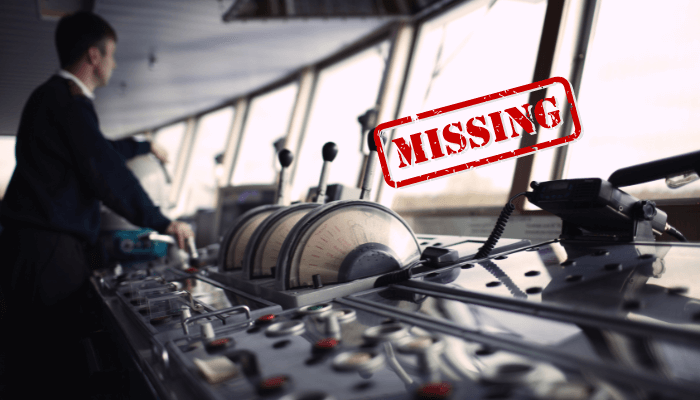
Spanish authorities are examining the sudden disappearance of a 50,789 DWT container ship captain. The vessel reached the Port of Algeciras late last week.
The Algeciras Express set sail from the port of Yalova, located on the Sea of Marmara south of Istanbul, on 30 June. La Guardia Civil de Algeciras reports that on 3 July, four days later, they were informed by the vessel’s first officer that their captain went missing.
The crew members thoroughly searched the vessel and reported that the captain was nowhere to be found.
The ship reached the Port of Algeciras on 7 July, but the authorities ordered the ship to anchor offshore until a new captain joined duty to take over the command of the Algeciras Express. Reports indicated that the port needed a captain to be on the ship to oversee its maneuvering into the dock.
Image for representation purpose only
Owned by Seaspan and registered with Liberia, the container ship operates under charter to Hapag-Lloyd. Reports mentioned that Hapag arranged for a Ukraine-based captain to fly to the port and immediately join the vessel. The ship was permitted to proceed toward the dock on 10 July.
Once the ship was alongside, the police boarded it and began interviewing the first officer and the 28-member crew. The police searched the vessel and entered the missing captain’s cabin. Local media reports have indicated that the cabin was in good condition, and the captain had also prepared a navigation plan for 4 July. However, they could not locate any signs of struggle or the captain. Nothing seemed abnormal on the ship.
The relevant Spanish authorities have reported the same to Liberia as it is the flag state for the vessel. They are in touch with the Philippines as the captain was a Philippine citizen. Concerned Spanish authorities have listed the captain as missing.
The Algeciras Express was traveling with a few containers when it arrived but was allowed to get done with its typical container handling on Sunday at the port. On Monday, it was anchored off Algeciras, but later on, it was released by the Spanish authorities and is sailing toward Tanger-Med in Morocco.
Avikus Corp., a subsidiary of Hyundai Heavy Industries Group, is planning to expand the application of its autonomous navigation solutions to leisure boats.
On July 12, the company demonstrated the self-navigation of a leisure boat for the first time in Korea. The leisure boat powered by the self-driving solution NAS 2.0 showed more delicate movements than when it was operated by humans. In particular, the boat’s anchoring technology through auto-docking stood out. Cameras on the boat analyzed surroundings, so the boat turned its hull 90 degrees to accurately enter an anchorage, which is about 3.5 meters wide per unit.
Abikus plans to expand its autonomous navigation business to the boat sector from the end of this year. “The self-navigation market is now beginning to open, so there is no clear strong player in the market yet,” said Lim Do-hyung, CEO of Avikus. “If we secure self-navigation technology ahead of others, we will be able to secure leadership as the first mover.”
“High value-added ships are produced in hundreds of units a year around the world, but leisure boats constitute a larger market as more than 10 million units are produced a year,” Lim said. “We will hold a demonstration session at the largest boat exhibition in the United States at the end of October.”
The company provides Hyundai intelligent Navigation Assistant System (HiNAS) for large merchant ships and Avikus intelligent Boat Autonomous Solution (AiBOAT) for boats. HiNAS has two options, Navigation Assistant System (NAS) and Berthing Assistant System (BAS), while AiBOAT has four options: NAS, Docking Assistant System (DAS), NAS 2.0, and DAS 2.0.
NAS, BAS, and DAS are degree 1 autonomous solutions that assist sailors. NAS 2.0 and DAS 2.0 are degree 2 solutions that replace sailor’s recognition, decision, and control capabilities completely.
US Congressman Alan Lowenthal, representing the Port of Long Beach, and Congresswoman Nanette Barragán, representing the Port of Los Angeles, introduced the Clean Shipping Act, a legislation that aims to zero pollution from all ocean shipping companies in the United States.
The bill has the goal to clean up the shipping industry, which alone produces more emissions than all but five individual countries in the world.
The legislation will also protect the health of coastal communities, address environmental injustice and provide solutions to the climate crisis.
“Since my earliest days of public service on the Long Beach City Council three decades ago, I have worked to clean up the maritime industry,” Congressman Lowenthal said. “This legislation continues this effort.”
The bill calls on the Environmental Protection Agency (EPA) to:
Set stricter carbon intensity standards for fuels used by ships
Set requirements to eliminate ship emissions within the port by 2030
“The Clean Shipping Act of 2022 is bold legislation that will make the United States a global climate leader in addressing pollution from the shipping industry and protect the health of port communities in Los Angeles and around the country,” noted Congresswoman Barragán.
“This is a big step forward for climate-smart ports and a clean energy future for every community. Proud to support this legislation as an original co-sponsor. Thank you to Congressman Lowenthal for your leadership and partnership to clean up the maritime industry and advance the greening of our ports,” she added.
The Danish logistics company Unifeeder has chosen its compatriot technology firm ZeroNorth for full suite of optimisation services.
The two parties signed a three-year agreement, which will see Unifeeder implement the full suite of services included in ZeroNorth’s platform, as well as ClearLynx’s bunker solution, as part of the company’s decarbonisation process.
The partnership is expected to give Unifeeder’s fleet full transparency over voyage planning, access to industry-leading voyage optimisation with integrated weather routing, as well as bunker, vessel, and emissions optimisation recommendations to unlock fuel efficiencies, reduce carbon emissions, and improve earnings, according to a statement.
Jesper Bo Hansen, chief revenue officer of ZeroNorth
It is important to note that in the first phase, 90 of Unifeeder’s vessels will adopt ZeroNorth’s technology, with the Aarhus-based shipping company being able to scale up the number of vessels easily at any point, according to Jesper Bo Hansen, chief revenue officer of ZeroNorth.
“ZeroNorth offers cloud-based software solutions in one platform that helps owners and operators to optimise voyages, vessels, bunker and emissions. Unifeeder will utilise the platform starting with 90 vessels. Nothing needs to be installed on the vessels as ZeroNorth’s platform is easily accessible online,” explained Jesper Bo Hansen at Container News.
The partnership is another move of ZeroNorth into the container market.
“In Unifeeder, we are gaining a partner that understands the urgency of the climate emergency and our mission to make global trade green, as well as the role that digital solutions can play to reduce the environmental impact of maritime operations whilst improving earnings,” said Jesper Bo Hansen.
Martin Gaard Christiansen, chief commercial officer at Unifeeder, commented, “We recognise that it is a key strategic priority to be able to connect vessel, voyage, and bunker processes to maximise our fuel efficiency and reduce our carbon emissions. Adopting digital technologies that will help us to advance our green agenda is a crucial step in our commitment to contribute to the reduction of emissions on a local and global scale.”
He went on to point out that Unifeeder’s green agenda includes efficiency targets and limiting bunker consumption to reduce the company’s overall emission levels by 50% per container by 2040.
“After extensive market research, we found that ZeroNorth is ahead of others with regards to their sustainability features, especially CII analytics. By offering all operations optimisations in one platform, on a global, 24/7 basis and with full transparency over voyage planning, ZeroNorth is the right partner to support the progress of our sustainable shipping strategy, help improve earnings, reduce emissions, and drive success for our company in the future,” concluded Martin Gaard Christiansen.
HMM has decided to proceed with massive investment in several initiatives aiming to diversify its business portfolio for future growth.
In the mid-to-long term strategy presentation held in the company’s headquarters in Seoul today (14 July), HMM announced it will expand its container ship fleet from 820,000 to 1.2 million TEU by 2026. Additionally, HMM is expected to enhance its bulk business increasing its fleet to 55 ships from the current 29 ships on the same timetable.
South Korea’s national flagship carrier is expected to invest more than US$11.4 billion in a range of projects, including securing core assets such as vessels, terminals, and logistics facilities throughout the upcoming five years.
HMM explained that “the future strategy has been established to respond to growing uncertainty arising from ever-changing business circumstances and lay a solid foundation for sustainable growth.”
Apart from the boost of its container and bulk sectors, HMM noted it will continue to enhance environmentally-friendly services for carbon neutrality in 2050 and explore the likelihood of ordering ships using alternative fuels in the future.
The South Korean shipping company added it will also make Research & Development (R&D) efforts into the use of carbon-neutral fuels in cooperation with industrial players.
HMM CEO & President Kim, Kyung Bae (third from the right) and employees declared a vision at the mid-to long-term strategy presentation held in HMM headquarters in Seoul on 14 July 2022.
“Our strategy is to ensure perpetual growth of HMM under the new vision – a global leading company generating sustainable value for the world,” commented Kim, Kyung Bae, HMM President & CEO.
Furthermore, the company plans to proceed with its digitalisation process by improving online-based ‘e-platform’ and accelerating Enterprise resource planning (ERP) upgrades. HMM recently launched ‘Hi Quote’, an online sales platform based on its own technological capabilities and aims to integrate its inland logistics network into Hi Quote and apply freight rate solutions powered by Artificial Intelligence.
Moreover, HMM wants to strengthen its business areas by developing a customer portfolio, enhancing sales power and expertise, and training employees. Especially, the company said it will organise teams to accomplish strategic projects and explore new business opportunities.
Innovation is a buzzword in maritime, with ‘innovation hubs’ springing up around the world to encourage the acceleration of automation and greener maritime tech. But are the bold promises of technology being kept, and how does maritime innovation benefit seafarers? Sarah Robinson, Rob Coston and Deborah McPherson investigate
As a trade union, Nautilus supports maritime innovation. Innovation can give seafarers a safer and better working experience and can make our industry less harmful to the environment.
When a maritime innovation hub is set up, it can be an indication that government and businesses are ready to invest in shipping and seafarers – which is no bad thing for an industry that so often suffers from being out of sight, out of mind.
Innovation hubs come in a variety of shapes and sizes, but in general a hub involves schemes to improve collaboration between individual businesses, and between the public and private sectors. Sometimes there is a physical campus where participants in the hub can work side by side to learn from each other and spark new ideas. Funding is often made available to develop inventions into viable businesses, and support can also be offered in the form of mentoring and networking.
Empty rhetoric or valuable promises?
Innovation hubs can sound great without necessarily delivering on a government’s eager promises. With this in mind, Nautilus is holding the UK government to account on pledges made on innovation in its Maritime 2050 strategy document. The government wants to accelerate maritime innovation, particularly in developing cleaner fuels and other green maritime tech – as described below. But Nautilus is concerned that maritime professionals could be left behind in the rush to introduce new tech. So when the UK parliament’s Transport Select Committee called for feedback this year on how the Maritime 2050 plans are progressing, Nautilus had this to say about training:
‘As the maritime industry progresses towards decarbonisation as laid out in the [Maritime 2050] clean maritime plan, the need for continuous professional development, education and training will only increase. As technological advances are made and new fuels and engine types developed, it is imperative that our maritime professionals are given every opportunity to re-skill and up-skill so as not to be disadvantaged by these changes. Maritime professionals should not bear the costs of these re-training requirements; it should be funded by government and industry.’
There’s more about Nautilus’s participation in the Maritime 2050 review here, but we are going to look in more detail at how maritime innovation hubs are working in all three countries where the Union has national branches: the UK, Netherlands and Switzerland.
Maritime innovation in the UK
The UK has made a start on hub-style collaborative initiatives to move the industry towards ‘net zero’ carbon emissions. Established as part of the Department of Transport (DfT), the UK Shipping Office for Reducing Emissions (UK SHORE), was launched in March this year with the bold aim of cementing the UK’s role as a technological innovator and manufacturer in the transport sector, and (even more boldly) ‘[making] journeys by sea as green as they were hundreds of years ago’.
The new office will draw on the experience gained in recent years through negotiations leading to the Clydebank Declaration at COP 26, and from the Clean Maritime Demonstration Competition (CMDC).
CMDC bearing fruit
The first CMDC was launched in 2021, and resulted in government funding being awarded to 55 UK projects, including a net-positive submarine fleet (i.e. one that removes more greenhouse gases than it emits) for collecting microplastics, software now being used to measure greenhouse gas emissions in ports, clean energy refuelling infrastructure in Grimsby, and ‘the world’s first commercially viable 100% electric, high-speed foiling workboat range’, which was recently launched by Artemis Technologies.
A bid by MJR Power and Automation has created an all-electric charge point connected to an offshore wind turbine to power boats using 100% renewable energy. Billed as the ‘world’s first fully automated offshore wind vessel charging system’, this is contributing towards ‘Operation Zero’, a coalition across the North Sea offshore wind sector, which intends to deploy zero-emissions workboats operating commercially on wind farms by 2025. Eight months after winning the funding, MJR has created the charging ports, and installation is now set to go ahead in late summer 2022 at the Lynn and Inner Dowsing offshore wind farms.
Ten times the funding
Whereas the 2021 CMDC offered £23 million in funding, UK SHORE now has £206 million in new funding for research and development to assign. This represents the largest investment by the DfT in maritime decarbonisation to date.
At the recent 2050 Maritime Innovation Week hosted in June by the Port of Tyne – which is aiming to be net zero itself by 2030 – Eamonn Beirne of the DfT revealed some of the ways this new UK SHORE funding will be used to boost innovation and help the country meet its climate ambitions.
This includes a second round of the CMDC to last over multiple years, which will also comprise feasibility studies for UK green shipping corridors. Some £12 million has already been assigned for the first year – with entries closing on 13 July 2022 – and substantially more funding is planned for years two and three.
UK SHORE’s plans also include a new Skills Taskforce for net zero shipping; a Zero Emission Ferries programme for ‘greening intra-UK ferry routes’; grant schemes for early research projects at UK universities; and a Centre for Smart Shipping to support existing innovation hubs for automation – which is seen as a key way to cut emissions.
Spreading the wealth
As might be expected at an event hosted in the Port of Tyne rather than in the capital, there was also discussion about how investment in decarbonisation has helped to rebuild communities in previously declining areas of the UK – such as the offshore wind industry’s investment in Grimsby – and how this trend can be continued.
In Liverpool, a £23 million Maritime Knowledge Hub is being developed as part of the redevelopment of Wirral Waters. The planning application has now been submitted for this centre – with proposed tenants including Peel L&P, Mersey Maritime and the Liverpool City Region Combined Authority – which will focus on the opportunities offered by decarbonisation via innovation, engineering, R&D, entrepreneurship and training. It will seek to provide the skilled professionals who will be needed to drive forward the maritime innovation projects of the future.
MJR’s innovative all-electric charge point connected to an offshore wind turbine received UK government funding, and is to be deployed in 2022. Picture: MJR
Innovation elsewhere: Singapore’s maritime hub
In the 2022 edition of the Leading Maritime Cities report by DNV and Menon Economics, Singapore held onto its spot as one of the world’s best maritime cities, not least because it scooped the Maritime Technology title due to the city-state’s focus on digital transformation.
Such attention to maritime digital enhancements is no surprise, considering the maritime industry contributes about 7% of Singapore’s GDP.
This drive to digitalisation includes everything from the ship supplies delivery process to port operations such as:
‘internet of things’ tracking technology which allows workers and assets to be tracked at any time
web-based bunker supply improvements for bunker operators
sustainability technology for addressing climate change, improving health and the environment, including a focus on ways to reduce human-impacting nitrogen and sulphur as well as C02 emissions.
new ways to enhance digitalisation for maritime security and improve safety at sea through the development of high-tech early warning systems for collisions
Many of these developments can be traced to the MPA Maritime Innovation Lab, a partnership platform for technology and capability development expected to shape future port operations. Current projects focus on collision technology, ship-to-shore communications and the automatic generation of reports for safe and efficient vessel approaches to Singapore.
The Netherlands is proud of its reputation as ‘the maritime centre of Europe’, and has numerous schemes to encourage innovation.
In a country with a strong culture of collaborative working, the concept of bringing together entrepreneurs, universities, government and investors is long established. The government has decided to focus its maritime innovation work on four main areas:
Clean Ships looks at fuel efficiency, reduced emissions and material efficiency. Various alternative fuel applications are being examined, as well as noise reduction both above water and underwater – which has obvious benefits for seafarers.
Smart Ships aims to see vessels ‘better equipped for their many tasks at sea’. This is a more contentious one for seafarers because it looks at how shipowners can save money through automation. ‘[Smart ships] lower the costs of construction and operation,’ notes a page on the government website www.government.nl. ‘This means that the size of crews and the costs of maintenance and operation are significantly reduced.’ Perhaps aware that this kind of language is a red flag to maritime trade unions, the website does concede that ‘special attention should be paid to ensuring safety’.
Smart Ports is about making ‘the entire process from calling at port to transhipment at the quay more efficient for ships’. This project also has a nod to worker wellbeing on the government website: ‘Research into the safety of operations is necessary to be able to guarantee the desired safety level when innovations are implemented.’
Winning at Sea seeks technological solutions for extracting energy from the sea and the offshore mining of raw materials. This seems unlikely to create many jobs for seafarers, given that it starts from a principle of technology and automation.
Port of Rotterdam. Picture: Getty Images
Private sector hub scheme
Meanwhile, in Europe’s busiest container port, a private-sector maritime hub scheme called the Rotterdam Port Fund (RPF) ‘eagerly contributes’ to companies that ‘focus on sustainability, durability and technology.’
The RPF supports management teams with capital, knowledge and networks to ‘realise further growth and long-term activity’. As well as helping entrepreneurs to develop innovations and turn a profit, the Fund encourages participants to ‘contribute to a positive, social and sustainable change to the port’ – which could be good news for maritime professionals.
Cooperation is evolving rapidly between Japan and Singapore on the digital front.
In the Japan Times it was reported that the bond shared by Japan and Singapore was strengthened during the Covid-19 pandemic through cooperation in science, innovation and green technologies. The prediction is the digital market is set to expand – with a particular focus on support for CO2 reduction initiatives in shipping.
An Inmarsat report from 2020 also highlighted Japan’s ongoing ‘connected maritime innovation ecosystem’ and its commitment to implementing the ‘internet of things’ (IoT) in its ship and crew management technology and the country’s emerging start-up culture.
The report noted that in merchant shipping, 34% of respondents see themselves as having ‘fully deployed’ IoT-based solutions, a proportion that puts maritime ahead of other industries such as agriculture, energy and mining. It also found that 100% of respondents will be adopting some form of electronic fuel monitoring system.
Picture: Mr. Cole/Getty Images
Maritime innovation in Switzerland
Passenger vessels in Basel. Picture: Getty Images
Turning to Switzerland, it is not surprising that the landlocked country has nothing explicitly called a ‘maritime innovation hub’. However, the country is generally keen to support innovation and has a substantial workforce on its rivers and lakes that could perhaps benefit from new tech.
Switzerland has six innovation parks that ‘facilitate collaborations for established companies, start-ups, and universities, to find solutions to some of the world’s most pressing challenges.’ So maritime innovators could presumably find a home there – as well as an excellent maritime union, of course, to work with on matters of training, skills and safety.
Innovation elsewhere: Isle of Man welfare project
For seafarer digital welfare innovations, look no further than the Isle of Man Ship Registry, which has an app where seafarers can see exercise classes and go to religious services, among other offerings.
The Isle of Man’s Crew Matters app was the first designed by a flag state. It was developed in partnership with Liverpool-based training company Tapiit Live and is available to around 10,000 seafarers sailing on more than 400 vessels under the flag. It can be downloaded from the Google Play store.
Where next for maritime innovation?
Maritime innovation can be good for seafarers, as Nautilus member Jeroen van de Voort found when GPS was introduced on the inland waterways where he works.
But sometimes innovation can lead to concerns over job losses or de-skilling; hence the European dock workers’ new rallying cry of ‘no automation without negotiation‘. In the dockers’ case, trade union support from across the European Transport Workers’ Federation is helping ensure that maritime innovation works to their benefit rather than their detriment, and this is a commitment that individual unions such as Nautilus must also make to members.
Nautilus general secretary Mark Dickinson is determined that the Union will continue to do its part. He says:
‘We are monitoring the delivery of the UK government on its pledges and pressing for increased funding of seafarer training in new technology in order to secure a just transition for our members and all maritime professionals.
’We will also hold the industry and government to account in the Netherlands and Switzerland, and will be keeping a close eye on the delivery of pledges made to deliver human-centred technology and decarbonisation.
‘As both a trade union and a professional association, Nautilus is a respected voice in the maritime industry that provides expertise to policy-makers to ensure the best outcome for our members. We will carry on using our influence to make sure innovation pledges aren’t just hot air, and to ensure that no maritime professional is left behind.’
The post-Covid-19 container demand boom appears to have peaked, based on Drewry’s port throughput index, which showed a decline in April.
The Shanghai lockdown took its toll as volumes in the world’s busiest port fell 25% in April, compared with March.
The Drewry Global Port Throughput Index increased by 1.7% month-on-month to reach 141.1 points in April 2022, 1.5% below the 143.1 points recorded in April 2021.
“This is further evidence that the post-Covid demand boom appears to have run its course,” said Drewry.
North America recorded a 4.5% increase in port handling, with Oceania being the only other region in positive territory. Throughput in Asia (excluding China) was 4.1% lower year-on-year, with ports in this region quick to feel the impact of Chinese lockdowns on trade.
European volumes remained below 2021 levels, with the ongoing crisis in Ukraine driving steep rises in energy costs and consequentially impacting regional manufacturing and consumer demand.
In a commentary released on 11 July, Neil Dekker, a senior analyst at maritime credit reporting agency Infospectrum, said that there are warning signals for the container shipping market, both in the short and long term.
“There have been real signs of a decline in cargo growth during Q2 2022 compounded by the factory shutdowns and port congestions in China as well as normal seasonality. Current estimates of global cargo growth for 2022 range from about zero to 2% to 3% (down from 6% in 2021), with Maersk management now more negative about future growth,” said Dekker.
Average spot freight rates on the core Asia to North Europe trade have also contracted by about 20% to 30% since early December 2021, although these remain at record-high levels when compared to early 2020.
Rising charter and bunker costs present long-term risk factors, according to Dekker.
Noting that while some liner operators are managing costs by expanding their owned fleets, others have committed to long-term charters, Dekker said, “Companies that are more highly exposed to charters (at record-high rates) for the next three to five years (and this also includes Zim Integrated Shipping) will need to carefully manage operating costs.”
This website uses cookies to improve your experience. We'll assume you're ok with this, but you can opt-out if you wish. Cookie settingsACCEPT
Privacy & Cookies Policy
Privacy Overview
This website uses cookies to improve your experience while you navigate through the website. Out of these cookies, the cookies that are categorized as necessary are stored on your browser as they are essential for the working of basic functionalities of the website. We also use third-party cookies that help us analyze and understand how you use this website. These cookies will be stored in your browser only with your consent. You also have the option to opt-out of these cookies. But opting out of some of these cookies may have an effect on your browsing experience.
Necessary cookies are absolutely essential for the website to function properly. This category only includes cookies that ensures basic functionalities and security features of the website. These cookies do not store any personal information.
Any cookies that may not be particularly necessary for the website to function and is used specifically to collect user personal data via analytics, ads, other embedded contents are termed as non-necessary cookies. It is mandatory to procure user consent prior to running these cookies on your website.