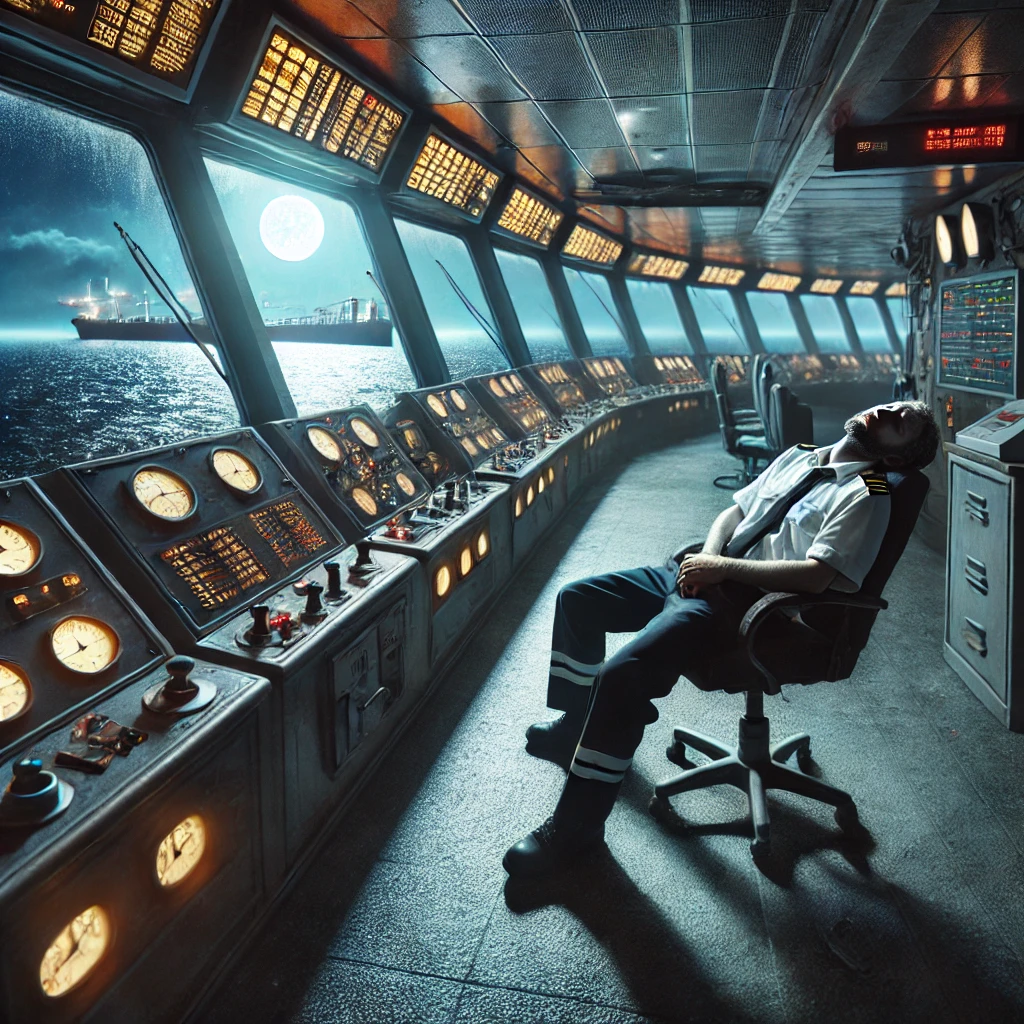
Container ship ALGECIRAS EXPRESS reported missing Captain in Jul 3 in Mediterranean being halfway between Malta and Panteleria islands, while en route from Istanbul to Tanger-Med with ETA Jul 6. The ship started SAR, which lasted from morning Jul 3 until morning Jul 5, with understood, involvement of SAR and CG of coastal states. The ship arrived at Algeciras on Jul 7, she was thoroughly searched by police, all crew were interrogated, but Captain’s disappearance remained a mystery. ALGECIRAS EXPRESS was allowed to leave Algeciras on Jul 12, after arrival of new Captain. ALGECIRAS EXPRESS arrived at Tanger-Med same day, left on Jul 13, next port of call unknown, as of 1320 UTC the ship is adrift in Med east of Tanger-Med since morning Jul 13.
Missing Captain said to be of Filipino nationality.

New FleetMon Vessel Safety Risk Reports Available: https://www.fleetmon.com/services/vessel-risk-rating/


MSC Group and the Italian Shipbuilder Fincantieri have signed a Memorandum of Understanding for an additional order of two vessels in the Explora Cruise fleet. The agreement also entails modifying the cruise vessels already under construction to be equipped with LNG-powered engines and power plants that use LNG and Hydrogen.

Explora Journeys, the new cruise brand of MSC Group, already had four ships on order; EXPLORA I – IV. This agreement called for two new vessels, along with the modification of the EXPLORA III and EXPLORA IV, to be equipped with LNG engines and a power plant that can run on Hydrogen and LNG. The work in progress on EXPLORA III and IV was halted due to the significant redesign of the vessels required. As a result, these vessels are being enlarged by 19m and will cost $120 million more than before. The delivery date for the vessels is also pushed back from 2024, 2025 to 2026 and 2027.

The two additional vessels, the EXPLORA V and VI, are newbuilds and will feature new generation LNG-powered engines. These new engines address the issue of methane slip, making them more environmentally friendly and fuel-efficient. The vessels will feature a containment system for liquid hydrogen, making hydrogen available for use, and a six megawatt hydrogen fuel cell, which will be used to power the hotel operations when the vessel is at the port and the engines are shut down. These vessels are to be delivered in 2026 and 2027.

Source: https://www.fleetmon.com/maritime-news/2022/38833/msc-places-order-two-new-cruise-vessels-powered-hy/


Body of Filipino seaman who died in a work related accident was transferred from bulk carrier LOWLANDS COMFORT to authorities in Banda Aceh waters, Sumatra, on Jul 14. Bulk carrier is en route from Baltimore USA to China via Suez, accident took place on Jul 4 in Gulf of Aden, understood he was operating ship’s aux crane in aft section, and was hit. According to ship’s track, there was an attempt to disembark body in Oman, but understood, attempt was aborted, reason unknown. So body had to be kept on board until bulk carrier reached Indonesian waters. LOWLANDS COMFORT resumed voyage same day.

New FleetMon Vessel Safety Risk Reports Available: https://www.fleetmon.com/services/vessel-risk-rating/


Container ship APL VANDA according to numerous reports, suffered loss of containers sometime between Jul 3 and Jul 5 in Arabian sea, while en route from Singapore to Southampton via Suez. The ship had to interrupt voyage and arrived at Djibouti Anchorage on Jul 6, on Jul 15 she moved to port, at 0440 UTC Jul 15 she was in process of berthing, assisted by tugs.
There’s a monsoon season in Indian ocean now, with more or less regular rough seas, mostly not classified as storm. According to ship’s track, container loss if that’s what happened, took place somewhere east of Socotra in 400-nm radius zone,
There was no alert on containers drifting in the area of alleged loss, but if there was major loss, there should be, undoubtedly, drifting hazard warning. Either number of lost containers is small, or it was something else, maybe stacks collapse.

New FleetMon Vessel Safety Risk Reports Available: https://www.fleetmon.com/services/vessel-risk-rating/


Not since the ghost ships of maritime legend has a single floating vessel caused more collective dread. To the horror of many Sydneysiders, the cruise ship Coral Princess docked in Circular Quay this week with more than 100 COVID-19 positive cases on board.

According to news reports, most of the infected were crew members, with 114 in isolation on the ship. However, four passengers were also isolating after positive COVID results.

But how has the ongoing threat of COVID-19 impacted travel insurance offerings? Do insurers cover travellers impacted by outbreaks like the one being suffered aboard the Coral Princess?

According to recent research from Southern Cross Travel Insurance (SCTI) – which operates in New Zealand and Australia – 80% of Australian travellers now consider travel insurance a high priority for international travel and even 65% of Australian travellers now consider domestic travel insurance a high priority.

“With that in mind,” said Auckland-based SCTI CEO Jo McCauley (pictured above), “I’d hope that most affected passengers would have some level of travel insurance in place.”

SCTI’s domestic policy doesn’t cover cruises but their international comprehensive policy, TravelCare, does offer cruise cover. McCauley said this international travel policy also covers a cruise hit by a COVID-19 outbreak so long as the cruise is heading to a destination that has an Australian government Smartraveller travel advisory of Level 2 or below.

According to the Department of Foreign Affairs and Trade, Level 1 indicates travellers should exercise normal safety precautions, Level 2 recommends a high degree of caution.

Read next: Cover Genius finds 50% of Australian travellers not covered for COVID-19

“Some insurers though, may not cover cruises as standard and others may ask you to pay an additional premium to include cruise cover on your policy,” said McCauley. “So it’s important for travellers to make sure they fully understand the benefits available to them before buying travel insurance and the circumstances in which they can realistically make a claim.”

She said there are “many exclusions and significant differences in COVID cover between different insurers.”

The SCTI CEO said nearly three years of the COVID-19 pandemic had caused them to significantly rethink their travel insurance offerings.

“It was something we didn’t provide cover for initially,” said McCauley. “However, as travel restrictions began to ease, we knew Australians wanted cover for COVID-19 related cancellations.”

As a result, SCTI spent “considerable time assessing different options and trying to find the right balance between price and cover to deliver the level of COVID-19 cover we have available now,” she said.

McCauley said the pandemic also put the spotlight on the fact that many Australians are not clear on what their travel insurance policy covers them for.

“Our aim is to provide simplicity,’’ she said.

“We know nobody likes reading the small print but when it comes to looking at COVID-19 cover we strongly encourage Australians to carefully read their policy to really understand the benefits available to them and the circumstances in which they could practically make a claim,” added McCauley.

Despite the ongoing risks of COVID, other SCTI research suggests the appetite for travel is very strong in Australia. The Future of Travel found that more than 90% of Australians are planning to travel within Australia or overseas during the next two years.

However, 75% of these future travellers said they are now more concerned about health and safety when travelling than before the pandemic.

“The pandemic hasn’t reduced our desire for travel but is shaping the decisions we make about it including destination considerations, accommodation choices, holiday activities and attitudes towards risk and travel insurance,” said McCauley.

“It has made us more aware now, than ever, of the things that could potentially go wrong during our travels and the importance in planning for these unforeseen circumstances as much as we can,” she added.

SCTI’s comprehensive travel insurance offering, said McCauley, includes unlimited medical expenses if the insured is diagnosed with COVID-19 while on the journey, and $2,500 up to unlimited to change travel arrangements if the insured or a “relevant person” is diagnosed with COVID-19 before you leave. To be eligible for cover, people must be fully vaccinated.

“The majority of Southern Cross Travel Insurance’s COVID-19 claims have been for cancellation due to being diagnosed while on their trip, or before they were due to leave,” she said.

However, she added, other insurers may only offer cover for cancellation if you’re hospitalised with COVID or may not offer cancellation cover.

She also said that travel insurance with SCTI doesn’t kick in if Australia experiences a general COVID lockdown or state order while travelling, or if an overseas country closes its borders and this impacts travel plans/cancellations. There are also other exclusions.

“Therefore, when booking accommodation, activities and other travel-related expenses, we would always recommend choosing options that provide flexible or penalty free cancellation or rebooking options to avoid being left out of pocket,” said McCauley.
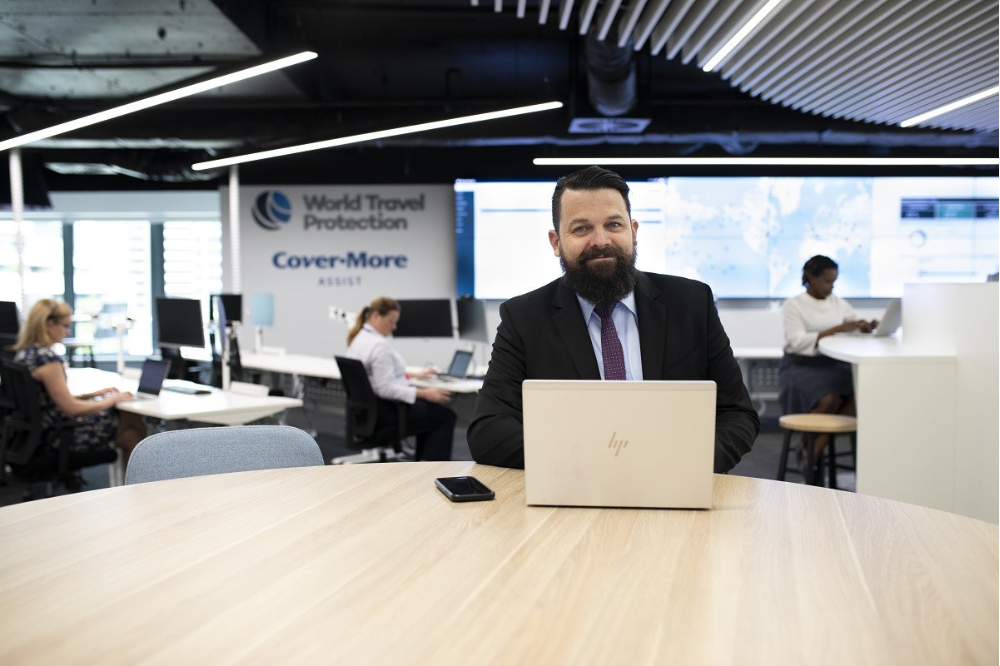
Brisbane based Rodger Cook (pictured directly above), general manager of Global Security Services for World Travel Protection said that the pandemic has caused the travel industry generally, including the cruise sector, to adapt to COVID risks.

Cook’s firm recommends a risk-based approach to travel of all kinds.

“We help educate travellers on the risks incurred based on three main factors: the traveller’s personal risk profile, the locations they’re traveling to, and the activities being conducted. We recommend this framework for risk mitigation during any travel – both leisure or business,” he said.

Read next: COVID-19 aware travel tips for the insurance professional

Cook also stressed the importance of up-to-date and accurate information about any potential medical and security disruptors that could impact a trip.

The Australian government further eased COVID-19 border restrictions this month. Cruise ship and airline passengers no longer have to fill out a Digital Passenger Declaration or Maritime Travel Declaration when entering Australia, prove their vaccination status or seek exemptions to enter the country.

Source: https://www.insurancebusinessmag.com/au/news/breaking-news/covid19-and-the-ongoing-travel-risks-of-cruise-ships-413223.aspx


State-owned Phnom Penh Autonomous Port has reported nearly $20 million in revenue for the first half of this year, increasing $4.46 million or 29 percent from $15 million for the same period last year, according to a company statement.

The public-listed international port firm’s revenue in port operation items rose by 37 percent to $16.37 million compared to $12 million for the same period in the previous year.
Its port authority revenue rose 24 percent to $2 million in the January-June period compared to $1.66 million in the same period last year.

However, the revenue generated from other income slipped by 24 percent to $1.15 million, from $1.51 million, while the revenue made from other services decreased by 15 percent to $0.18 million.

In the second quarter of this year, the port’s four categories of revenue rose by 43 percent to $10.27 million compared to $7.2 million for the same quarter in the previous year, driven by port operations, port authority and other income that surged by 49 percent, 36 percent and 4 percent, respectively.

The pace of revenue increase in June this year alone was similar to the rising pace of revenue in the first half as a whole — 28 percent driven by port operations, port authority and other income, it said.
The port’s report showed that its business operations grew in the first quarter, especially cargo vessel transits that rose by 117.38 percent, while local passenger transportation boats surged by 550.03 percent.
The cargo vessels that transit PPAP, including Cambodian and foreign vessels, barges, oil vessels and tankers, while in-out local passenger boats operate two-way Phnom Penh-Siem Reap with the number of passengers increasing 182.70 percent to 15,789 from 5,585 passengers.

The report added that container, general and oil cargoes have declined by 3.27 percent, while cargo handling at the port dropped by 1.54 percent.

Meanwhile, the Cambodia Securities Exchange (CSX) reported that the price of PPAP stock has fallen by 1.92 percent to 15,626 riels per share on average on the main board in the second quarter of this year, while the stock’s trading value has dropped by nearly 13 percent to 1,046 million riels from 1,202 million riels.

PPAP stock’s trading volume — the number of shares traded on the exchange — has dropped by 19.39 percent to 66,453 shares in the April-June of this year from 82,440 shares in the same period of last year, according to a CSX report.

In March, a groundbreaking ceremony for the cross-docking and cold storage facility was carried out at Container Terminal LM17 on National Road No. 1. It was the first step of the port’s development project. The existence of a cold warehouse will help it to meet the customer needs for storing, packaging, consolidating or deconsolidation, and stuffing or unstuffing cargoes for export and import via the port.

Source: https://www.khmertimeskh.com/501112982/phnom-penh-autonomous-port-h1-revenue-rises-29/


We are offering COVID-19 vaccinations at the upcoming Foyle Maritime Festival, Derry/Londonderry, one of the North West’s biggest events of the year, with thousands expected to attend the hugely popular sea-faring celebration.

Located within the Derry and Strabane District Council offices on the Strand Road, right in the heart of the festival, the pop-up vaccination clinic will run from 11.00am to 5.00pm on Saturday July 23rd and will provide first dose, second dose and booster jabs of the Pfizer vaccine to all those eligible from age 5+. No booking is required, but ID must be provided and those attending must be residents in Northern Ireland.

The Western Trust’s Senior Manager for Health Improvement, Equality and Involvement, Siobhan O’Donnell, has called on all those eligible to make the most of the opportunity to come forward at the event and ensure they are fully vaccinated.

“The latest wave of pop-up vaccination clinics is about accessibility, and trying to make it as convenient as possible to get a jab. There are still a large volume of people who, for whatever reason, have not been able to attend one of the Trust vaccine hubs which we are currently operating from.

“The Foyle Maritime Festival is one of the highlight events in the North-West this year, and we are delighted to be afforded this opportunity by Derry City and Strabane District Council to bring a vaccine centre to the Festival.

“Despite the easing of restrictions, COVID-19 has not gone away as the recent high rates show. Vaccination remains the best way to protect yourself, your family, and your community, and I would remind everyone that you are not fully vaccinated unless you have received all available jabs, including a booster where appropriate, to ensure the highest level of immunity.”

Jacqueline Whoriskey, Events Manager with Derry City and Strabane District Council, expressed the organisation’s support for the vaccination clinic, and how they are looking forward to including it as part of an action-packed Foyle Maritime Festival later this month.

“This will be our fifth Foyle Maritime Festival, where we welcome the Clipper Round the World Yacht Race to the city. The festival is our largest event, we will welcome hundreds of thousands of people over the five days for a mix of music, arts, markets and maritime activities as the place becomes awash with colour.

“We are delighted to welcome the Western Trust as part of the festival, as we continue our support for the Trust in the delivery of their vaccination programme.”

The Western Trust vaccination programme is currently operating from three hubs: Level 5, Tower Block, Altnagelvin Area Hospital; Key Worker Accommodation, South West Acute Hospital, Enniskillen and Children’s Centre, Omagh Hospital and Primary Care Complex.

An extensive programme of mobile clinics in community settings, across the geographical area of the Trust, also continues into the summer months.

Source: https://westerntrust.hscni.net/pop-up-covid-vaccination-clinic-at-foyle-maritime-festival/


In 2020, the ITF, FNV Havens and Nautilus NL took the case against Marlow Cyprus, Marlow Netherlands and Expert Shipping over their refusal to adhere to the Non-Seafarers’ Work Clause to court in the Netherlands. The companies signed up to the agreement in 2018 and the clause came into force two years later.

The ruling from the Rotterdam District Court means that the companies who employ seafarers on shipowners’ behalf, must ensure that cargo handling must be performed by trained local dock workers where possible, and not given to seafarers as an additional responsibility.

The decision means greater safety for seafarers and also secures jobs for dockers.

The court emphasised the importance of the proper implementation of agreements reached through social dialogue and the binding nature of such agreements. It also reaffirmed the ‘Albany exemption’ which provides that collective bargaining agreements are exempt from certain requirements of EU competition law.

“The court makes clear that the parties are bound to the terms of the agreement. Given the weight attached to social dialogue within the European Union, and in the principle statements of companies – it is of paramount importance that they follow through. That starts with employers doing what they say they will,” said ITF President and Dockers’ Section Chair, Paddy Crumlin.

“Employers like those we’ve won this important case against, have been reminded this week by the court about what it actually means to be a social partner. It means doing what you say you’ll do. It means keeping your word.”

“Seafarers, dockers and our unions have upheld our parts of the agreement, which has delivered these companies stable profits. This case is a big step forward in our campaign, but we won’t be happy until we get all charterers to respect the clause.”

“Now, it is time for these employers, particularly short sea shipping charterers, to return to true social dialogue and restore good faith with unions, this must include working with shipowners to implement the Non-Seafarers’ Work Clause.”

“Our industry has important issues to tackle together, and we will continue to be part of the IBF process that has improved wages and working conditions for seafarers for almost 20 years,” said Crumlin.

ITF Dockers’ Section vice-chair Niek Stam, who is also the leader of Dutch dockers’ union FNV Havens, said the ruling was both a victory for seafarers’ safety and for dockers’ jobs.

“Those who don’t fight will never win. This is the only logical outcome of the lawsuit. Otherwise a signature would no longer be worth anything. A deal is a deal,” said Stam.

“Lashing can be extremely unsafe for seafarers, who are often untrained in port operations, such as the dangers of moving cranes. Automated terminals and supply chain pressures have further increased these dangers to ships’ crew,” he said.

ETF General Secretary Livia Spera said, “This ruling makes clear to shipowners and others that it is a legal requirement to honour the terms of a collective bargaining agreement.”

“This is the result of years of hard work from the union side and this verdict represents a victory for both seafarers and dockers. It is about the safety of our transport workers, it is about the obligation of the charterers to use the specialised workforce of dockers, and to not exploit seafarers’ safety in this way.”

Source: https://www.itfglobal.org/en/news/victory-seafarers-safety-dutch-court-sides-unions-container-lashing


INCHEON — When a button was pressed on a control tablet, the 9-meter (29-foot) Quicksilver coolly plied the waters off of Yeongjong Island with nary a helmsman at the wheel.

The boat was its own skipper.

Equipped with Avikus autonomous navigation technology, the boat left the dock at Wangsan Marina, Incheon, did a wide loop in the calm shallows of the Yellow Sea and returned to the other side of the dock and docked itself.

Avikus, subsidiary of Hyundai Heavy Industries specializing in autonomous navigation technology, was holding a demonstration of its first fully autonomous leisure boat.

“If you mark the destination on an electronic chart, the boat automatically finds the optimal route and begins navigation accordingly,” said Lee Jun-sik, recreational boat solution team leader at Avikus. “It’s like entering a destination into Tesla’s navigation system and driving in autonomous driving mode.”

When Lee entered a route around the Wangsan Marina dock on a tablet, the optimal route immediately appeared on the screen. The screen blinked information about the route, telling passengers that the entire ride would be 2.5 kilometers (1.55 miles). A passenger volunteered to press the “Start Autonomous Mode” button on the tablet, and the boat left the dock and set off.

There was no one sitting in the captain’s seat, but the boat sailed smoothly. Lee explained that the boat was equipped with six surround cameras, LiDAR (Light Detection and Ranging) and augmented reality technology.

“We’ve input more than 150,000 images into the boat’s data system,” Lee said. “This allows the boat to recognize any obstacles or other vehicles that may approach during the ride.”

Five minutes into sailing, when another boat approached the Avikus, it turned sideways to avoid collision, correcting its course. Passengers could see the modified route on the tablet in real time.

This system, called the Hyundai Intelligent Navigation Assistant System (HiNAS), was developed by Avikus in April last year. So far, six boats equipped with HiNAS have been delivered from Hyundai Heavy Industries to various countries, while an additional order of 70 ships have been received this year.

The boat reached a speed of 5 knots (9.26 kilometers per hour) and sailed around the Wangsan Marina dock. Passengers could see a full 180-degree view of the boat’s path through two side screens attached at the left and right side walls in the inside of the boat. The speed of the boat could also be controlled through the tablet. Lee pressed hit a “plus” sign on the tablet, and the boat sped up to 7 knots (13 kilometers per hour).

After a full circle around Wangsan Marina that took about 20 minutes, the boat slowed down and began its way back into the dock.

“This boat has better docking skills than I do,” Lee commented, who holds a piloting license, as the boat made its final course.

“By using autonomous navigational technology in leisure boats, users can greatly reduce the time required for berthing and unberthing as well as the risk of accidents during operation,” said Lim Do-hyeong, CEO of Avikus, in a press conference afterwards. “There is no other company in the shipping industry that is developing autonomous unmanned ships like we are.”

Avikus has sold 210 Level-1 autonomous boats so far, the most of any company. Autonomous boats are divided into four levels by the International Maritime Organization depending on how autonomous they are. Level-2 boats only require human assistance in emergency situations. Level 3 allows for remote control of boats. Level 4 boats do not require human intervention.

Avikus plans to take part in the Fort Lauderdale International Boat Show in Florida this October to showcase its Level 2 autonomous boats. Lim announced that Avikus is planning to market Level 2 autonomous boats by the first half of next year.

The captain's seat is left empty on a leisure boat equipped with autonomous navigation technology. [AVIKUS]

The captain’s seat is left empty on a leisure boat equipped with autonomous navigation technology. [AVIKUS]

Avikus and Hyundai Heavy Industries are developing technology for leisure boats because the commercial market is not big enough. Only about 500 high value-added vessels, such as LNG ships and eco-friendly carriers, are ordered every year. Even if Avikus manages to sell their autonomous navigation technology to all 500 ships, the volume is too small.

“In comparison, the market for leisure ships is much bigger and has a lot of potential,” said Lim. “There are about 10 million leisure boats worldwide. Those who own leisure boats are affluent and tend to be open to new technologies. This is a good target for us.”

Avikus was found by Hyundai Heavy Industries in December 2020 to help advance and deepen technologies and expertise related to autonomous ships.

“There is still a long way to go for the development of autonomous ships,” said Lim. “And naval officers won’t disappear even if autonomous ships are commercialized. It has been 20 years since autonomous driving technology came out, but we still have taxi drivers. It will be the same for autonomous ships.”

BY LIM JEONG-WON [lim.jeongwon@joongang.co.kr]


Kongsberg Digital’s suite of simulation systems provides efficient and realistic training for maritime students and crew so building vital skills promoting safety, cost-efficiency, and sustainability in operations at sea. MARINA is a leading maritime authority, representing the largest number of seafarers in the world. Partnership with Kongsberg Digital means that MARINA can provide simulation technology for research, operations and training, increasing the knowledge and competency of their workforce.

MARINA aims to bring the Philippines to the forefront of transformation in the maritime sector. Kongsberg Digital will contribute to this endeavour with its extensive experience in simulation studies related to autonomous shipping, digital twin and vessel insight. This MOU aims to contribute towards the realization of the Maritime Industry Development Plan (MIDP) through the use of innovative and modern simulation technologies and the two partners will cooperate on several areas.

“With this MOU, MARINA and Kongsberg Digital will work together to adopt and leverage more advanced methodologies and tools within the maritime education and training segment as well as forming best practices. This will lead to a more competent and agile seafaring workforce, prepared to adapt to the everchanging maritime landscape,” says VAdm Robert A. Empedrad AFP (Ret), Maritime Industry Authority in the Philippines, MARINA.

“We are very pleased to announce this MOU, which signals the start of a mutually beneficial partnership with MARINA. This forward-thinking organization shares Kongsberg Digitals´ understanding of the significance of maritime education and training, and the recognition that it is only feasible to secure highly qualified crew through innovative and high-quality training methodologies,” says Andreas Jagtøyen, Executive Vice President Digital Ocean, Kongsberg Digital.

Source: https://workboat365.com/commercial-marine-news/training/kongsberg-digital-signs-prestigious-mou-with-maritime-industry-authority-in-the-philippines/


Company DETAILS

SHIP IP LTD
VAT:BG 202572176
Rakovski STR.145
Sofia,
Bulgaria
Phone ( +359) 24929284
E-mail: sales(at)shipip.com

ISO 9001:2015 CERTIFIED